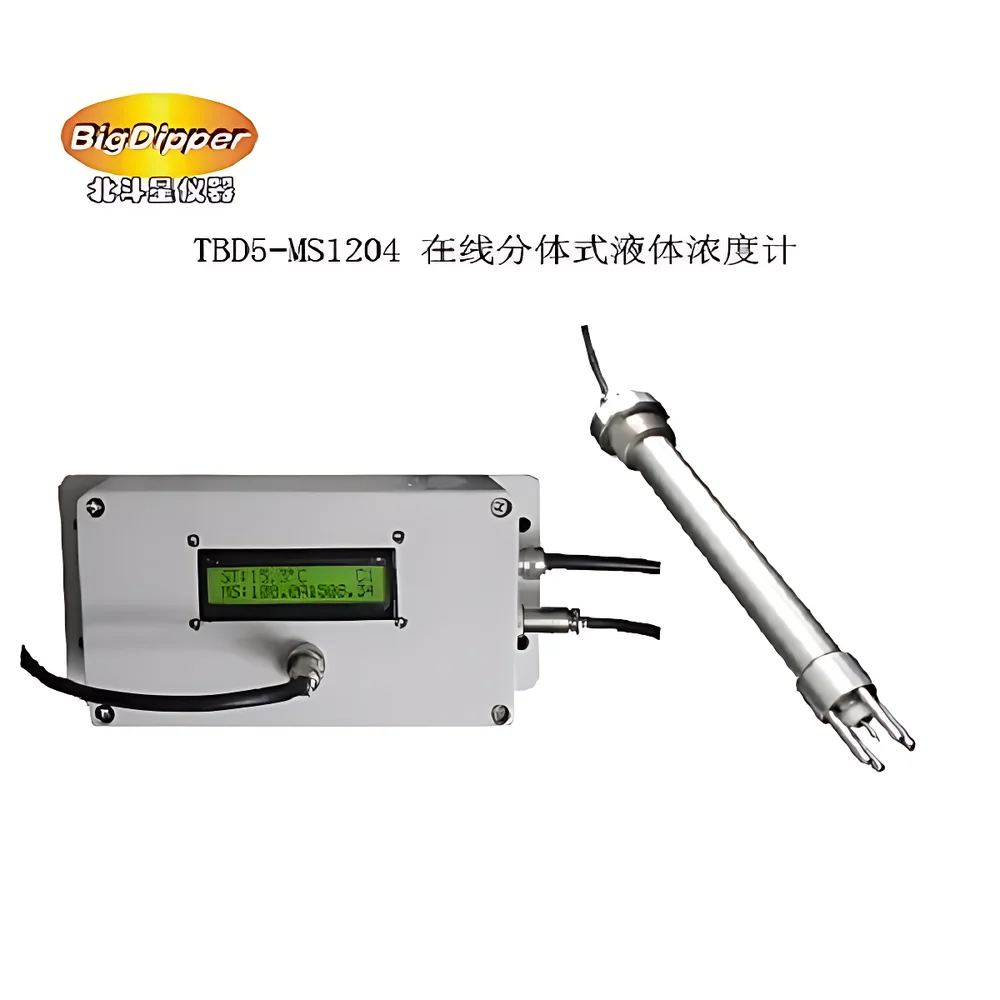
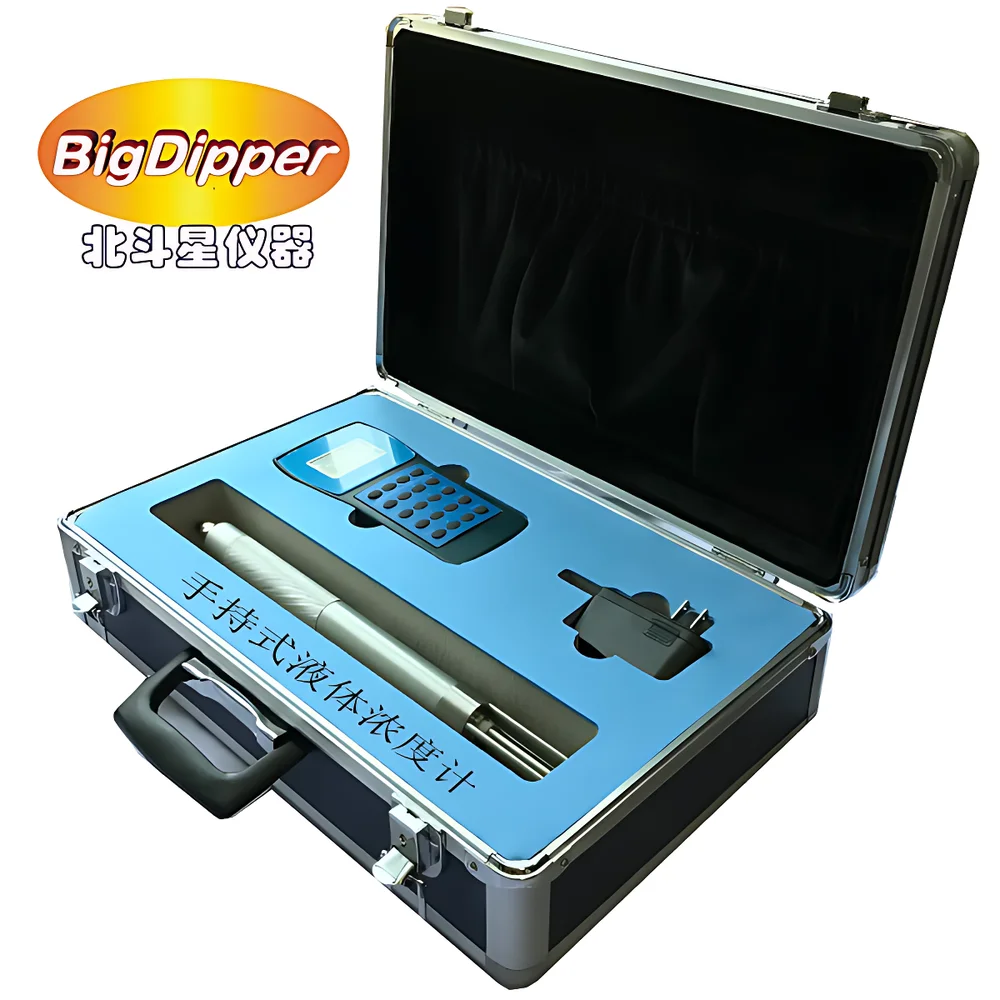
Bigdipper T-EMC1204 RF Attenuation-Based Electromagnetic Concentration Transmitter

| Brand | Bigdipper |
|---|---|
| Origin | Beijing, China |
| Manufacturer Type | Direct Manufacturer |
| Model | T-EMC1204 |
| Operating Temperature Range | 100–350 °C |
| Pressure Rating | 1.6–4.0 MPa |
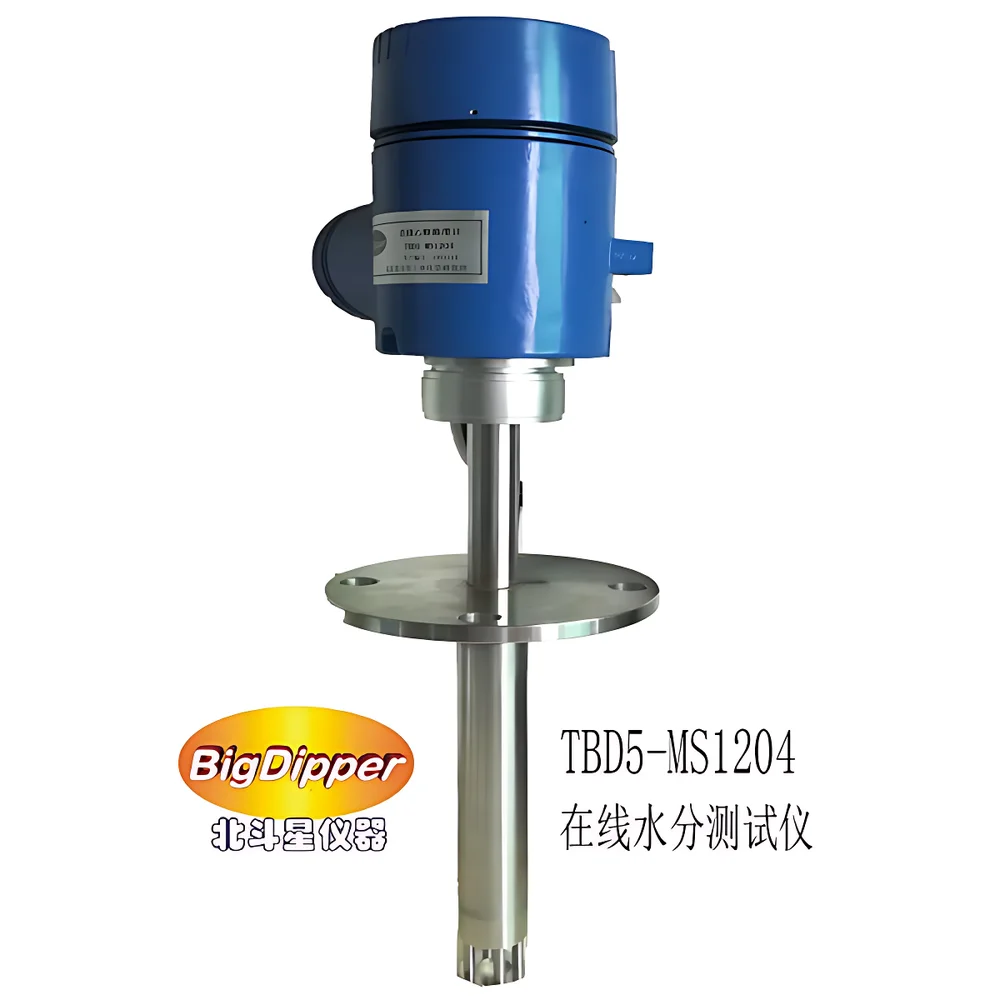
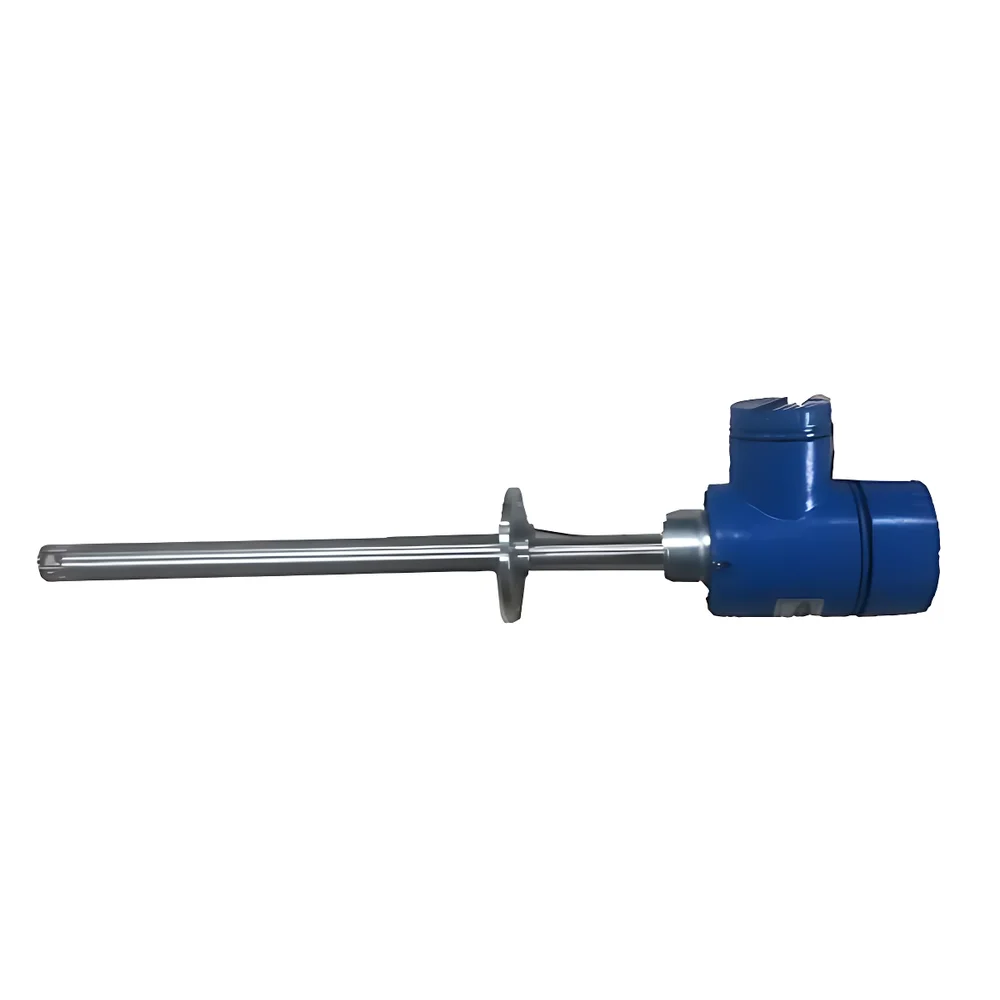
| Installation Type | Insertion-type (NPT 1″ or ZG1″) |
| Orientation | Vertical, flow-against mounting |
| Probe Length Options | 440 mm, 500 mm |
| Total Length | 800–850 mm |
| Weight | 4–7 kg |
| Measuring Principle | RF energy attenuation (related to imaginary permittivity ε″) |
| Typical Range | 0.02–100.1 wt% |
| Resolution | 0.02–0.05 % |
| Repeatability | ±0.05–0.1 % FS or ±0.1 % |
| Output | 4–20 mA (field-configurable), RS232/RS485, Modbus RTU, IEEE 1451.2 STIM |
| Enclosure Rating | NEMA 7/8/9 |
| Intrinsic Safety | Ex ia II CT6 |
| Wetted Materials | 1Cr18Ni9Ti stainless steel, polyimide |
Ask about pricing, availability and specifications.
Overview
The Bigdipper T-EMC1204 is an insertion-type electromagnetic concentration transmitter engineered for continuous, in-line measurement of binary liquid mixtures where components exhibit distinct dielectric loss characteristics—specifically, differences in the imaginary component of complex permittivity (ε″). Unlike conductivity-dominant sensors (e.g., EMC1124 or EMC1201), the T-EMC1204 operates on radio-frequency (RF) attenuation principles: a high-frequency electromagnetic field (typically in the 1–100 MHz range) is coupled into the process stream; as the mixture composition changes, energy absorption—governed primarily by dipole relaxation and ionic conduction losses—alters the amplitude of the transmitted signal. This enables robust quantification of relative concentration in aggressive media such as concentrated acids (e.g., HCl up to 40 wt%), caustic solutions, hydrocarbon–water emulsions, and polymer–solvent systems—without reliance on ionic mobility or electrode contact.
Key Features
- True non-contact RF sensing: No electrodes, no moving parts, no fouling-prone surfaces—designed for long-term stability in viscous, abrasive, or scaling process streams.
- High-temperature and high-pressure operation: Rated for continuous service up to 350 °C and 4.0 MPa, with wetted materials including ASTM A276 1Cr18Ni9Ti stainless steel and thermally stable polyimide insulation.
- Intrinsically safe architecture: Certified Ex ia II CT6 per IEC 60079-11, suitable for Zone 0/1 hazardous areas classified under Class I Groups A/B/C/D and Class II Groups E/F/G.
- Flexible installation: Standardized 1″ NPT or ZG1″ threaded insertion design; optimized for vertical, flow-against orientation to ensure representative sampling and minimize sediment accumulation.
- Multi-protocol digital interface: Supports Modbus RTU over RS485, IEEE 1451.2 STIM for smart transducer interoperability, and legacy RS232 diagnostics—enabling integration into DCS, SCADA, and IIoT edge platforms.
- Configurable analog output: Isolated 4–20 mA current loop with user-defined span mapping, compliant with NAMUR NE43 fault signaling standards.
Sample Compatibility & Compliance
The T-EMC1204 is validated for homogeneous, turbulent-flow conditions where phase distribution remains stable across the sensor’s active volume. It is not intended for multiphase slug flow, gas-entrained liquids, or highly aerated slurries without prior engineering assessment. Applications include refinery desalter effluent monitoring, acid regeneration circuits, polymerization reactor feed control, and edible oil–water separation. The instrument complies with electromagnetic compatibility requirements per IEC 61326-1 (industrial environment), meets mechanical safety standards per ISO 13849-1 (PL e), and supports audit-ready data integrity when paired with BD5xCD series transmitters featuring timestamped event logging. While not FDA 21 CFR Part 11–certified out-of-the-box, its dual-alarm relay outputs (one opto-isolated) and configurable hold-last-value behavior facilitate GMP-aligned process validation protocols.
Software & Data Management
Configuration and calibration are performed via the BD-ConfigSuite PC application (Windows-based), which provides guided setup wizards, real-time signal diagnostics, and multi-point span verification using certified reference mixtures. All configuration parameters—including damping time, linearization tables, alarm thresholds, and unit scaling—are stored in non-volatile memory with write-protection options. Field firmware updates are supported over RS485 using signed binary packages. For enterprise-level deployment, the IEEE 1451.2 STIM interface enables plug-and-play recognition in TEDS-aware systems, while Modbus register maps include diagnostic registers for sensor health (e.g., RF power stability, temperature drift compensation status, and impedance mismatch alerts).
Applications
- Petroleum refining: Real-time water-in-crude or water-in-fuel measurement upstream of electrostatic desalters.
- Chemical manufacturing: Continuous monitoring of H2SO4, HNO3, or NaOH concentration in recycling loops where electrode corrosion limits traditional methods.
- Food & beverage: Inline control of syrup–water blends or ethanol–water dilution in spirit production.
- Pharmaceutical intermediates: Concentration tracking of solvent–API suspensions during crystallization or extraction, provided suspension homogeneity is maintained by inline static mixers.
- Wastewater treatment: Detection of organic load shifts in anaerobic digester influent via dielectric loss signature changes.
FAQ
What physical property does the T-EMC1204 actually measure?
It measures RF signal attenuation magnitude at a fixed carrier frequency, which correlates empirically to the imaginary permittivity (ε″) of the process fluid—dominated by dipole relaxation and conductive losses.
Can it distinguish between two non-aqueous solvents with similar dielectric constants?
No—its resolution depends on measurable ε″ contrast. Binary systems require ≥15% difference in loss tangent (tan δ = ε″/ε′) for reliable discrimination.
Is calibration required for each new application?
Yes. A minimum two-point calibration using traceable reference mixtures is mandatory; optional multi-point linearization improves accuracy across wide ranges.
Does insertion depth affect measurement accuracy?
Yes. Depth must match the specified probe length (e.g., 440 mm) to position the sensing zone within the pipe’s fully developed flow profile—deviations >±5 mm introduce velocity-profile bias.
How is temperature compensation handled?
An integrated Pt100 RTD (IEC 60751 Class B) feeds real-time temperature to the transmitter’s embedded algorithm, applying fluid-specific ε″ vs. T correction curves stored in memory.
More from Bigdipper
View all Bigdipper products → Bigdipper EMC120A Portable Ethanol Concentration Analyzer
- Bigdipper HBD5-OPA4110TP Handheld Optical Turbidity-Based Fog & Aerosol Mass Concentration Analyzer
- Bigdipper T-BD5-SPM4210 Online Dust Concentration Monitor
- Bigdipper pGas2000-5S Portable Odor Measurement Instrument for Public Restroom and Environmental Odor Assessment