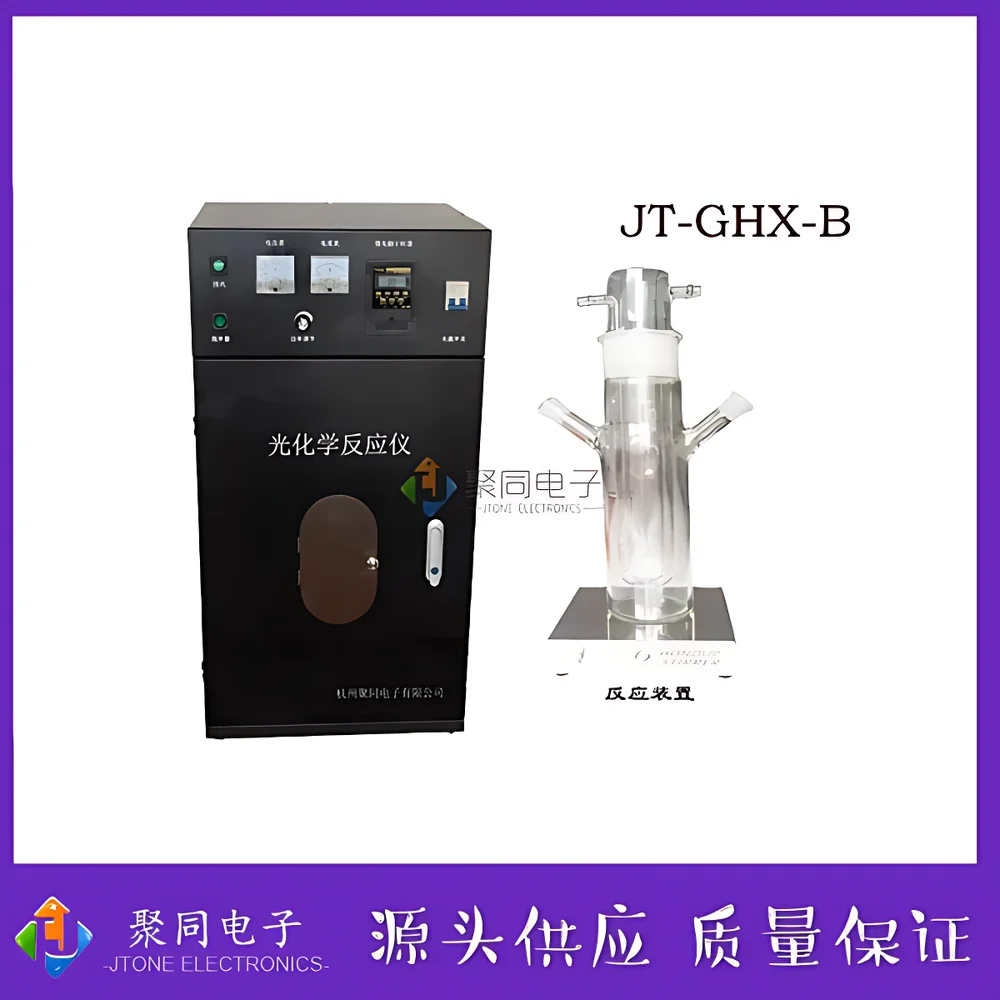

JTONE JT-GHX-AC Temperature-Controlled Photochemical Reactor with Integrated Light Source Management

| Brand | JTONE |
|---|---|
| Origin | Hebei, China |
| Manufacturer Type | Authorized Distributor |
| Country of Origin | China |
| Model | JT-GHX-AC |
| Price Range | USD 2,400 – 3,250 (FOB) |
| Component Category | Photoreactor System |
| Light Sources Supported | 1000 W Mercury Lamp, 1000 W Xenon Lamp, 500 W Metal Halide Lamp |
| Illumination Modes | UV and Simulated Visible Light |
| Sample Capacity | 8-position (configurable to 6 or 12) |
| Reaction Vessel Options | Quartz tubes (30 mL or 50 mL standard) |
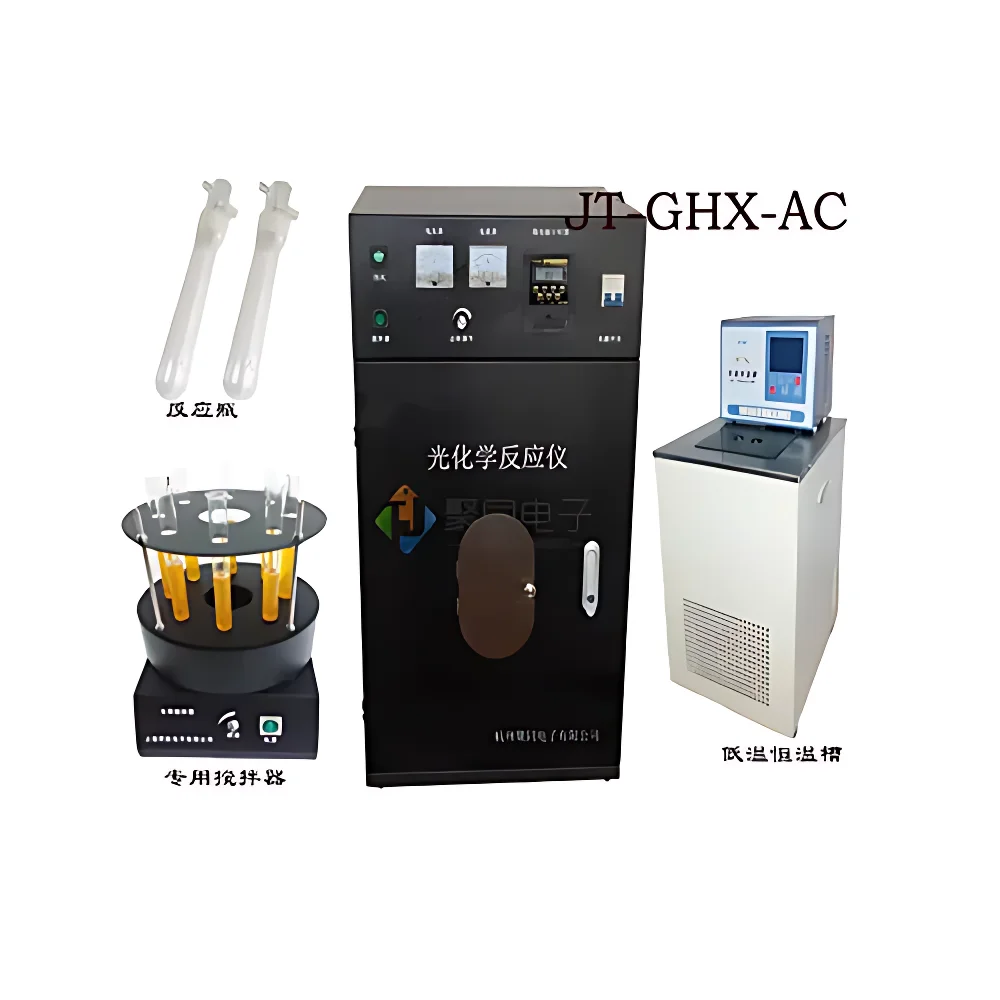
| Cooling System | Dual-layer quartz cold finger with external recirculating chiller (–5 °C to 100 °C control range, >1000 W cooling capacity) |
| Power Regulation | Continuous electronic dimming for all lamp types |
| Stirring | Synchronized magnetic stirring across all positions |
| Safety Features | Overtemperature cutoff, radiation-shielded reaction chamber with borosilicate observation window, high-voltage lamp housing |
| Compliance | Designed for GLP-compliant photochemical kinetics studies |
Ask about pricing, availability and specifications.
Overview
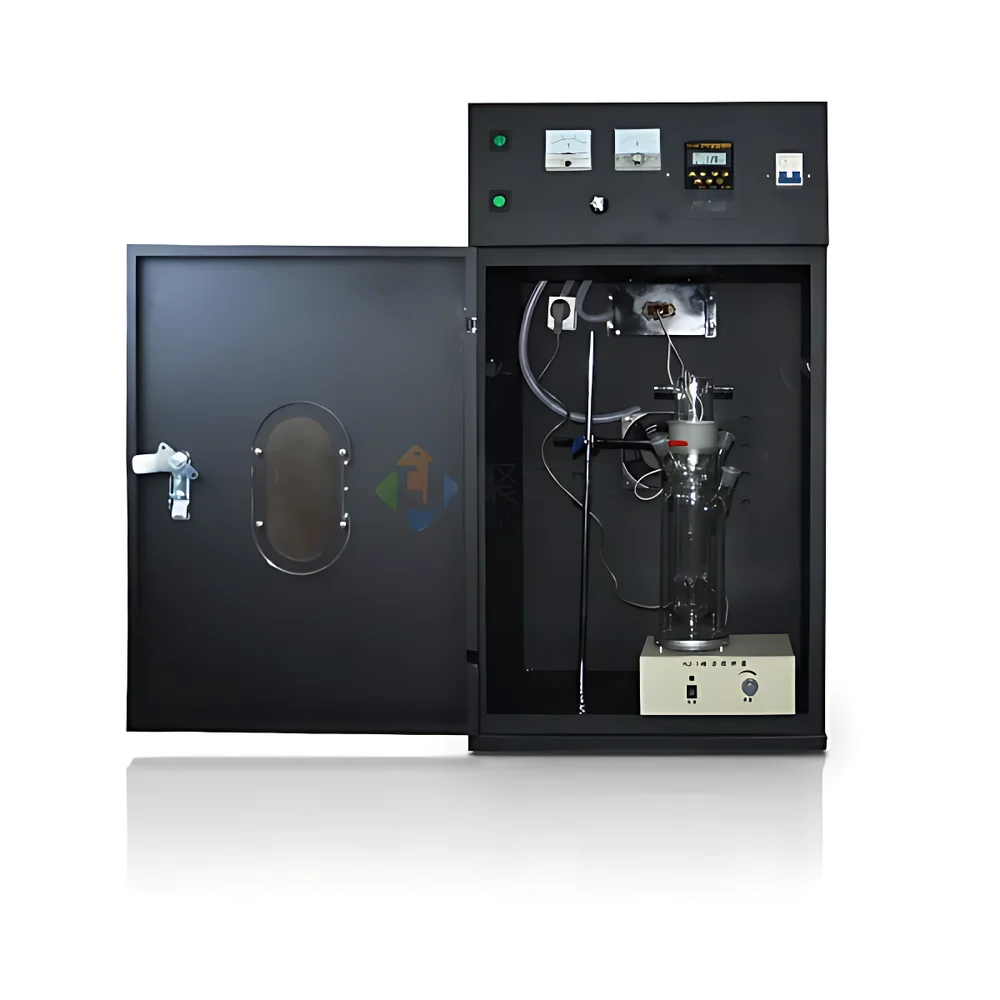
The JTONE JT-GHX-AC Temperature-Controlled Photochemical Reactor is an engineered platform for quantitative photochemical kinetics research under precisely regulated thermal and irradiance conditions. It operates on the principle of controlled photon delivery to catalytic or homogeneous reaction systems—enabling rigorous investigation of photocatalytic degradation (e.g., TiO₂-mediated oxidation), photolysis pathways, quantum yield determination, and light-driven synthetic transformations. Unlike generic illumination boxes, the JT-GHX-AC integrates spectral flexibility (UV through visible), active temperature management via dual-layer quartz cold-finger coupling, and synchronized mechanical agitation—ensuring reproducible photon flux distribution, minimized thermal gradients, and statistically robust reaction sampling. Its architecture supports both gas-phase and liquid-phase photochemistry in static or flow-through configurations, making it suitable for academic laboratories, environmental testing centers, and industrial R&D groups conducting photostability assessments per ICH Q1B or catalyst screening per ASTM E265-22.
Key Features
- Modular multi-lamp compatibility: Electronically stabilized power control for 1000 W mercury, 1000 W xenon, and 500 W metal halide lamps—each with continuous 0–100% dimming and real-time voltage/current monitoring.
- Thermally isolated reaction chamber: Radiation-absorbing interior lining with reinforced borosilicate observation window; dual-layer quartz cold finger enables direct immersion cooling while maintaining optical clarity and UV transmission down to 190 nm.
- Precision temperature regulation: External recirculating chiller (–5 °C to 100 °C range, >1000 W cooling capacity) interfaced via standardized quick-connect ports; integrated overtemperature safety cutoff prevents thermal runaway during exothermic photoreactions.
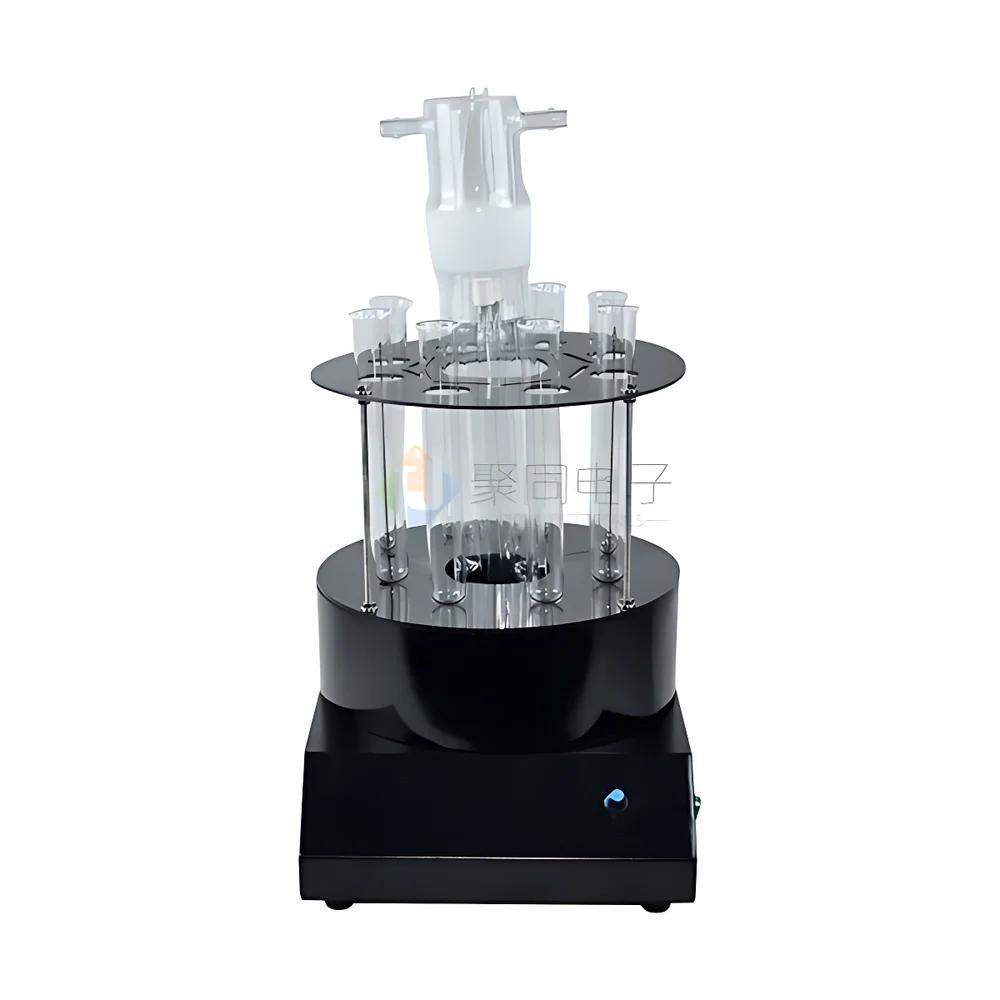
- Synchronized 8-position magnetic stirring: Independently adjustable speed control across all stations ensures uniform mass transfer and consistent photon exposure—critical for comparative kinetic studies across replicate samples.
- GLP-ready hardware design: Dedicated dual AC outlets (isolated for lamp and stirrer circuits), chassis-mounted water inlet/outlet manifolds, and lockable front access panel support audit-trail-capable operation in regulated environments.
Sample Compatibility & Compliance
The JT-GHX-AC accommodates standard quartz reaction tubes (30 mL and 50 mL) with optional custom geometries—including flat-bottom, side-port, and septum-sealed variants—for gas-tight photolysis or headspace analysis. Its open-platform configuration allows integration with online GC-MS, HPLC, or dissolved oxygen probes for real-time product quantification. The system complies with foundational photoreactor performance criteria outlined in ASTM E265 (Standard Practice for Determining the Quantum Yield of Photolysis Reactions), ISO 10677 (Photocatalytic Activity Measurement), and ICH Q1B (Photostability Testing of New Drug Substances and Products). While not certified for FDA 21 CFR Part 11 out-of-the-box, its hardware architecture supports third-party validation for electronic record integrity when paired with compliant LIMS or ELN software.
Software & Data Management
The JT-GHX-AC operates via embedded microcontroller firmware with local LCD interface—providing real-time display of lamp voltage, current, setpoint temperature, and elapsed irradiation time. No proprietary software is required for basic operation; however, RS-485 and analog 0–10 V outputs enable seamless integration with LabVIEW, MATLAB, or SCADA-based data acquisition systems for automated logging of irradiance profiles, thermal transients, and reaction timelines. All parameter changes are timestamped and stored in non-volatile memory—supporting retrospective traceability in GLP or ISO/IEC 17025-accredited labs. Optional USB-to-serial adapters allow export of operational logs (.csv) for post-hoc correlation with analytical instrument data.
Applications
- Environmental photocatalysis: Quantitative evaluation of pollutant degradation kinetics (e.g., methylene blue, phenol, pharmaceutical residues) under simulated solar or UV-A/B irradiation.
- Photostability screening: Accelerated light exposure testing of APIs, polymers, and coatings per ICH Q1B protocols—using defined irradiance spectra and controlled thermal boundary conditions.
- Quantum yield determination: Absolute measurement of photoreaction efficiency using actinometry (e.g., potassium ferrioxalate) with calibrated radiometric input.
- Heterogeneous photocatalyst development: High-throughput comparison of TiO₂, g-C₃N₄, BiVO₄, and MOF-based materials under identical irradiance and thermal loading.
- Photoinduced synthesis: Controlled generation of reactive intermediates (e.g., singlet oxygen, hydroxyl radicals) for C–H functionalization or polymer crosslinking studies.
FAQ
What lamp types are natively supported, and can spectral filters be added?
The system ships with 1000 W mercury, 1000 W xenon, and 500 W metal halide lamps. Standard 25 mm diameter filter holders (M25 thread) are integrated into the cold-finger assembly—accepting commercially available bandpass, longpass, and neutral density filters for spectral tuning.
Is the reaction chamber vacuum-compatible?
The standard dark box is rated for ambient pressure only. Vacuum or positive-pressure operation requires optional O-ring sealed quartz tube adapters and custom flange kits—available upon request with engineering review.
How is irradiance uniformity verified across the 8-position array?
Uniformity is validated using a NIST-traceable UV-A radiometer (320–400 nm) scanned at each tube position under standardized lamp output and cold-finger coolant flow. Typical spatial variation is ≤ ±8% RMS across the active zone.
Can the system be used for gas-phase reactions with continuous flow?
Yes—quartz tube caps with Swagelok®-compatible gas fittings (¼″ VCR or SS 1/8″ NPT) are available as accessories. Mass flow controllers and online FTIR/GC interfaces may be externally integrated via the chamber’s auxiliary port.
What maintenance intervals are recommended for lamp and cooling system longevity?
Lamp electrodes should be inspected every 200 h of operation; quartz cold fingers require quarterly ultrasonic cleaning in dilute nitric acid (5% v/v) to prevent mineral scaling. Chiller coolant must be replaced annually or per manufacturer specifications for glycol-water mixtures.
More from JTONE
View all JTONE products → JTONE JT-GHX-B Large-Capacity Photochemical Reactor, High-Pressure Resistant & Shockproof Design
- JTONE JTZL-6Y Integrated Ammonia Nitrogen Distillation System with 7-Inch LCD Touchscreen
- JTONE JTWB-10 High-Throughput Microwave Digestion and Extraction System
- JTONE JT-CXW-6 Automated Crude Fiber Digestion and Oil Absorption Analyzer