
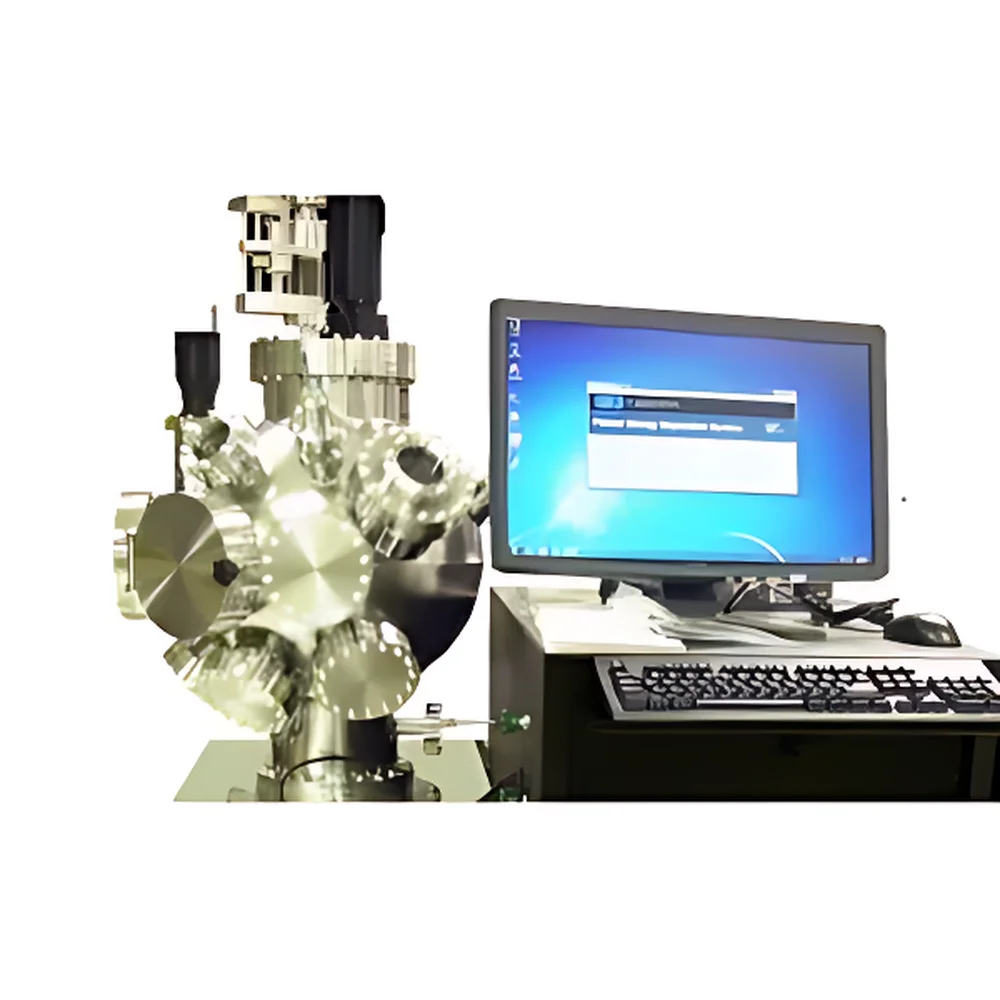
Pascal Pioneer 180 MAPLE PLD System

| Brand | Pascal |
|---|---|
| Origin | Netherlands |
| Model | Pioneer 180 MAPLE PLD |
| Vacuum Chamber Diameter | 18 in |
| Maximum Substrate Diameter | 2 in (50.8 mm) |
| Substrate Heating Range | Up to 500 °C (programmable) |
| Substrate Rotation Speed | 20 RPM |
| Target Stage | LN₂-cooled, single-target standard (multi-target optional) |
| Base Pressure | ≤5×10⁻⁸ Torr |
| Process Gas Flow Control | 50–100 SCCM MFC |
| Software Platform | Windows 7 + LabVIEW 2013 |
Ask about pricing, availability and specifications.
Overview
The Pascal Pioneer 180 MAPLE PLD System is a high-precision, ultra-high-vacuum thin-film deposition platform engineered for the controlled synthesis of functional organic, polymeric, and hybrid organic–inorganic films via Matrix-Assisted Pulsed Laser Evaporation (MAPLE). Unlike conventional pulsed laser deposition (PLD), which relies on direct UV laser ablation (5–6 eV) and often induces photochemical degradation in labile molecular species, MAPLE employs a cryogenically frozen target matrix—comprising the active material dissolved in a volatile, laser-absorbing solvent (e.g., acetone, toluene, or chloroform). Upon irradiation, the matrix absorbs the majority of the laser energy, undergoes rapid phase transition, and carries embedded solutes into the gas phase. The high vapor pressure of the frozen matrix ensures efficient desorption while minimizing thermal and photolytic damage to fragile organic moieties. This physical transfer mechanism preserves molecular integrity, stoichiometry, and conformational fidelity—critical for optoelectronic, bioactive, and stimuli-responsive thin films.
Key Features
- Integrated 18-inch-diameter stainless-steel UHV chamber with all-metal sealing and bake-out capability (≤150 °C), achieving base pressures ≤5×10⁻⁸ Torr
- Liquid nitrogen-cooled MAPLE target stage with real-time temperature monitoring and programmable freeze-cycle control
- Motorized, software-synchronized substrate rotation (0–20 RPM) and precise vertical translation (±1 mm resolution)
- Programmable resistive heater with closed-loop PID control, enabling uniform substrate heating from RT to 500 °C ±1 °C
- Dual-mode load-lock system for rapid, contamination-free sample exchange without breaking main chamber vacuum
- Modular source integration: optional co-deposition modules include pulsed electron deposition (PED), RF/DC sputtering, and DC ion beam sources
- Standard single-target configuration; multi-target carousel (up to 4 positions) available with automated indexing and shutter control
Sample Compatibility & Compliance
The Pioneer 180 MAPLE PLD accommodates substrates up to 2 inches (50.8 mm) in diameter or multiple 10 mm × 10 mm samples per run. Its design supports silicon wafers, fused silica, ITO/glass, flexible polymer foils (e.g., PET, PI), and single-crystal oxides (e.g., SrTiO₃, MgO). All wetted components comply with ASTM F568M Grade 8.8 stainless-steel specifications. Vacuum architecture conforms to ISO 2749 and EN 61000-6-3 electromagnetic compatibility standards. The system’s process repeatability meets GLP-aligned documentation requirements, supporting audit-ready operation under FDA 21 CFR Part 11 when paired with validated LabVIEW-based data logging and electronic signature modules.
Software & Data Management
Control and automation are implemented via a Windows 7–based interface built on LabVIEW 2013 runtime, providing deterministic real-time synchronization across laser firing, shutter actuation, substrate motion, temperature ramping, and gas flow modulation. All operational parameters—including pulse count, fluence (mJ/cm²), repetition rate (1–10 Hz), chamber pressure (via capacitance manometer), and substrate temperature—are logged with timestamped metadata at 100 Hz sampling. Export formats include CSV, HDF5, and TDMS for traceable post-processing in MATLAB, Python (NumPy/Pandas), or commercial statistical analysis suites. Optional add-ons include automated recipe management, interlock-driven safety logic, and remote diagnostics via secure TLS-encrypted VNC tunneling.
Applications
- Deposition of conjugated polymers (e.g., P3HT, PEDOT:PSS) for organic photovoltaics and OFETs
- Thin-film fabrication of biodegradable drug carriers (e.g., PLGA, chitosan) with preserved bioactivity
- Growth of peptide- and protein-based coatings for biosensor interfaces and neural implants
- Hybrid perovskite precursor layers (e.g., MAPbI₃ derivatives) with minimized halide segregation
- In-situ transfer-compatible film synthesis for angle-resolved photoemission spectroscopy (ARPES) and X-ray photoelectron spectroscopy (XPS) validation
- Multi-source combinatorial libraries for high-throughput materials discovery under identical vacuum history
FAQ
What distinguishes MAPLE from conventional PLD in terms of molecular preservation?
MAPLE decouples laser energy absorption from the functional material by embedding it in a volatile, UV-absorbing matrix. This prevents direct photon–molecule interactions, suppressing bond cleavage, cross-linking, and fragmentation commonly observed in standard PLD of organics.
Can the Pioneer 180 support in-situ surface analysis without air exposure?
Yes—the system integrates with industry-standard UHV transfer arms compatible with commercial XPS, AES, and LEED analyzers, enabling full characterization within <1×10⁻⁹ Torr vacuum environments.
Is the LabVIEW control software compliant with 21 CFR Part 11 for regulated R&D environments?
When deployed with optional electronic signature modules, audit trail logging, and user role-based access controls, the software satisfies core ALCOA+ (Attributable, Legible, Contemporaneous, Original, Accurate, Complete, Consistent, Enduring, Available) data integrity criteria.
What vacuum pumping configuration is recommended for optimal MAPLE performance?
A dual-stage pumping architecture is standard: turbomolecular pump (≥800 L/s for N₂) backed by a dry scroll pump, supplemented by a cryopump (optional) for enhanced solvent vapor capture during MAPLE runs.
Are custom target holders or substrate heaters available for non-standard geometries?
Yes—Pascal offers OEM engineering support for bespoke fixtures, including patterned heater arrays, electrostatic chucks, and low-thermal-mass ceramic substrates optimized for rapid thermal cycling.