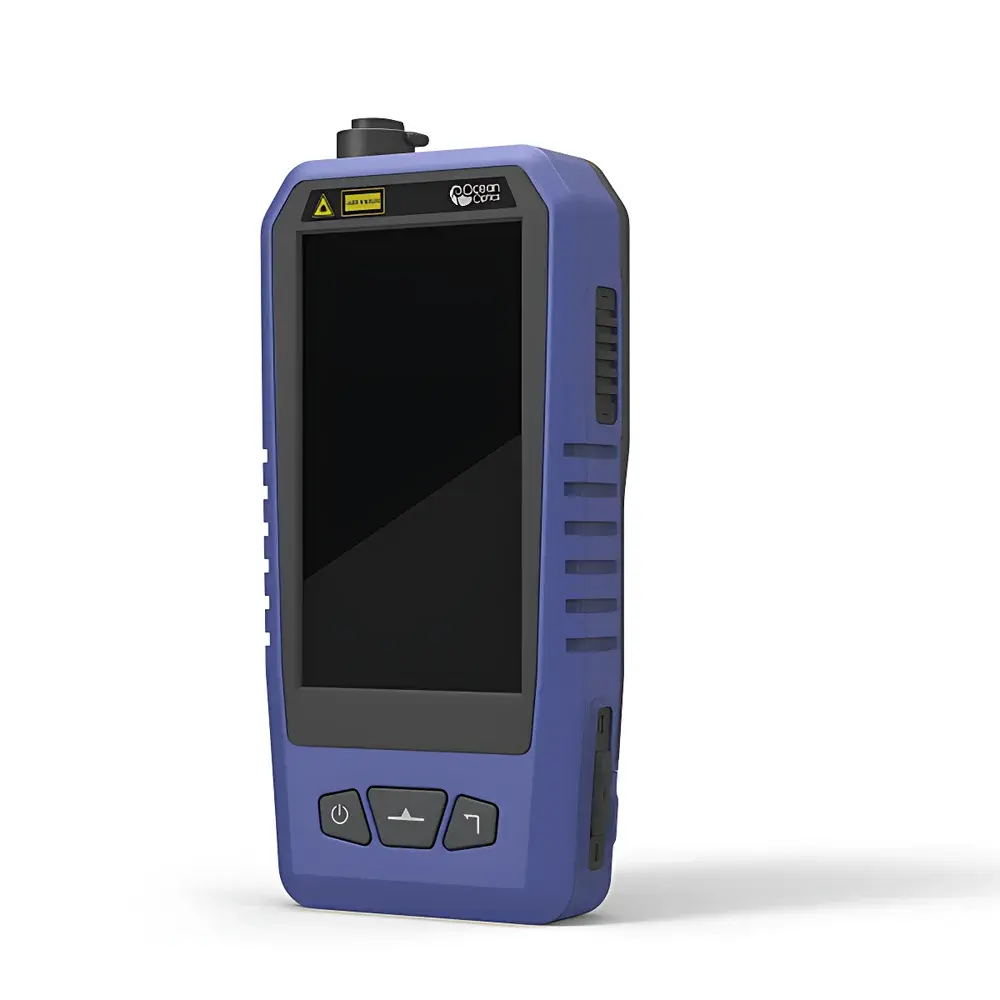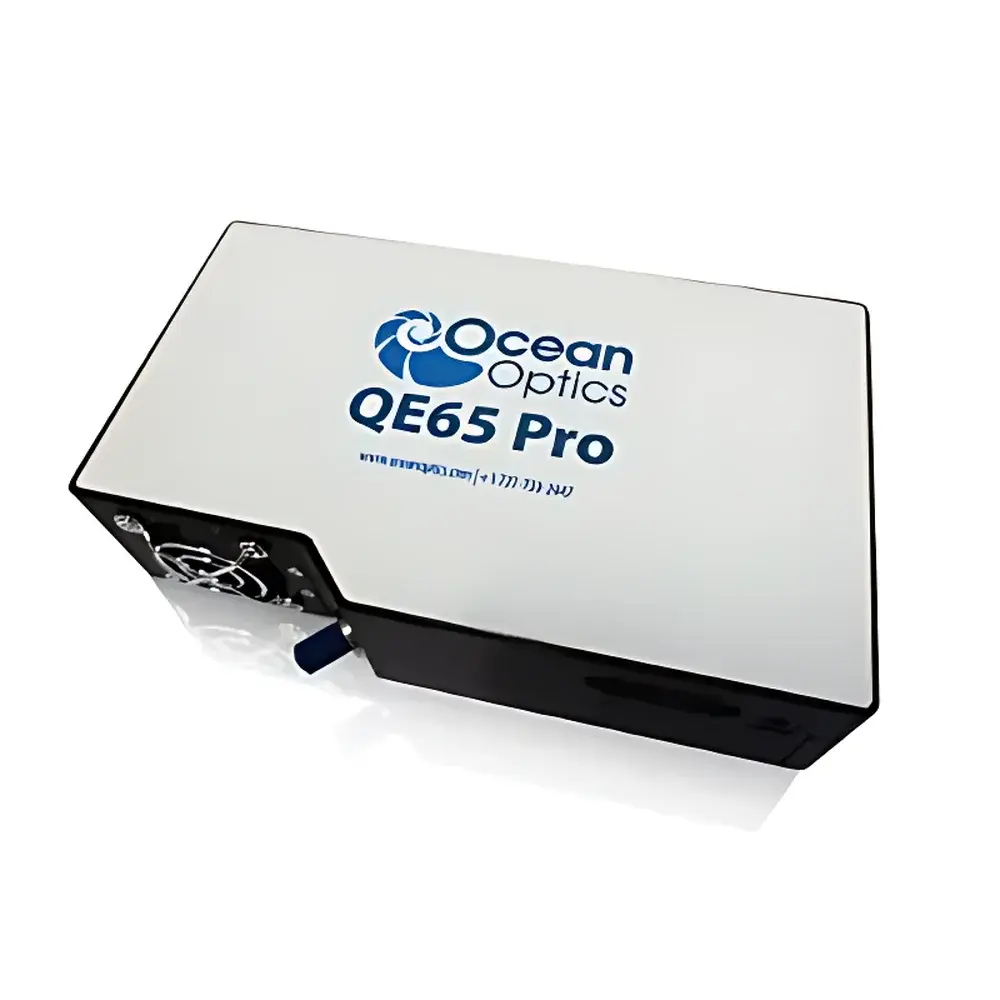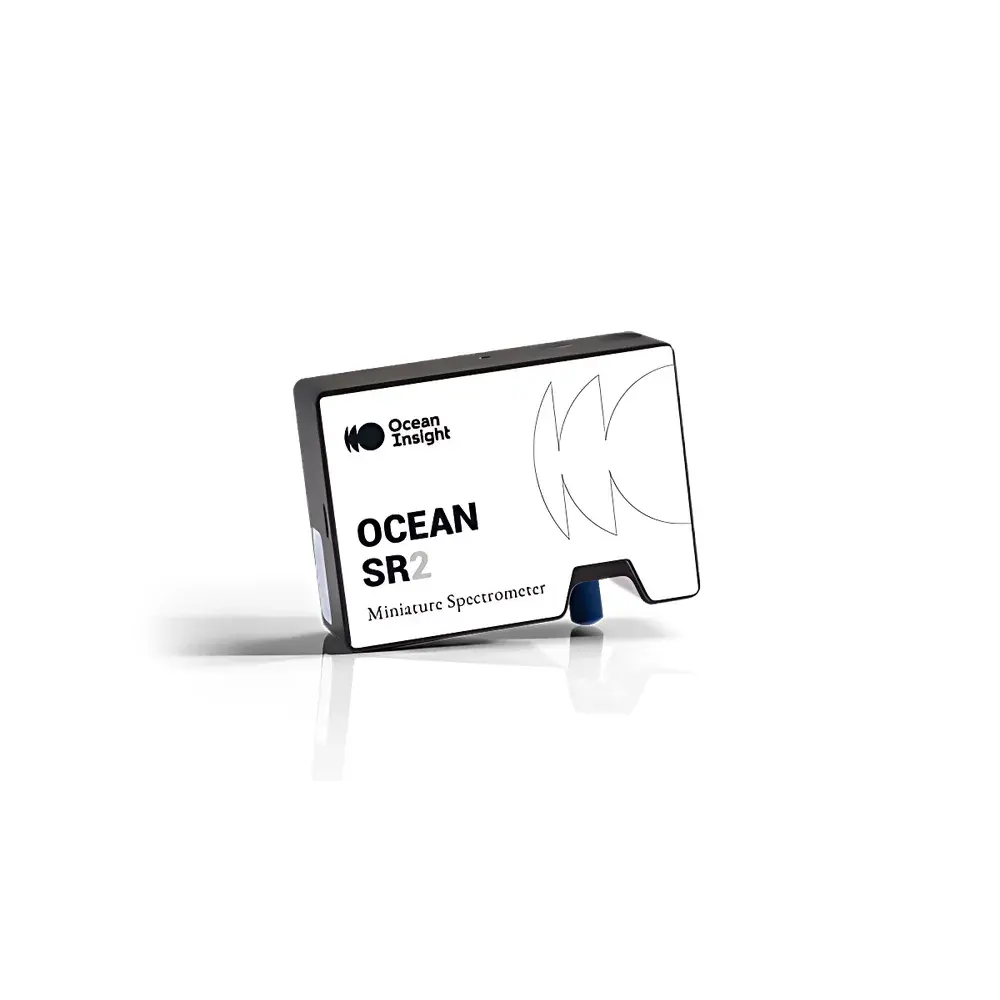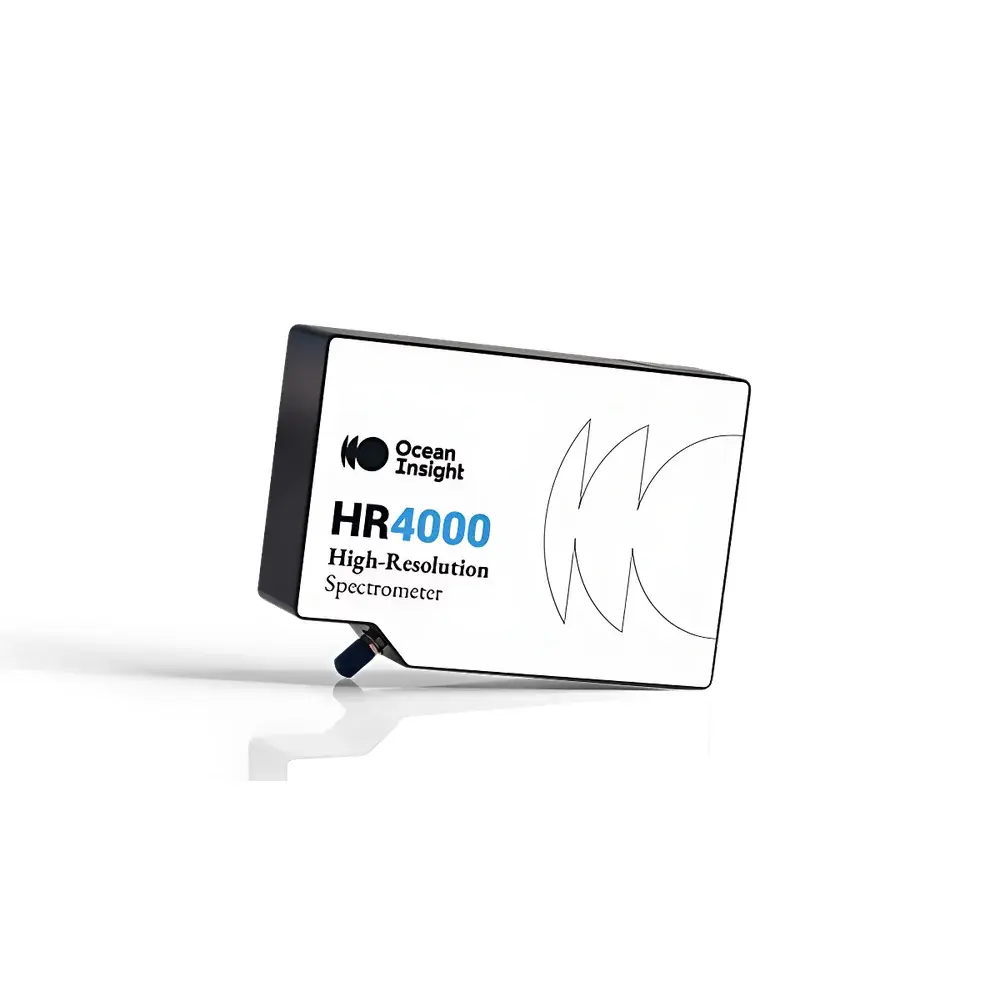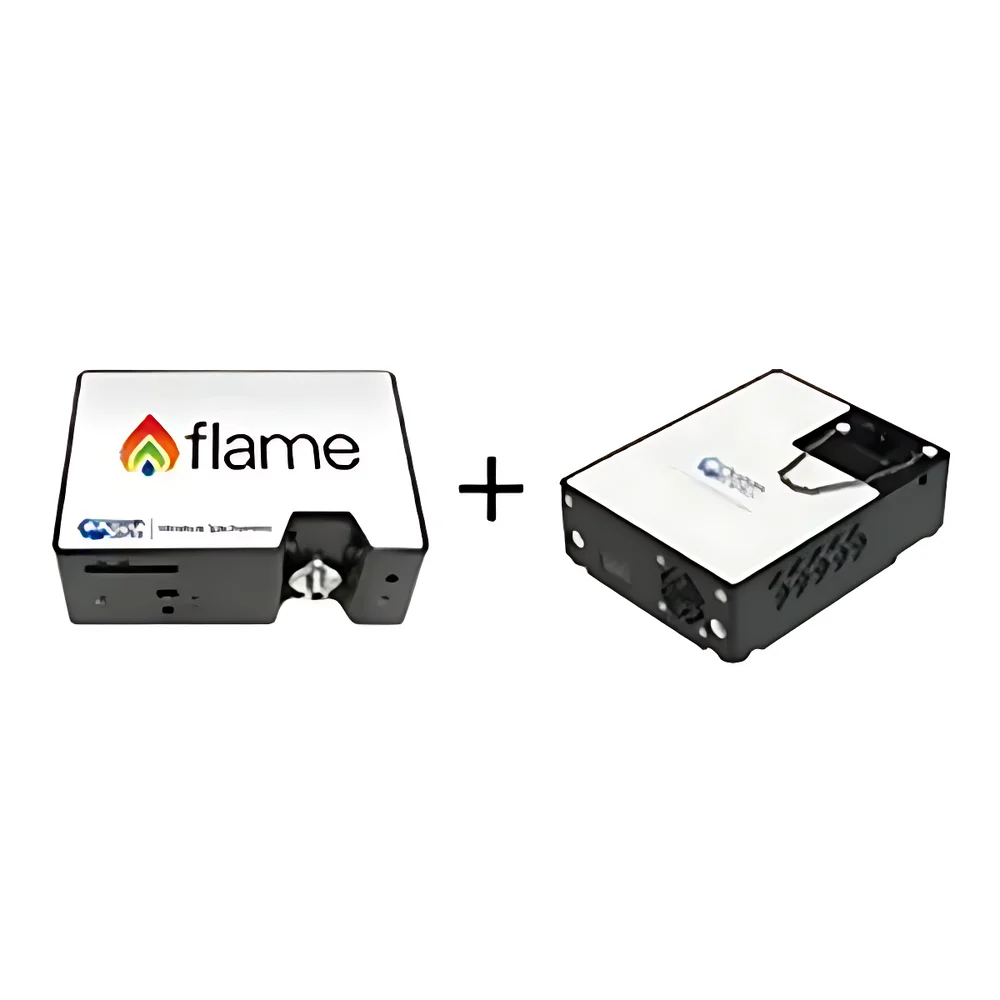
Ocean Optics FLAME-CHEM Compact UV-Vis Spectrophotometer

| Brand | Ocean Optics |
|---|---|
| Origin | USA |
| Manufacturer Type | Authorized Distributor |
| Product Origin | Imported |
| Model | FLAME-CHEM |
| Instrument Architecture | Dual-Wavelength Configuration |
| Detector Type | CMOS Linear Array |
| Wavelength Range | 190–850 nm (typical, configurable with grating selection) |
| Automation Level | Motorized Wavelength Scanning |
| Spectral Bandwidth (FWHM) | 1.2–5.0 nm (grating-dependent) |
| Wavelength Accuracy | ±0.5 nm |
| Wavelength Repeatability | ±0.1 nm |
| Stray Light | <0.05% at 220 nm, <0.02% at 600 nm |
Ask about pricing, availability and specifications.
Overview
The Ocean Optics FLAME-CHEM is a compact, research-grade UV-Vis spectrophotometer engineered for precision absorbance, transmittance, and reflectance measurements in academic teaching laboratories and quality-controlled analytical environments. Built upon Ocean’s proven FLAME optical platform, it employs a fixed-grating Czerny-Turner spectrometer architecture coupled with a thermoelectrically stabilized CMOS linear array detector. This design ensures high signal-to-noise ratio (SNR > 300:1 at full signal), low thermal drift, and robust spectral fidelity across the 190–850 nm range—covering deep UV through near-infrared wavelengths critical for quantifying organic chromophores, transition metal complexes, nucleic acids, and protein assays (e.g., Bradford, BCA). Unlike benchtop scanning instruments, the FLAME-CHEM acquires full spectra in a single integration cycle (as fast as 1 ms), eliminating mechanical wavelength drive latency and enabling kinetic studies, multi-point calibration workflows, and real-time monitoring of chemical reactions without spectral interpolation artifacts.
Key Features
- Compact footprint (125 × 89 × 40 mm) optimized for fume hoods, portable lab carts, and shared instrumentation spaces
- Dual-wavelength measurement capability via software-defined region-of-interest (ROI) extraction—enabling ratiometric analysis (e.g., A260/A280 for nucleic acid purity) without hardware modification
- Motorized slit and grating selection support (optional upgrade path) for dynamic resolution tuning between 1.2 nm and 5.0 nm FWHM
- Onboard memory and USB 2.0 interface compliant with USB Device Class 0x00 (no driver required on Windows/macOS/Linux)
- Integrated shutter and dark-reference acquisition sequence for automated baseline correction per measurement cycle
- NIST-traceable wavelength calibration performed at factory; user-accessible recalibration routine using mercury-argon emission lines
Sample Compatibility & Compliance
The FLAME-CHEM supports standard 10 mm pathlength cuvettes (square or rectangular), fiber-optic probe configurations (e.g., Ocean’s QP400-2-SR), and micro-volume platforms via optional adapter kits. Its optical design conforms to ISO 6507-2:2018 (spectrophotometer performance verification) and meets ASTM E275-21 criteria for photometric accuracy assessment. For regulated environments, the instrument operates within GLP-compliant data acquisition frameworks when paired with OceanView software configured for 21 CFR Part 11 audit trails—including electronic signatures, session locking, and immutable raw-data archiving. All firmware and calibration files carry SHA-256 checksums for integrity verification during QA/QC audits.
Software & Data Management
Controlled exclusively via OceanView v2.5+ (Windows/macOS), the FLAME-CHEM integrates native support for method templates, multi-curve overlay, derivative spectroscopy, and Beer-Lambert linear regression with residual error mapping. Raw spectral data exports in CSV, XML, and JCAMP-DX formats ensure interoperability with LIMS systems (e.g., LabVantage, Thermo Fisher SampleManager) and statistical packages (R, Python pandas). The software includes built-in compliance modules for IQ/OQ documentation generation, calibration log export (with timestamp, operator ID, and environmental metadata), and spectral library matching against NIST SRD-69 and EPA Compendium databases.
Applications
- Undergraduate chemistry labs: Quantitative analysis of KMnO₄, CoCl₂, and dye kinetics under guided inquiry protocols
- Pharmaceutical QC: Dissolution testing of immediate-release tablets per USP <711> using fixed-wavelength or full-spectrum deconvolution
- Environmental monitoring: Nitrate/nitrite detection in water samples via diazotization assays (EPA Method 353.2)
- Materials science: Thin-film thickness estimation from interference fringe analysis in transmission mode
- Food science: Anthocyanin content profiling in berry extracts using pH-dependent spectral shifts
FAQ
Is the FLAME-CHEM suitable for GMP-regulated manufacturing environments?
Yes—when deployed with validated OceanView software configuration, electronic signature modules, and documented IQ/OQ protocols, it satisfies ALCOA+ data integrity principles and supports FDA inspection readiness.
Can I replace the default grating to extend UV sensitivity below 190 nm?
No—the FLAME-CHEM optical housing uses fused silica windows and UV-enhanced coatings optimized for its specified 190–850 nm range; sub-190 nm operation requires vacuum UV instrumentation with purged or evacuated light paths.
Does the CMOS detector require external cooling for long-integration measurements?
No—integrated thermoelectric cooling maintains detector temperature within ±0.1 °C of setpoint (typically 15 °C), suppressing dark current drift even at 10 s integration times.
How is wavelength accuracy verified post-installation?
Users may perform traceable verification using the included Hg-Ar calibration lamp (Ocean part # HG-1); peak centroid analysis against NIST-certified emission lines (e.g., 253.65 nm, 435.83 nm) confirms compliance with ±0.5 nm specification.
Is fiber-optic coupling compatible with this model?
Yes—standard SMA 905 connectors support direct attachment of Ocean’s bifurcated reflection probes, immersion probes, or collimating lenses for non-cuvette sample geometries.