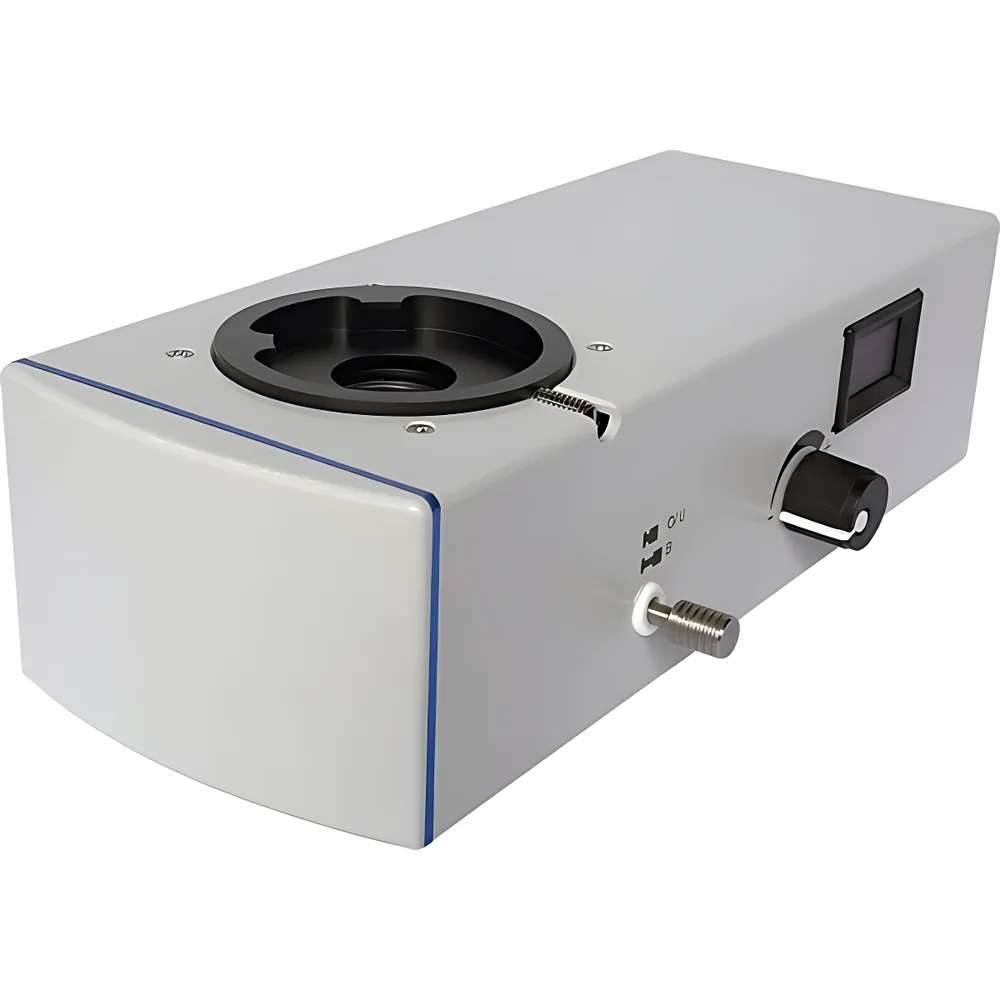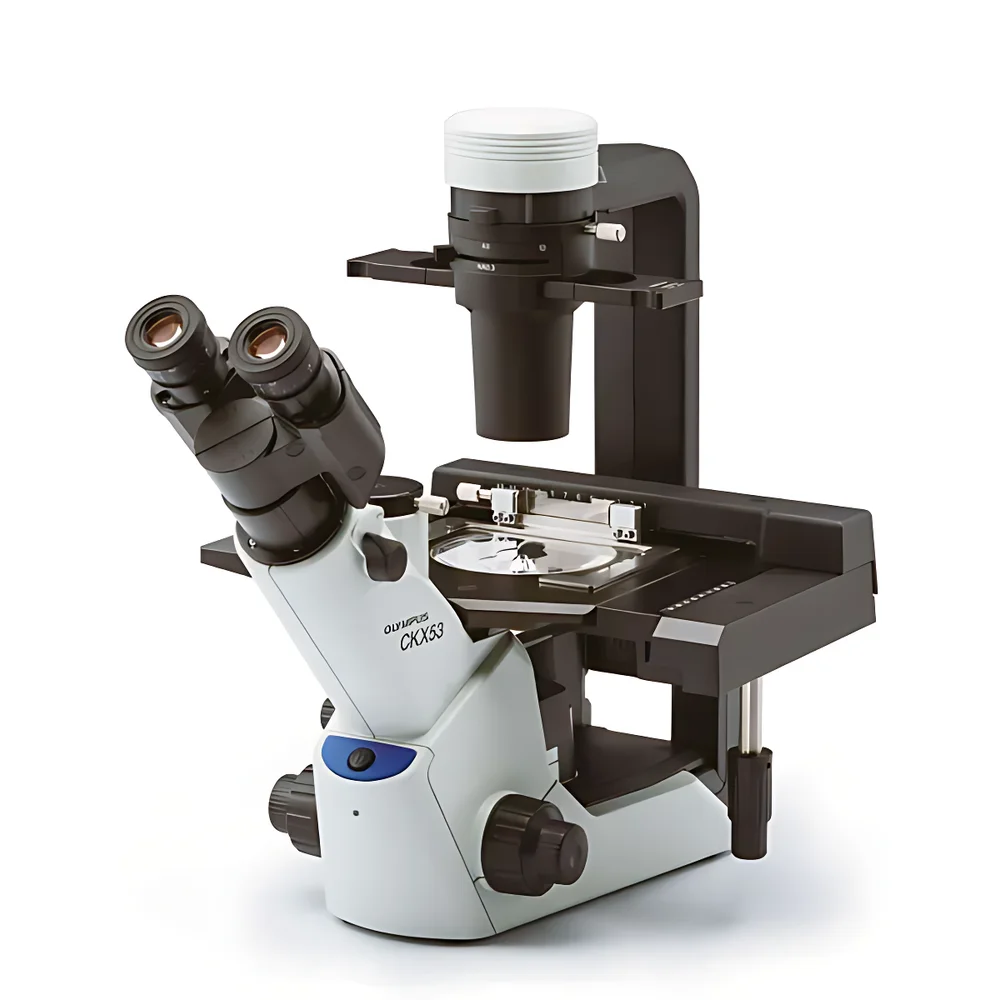
MingHui BG-LED-IMH Dual-Channel LED Fluorescence Attachment for Olympus CKX53 Inverted Microscopes

| Brand | MingHui |
|---|---|
| Origin | Guangdong, China |
| Manufacturer Type | OEM/ODM Producer |
| Country of Origin | China |
| Model | BG-LED-IMH |
| Illumination Mode | Internal (Integrated) Illumination |
| Light Source | Adjustable High-Power LEDs (Blue & Green Channels) |
| LED Lifetime | >20,000 hours |
| Intensity Control | 0–100% Linear Dimming |
| Observation Modes | Brightfield & Fluorescence |
| Fluorescence Channels | 2 (Blue & Green) |
| Blue Channel | EX 470/30 nm, DM 505 nm, EM 535/35 nm |
| Green Channel | EX 530/30 nm, DM 565 nm, EM 575 nm LP |
| Filter Switching Mechanism | Manual Rotating Slider |
| Optical Path Compatibility | Infinity-Corrected Microscopes (e.g., Olympus CKX53, MHIF2000, MHI-100) |
Ask about pricing, availability and specifications.
Overview
The MingHui BG-LED-IMH Dual-Channel LED Fluorescence Attachment is an engineered optical upgrade module designed specifically for inverted microscopes utilizing infinity-corrected optical pathways. It integrates two independently controllable high-stability LED excitation sources—blue (470/30 nm) and green (530/30 nm)—with matched dichroic mirrors and emission filters to enable precise, low-phototoxicity fluorescence observation in live-cell and fixed-sample applications. Unlike traditional mercury or xenon arc lamps, this solid-state illumination system eliminates warm-up time, reduces thermal drift, and delivers consistent spectral output over its rated lifetime (>20,000 hours). The attachment mounts directly into the internal illumination port of compatible inverted platforms—including the Olympus CKX53—without requiring external light guides or alignment optics, preserving native Köhler illumination geometry and minimizing stray light contamination. Its mechanical design conforms to standard DIN 29500 mechanical interfaces for infinity-corrected systems, ensuring axial parfocality and minimal image shift during channel switching.
Key Features
- Two-channel LED excitation system with independent intensity control (0–100% linear dimming) per channel, enabling quantitative fluorescence intensity modulation without neutral density filters.
- Manual rotating slider mechanism for rapid, repeatable, and backlash-free selection between blue and green fluorescence channels—or brightfield illumination—without realignment.
- Optimized filter sets meeting ISO 10934-1 spectral tolerance standards: blue channel (EX 470/30 nm, DM 505 nm, EM 535/35 nm); green channel (EX 530/30 nm, DM 565 nm, EM 575 nm LP).
- Compact, low-profile housing with matte black anodized aluminum finish, engineered for thermal stability and seamless aesthetic integration with Olympus CKX53 and other inverted microscope chassis.
- No external power supply required: powered via integrated DC input (12 V, 2 A), compatible with standard laboratory bench power adapters and uninterruptible power sources.
- Designed for compliance with IEC 61000-6-3 (EMC emissions) and IEC 62471 (photobiological safety), Class 1 LED hazard rating under normal operating conditions.
Sample Compatibility & Compliance
The BG-LED-IMH supports a broad range of biological specimens, including adherent mammalian cells (e.g., HeLa, NIH/3T3), primary neuronal cultures, zebrafish embryos, and tissue sections labeled with common fluorophores such as DAPI (via optional UV upgrade), FITC, GFP, Alexa Fluor 488, and SYTO dyes. Its internal illumination architecture maintains uniform excitation across standard 35 mm and 60 mm culture dishes, as well as multi-well plates (up to 96-well format with appropriate stage adapters). The system is compatible with both analog and digital fluorescence cameras (including sCMOS and EMCCD sensors) when used with standard C-mount or F-mount adapters. From a regulatory standpoint, the module supports GLP-compliant documentation workflows: all optical components are serialized, filter transmission data is traceable to NIST-calibrated spectrophotometry, and mechanical tolerances adhere to ISO 8578 (microscope accessory mounting interfaces).
Software & Data Management
While the BG-LED-IMH operates as a hardware-only illumination module, it is fully interoperable with third-party acquisition software packages—including Olympus cellSens, Nikon NIS-Elements, and open-source platforms such as Micro-Manager 2.0 and Python-based PyMicroscope—via TTL trigger inputs for synchronized exposure gating. Intensity levels can be logged alongside image metadata using standard TIFF header tags (e.g., ImageDescription, ExposureTime, LightSource). For audit-trail requirements under FDA 21 CFR Part 11, users may integrate the module into validated imaging workflows where illumination parameters are captured and timestamped within LIMS or ELN systems through serial or USB-to-TTL interface modules (available separately). Firmware updates—though infrequent due to LED driver stability—are delivered via secure HTTPS download and verified using SHA-256 checksums.
Applications
This attachment serves core applications in academic and industrial life science laboratories, particularly where long-term time-lapse imaging, routine QC of transfected cell lines, or high-throughput screening of fluorescent reporters is performed. Typical use cases include: monitoring GFP-tagged protein translocation during drug stimulation; assessing mitochondrial membrane potential using JC-1 dye under dual-excitation protocols; validating CRISPR-edited clones via co-expression of fluorescent markers; and performing basic immunofluorescence assays on cultured monolayers prior to downstream Western blot or RNA-seq analysis. Its compatibility with the Olympus CKX53 makes it especially suitable for shared-resource core facilities seeking cost-effective, low-maintenance fluorescence capability without replacing existing microscope infrastructure.
FAQ
Is the BG-LED-IMH compatible with non-Olympus microscopes?
Yes—it is mechanically and optically designed for any inverted microscope employing a standard infinity-corrected optical path and internal Koehler illumination port (e.g., MHIF2000, MHI-100, and select Nikon TS series models). Adapter rings are available upon request.
Can UV or red excitation channels be added?
Custom configurations with additional LED channels (e.g., 395 nm UV or 625 nm red) are available under OEM agreement; lead time and minimum order quantities apply.
Does the module support automated filter wheel integration?
The current version uses manual rotation; however, motorized filter turret variants (with RS-232/USB control) are offered as a configurable option for automated multi-channel acquisition.
What maintenance is required?
None beyond periodic cleaning of the front aperture lens with lens-grade solvent and lint-free wipes; LED drivers require no calibration or recalibration during service life.
Is technical documentation provided in English?
Yes—full English-language user manual, optical schematics, mechanical drawings (STEP/IGES), and CE/ROHS declarations are supplied with each unit.