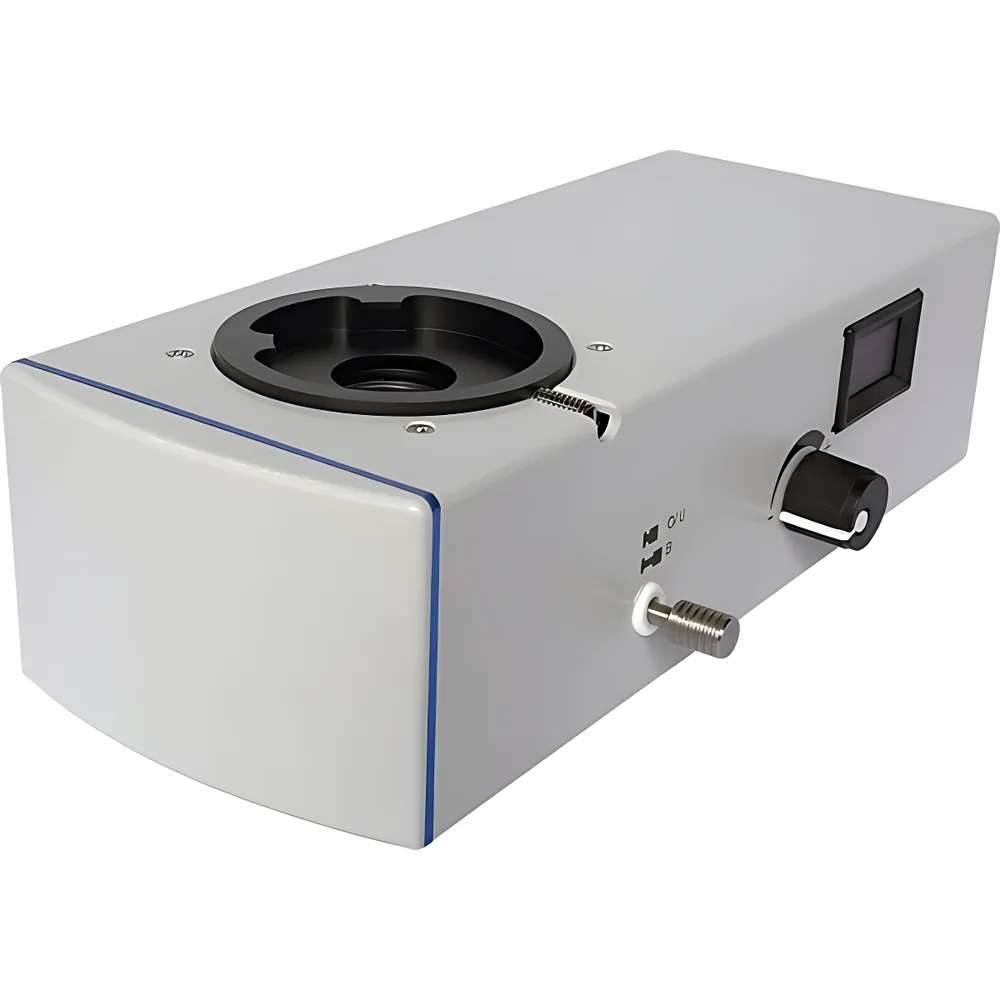
MingHui FL-BGU-MH Upright Six-Position LED Fluorescence Module

| Brand | MingHui |
|---|---|
| Origin | Guangdong, China |
| Manufacturer Type | Direct Manufacturer |
| Product Category | Domestic |
| Model | FL-BGU-MH |
| Light Source Type | High-Power Tunable LED Array |
| Illumination Mode | Internal (Epi-Illumination) |
| Excitation Channels | 6-position filter turret (UV/Blue/Green/Yellow/Red optional) |
| Standard Excitation Bands | DAPI (360/50 nm), FITC (475/35 nm), TRITC (530/40 nm) |
| LED Lifetime | >20,000 h |
| Intensity Control | 0–100% linear digital dimming |
| Observation Modes | Brightfield & Fluorescence |
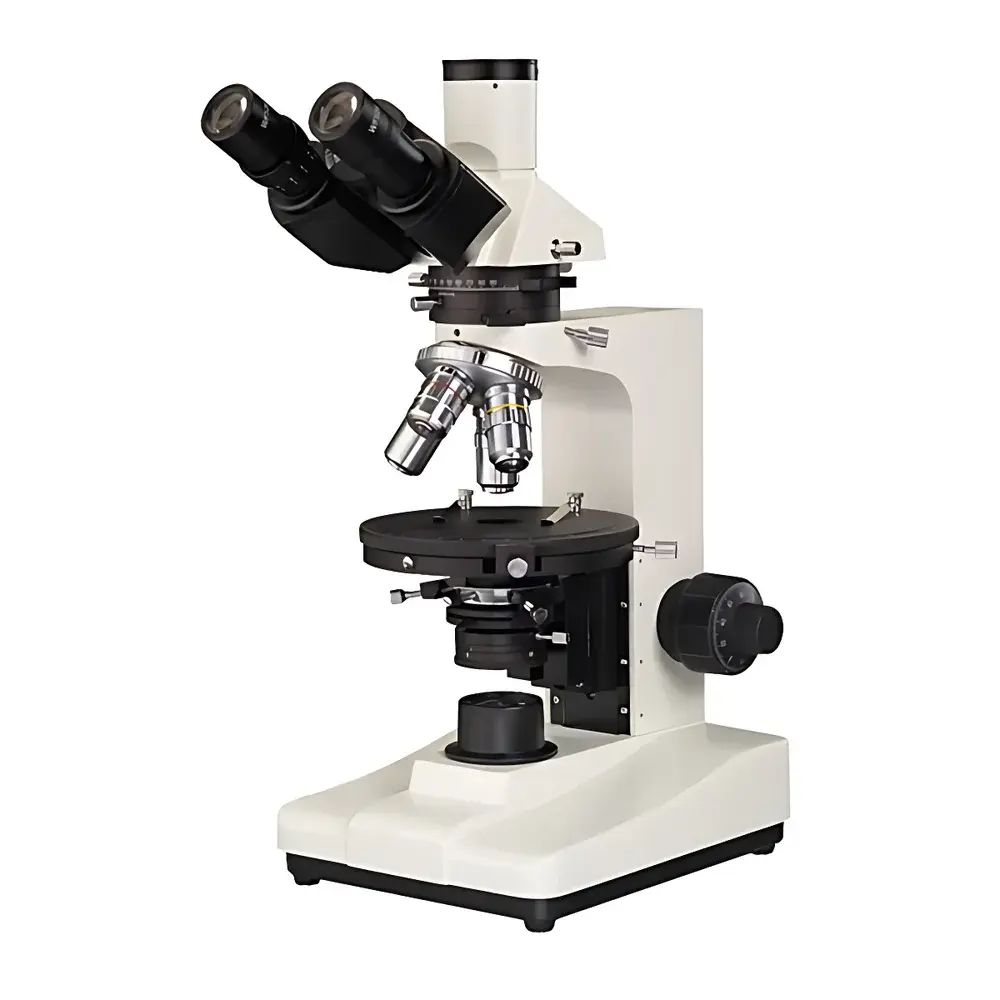
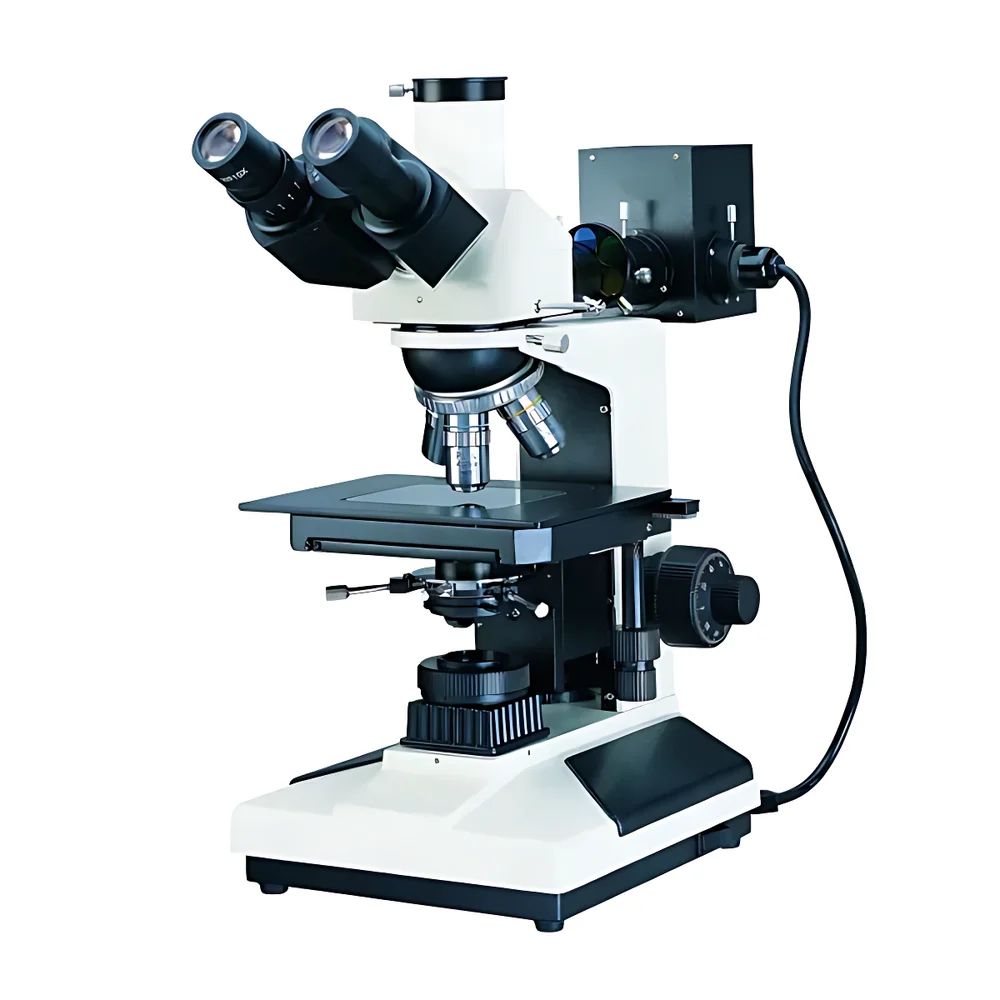
| Compatibility | Infinity-corrected upright microscopes (e.g., NE910, Olympus BX43/BX53, Zeiss Primo Star) |
| Display | Integrated digital intensity readout |
| Field of View | Expanded for full-frame sensor compatibility |
| Power Supply | 12 V DC, 2.5 A |
Ask about pricing, availability and specifications.
Overview
The MingHui FL-BGU-MH is an engineered six-position epi-fluorescence illumination module designed for integration with infinity-corrected upright biological microscopes. It employs a high-stability, multi-channel LED light engine featuring independently controllable UV (365 nm), blue (475 nm), and green (530 nm) excitation sources—each matched with standardized bandpass filters aligned to common fluorophore emission profiles (e.g., DAPI, FITC, TRITC). Unlike arc-lamp-based systems, this module operates on solid-state LED technology, eliminating warm-up delays, mercury vapor hazards, and spectral drift over time. Its internal epi-illumination architecture preserves the microscope’s native Köhler illumination path without optical realignment or mechanical modification—ensuring minimal perturbation to existing brightfield performance while enabling rapid, repeatable fluorescence mode switching via a precision-machined 6-position filter turret.
Key Features
- True plug-and-play integration with infinity-corrected upright platforms—including Olympus BX43/BX53, Ningbo Jiangnan NE910, Zeiss Primo Star, and other third-party systems compliant with 45 mm parfocal distance and standard nosepiece threading.
- Six-position filter turret supporting simultaneous configuration of up to six excitation/emission sets; includes factory-calibrated DAPI (360/50 nm), FITC (475/35 nm), and TRITC (530/40 nm) channels as standard—custom filter sets (e.g., Cy3, Cy5, Hoechst, Alexa Fluor® variants) available upon request.
- Digital-integrated intensity control with linear 0–100% dimming and real-time LED power readout via front-panel OLED display—enabling reproducible exposure settings across sessions and users.
- Optimized optical throughput: expanded field diameter (>22 mm) ensures uniform illumination across full-frame sCMOS and CCD sensors, reducing vignetting and improving quantitative signal consistency in wide-field imaging.
- Thermally managed LED array with passive heatsinking and current-regulated drivers—guaranteeing stable radiometric output over extended acquisition periods (>8 h continuous operation).
- No warm-up required; full spectral output achieved within <100 ms of activation—critical for time-sensitive assays and high-throughput screening workflows.
Sample Compatibility & Compliance
The FL-BGU-MH supports standard 1–2 mm thick glass slides, coverslips (No. 1.5), and multi-well plates (e.g., 96-/384-well formats) mounted on conventional mechanical stages. Its epi-illumination geometry is compatible with both fixed and live-cell preparations stained with conventional organic dyes (DAPI, FITC, TRITC), quantum dots, and fluorescent proteins (eGFP, mCherry). The module conforms to IEC 61000-6-3 (EMC emissions) and IEC 62471 (photobiological safety classification—Risk Group 1 for all configured LEDs under normal use). While not certified for clinical diagnostics per ISO 13485 or FDA 510(k), its design adheres to GLP-aligned documentation practices—including traceable calibration records for intensity linearity and spectral verification reports (available upon order).
Software & Data Management
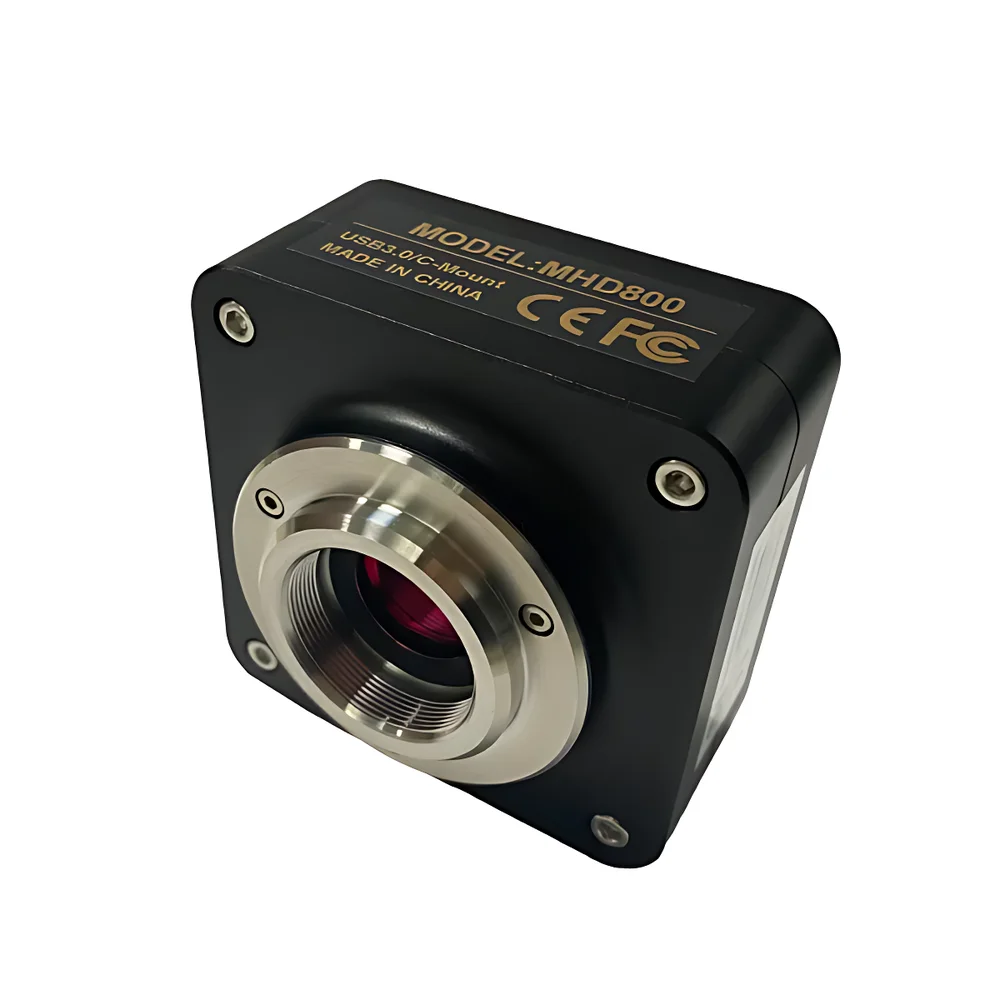
The module operates independently of proprietary software but integrates seamlessly with industry-standard imaging platforms including NIS-Elements (Nikon), ZEN (Zeiss), CellSens (Olympus), and open-source tools such as Micro-Manager and Fiji/ImageJ via TTL-triggered exposure synchronization. Digital intensity values are logged alongside image metadata when using supported camera interfaces (USB 3.0, Camera Link, or GigE Vision). Audit-trail-capable configurations—requiring external PC-based logging—support 21 CFR Part 11 compliance when paired with validated LIMS or ELN systems (e.g., LabArchives, Benchling) through timestamped export of LED power logs and turret position history.
Applications
This module serves core research and diagnostic support functions in academic, pharmaceutical, and public health laboratories. Validated use cases include: detection of Mycobacterium tuberculosis in Ziehl–Neelsen–modified auramine-rhodamine staining; immunofluorescent localization of autoantibodies in ANA testing for systemic lupus erythematosus; multiplexed viral antigen screening (e.g., SARS-CoV-2 nucleocapsid + ORF3a co-localization); and routine assessment of sperm morphology and viability in andrology labs. Its stability and repeatability make it suitable for longitudinal studies requiring inter-session intensity normalization—particularly where regulatory-grade documentation of illumination parameters is required.
FAQ
Can the FL-BGU-MH be used with non-infinity-corrected microscopes?
No—it requires an infinity-corrected optical pathway with a designated tube lens focal length (typically 180 mm) and matching mechanical tube length. Adapters for finite-conjugate systems are not supported.
Is spectral calibration data provided with each unit?
Yes—each module ships with a factory spectral verification report (measured at 1 mW/mm² irradiance, ±2 nm wavelength accuracy) and intensity linearity curve (R² ≥ 0.999 over 0–100% range).
What is the maximum permissible ambient temperature for continuous operation?
The module is rated for sustained operation at ≤35 °C ambient temperature with ≥10 cm clearance around heatsink surfaces.
Are replacement filter sets user-serviceable?
Yes—filter cubes are secured with M3 stainless screws and can be exchanged using standard 1.5 mm hex keys; no optical realignment is required post-replacement.
Does the module support TTL triggering for synchronized exposure?
Yes—TTL-compatible trigger input (5 V CMOS, negative edge) is provided via 4-pin Hirose connector for hardware-gated acquisition.