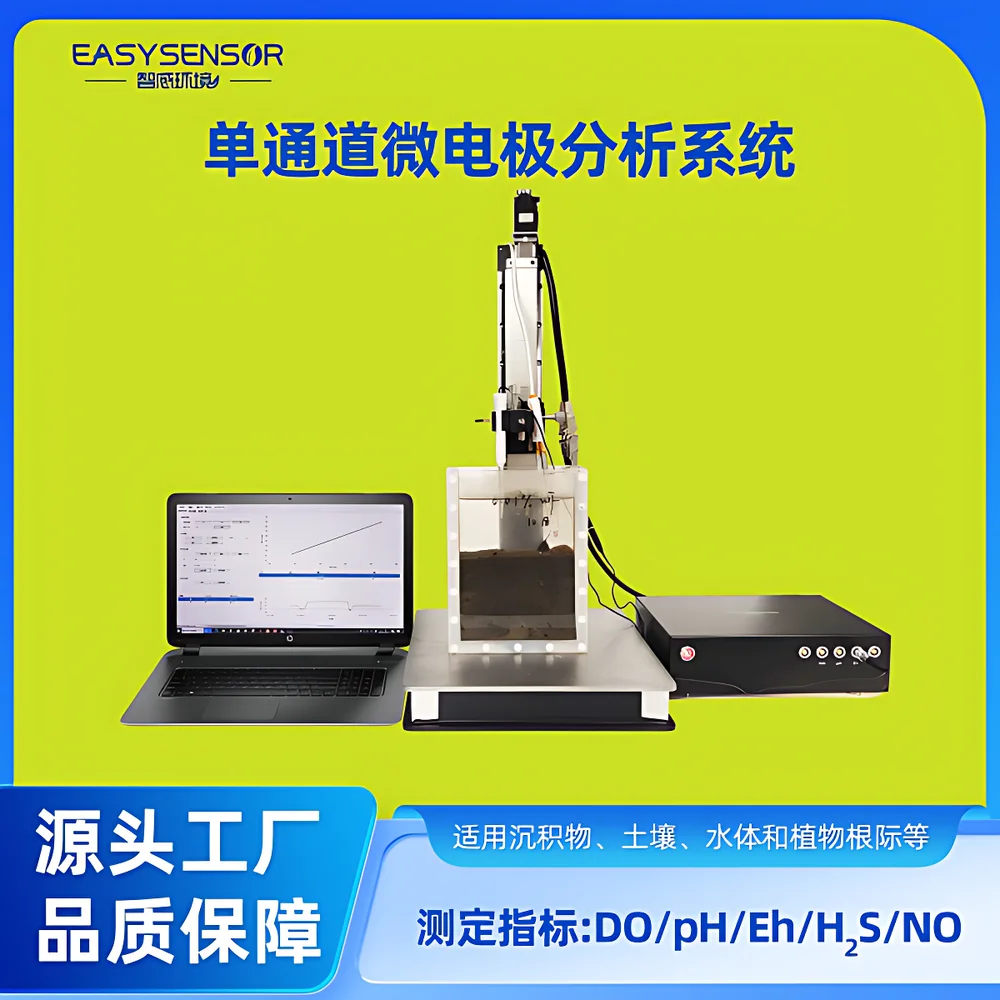
Micro1100-N (11) Single-Channel Microelectrode Analysis System for NO, pH, DO, Eh and H₂S Profiling in Biofilms and Rhizosphere Environments

| Brand | Easysensor |
|---|---|
| Origin | Jiangsu, China |
| Model | Micro1100-N (11) |
| Vertical Resolution | 5 µm step precision |
| Electrode Tip Diameter | 200 µm |
| Compatible Analytes | NO, pH, Dissolved Oxygen (DO), Redox Potential (Eh), Hydrogen Sulfide (H₂S) |
| Software | Easysensor MicroProfile v3.2 (single-channel acquisition & profile visualization) |
| Compliance | Designed for laboratory-based environmental simulation studies under GLP-aligned workflows |
Ask about pricing, availability and specifications.
Overview
The Easysensor Micro1100-N (11) is a single-channel microelectrode analysis system engineered for high-spatial-resolution profiling of key biogeochemical parameters across diffusion-limited interfaces. It operates on two fundamental electrochemical principles: potentiometric measurement (for pH and Eh, governed by the Nernst equation) and amperometric detection (for DO, H₂S, and nitric oxide [NO], based on controlled-potential reduction/oxidation currents). The system integrates a precision motorized micromanipulator with 5 µm step resolution, enabling automated vertical scanning through aqueous boundary layers, sediment porewater, rhizosphere zones, biofilm matrices, and algal mats. Unlike conventional macroelectrodes, its microfabricated sensors—featuring tip diameters down to 200 µm—minimize physical disturbance and preserve in situ chemical gradients during measurement. This architecture supports quantitative, non-invasive mapping of dynamic redox stratification, oxygen penetration depth, proton activity shifts, sulfide accumulation, and reactive nitrogen species distribution in complex heterogeneous media.
Key Features
- Precision Z-axis micromanipulator with 5 µm incremental movement and programmable depth sequencing for reproducible vertical profiling
- Interchangeable microelectrode modules calibrated for NO, pH, DO, Eh, and H₂S—each optimized for selectivity, low detection limits, and minimal interference in natural matrices
- Dedicated single-channel signal conditioning electronics with low-noise amplification and real-time analog-to-digital conversion (16-bit resolution)
- Easysensor MicroProfile v3.2 software: enables synchronized electrode positioning control, time-stamped data acquisition, depth-aligned profile visualization, and export of raw voltage/current vs. position/time datasets in CSV and MATLAB-compatible formats
- Modular design accommodating standard Ag/AgCl reference electrodes and compatible with third-party grounding or guard electrodes for improved signal stability in high-resistivity media
- Compact benchtop footprint (W × D × H: 320 × 380 × 240 mm) suitable for controlled-environment chambers, climate rooms, and glovebox-integrated setups
Sample Compatibility & Compliance
The Micro1100-N (11) is validated for use in laboratory-scale simulations of natural and engineered systems including freshwater and marine sediments, saturated soil columns, hydroponic rhizospheres, microbial biofilms on inert substrates, and photosynthetic algal mats. Its microelectrode geometry ensures minimal disruption to diffusive boundary layers—critical for accurate quantification of O₂ consumption rates, pH microgradients near root surfaces, and Eh transitions at redox clines. While not certified for field deployment, the system supports experimental protocols aligned with ASTM D3740 (standard practice for quality assurance of geotechnical laboratories) and ISO 11277 (soil sampling for physicochemical analysis). Data acquisition workflows are structured to support traceability requirements under GLP-compliant research frameworks; audit trails (user login, parameter settings, timestamped profiles) are embedded in project file metadata. Though not FDA 21 CFR Part 11–validated out-of-the-box, raw data files retain full provenance for integration into validated LIMS environments.
Software & Data Management
Easysensor MicroProfile v3.2 provides an intuitive interface for defining multi-point depth sequences, setting dwell times per position (100 ms to 10 s), applying real-time signal filtering (moving average, median), and generating 2D depth–time contour plots. All acquired signals undergo automatic unit conversion using preloaded calibration coefficients (e.g., mV → pH units, nA → µM O₂) and are stored with full metadata: electrode ID, calibration date, temperature reading (via integrated thermistor), and positional coordinates. Export options include ASCII-delimited tables for statistical analysis in R or Python, as well as vector-based SVG exports for publication-ready figures. Batch processing tools allow alignment and normalization of replicate profiles across treatments—essential for comparative studies of rhizosphere acidification kinetics or biofilm O₂ consumption dynamics.
Applications
- Rhizosphere biogeochemistry: Quantifying pH depression and O₂ depletion zones around living roots under varying nutrient or drought stress conditions
- Biofilm metabolic zoning: Mapping vertical O₂ and NO gradients across aerobic, denitrifying, and anoxic strata in wastewater biofilm reactors
- Sediment redox stratification: Resolving Eh transition depths in response to organic loading or microbial amendment (e.g., probiotic dosing in lake restoration trials)
- Plant tissue physiology: Measuring intra-fruit pH evolution during ripening—correlating electrochemical endpoints with sugar-acid ratios and volatile compound profiles
- Algal–bacterial consortia: Tracking diel cycles of DO, pH, and Eh in benthic cyanobacterial mats to infer net photosynthesis/respiration balances
- Soil redox dynamics: Monitoring Eh collapse and recovery during simulated flood–dry cycles in paddy soil mesocosms
FAQ
What electrochemical principles does the Micro1100-N (11) employ for different analytes?
It uses potentiometry (Nernstian response) for pH and Eh measurements, and amperometry (fixed-potential current detection) for DO, H₂S, and NO.
Can the system be upgraded to multi-channel operation?
No—the Micro1100-N (11) is a dedicated single-channel platform; multi-channel configurations require separate hardware architectures (e.g., Micro1100-M series).
Is electrode calibration performed in situ or ex situ?
Calibration is conducted ex situ using standardized buffer solutions (pH), dissolved O₂ saturation standards (DO), and redox couples (Eh); post-measurement drift correction is supported via reference point anchoring in software.
What is the typical response time for NO detection?
T90 is ≤ 2 seconds for 200 µm NO microelectrodes in aqueous media at 25°C, consistent with literature-reported performance for porphyrinic sensor coatings.
Does the software support automated calculation of diffusion coefficients or flux estimates?
No—profile-derived flux calculations (e.g., Fick’s first law integration) require external post-processing; however, depth-aligned concentration gradients are exported with precise positional metadata to enable such analysis.
More from Easysensor
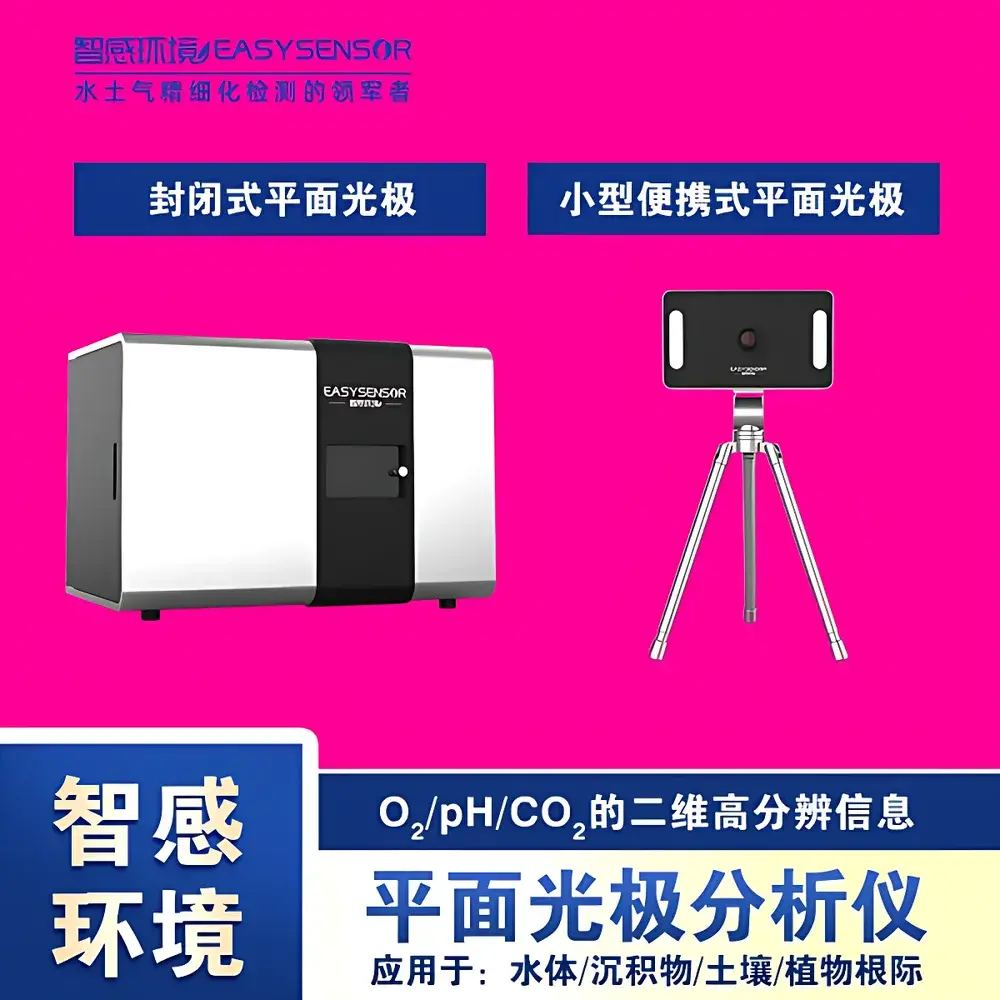
View all Easysensor products → High-Resolution Planar Optode Fluorescence Imaging Analyzer – Easysensor Planar Optode Analyzer (Model 02)
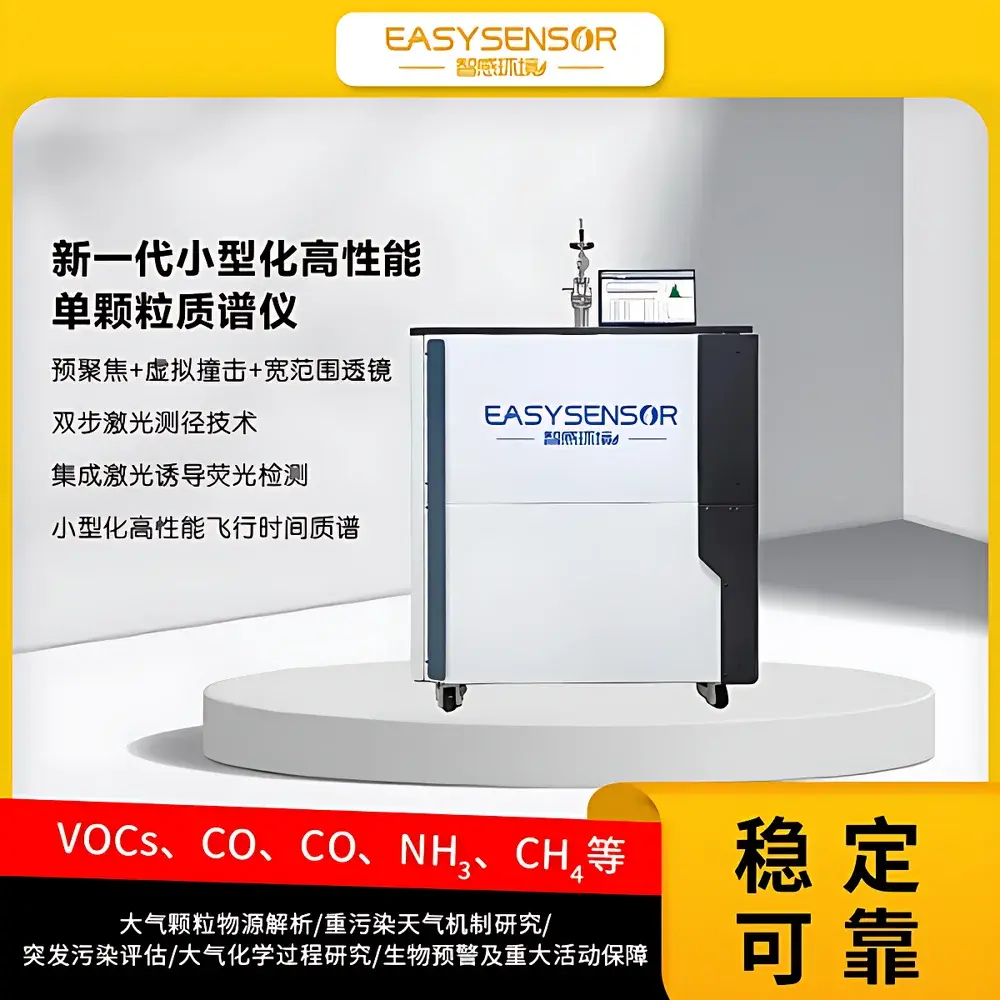
- Easysensor ZG-SPAMS 1000(15) Aerosol Single-Particle Time-of-Flight Mass Spectrometer
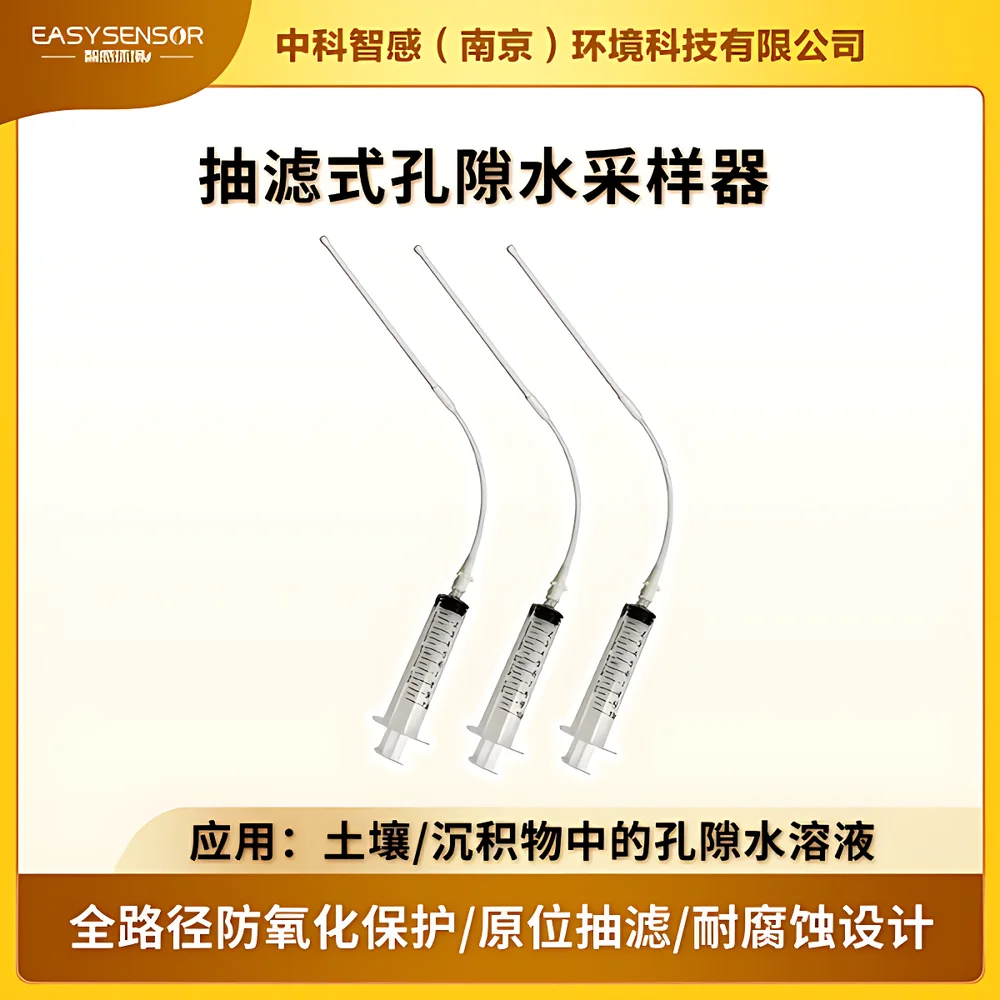
- Easysensor SFS-5/10 Series (03) Vacuum-Driven Pore Water Sampler with 0.40 µm Hydrophilized PVDF Filtration Membrane
- Easysensor RS-γ3000-Pro In-Situ Gamma Spectrometry Sensor for Real-Time Aquatic Radioactivity Monitoring