

Mitqi MITR Universal Lab Electric Heating Mantle

| Brand | Mitqi/MITR |
|---|---|
| Origin | Hunan, China |
| Manufacturer Type | Direct Manufacturer |
| Product Category | Domestic |
| Model | Universal Electric Furnace |
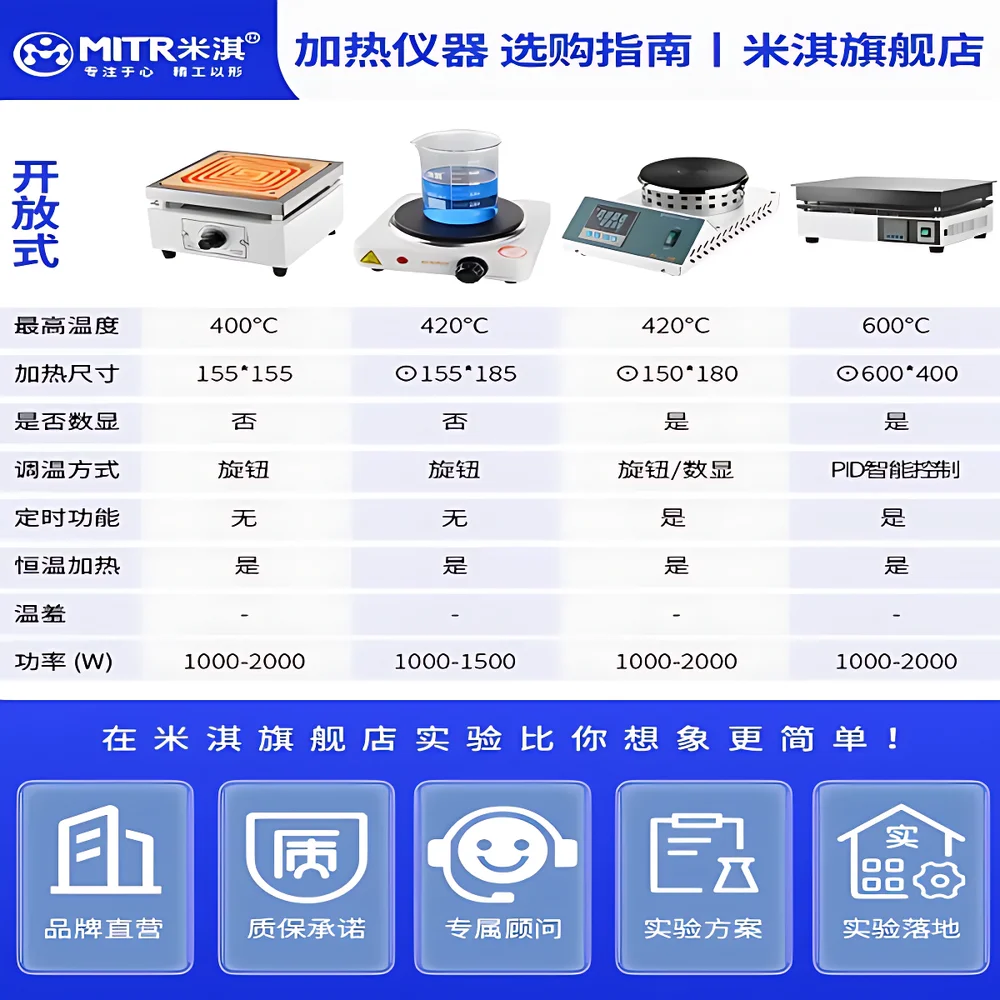
| Max Temperature | 400 °C |
| Temperature Control Accuracy | ±1 °C |
| Max Power | 500 W |
| Heating Method | Resistance Wire Heating |
| Control Interface | Analog Knob (4-Position Step Control) |
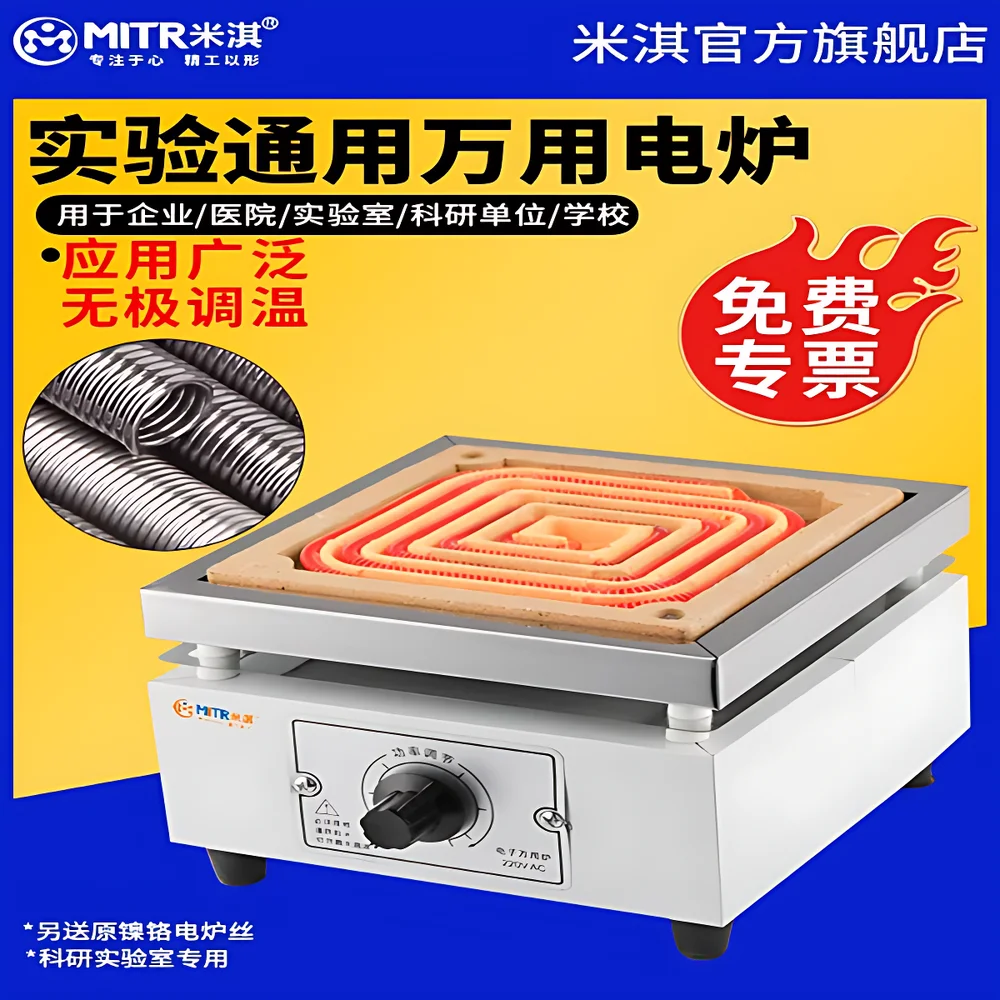
| Chamber Configuration | Benchtop Open-Top Heating Platform |
Ask about pricing, availability and specifications.
Overview
The Mitqi MITR Universal Lab Electric Heating Mantle is a compact, benchtop-grade resistive heating device engineered for precise thermal control in routine laboratory workflows. Unlike muffle furnaces—enclosed high-temperature ovens designed for ashing, sintering, or heat treatment—the Mitqi Universal Electric Furnace operates as an open-platform resistive heater optimized for direct contact heating of glassware (e.g., beakers, flasks, Erlenmeyer vessels) and small metal containers. Its operational principle relies on Joule heating via embedded nickel-chromium resistance wire, delivering stable thermal output across a defined temperature range up to 400 °C. This architecture prioritizes accessibility, rapid thermal response, and compatibility with standard lab glassware rather than atmospheric isolation or high-temperature uniformity. It is not intended for inert-atmosphere processing, calcination, or applications requiring ISO/IEC 17025 traceable calibration at elevated setpoints.
Key Features
- Four-step analog temperature control interface enables coarse but repeatable setpoint selection without digital programming overhead;
- ±1 °C temperature stability at steady state under nominal load conditions, verified per internal factory calibration protocol;
- 500 W maximum power draw ensures sufficient thermal capacity for volumes up to 1000 mL when heating aqueous or low-viscosity solvents;
- Open-top design allows real-time visual monitoring of sample state, stirring integration, and immediate access for pipetting or sampling;
- Robust ceramic-fiber insulation layer beneath the heating surface minimizes external surface temperature rise and improves energy efficiency;
- UL-listed internal wiring and over-temperature cut-off switch (mechanical bimetallic limiter) provide basic electrical safety compliance for Class I laboratory environments.
Sample Compatibility & Compliance
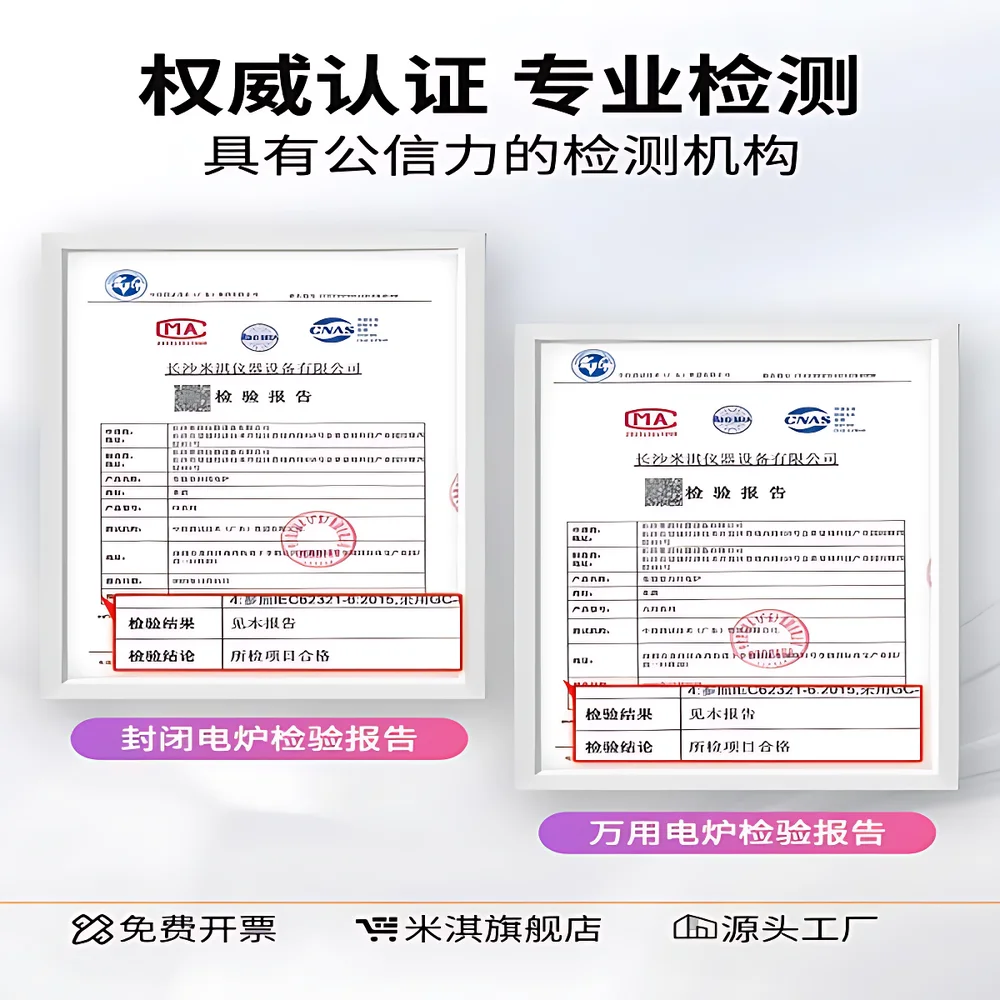
This unit accommodates standard borosilicate glassware (e.g., Pyrex®-compatible beakers from 50 mL to 1000 mL) and stainless steel containers with flat-bottom geometry. It is not suitable for quartz, polymeric, or thin-walled vessels prone to thermal shock. The device meets general safety requirements outlined in IEC 61010-1:2010 for electrical equipment used in laboratory settings. While not certified to UL 61010-1 or CE EN 61010-1 as a standalone product, its construction aligns with common baseline expectations for non-critical heating tasks in academic teaching labs, QC/QA screening, and preparative chemistry workflows. No regulatory documentation (e.g., FDA 21 CFR Part 11, ISO 17025 calibration certificate) is provided with standard configuration.
Software & Data Management
The Mitqi Universal Electric Furnace operates without embedded firmware, connectivity interfaces (USB, RS-232, Ethernet), or data logging capability. Temperature setting and monitoring are performed manually via the front-panel analog knob and integrated mechanical dial indicator. Users must employ external calibrated thermometers (e.g., Pt100 probe with digital readout) for independent verification of bath or vessel temperature during method validation or GLP-compliant procedures. No software drivers, cloud synchronization, or audit trail functionality is available. This design reflects its role as a foundational utility instrument—not a regulated process endpoint.
Applications
- Pre-heating reagents prior to reaction initiation in synthetic organic chemistry;
- Maintaining constant temperature during solvent evaporation or concentration steps;
- Supporting dissolution testing of solid dosage forms in pharmaceutical development labs;
- Providing controlled warming for viscosity measurements using rotational viscometers;
- Enabling gentle drying of filter papers, precipitates, or chromatography plates;
- Serving as a cost-effective alternative to hot plates in undergraduate teaching laboratories where programmability is unnecessary.
FAQ
Is this unit suitable for use with flammable solvents?
No. The open-heating architecture and lack of explosion-proof enclosure or vapor containment make it unsuitable for heating low-flashpoint liquids such as ether, acetone, or hexane.
Does the device include a temperature sensor or feedback loop?
It features a bimetallic thermostat for over-temperature protection only—not a closed-loop PID controller. Actual temperature at the vessel bottom may deviate from setpoint depending on load mass, ambient draft, and container thermal conductivity.
Can it be integrated into automated lab systems?
No. There are no analog voltage outputs, digital communication ports, or relay triggers for external system interfacing.
What maintenance is required?
Periodic inspection of the resistance wire housing for physical damage and cleaning of dust/debris from ventilation slots using compressed air. No scheduled recalibration is specified by the manufacturer.
Is a calibration certificate included?
No. Calibration documentation must be obtained separately through third-party accredited laboratories if required for quality assurance protocols.
