
HAAKE Viscotester™ 3 Portable Rotational Viscometer
| Brand | HAAKE |
|---|---|
| Origin | Germany |
| Model | Viscotester™ 3 |
| Instrument Type | Rotational Viscometer |
| Viscosity Range (L-spindle) | 1.5 mPa·s – 1,300 mPa·s |
| Viscosity Range (R-spindle) | 30 mPa·s – 400,000 mPa·s |
| Rotational Speed | 62.5 rpm |
| Temperature Capability | up to 150 °C |
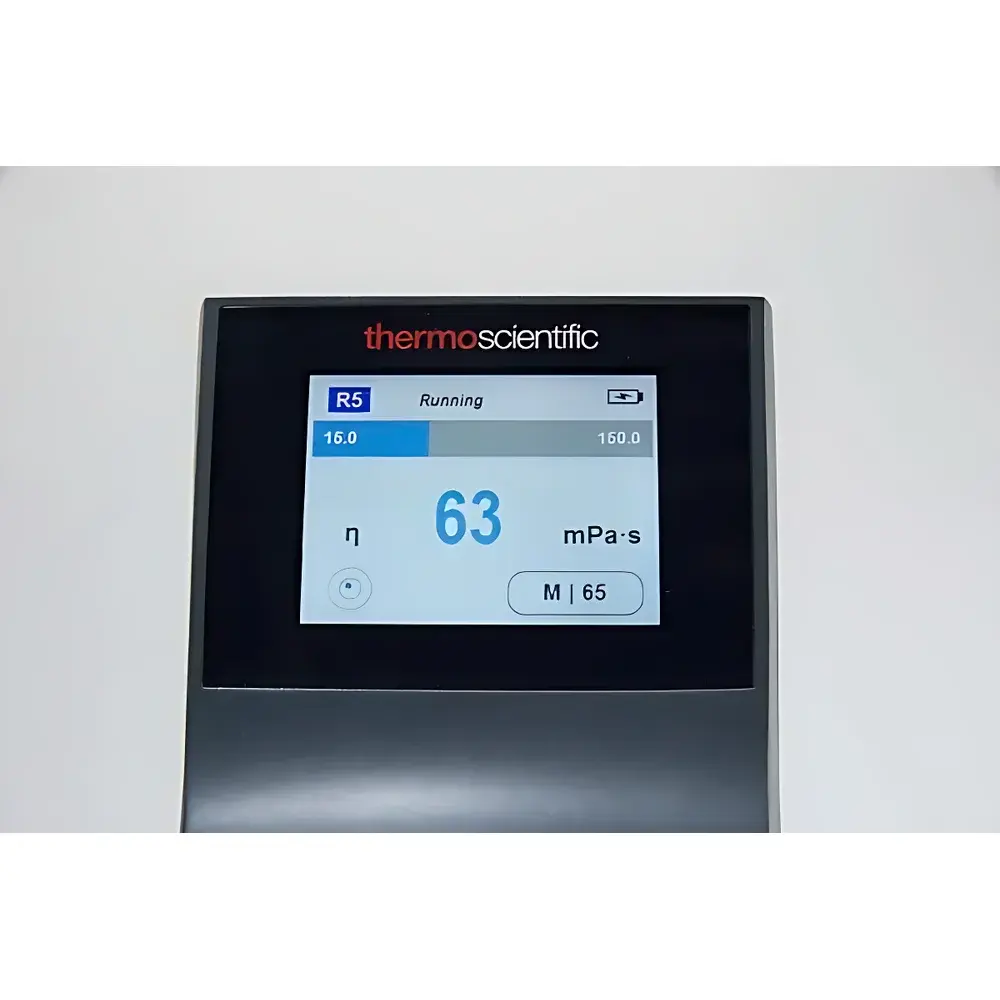
| Display | 2.4-inch adjustable-brightness color LCD |
| Power Supply | Rechargeable battery or external AC adapter |
| Calibration | Electronic auto-leveling sensor |
| Accuracy | ±5% FSD (R1–R3), ±7.5% FSD (R5), ±10% FSD (R4) |
| Unit Options | mPa·s or dPa·s (1 dPa·s = 100 mPa·s) |
| Spindle Compatibility | Fully compatible with HAAKE Viscotester 1 Plus, 2 Plus, 01, and 02 series |
Overview
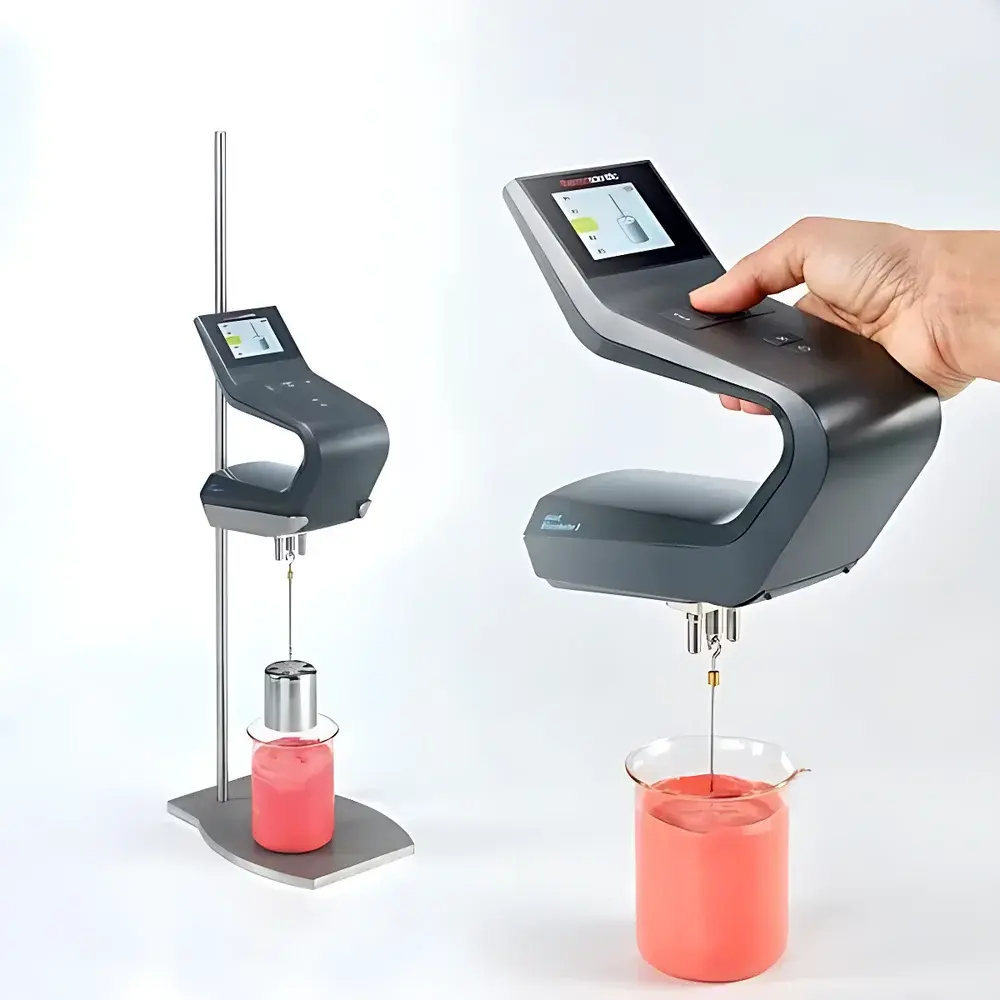
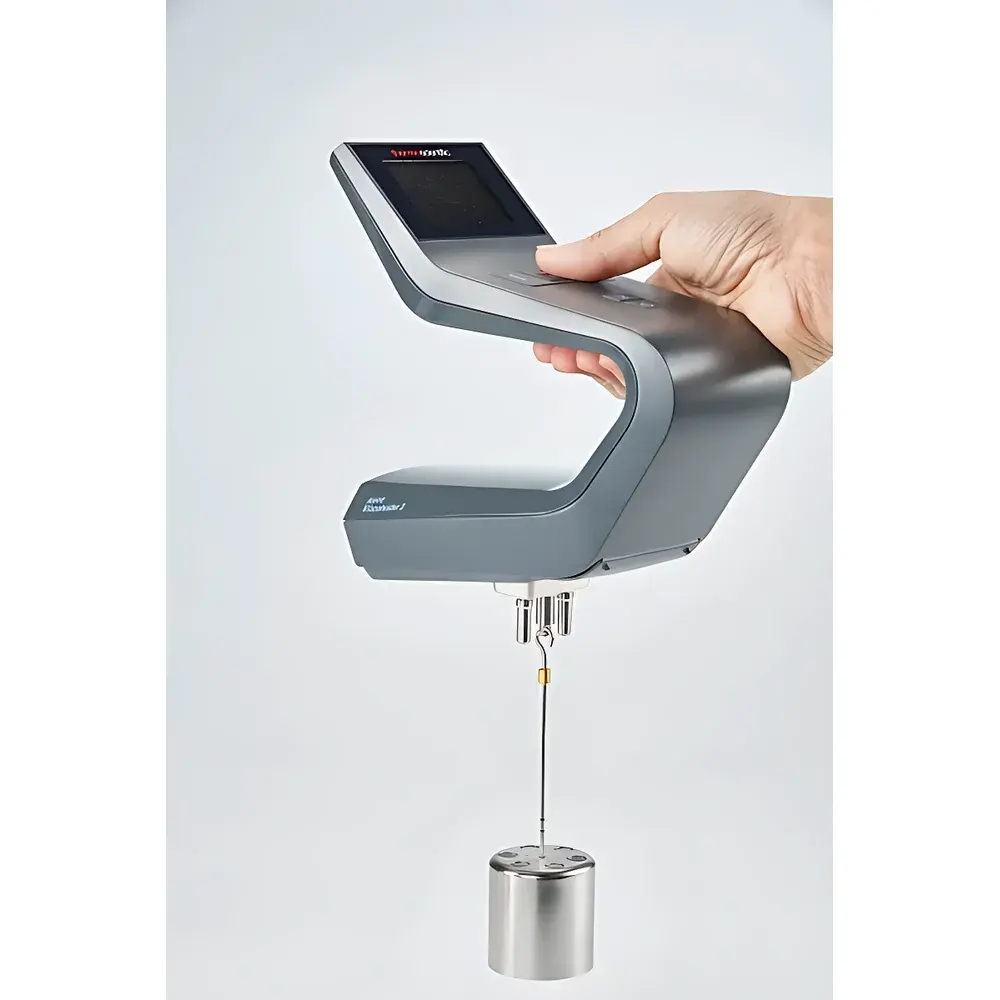
The HAAKE Viscotester™ 3 is a handheld rotational viscometer engineered for precision, portability, and operational robustness in demanding industrial and quality control environments. Based on Couette flow rheometry principles, it measures dynamic viscosity by rotating a spindle immersed in the sample at a fixed shear rate (62.5 rpm), detecting torque resistance via a calibrated electromagnetic sensor. Its compact, ergonomic design integrates an electronic auto-leveling system that compensates for minor angular deviations—whether operated freehand or mounted on a lab stand—ensuring consistent measurement geometry and minimizing operator-induced error. Unlike benchtop viscometers requiring dedicated workstations, the Viscotester™ 3 delivers laboratory-grade repeatability in field, production line, or warehouse settings without sacrificing metrological integrity.
Key Features
- Integrated electronic auto-leveling sensor ensures accurate vertical alignment independent of mounting orientation—critical for reliable torque transmission and shear rate fidelity.
- 2.4-inch high-contrast color LCD with adjustable brightness supports clear visualization under varied ambient lighting conditions, including factory floors and outdoor loading docks.
- Dual viscosity unit selection (mPa·s or dPa·s) enables seamless compliance with regional reporting conventions and internal SOPs; conversion is automatic and traceable within instrument firmware.
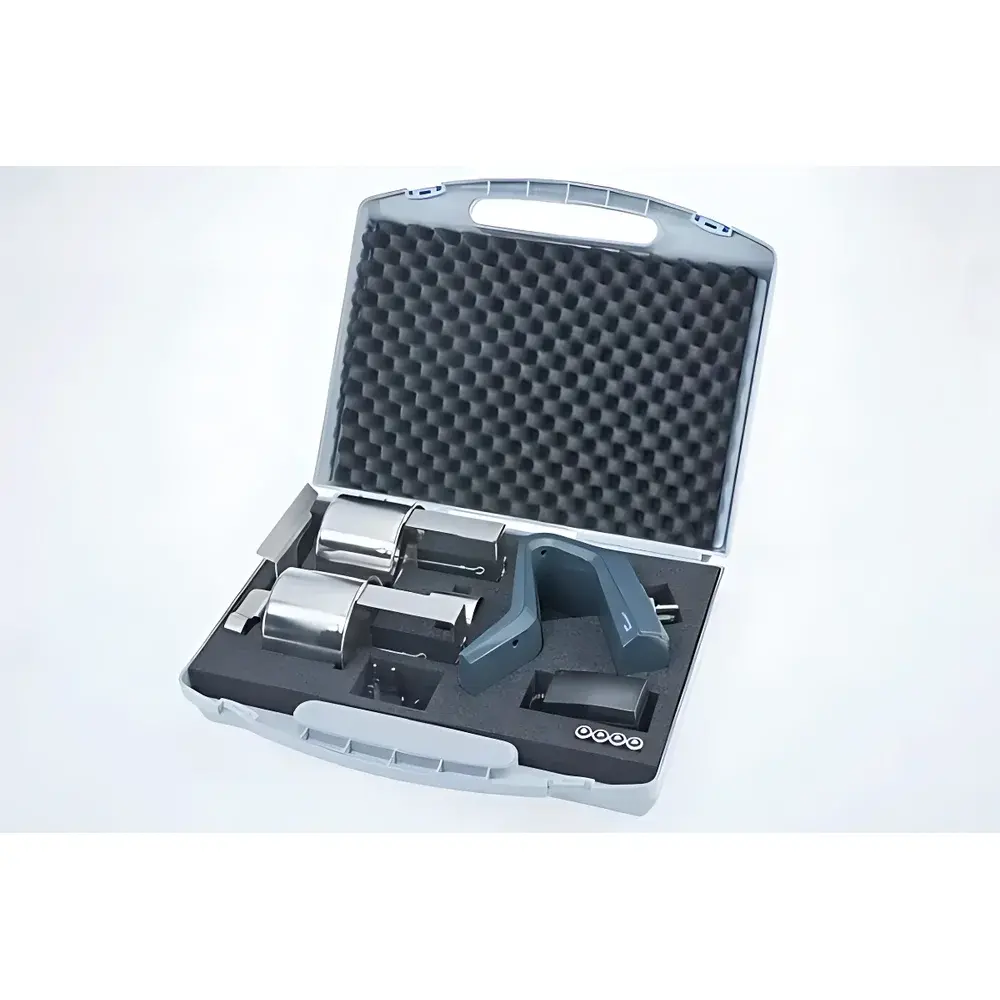
- Modular spindle architecture features color-coded L-series (low-viscosity) and R-series (medium-to-high-viscosity) spindles, each mechanically keyed for correct insertion and rapid exchange without tools.
- Built-in “Memory Assistant” function stores reference values and permits real-time delta comparison against current measurements—supporting pass/fail decisions during incoming inspection or batch release.
- Power-flexible operation: rechargeable Li-ion battery provides >8 hours of continuous use per charge, while optional AC adapter enables uninterrupted operation during extended QC shifts.
- Firmware-level backward compatibility with legacy HAAKE Viscotester 1 Plus, 2 Plus, 01, and 02 spindles and calibration files simplifies fleet standardization and reduces total cost of ownership.
Sample Compatibility & Compliance
The Viscotester™ 3 accommodates Newtonian and mildly shear-thinning non-Newtonian fluids across diverse sectors—including coatings (paints, inks, varnishes), personal care (shampoos, lotions, emulsions), food (sauces, dressings, thickeners), and lubricants (hydraulic oils, greases, gear oils). Its temperature-rated spindle housing supports measurements up to 150 °C, enabling hot-fill process verification and thermal stability screening. While not a GLP/GMP-certified instrument out-of-the-box, its deterministic measurement protocol, audit-ready calibration logging (via optional PC software), and traceable spindle identification align with ISO 2555, ASTM D2196, and USP viscosity testing requirements. For regulated environments, documented IQ/OQ protocols and 21 CFR Part 11-compliant data export modules are available through authorized HAAKE service partners.
Software & Data Management
Data acquisition and reporting are supported via HAAKE RheoWin Connect software (Windows-based), which enables remote instrument control, real-time graphing, statistical analysis (mean, SD, CV%), and CSV/PDF report generation. All measurements include embedded metadata: timestamp, spindle ID, rotational speed, unit setting, and operator ID (if configured). Firmware logs retain the last 1,000 measurements locally, with timestamped export capability. Calibration history—including date, technician ID, and reference fluid batch—is stored separately and exportable for internal audits or regulatory review.
Applications
- Routine in-process viscosity checks during formulation adjustment or line start-up validation.
- Batch release testing in manufacturing QA labs where rapid turnaround and minimal sample volume (<15 mL) are essential.
- Supplier material acceptance testing (MAT) for raw materials such as resins, surfactants, or thickeners.
- Troubleshooting viscosity drift in aging products or after thermal cycling exposure.
- Training and demonstration applications due to intuitive UI and contextual on-screen guidance.
FAQ
Is the Viscotester™ 3 suitable for non-Newtonian fluid characterization?
It provides single-point viscosity values at 62.5 rpm and is not designed for full flow curve generation or yield stress determination. For comprehensive rheological profiling, consider the HAAKE Viscotester iQ or modular MARS systems.
Can I perform temperature-controlled measurements with this device?
The instrument itself does not include active temperature control; however, it accepts externally pre-conditioned samples up to 150 °C using optional high-temp spindles and thermal guards.
What calibration standards are recommended?
Certified silicone oil standards traceable to NIST or PTB are recommended for routine verification; HAAKE offers certified calibration kits (e.g., Viscostandard® series) with uncertainty statements compliant with ISO/IEC 17025.
Does the device support GMP-compliant data integrity practices?
Standalone operation does not meet 21 CFR Part 11 requirements; however, when paired with RheoWin Connect and configured with user access controls, electronic signatures, and audit-trail-enabled export, it can be validated for regulated workflows.
How often should I verify leveling accuracy?
The auto-leveling sensor performs self-checks at power-on and before each measurement cycle; no manual recalibration is required unless physical damage to the sensor module is suspected.



