Tech4imaging ECVT Non-Invasive Capacitive Electrical Capacitance Tomography System
| Origin | USA |
|---|---|
| Manufacturer Type | Authorized Distributor |
| Origin Category | Imported |
| Model | ECVT |
| Pricing | Available Upon Request |
Overview
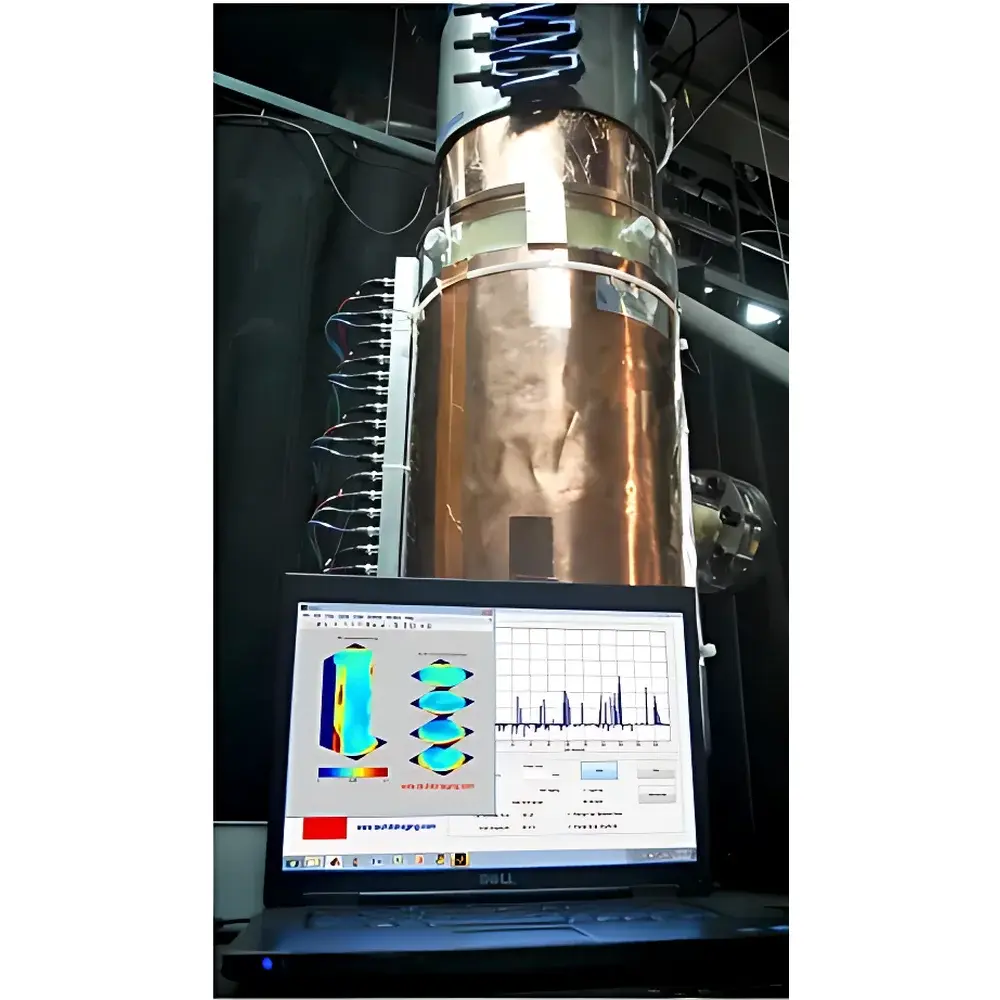
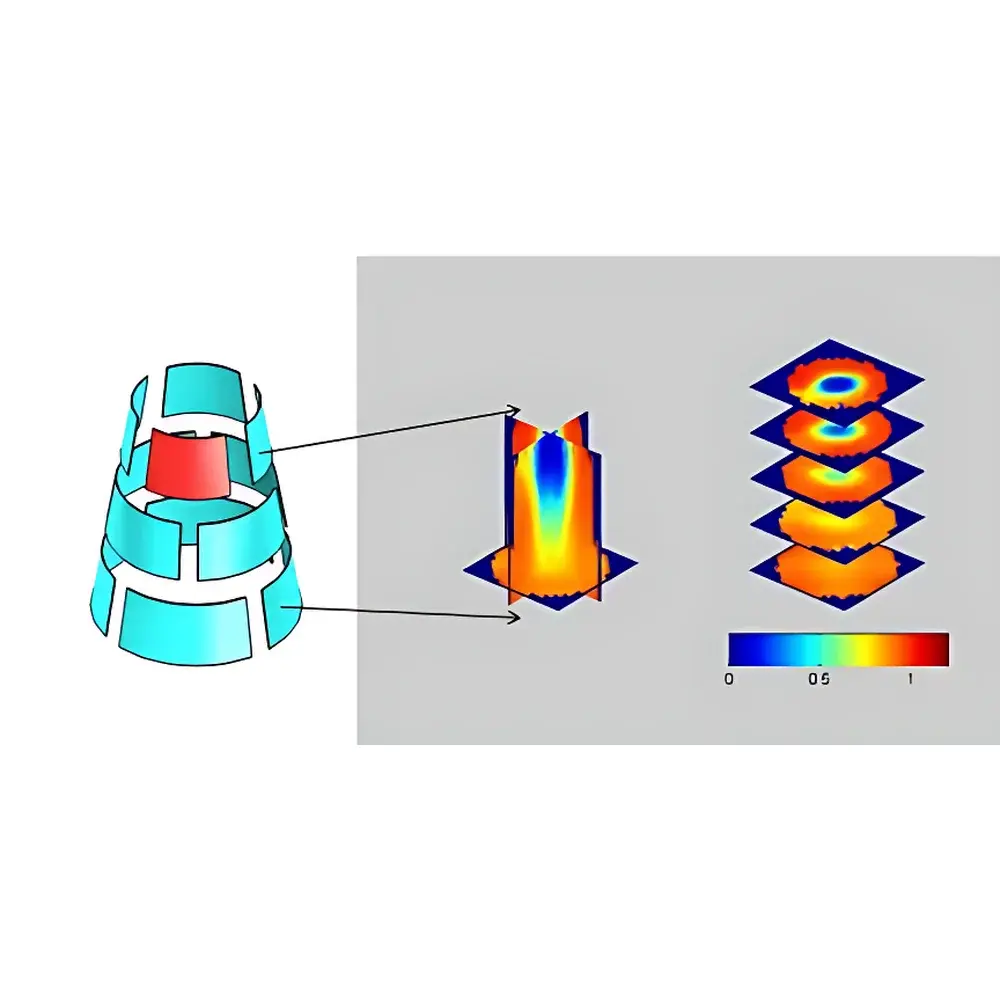
The Tech4imaging ECVT Non-Invasive Capacitive Electrical Capacitance Tomography (ECT) System is a high-fidelity, contactless multiphase flow imaging platform engineered for quantitative, real-time visualization and analysis of complex two-phase and multi-phase flows. Based on the physical principle of electrical capacitance tomography—measuring minute variations in inter-electrode capacitance induced by spatial permittivity differences among phases—the ECVT system reconstructs cross-sectional permittivity distributions with sub-picofarad (1 fF = 10⁻¹² F) resolution. Unlike optical or gamma-based modalities, ECT operates independently of fluid opacity, temperature, pressure, or radiation constraints, making it uniquely suited for harsh industrial environments including combustion chambers, high-temperature fluidized beds, and pressurized hydrocarbon transport systems. The system delivers time-resolved tomographic data at frame rates ranging from 50 to 200 fps, enabling dynamic tracking of phase distribution, interface evolution, and transient flow structures without perturbing the flow field.
Key Features
- Non-invasive, non-radioactive measurement architecture—no intrusive probes or ionizing sources required
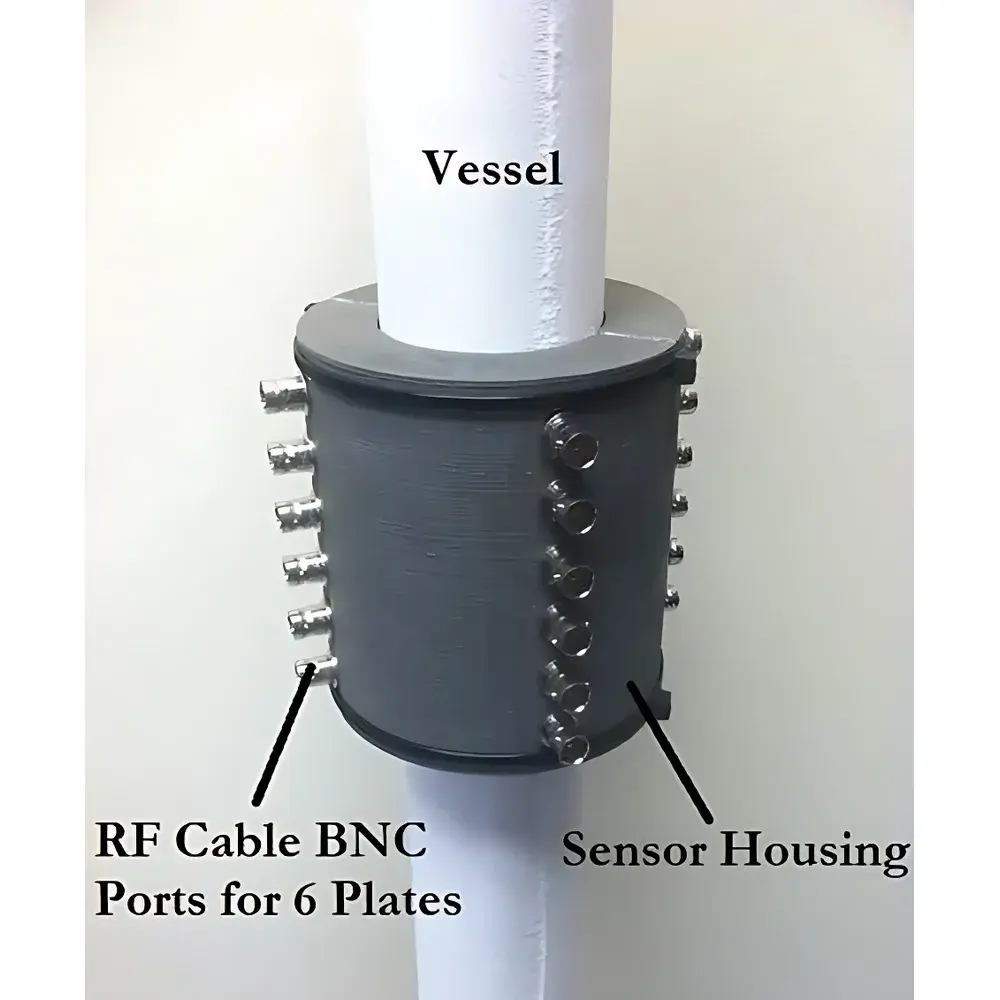
- 12-electrode modular sensor ring with customizable geometry (cylindrical, rectangular, annular) for integration into pipes, reactors, and combustors
- Capacitance measurement resolution down to 1 fF, supporting detection of low-permittivity contrast phases (e.g., gas–solid, gas–liquid)
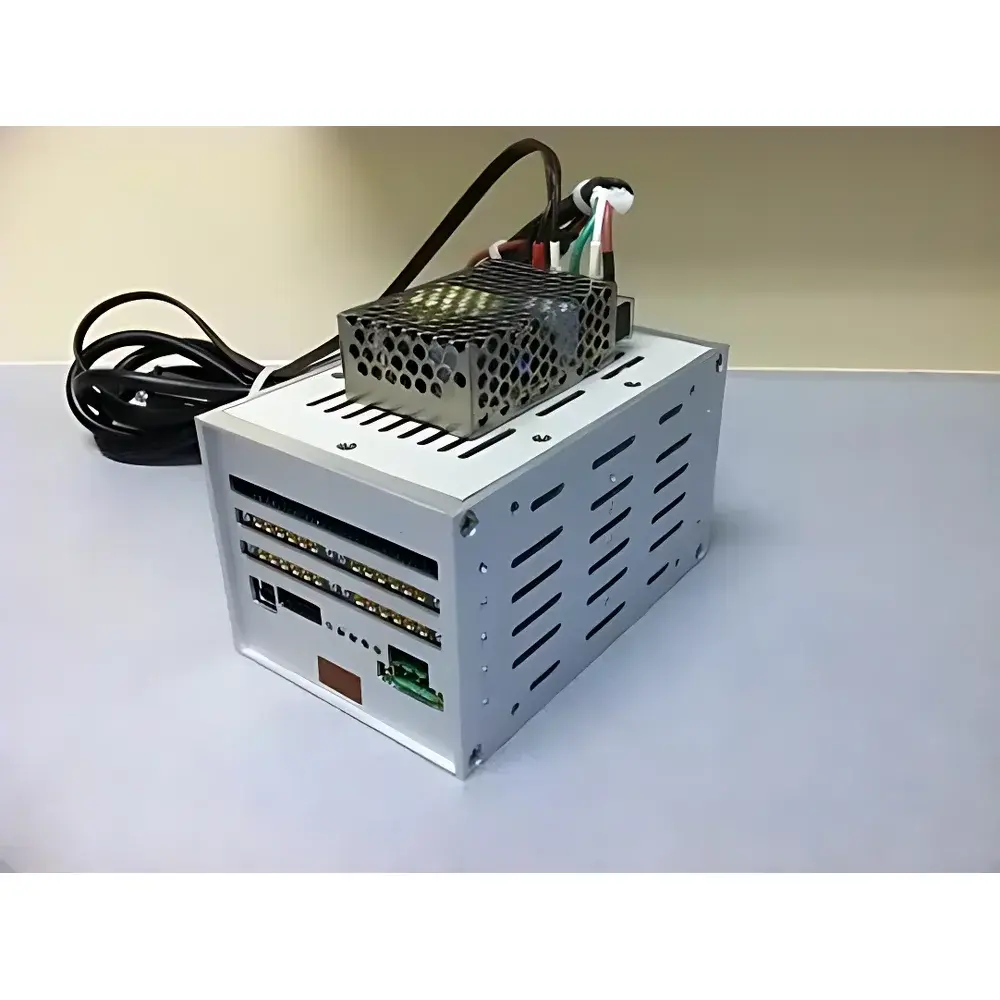
- Real-time data acquisition unit with synchronized timestamping and hardware-triggered acquisition for process synchronization
- Robust mechanical design rated for continuous operation at temperatures up to 800 °C when equipped with high-temperature ceramic sensor housings
- Modular software architecture compliant with IEEE 1588 Precision Time Protocol (PTP) for distributed multi-sensor deployments
Sample Compatibility & Compliance
The ECVT system accommodates a broad spectrum of multiphase systems, including but not limited to: gas–solid (e.g., pneumatic conveying, circulating fluidized beds), gas–liquid (e.g., bubble columns, riser reactors), liquid–liquid (e.g., solvent extraction, emulsion flow), and three-phase (gas–liquid–solid) configurations. Sensor materials—including alumina, quartz, and Inconel-compatible dielectric sleeves—are selected per application-specific thermal, chemical, and mechanical requirements. The system conforms to IEC 61000-6-2 (EMC immunity) and IEC 61000-6-4 (EMC emissions) standards. Data integrity protocols align with GLP/GMP principles; audit trails, user access controls, and electronic signature support are available via optional FDA 21 CFR Part 11-compliant software modules.
Software & Data Management
The ECVT platform includes three integrated software components: (1) ECT-Acq—a deterministic real-time acquisition engine with configurable sampling windows, trigger logic, and raw capacitance matrix logging; (2) ECT-Recon—a GPU-accelerated image reconstruction suite implementing linear back-projection (LBP), Tikhonov regularization, and iterative Landweber algorithms for 2D/3D permittivity mapping; and (3) ECT-Analyze—a post-processing environment supporting volumetric phase fraction quantification, velocity field estimation via cross-correlation of temporal sequences, and spatiotemporal statistical analysis (e.g., power spectral density, chord-length distribution). All software modules export standardized HDF5 and CSV formats compatible with MATLAB, Python (NumPy/Pandas), and commercial CFD post-processors (e.g., ANSYS CFD-Post, OpenFOAM ParaView).
Applications
The ECVT system serves as a primary experimental validation tool across energy, chemical, and environmental engineering domains. In coal gasification and oxy-fuel combustion research, it enables in-situ monitoring of char particle dispersion, flame front propagation, and slag accumulation dynamics. For oil & gas applications, it characterizes slug flow regimes, water cut distribution, and wax deposition onset in pipeline segments under operational pressure. Within academic laboratories, it supports fundamental studies of Geldart classification behavior, bubbling regime transitions, and segregation kinetics in triboelectric granular flows. Its compatibility with computational fluid dynamics makes it a benchmark instrument for validating Euler–Euler and Euler–Lagrange multiphase models—particularly where interfacial closure laws and drag coefficient parametrizations require empirical calibration.
FAQ
What is the minimum detectable phase concentration difference using the ECVT system?
The system resolves permittivity contrasts ≥0.5 εᵣ under optimized signal-to-noise conditions—translating to ~5–10% volumetric fraction changes for typical gas–solid or gas–liquid systems.
Can the ECVT sensor be retrofitted into existing stainless-steel piping?
Yes—custom flanged sensor housings are available for ANSI/ISO pipe standards (DN50–DN600); non-metallic electrode arrays maintain electromagnetic isolation without compromising structural integrity.
Is real-time 3D reconstruction supported?
The base configuration provides real-time 2D slice reconstruction; 3D volume reconstruction requires multi-plane sensor stacks and is performed offline with ECT-Recon using calibrated axial offset data.
Does the system support synchronization with external measurement devices?
Yes—via TTL trigger input/output ports and IEEE 1588 PTP over Ethernet, enabling precise temporal alignment with high-speed cameras, pressure transducers, or laser Doppler anemometers.
What training and technical documentation are provided?
Comprehensive operator manuals, reconstruction algorithm white papers, ASTM D7504-compliant validation reports, and on-site installation & commissioning support are included with each system delivery.