Tech4Imaging 4RD™ Electrostatic Capacitance Tomography (ECT) System
| Origin | USA |
|---|---|
| Supplier Type | Authorized Distributor |
| Import Status | Imported |
| Model | 4RD |
| Price | USD $100,000 |
| Electrode Count | 12 / 24 / 36 |
| SNR | >60 dB |
| Data Acquisition Rate | 2 ms/frame (12 ch), 5 ms/frame (24 ch), 10 ms/frame (36 ch) |
| Capacitance Resolution | 1 fF |
| Excitation Signal | 0–10 V<sub>p-p</sub> at 2 MHz |
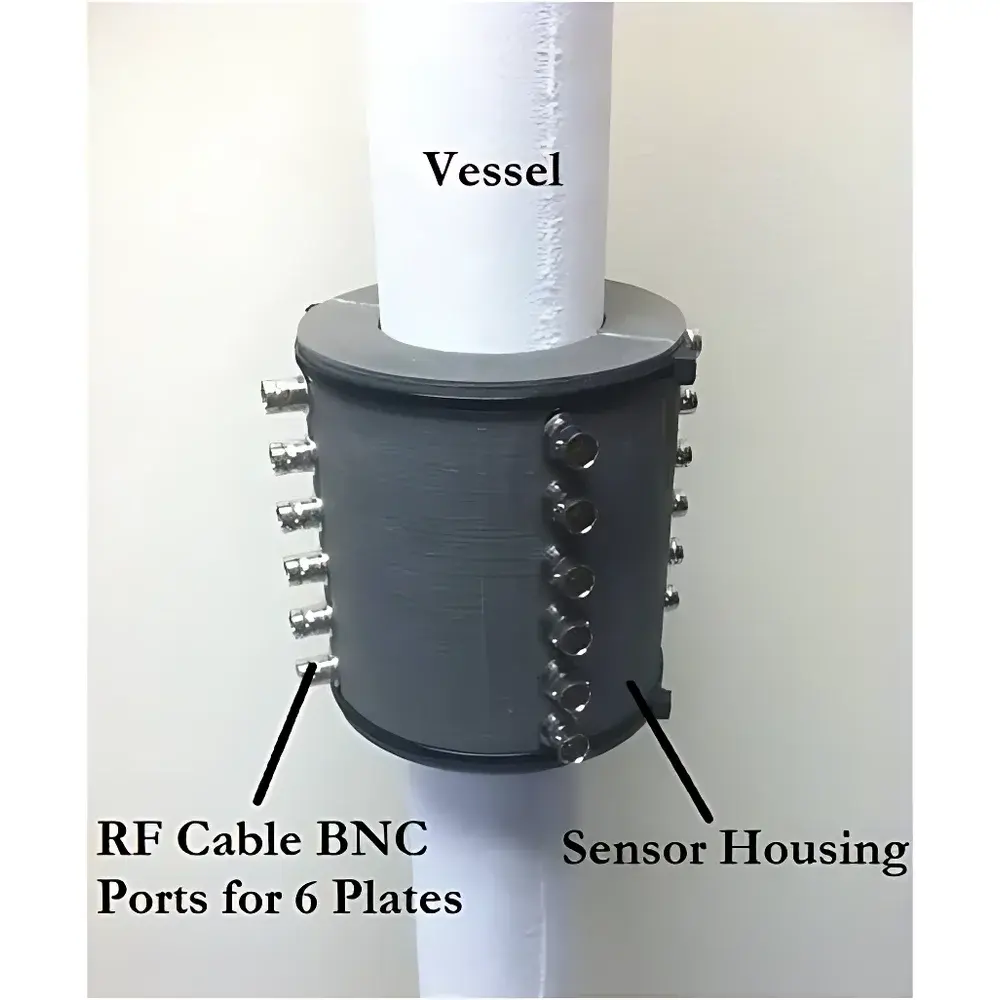
| Sensor Interface | Removable sensors with BNC connectors |
| Sensor Geometry Support | Planar, circular, square, or custom complex geometries |
| Image Reconstruction Algorithms | Linear Back Projection (LBP), Iterative LBP (ILBP), 3D-NNMOIRT |
| Volumetric Resolution | ±3% |
| Power Supply | 110–240 V AC, 50–60 Hz |
Overview
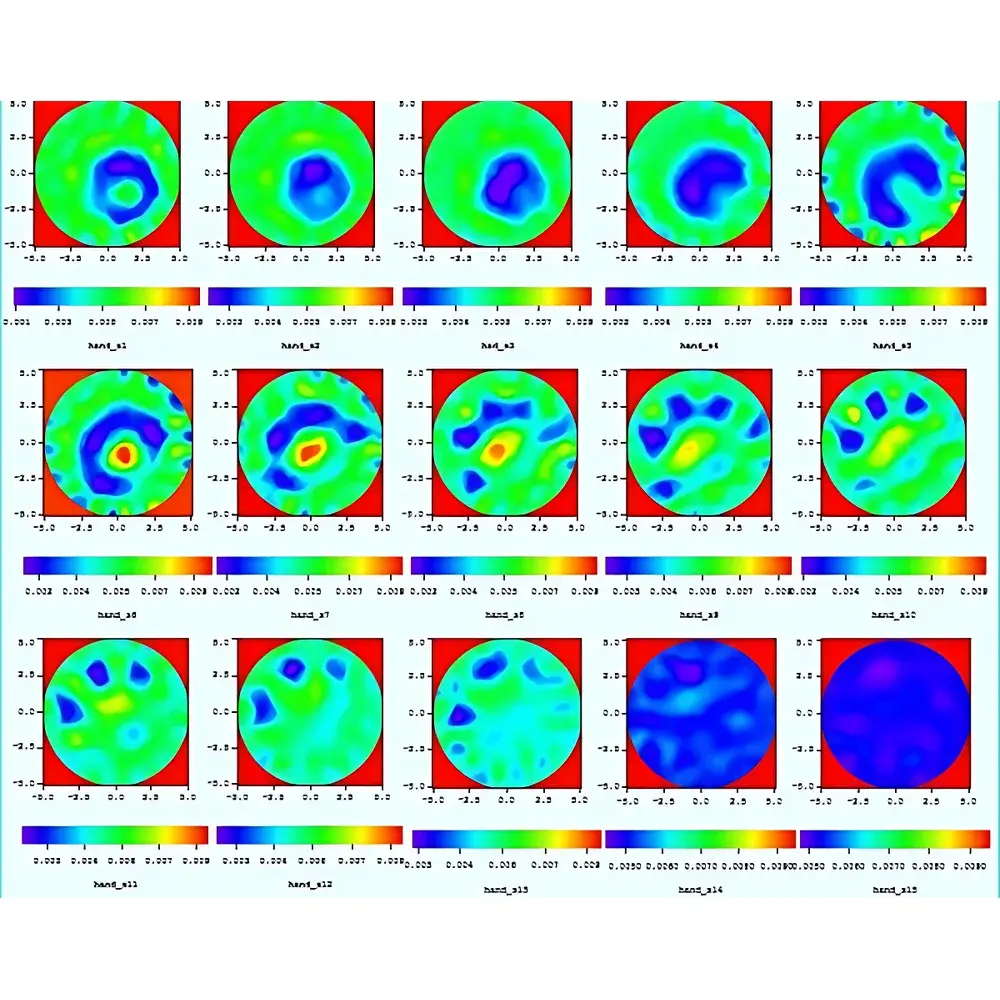
The Tech4Imaging 4RD™ Electrostatic Capacitance Tomography (ECT) System is a non-invasive, contactless imaging platform engineered for real-time, quantitative visualization of dielectric permittivity distribution within opaque multiphase flow systems. Unlike optical or gamma-based modalities, ECT operates on the principle of electrostatic capacitance sensing—measuring minute changes in inter-electrode capacitance induced by spatial variations in material permittivity. This physics-based approach enables robust operation in harsh industrial environments—including high-temperature, high-pressure, corrosive, or explosive atmospheres—where conventional imaging techniques fail. The system implements Electrical Capacitance Volume Tomography (ECVT), an extension of classical 2D ECT that reconstructs volumetric permittivity maps from multi-plane electrode arrays. Its design targets process engineers, academic researchers, and R&D teams engaged in fluidized bed characterization, pneumatic conveying optimization, granular flow analysis, and multiphase reactor monitoring.
Key Features
- Modular electrode architecture supporting 12-, 24-, or 36-electrode configurations to balance spatial resolution, temporal resolution, and hardware complexity.
- High-fidelity data acquisition subsystem with sub-millisecond frame rates: 2 ms per frame for 12-channel operation, scalable to 10 ms for full 36-channel acquisition—enabling capture of fast transient phenomena such as slug flow initiation or bubble coalescence.
- Capacitance measurement resolution of 1 fF, calibrated against NIST-traceable standards, ensuring metrological integrity across operating conditions.
- Removable sensor modules with standardized BNC interfaces facilitate rapid deployment across diverse vessel geometries—planar wall-mounted arrays, annular rings for pipe sections, square-section ducts, or custom-machined housings for pilot-scale reactors.
- Dual-mode excitation: programmable 0–10 Vp-p sinusoidal signal at 2 MHz ensures optimal signal penetration while minimizing stray coupling and electromagnetic interference in electrically noisy plant environments.
- Integrated thermal management and shielding compliant with IEC 61000-4-3 (radiated immunity) and IEC 61000-4-6 (conducted immunity) for stable performance in industrial settings.
Sample Compatibility & Compliance
The 4RD™ system imposes no intrinsic restrictions on sample phase composition, provided materials exhibit measurable permittivity contrast (e.g., air–polymer pellets, oil–water, gas–catalyst particles). It is inherently compatible with conductive, insulating, and semi-conductive media—though metallic solids require dielectric coating or indirect measurement strategies. All hardware and firmware comply with CE marking requirements under the EMC Directive 2014/30/EU and Low Voltage Directive 2014/35/EU. Software execution supports audit-ready operation: timestamped raw capacitance logs, reconstruction metadata, and user action records are stored in HDF5 format with SHA-256 checksums—facilitating alignment with GLP, GMP, and FDA 21 CFR Part 11 data integrity expectations where applicable.
Software & Data Management
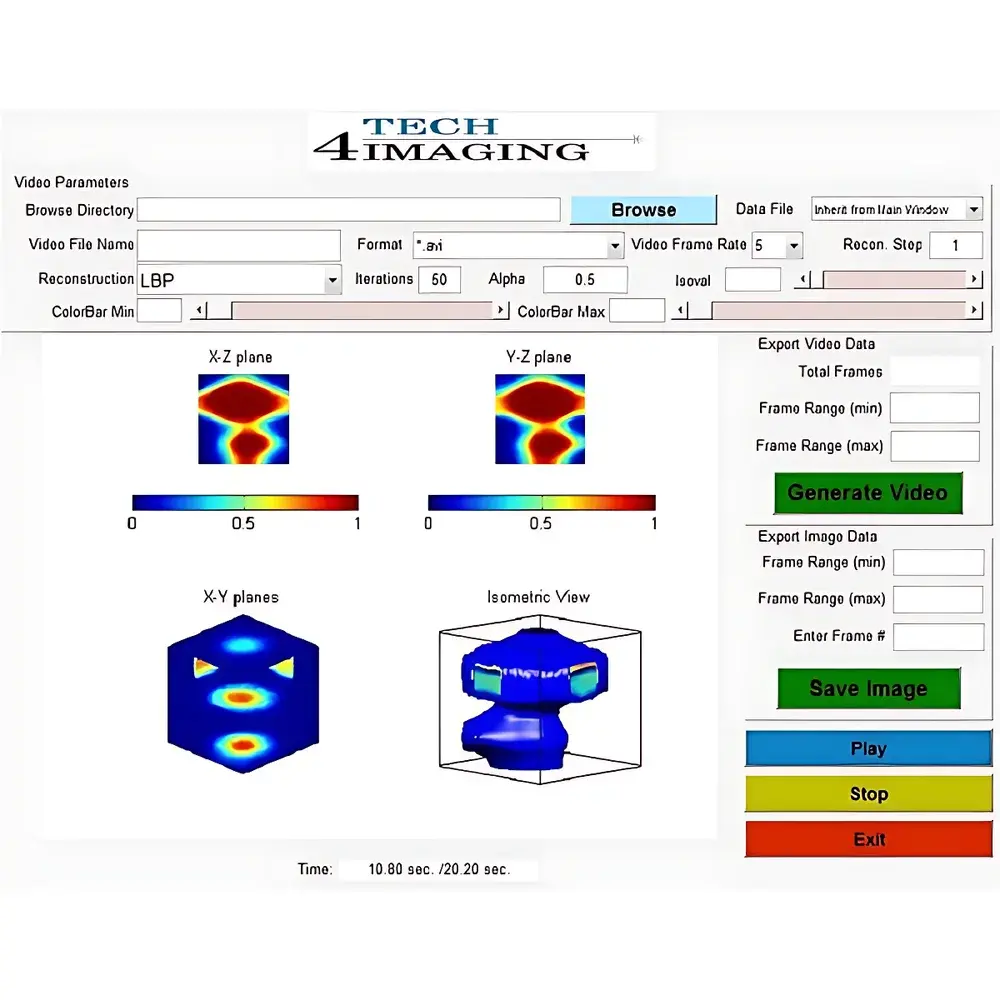
The bundled 4RD Control Suite provides deterministic real-time acquisition, reconstruction, and visualization. It supports three reconstruction engines: Linear Back Projection (LBP) for rapid qualitative assessment; Iterative LBP (ILBP) for improved boundary definition; and 3D-NNMOIRT—a neural-network-enhanced, model-based iterative algorithm delivering superior quantification accuracy in low-SNR regimes. All reconstructions generate true 3D voxel grids (not stacked 2D slices), with volumetric resolution validated at ±3% via phantom calibration using ASTM D257-compliant reference standards. Capacitance and reconstructed data streams are accessible via TCP/IP socket interface for integration into SCADA, DCS, or Python-based analytics pipelines. Raw datasets are archived with embedded instrument configuration, environmental telemetry (ambient temperature/humidity), and operator annotations—ensuring full traceability per ISO/IEC 17025 clause 7.5.
Applications
- Real-time monitoring of solids concentration and flow regime transitions in circulating fluidized beds (CFBs) and riser reactors.
- Quantitative validation of CFD-DEM simulations through time-resolved permittivity field comparison.
- In-line quality assurance of powder blending uniformity in pharmaceutical continuous manufacturing lines.
- Dynamic mapping of liquid holdup distribution in trickle-bed reactors under varying pressure and temperature conditions.
- Fundamental studies of particle segregation, electrostatic charging, and dielectric relaxation behavior in granular materials.
FAQ
What is the minimum detectable permittivity contrast between phases?
The system reliably resolves contrasts ≥1.5:1 (e.g., air εr ≈ 1 vs. polyethylene εr ≈ 2.3) under standard 12-electrode configuration with optimized sensor geometry.
Can the 4RD™ be integrated with existing PLC or DCS infrastructure?
Yes—via OPC UA server mode or Modbus TCP gateway; preconfigured drivers available for Siemens S7, Rockwell ControlLogix, and Emerson DeltaV.
Is calibration required before each experiment?
A single full-system calibration (air-only baseline) suffices for stable operation over 72 hours; drift compensation algorithms automatically correct for thermal drift in real time.
Does the system support hazardous area installation?
The electronics unit is rated for Class I, Division 2 (NEC) / Zone 2 (IECEx); intrinsically safe sensor variants with ATEX/IECEx certification are available upon request.
What file formats are supported for export?
HDF5 (primary), TIFF stack (for 3D volume slices), CSV (capacitance matrix), and JSON (metadata)—all conforming to FAIR data principles.