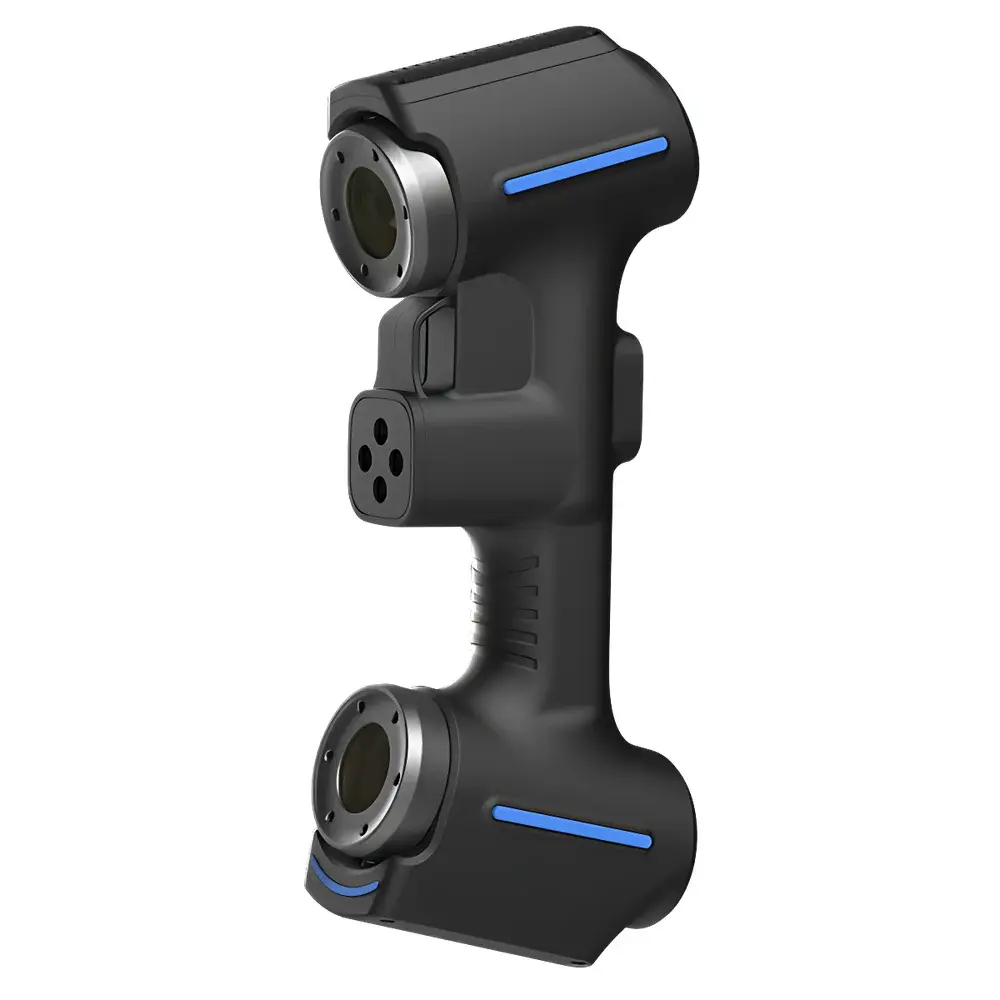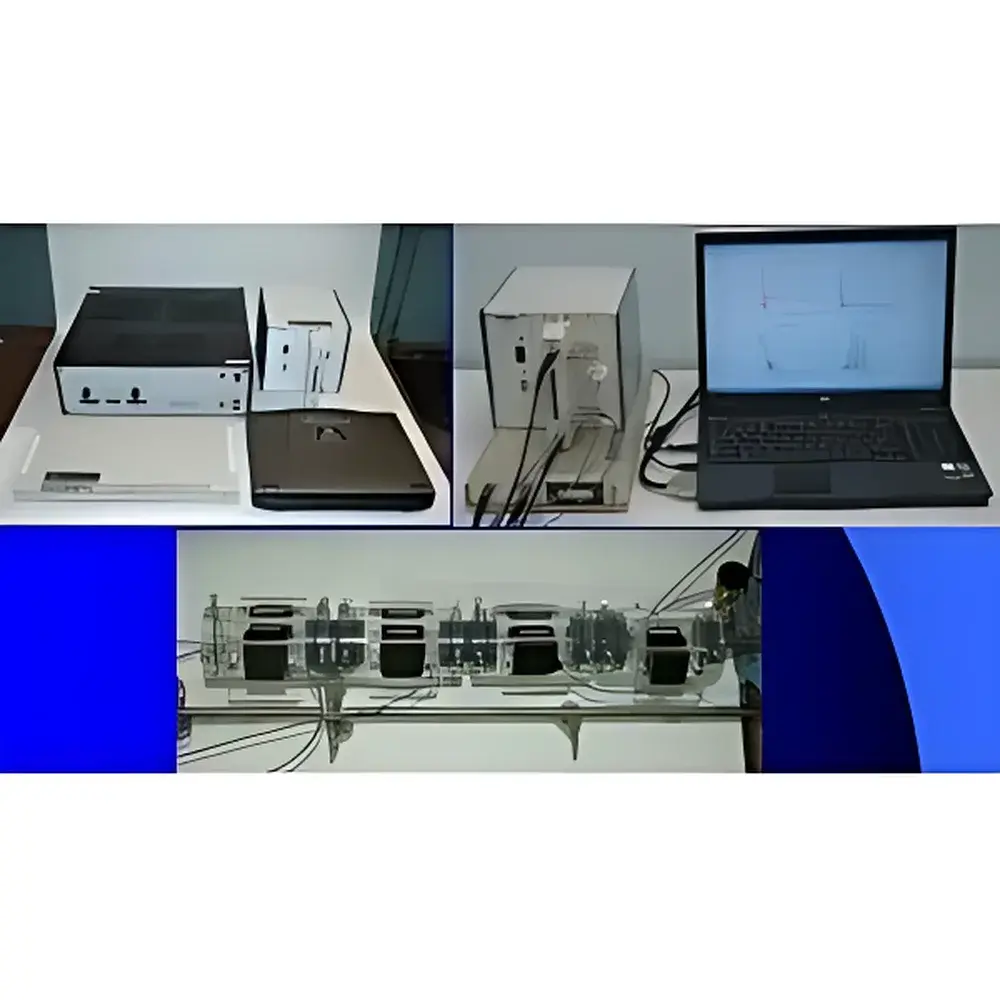
Dynaflow ABS Advanced Bubble Sizing & Void Fraction Analyzer
| Origin | USA |
|---|---|
| Manufacturer Type | Authorized Distributor |
| Origin Category | Imported |
| Model | ABS Series for Aeration Monitoring |
| Pricing | Available Upon Request |
Overview
The Dynaflow ABS Advanced Bubble Sizing & Void Fraction Analyzer is a high-fidelity, ultrasonic-based measurement system engineered for non-invasive, real-time characterization of gas bubble size distribution (BSD) and local void fraction in opaque, turbulent, and optically inaccessible multiphase flows. Unlike optical techniques—such as high-speed imaging, laser diffraction, or phase-Doppler anemometry—the ABS leverages broadband acoustic scattering principles to discriminate gas bubbles from solid particles with high specificity, even in highly turbid, aerated, or opaque media where light transmission is negligible. Its core transduction architecture employs calibrated, wideband piezoelectric transducers operating in pulse-echo or through-transmission mode, enabling quantitative inversion of backscattered acoustic spectra into statistically robust BSD profiles (typically spanning 10 µm to 3 mm) and spatially resolved void fraction maps. Designed for integration into industrial-scale aeration basins, hydraulic test loops, marine propulsion rigs, and biomedical flow simulators, the ABS delivers metrologically traceable data under dynamic, high-velocity, and thermally variable conditions—making it indispensable for cavitation research, wastewater process optimization, and multiphase system validation.
Key Features
- Ultrasonic discrimination of gas bubbles from solid particulates based on density and compressibility contrast—enabling unambiguous detection in non-transparent fluids (e.g., activated sludge, blood analogs, seawater with suspended sediment)
- Real-time, continuous measurement of bubble size distribution (BSD) and local void fraction without flow interruption or intrusive probes
- Configurable transducer arrays for single-point profiling or 2D/3D volumetric mapping across complex geometries (e.g., pump volutes, aeration tanks, propeller wakes)
- Windows-based graphical user interface (GUI) with intuitive workflow navigation, live spectral display, and automated BSD histogram generation
- Integrated micro-camera module for optional side-by-side visual validation—correlating acoustic signatures with high-resolution bubble morphology under controlled illumination
- Ruggedized industrial enclosure rated IP65; compatible with ambient temperatures from 5 °C to 45 °C and pressures up to 10 bar (gauge)
Sample Compatibility & Compliance
The ABS is validated for use in aqueous systems containing suspended solids, biological aggregates, oils, and surfactants—common in wastewater treatment, bioreactor operation, and marine hydrodynamics testing. It requires no sample dilution, filtration, or optical path access. The system complies with IEC 61000-6-2 (EMC immunity) and IEC 61000-6-4 (EMC emission) standards. Data acquisition protocols support audit-ready logging aligned with GLP and GMP frameworks; raw acoustic time-series and processed BSD outputs are timestamped, version-controlled, and exportable in HDF5 and CSV formats for third-party analysis. While not FDA-cleared as a medical device, its measurement methodology is referenced in ASTM E2987–22 (Standard Guide for Acoustic Characterization of Gas-Liquid Dispersions) and ISO 20486:2019 (Multiphase Flow Measurement—Ultrasonic Void Fraction Sensors).
Software & Data Management
The ABS Control Suite v4.x runs natively on Windows 10/11 (64-bit) and provides full control over transducer excitation parameters (center frequency, pulse width, PRF), signal gain, gating windows, and spectral averaging depth. Post-processing modules implement validated inverse scattering algorithms—including modified Rayleigh–Plesset inversion and multi-frequency spectral deconvolution—to resolve overlapping bubble populations. All datasets include embedded metadata: transducer calibration coefficients, temperature-compensated sound speed, system gain history, and operator ID. Software supports 21 CFR Part 11-compliant user authentication, electronic signatures, and immutable audit trails for regulated environments. Batch analysis tools enable comparative BSD statistics across multiple test runs, including D10/D50/D90 diameters, interfacial area concentration, and void fraction variance profiles.
Applications
- Wastewater Treatment: Quantifying bubble size distribution in fine-pore diffusers and surface aerators to optimize oxygen transfer efficiency (OTE) and reduce energy consumption
- Marine Hydrodynamics: Mapping cavitation inception zones and bubble cloud dynamics around propellers, rudders, and hydrofoils under scaled towing tank conditions
- Biomedical Engineering: Monitoring microbubble formation and dissolution in extracorporeal circuits, artificial heart valve testing, and decompression studies
- Power Generation: Assessing air entrainment and vortex-induced aeration in turbine draft tubes and pump sumps to mitigate vibration and erosion
- Chemical Process Engineering: Characterizing gas dispersion in stirred reactors, flotation cells, and bubble column absorbers for scale-up validation
- Space Fluid Physics: Investigating bubble coalescence and migration behavior under microgravity-simulated conditions (e.g., parabolic flight or drop tower experiments)
FAQ
Can the ABS measure bubbles in highly viscous or non-Newtonian fluids?
Yes—provided the acoustic impedance mismatch between fluid and gas remains sufficient for detectable scattering (typical lower limit: kinematic viscosity < 500 cSt at measurement temperature). Calibration adjustments may be required for shear-thinning or thixotropic media.
Does the system require periodic recalibration against reference standards?
Transducer sensitivity drift is monitored via built-in reference echo checks; full system calibration using NIST-traceable glass bead phantoms is recommended annually or after mechanical shock.
Is it possible to integrate ABS data streams into SCADA or DCS platforms?
Yes—via OPC UA or Modbus TCP interfaces; real-time void fraction and mean bubble diameter (Sauter mean diameter) are exposed as configurable process variables.
How does ABS handle overlapping bubble populations in polydisperse flows?
Multi-frequency spectral decomposition combined with constrained iterative inversion resolves bimodal and trimodal BSDs with resolution down to ±15% relative uncertainty in D₅₀ under controlled lab conditions.
Can ABS distinguish between air, nitrogen, and oxygen bubbles?
No—the technique is insensitive to gas composition; it identifies bubbles solely by compressibility contrast. Gas identification requires complementary methods (e.g., dissolved gas analysis or Raman spectroscopy).