
PEA Space Charge Measurement System PEANUTS
| Origin | Japan |
|---|---|
| Manufacturer Type | Distributor |
| Origin Category | Imported |
| Model | PEANUTS |
| Price | Upon Request |
Overview
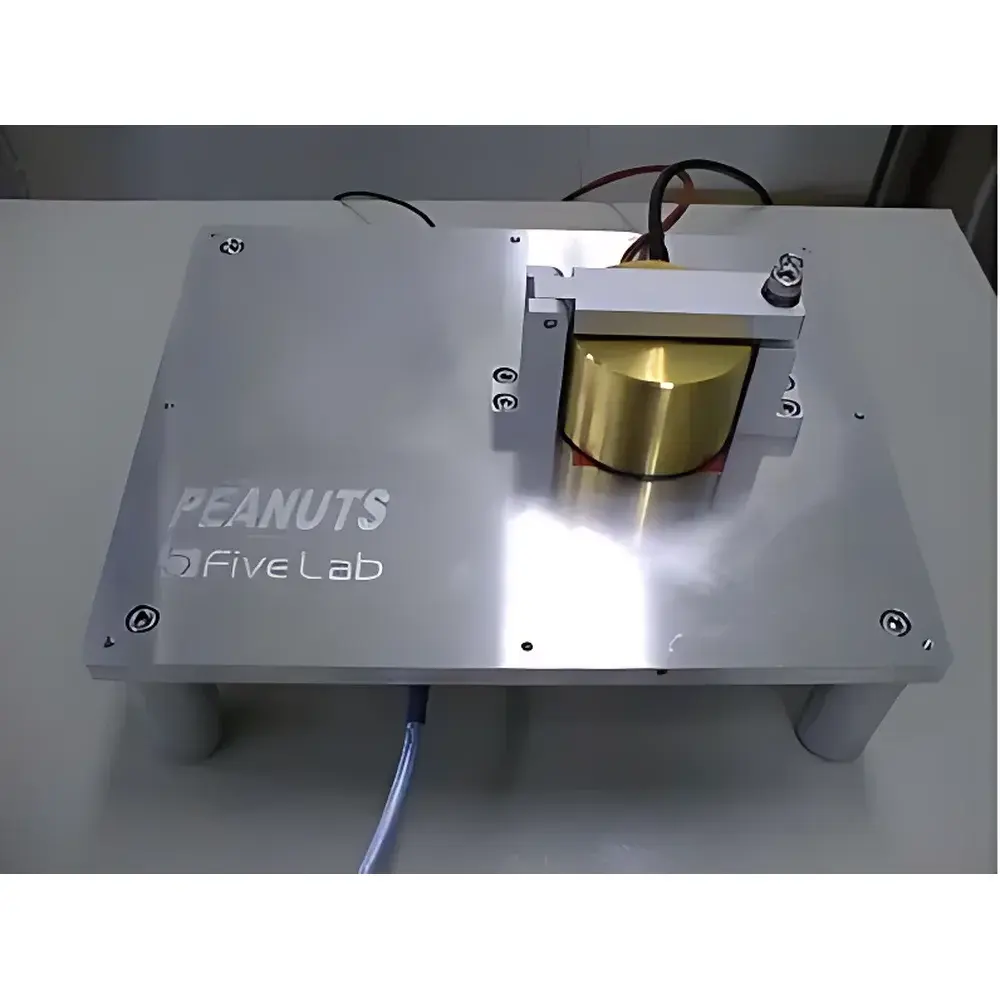
The PEA Space Charge Measurement System PEANUTS is a precision instrument engineered for non-invasive, high-resolution spatial mapping of charge distribution within solid dielectric materials. Based on the pulsed electro-acoustic (PEA) principle, the system applies a short-duration high-voltage pulse to induce acoustic waves proportional to local charge density; these waves are detected by a piezoelectric sensor and reconstructed into one-dimensional space charge profiles along the sample thickness direction. This physics-based methodology enables quantitative analysis of trapped charge, field distortion, and potential gradients—critical parameters in the development and qualification of high-voltage insulation systems, polymer electrolytes, organic photoconductors, and ion-conducting membranes. Designed for laboratory and industrial R&D environments, the PEANUTS system delivers millisecond-scale measurement repetition and sub-10 µm axial resolution under controlled bias and environmental conditions.
Key Features
- Non-destructive measurement: No sample coating, electrode deposition, or physical modification required—preserves intrinsic material structure and electrical integrity.
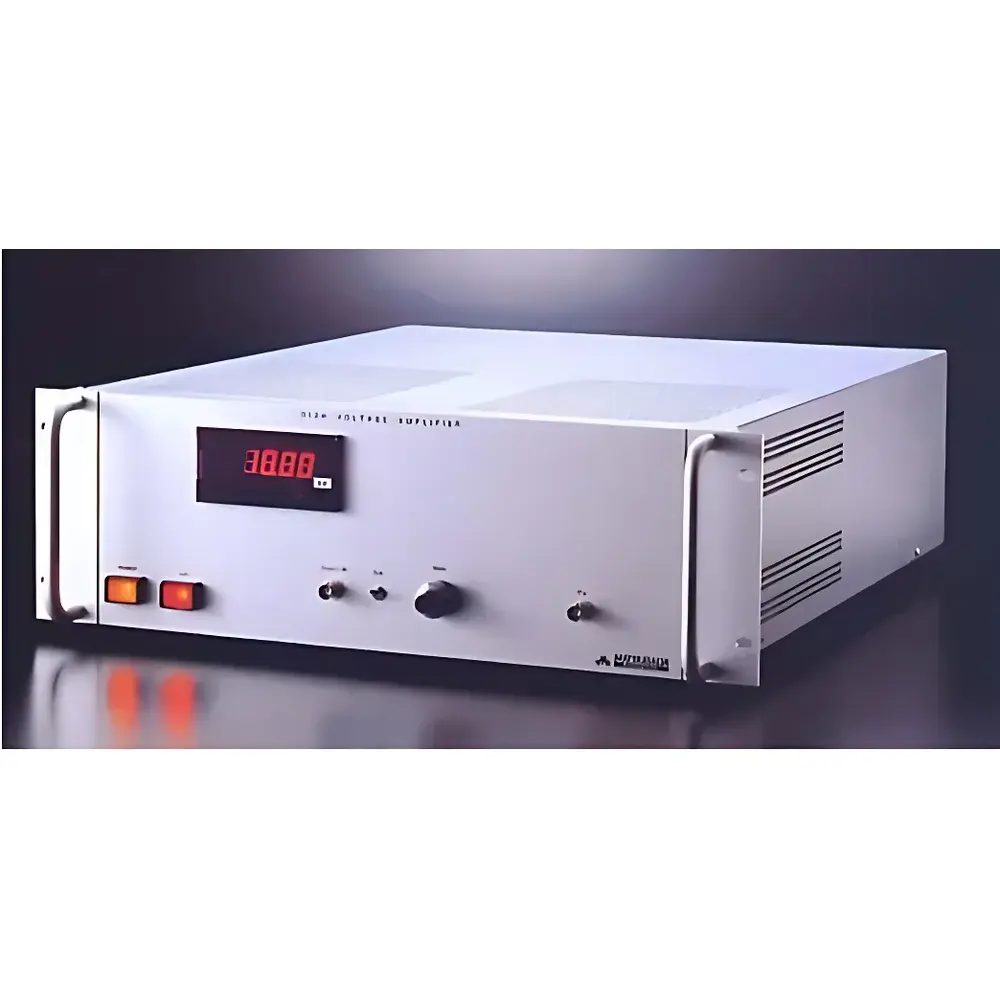
- In-situ high-field operation: Capable of simultaneous application of DC bias up to ±10 kV while acquiring space charge data, enabling real-time observation of charge injection, transport, and trapping dynamics under service-relevant electric stress.
- Irradiation-compatible configuration: Modular design allows integration with gamma or electron beam irradiation sources for studying radiation-induced charge accumulation and decay kinetics.
- High reproducibility: Measurement repeatability better than ±5% (relative standard deviation) across repeated acquisitions under identical thermal and electrical conditions.
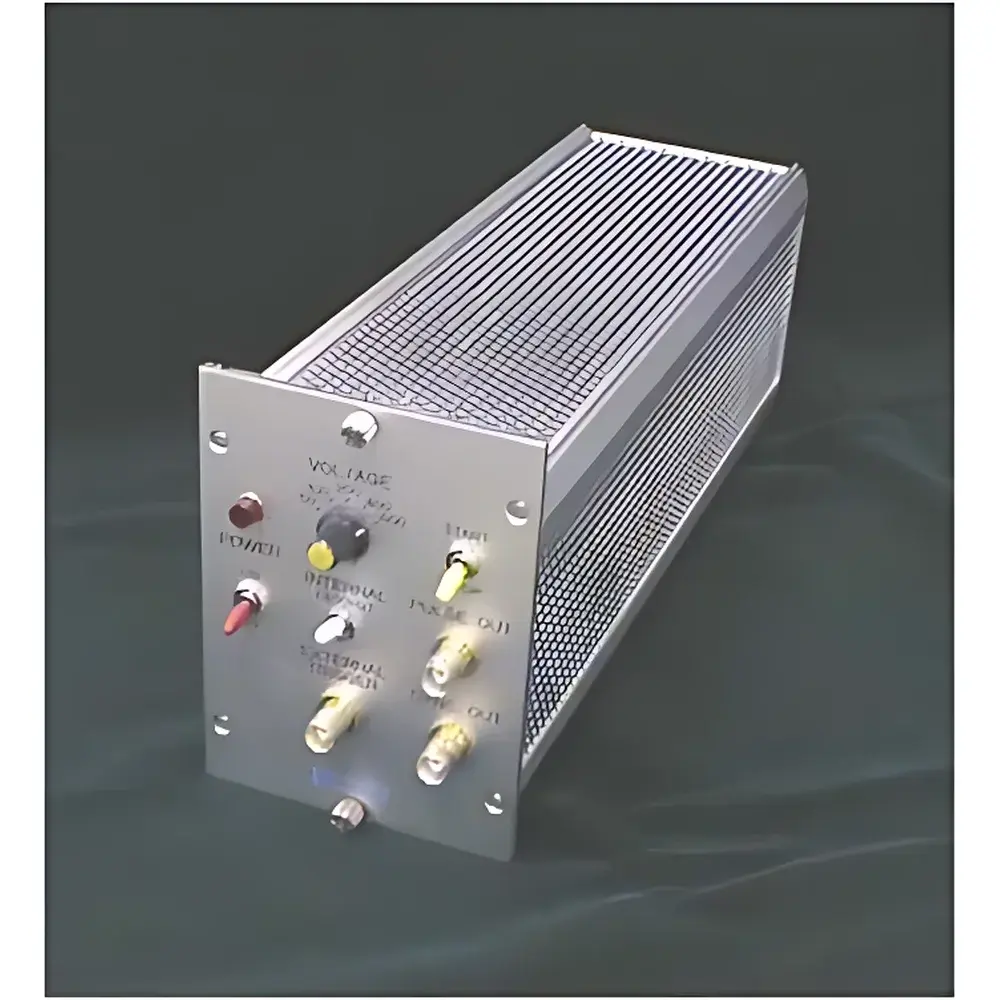
- Modular architecture: Fully separable subsystems—including PEA measurement head, 400 Hz pulse generator, HV amplifier, low-noise signal conditioning, and calibrated oscilloscope—facilitate maintenance, calibration traceability, and system upgrades.
Sample Compatibility & Compliance
The PEANUTS system accommodates planar dielectric specimens with thicknesses ranging from 50 µm to 1.5 mm, including cross-linked polyethylene (XLPE), ethylene-propylene rubber (EPR), polyimide films, epoxy resins, and ion-conductive polymers. Electrode contact is achieved via parallel-plate configuration using brass or stainless-steel electrodes with optional guard rings to minimize fringing field effects. All subsystems comply with IEC 61283 (Electro-acoustic methods for space charge measurement) and support traceable calibration protocols aligned with ISO/IEC 17025 requirements. The HV amplifier meets IEC 61010-1 safety standards for measurement category CAT II, and the entire system operates within ambient temperature range of 15–30 °C at relative humidity ≤65% (non-condensing).
Software & Data Management
The dedicated DOS/V-based PEA acquisition and analysis software (compatible with Windows 2000/XP via PCI-GPIB interface) provides full control over pulse timing, bias ramping, averaging cycles, and trigger synchronization. Raw waveform data from the oscilloscope (LeCroy WR62Xi, 600 MHz bandwidth, 5 GS/s sampling) is automatically imported, processed using deconvolution algorithms to compensate for transducer response, and converted into quantitative space charge density profiles (µC/cm³) versus depth (µm). Software features include batch processing, statistical overlay of multiple measurements, export to CSV and MATLAB formats, and built-in tools for calculating electric field and potential distributions via numerical integration. Audit trails, user access levels, and electronic signature support are implemented to meet GLP and FDA 21 CFR Part 11 documentation requirements for regulated laboratories.
Applications
- High-voltage cable insulation aging assessment: Quantifying space charge buildup at interfaces and defects under thermal-electrical stress.
- Dielectric material screening: Comparative evaluation of charge trapping behavior in novel nanocomposites and biodegradable insulators.
- Organic semiconductor characterization: Mapping charge carrier injection barriers and bulk recombination zones in OLED and OPV layers.
- Electrochemical device R&D: Monitoring ion redistribution and interfacial polarization in solid-state batteries and fuel cell membranes.
- Spacecraft material qualification: Studying tribocharging and discharge-induced degradation in thermal control coatings exposed to simulated LEO plasma environments.
FAQ
What is the minimum detectable charge density?
The system achieves a charge density sensitivity of 0.2 µC/cm³ under standard acquisition settings (1024 averages, 400 Hz pulse rate). Sensitivity may improve with extended averaging or optimized transducer coupling.
Can the system measure space charge in liquids or powders?
No—the PEA method requires mechanically stable, solid dielectrics with parallel, flat surfaces to ensure reliable acoustic wave propagation and unambiguous depth resolution.
Is the 400 Hz pulse generator compatible with external synchronization?
Yes—the pulse generator includes TTL-compatible trigger input and output ports, enabling synchronization with external voltage ramps, temperature controllers, or radiation dose monitors.
Does the software support automated compliance reporting per ASTM D257 or IEC 60243?
While the software does not auto-generate ASTM/IEC test reports, it exports raw and processed datasets in standardized formats that can be directly imported into third-party QA/QC platforms configured for those standards.
What calibration services are available?
Factory calibration includes pulse amplitude linearity verification, time-of-flight alignment, and charge density reference validation using NIST-traceable reference samples. On-site calibration and annual recertification are offered through authorized service centers.



