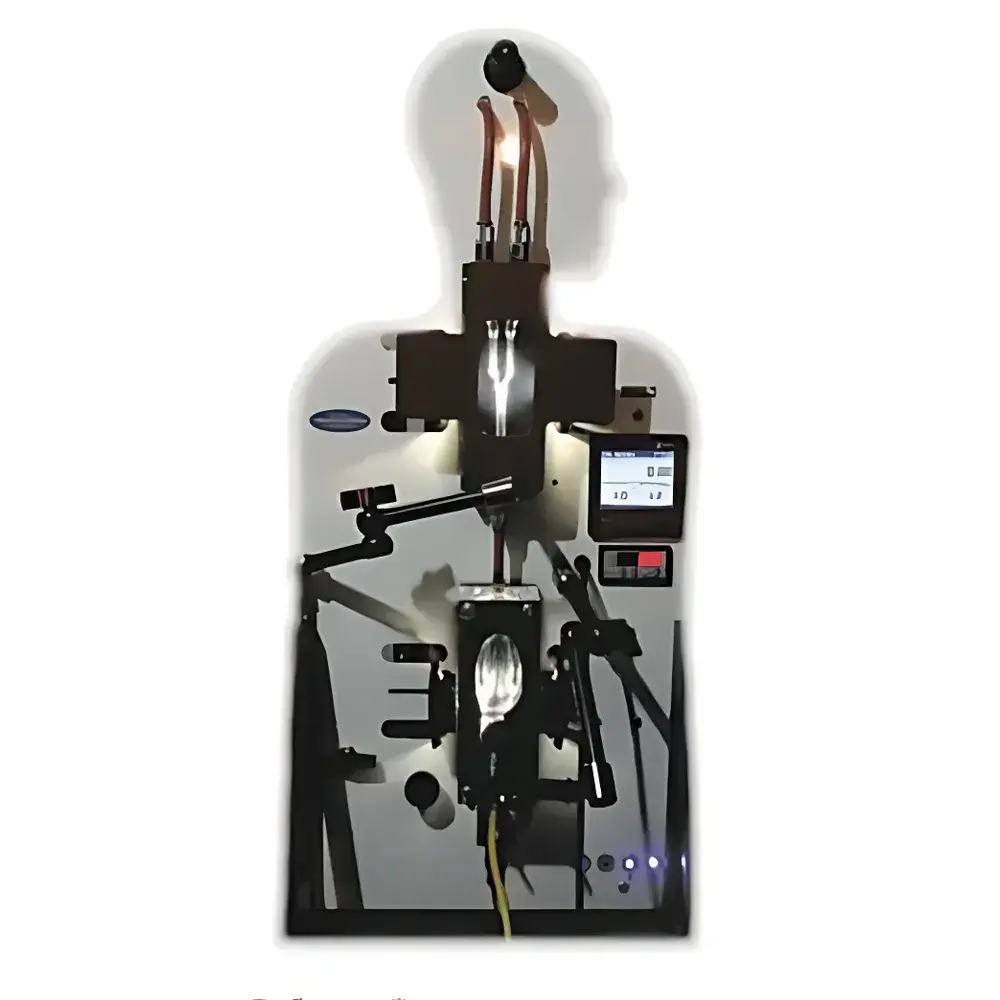
Hemoflow Blood Dynamics Simulation System
| Origin | France |
|---|---|
| Supplier Type | Authorized Distributor |
| Origin Category | Imported |
| Model | Hemoflow |
| Pricing | Available Upon Request |
Overview
The Hemoflow Blood Dynamics Simulation System is an engineered educational and research platform designed to replicate physiological hemodynamic conditions in controlled laboratory environments. Based on first-principles fluid mechanics—including Navier-Stokes governing equations, laminar and transitional flow regimes, and pulsatile pressure-driven flow—it enables quantitative investigation of blood flow behavior in vascular geometries. The system models key cardiovascular phenomena such as vortex formation, flow separation, recirculation zones, boundary layer development, and wall shear stress distribution—critical parameters in understanding atherosclerosis progression, valve hemodynamics, and stent performance. Unlike empirical benchtop trainers, Hemoflow integrates real-time physical flow measurement with computational validation tools, supporting both pedagogical demonstration and hypothesis-driven experimental inquiry aligned with biomedical engineering curricula and preclinical device evaluation protocols.
Key Features
- Physiologically relevant pulsatile flow generation (60–100 bpm), with programmable waveform profiles including sinusoidal, triangular, and patient-derived pulse shapes
- Integrated digital flowmeter and high-accuracy differential pressure transducers for simultaneous volumetric flow rate (mL/min) and pressure gradient (mmHg or kPa) acquisition
- Onboard miniaturized Particle Image Velocimetry (PIV) system with synchronized high-speed camera and laser sheet illumination for non-intrusive velocity field mapping
- Modular vascular phantom interface: supports interchangeable transparent acrylic or silicone-based arterial models—including stenotic, bifurcated, and curved geometries—and clinically sourced mechanical heart valves (non-sterile, ISO 5840-compliant)
- Real-time visualization of streamlines, pathlines, and vorticity fields via FLOWEX™ software’s embedded CFD solver and PIV post-processing module
- Portable benchtop architecture (dimensions: 650 × 420 × 320 mm; weight: <18 kg), enabling deployment across teaching labs, simulation centers, and conference demonstrations
Sample Compatibility & Compliance
The Hemoflow system accommodates Newtonian and non-Newtonian working fluids—such as glycerol-water mixtures, xanthan gum solutions, and FDA-approved blood analogs—to emulate physiological viscosity (3.5–5.0 cP at 37°C) and shear-thinning behavior. All vascular phantoms are fabricated using biocompatible, optically clear materials compliant with ISO 10993-5 cytotoxicity standards. Mechanical heart valve modules conform to ISO 5840-1:2021 for design verification testing. While the system itself is not a medical device, its operational methodology aligns with ASTM F2081 (standard practice for evaluating cardiovascular device hemodynamics) and supports experimental workflows referenced in AHA Scientific Statements on computational modeling validation.
Software & Data Management
FLOWEX™ is a purpose-built, Windows-based application developed for academic and translational research use. It provides synchronized acquisition of flow, pressure, temperature, and PIV data streams with timestamped metadata logging. The software includes built-in calibration routines traceable to NIST standards, export functionality for CSV, HDF5, and VTK formats, and compatibility with MATLAB and Python (via API) for advanced statistical analysis. Audit trail features meet GLP documentation requirements, while user-level access control and electronic signature support facilitate compliance with institutional review board (IRB) protocols. Optional add-ons include turbulence intensity quantification modules and wall shear stress (WSS) calculation based on velocity gradient tensor decomposition.
Applications
- Undergraduate and graduate instruction in fluid mechanics, biomechanics, and cardiovascular physiology
- Validation benchmarking of commercial CFD solvers (e.g., ANSYS Fluent, Simcenter STAR-CCM+) against experimental velocity and pressure datasets
- Preclinical assessment of intravascular devices—including stents, grafts, and transcatheter valves—under dynamic flow conditions
- Investigation of hemodynamic determinants of endothelial cell response, thrombus formation, and plaque instability
- Development and testing of custom 3D-printed vascular models derived from clinical CT/MRI segmentation
- Interdisciplinary capstone projects integrating mechanical design, sensor integration, and data science methodologies
FAQ
Is the Hemoflow system suitable for regulatory submission studies?
No—Hemoflow is classified as a research and education tool, not a Class II/III medical device. It does not carry CE marking or FDA 510(k) clearance, but its test methods inform ISO 14155-compliant preclinical investigations.
Can I import my own CAD vascular models into FLOWEX™?
Yes—FLOWEX™ accepts STEP, IGES, and STL files for geometry import, and supports mesh generation for integrated CFD simulation.
What fluid properties are recommended for simulating human arterial flow?
A 40% glycerol–60% water mixture at 37°C yields ~4.2 cP viscosity and matches the Reynolds number range (200–2000) typical of coronary and carotid arteries under rest and exercise conditions.
Does the system support long-term continuous operation?
Yes—designed for >8-hour uninterrupted runs with thermal stabilization and low-noise peristaltic pumping; maintenance intervals are specified per ISO 13485-aligned service manuals.
Are training and technical documentation provided?
All systems ship with bilingual (English/French) operator manuals, SOP templates, and access to instructor-led virtual workshops covering experimental design, PIV calibration, and CFD-PIV correlation analysis.