
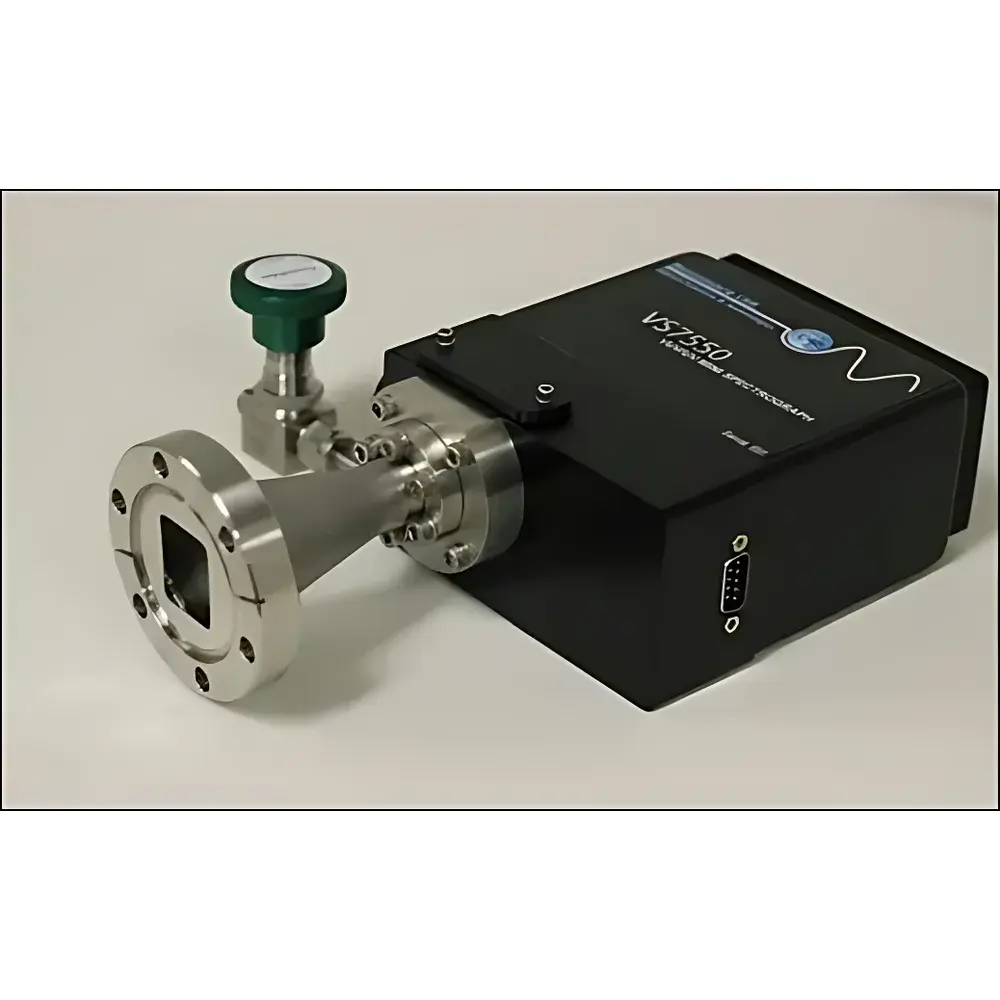
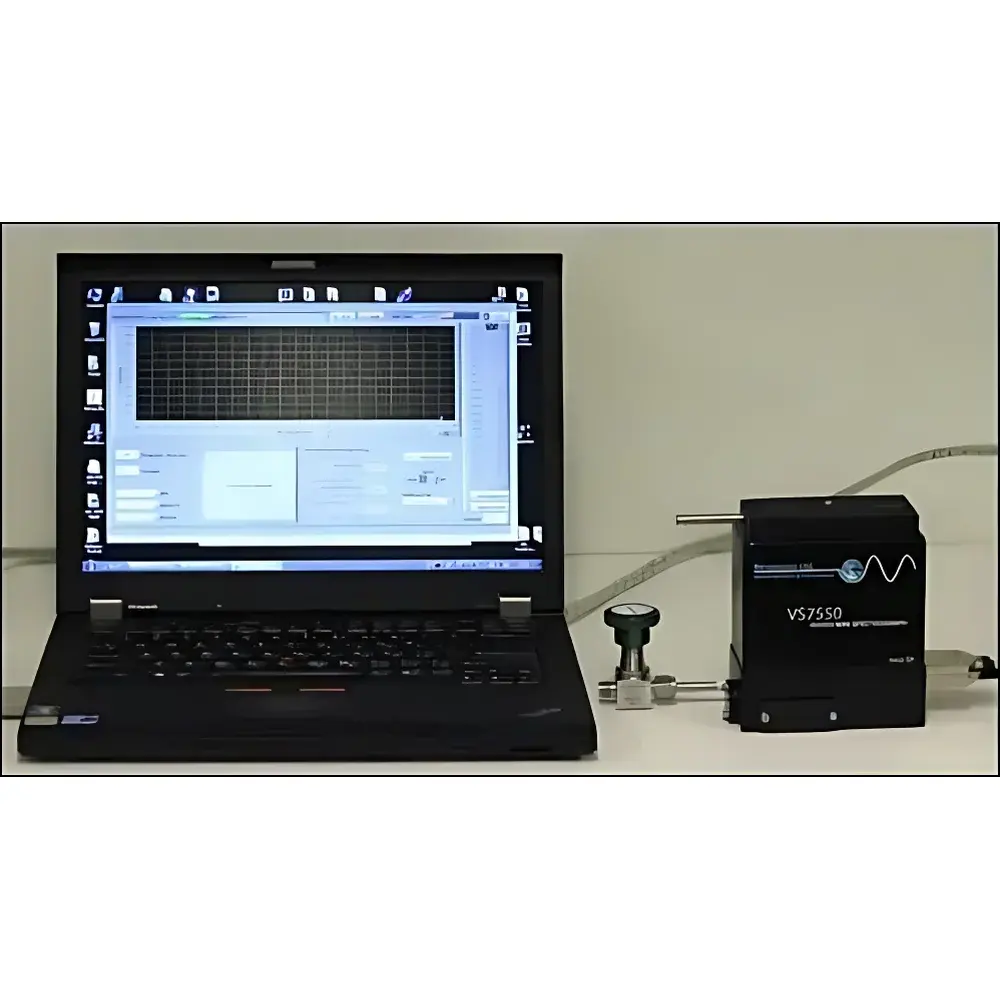
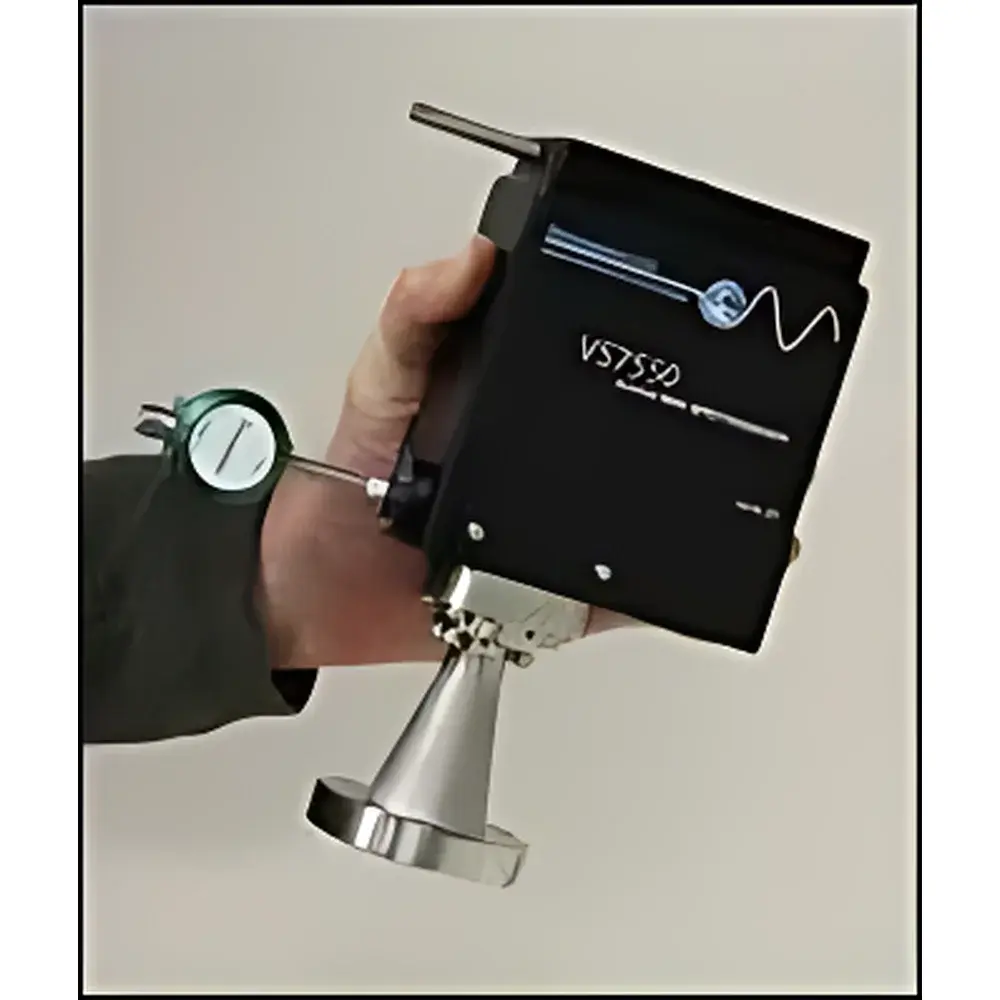
Resonance VS-7550 Vacuum Ultraviolet–Near-Infrared Miniature Czerny–Turner Spectrometer
| Origin | Canada |
|---|---|
| Manufacturer Type | Authorized Distributor |
| Origin Category | Imported |
| Model | VS-7550 |
| Price Range | USD 1,400–2,800 (FOB) |
| Optical Design | Single-beam |
| Detector | Photodiode Array (PDA) |
| Wavelength Range | 104 nm – 1030 nm |
| Automation | Motorized Wavelength Scanning |
| Spectral Bandwidth | Not Applicable (Fixed-grating, slit-defined resolution) |
| Wavelength Accuracy | ±0.35 nm |
| Stray Light | ≤0.01% T |
Overview
The Resonance VS-7550 is a compact, high-performance vacuum ultraviolet (VUV) to near-infrared (NIR) spectrometer engineered for precision spectral acquisition across an exceptionally broad range — from the deep VUV at 104 nm through the visible and into the NIR up to 1030 nm. Based on a robust Czerny–Turner optical architecture with f/3.2 throughput at the detector plane, it delivers high light-gathering efficiency and intrinsic wavelength stability. Unlike conventional UV-Vis spectrophotometers limited by atmospheric oxygen absorption below ~190 nm, the VS-7550 integrates a UHV-compatible MgF₂ window and laminar-flow purge system, enabling reliable operation down to 104 nm without requiring full chamber bake-out. Its miniature footprint (<15 cm × 10 cm × 8 cm) and USB 2.0 interface support benchtop, portable, and in-situ deployment — including integration into UHV systems via standardized CF-40 flanges. The instrument operates on first-principles spectroscopic measurement: dispersion is achieved via user-interchangeable ruled or holographic gratings (600–4200 grooves/mm), while spectral resolution is governed by slit width (25–400 µm, software-controlled), grating groove density, and detector pixel pitch.
Key Features
- Ultra-broad spectral coverage: 104 nm – 1030 nm, enabled by MgF₂ optics, UHV-grade window, and laminar N₂/Ar purge path
- High-throughput Czerny–Turner design with effective f-number adjustable from f/3.2 to f/8.4 via motorized input aperture control
- Software-tunable entrance slit (25–400 µm) and order-sorting filter wheel for harmonic suppression and spectral purity
- Motorized grating rotation stage supporting full-range spectral mapping and multi-grating panoramic acquisition
- Photodiode array detector with phosphor coating optimized for VUV quantum efficiency (QE >15% at 115 nm) and extended response to 1000 nm
- Integrated dark exposure compensation, real-time baseline correction, and on-board nonlinearity calibration
- UHV-compatible mechanical interface (CF-40) with removable window assembly for in-situ baking and contamination mitigation
- USB 2.0 interface with <10 m cable option; fully remote-controllable via ASCII command protocol and vendor SDK (C/C++, Python, LabVIEW)
Sample Compatibility & Compliance
The VS-7550 is designed for gas-phase, plasma, synchrotron beamline, and laser-induced emission analysis under low-pressure or vacuum environments. It accepts free-space collimated beams or fiber-coupled input (SMA 905). Sample interfaces include optional vacuum feedthroughs, telescope couplers, and flow controllers for reactive gas handling. All optical components comply with ISO 10110 surface quality standards; MgF₂ windows meet ASTM F2789 specifications for VUV transmission stability. The system supports GLP/GMP-aligned data integrity workflows: timestamped spectra, audit-trail-enabled parameter logging, and optional NIST-traceable calibration certificates (SRM 2031, 2032, and 1931 series) for wavelength and radiometric validation.
Software & Data Management
The instrument is operated via Resonance SpectraControl™ v4.x — a cross-platform application providing real-time spectrum acquisition, multi-channel averaging, peak integration, and derivative analysis. Raw data are saved in HDF5 format (self-describing, metadata-rich) with embedded calibration coefficients, environmental logs (pressure, temperature), and hardware state vectors. Export options include CSV, ASCII, and JCAMP-DX for LIMS integration. The SDK enables custom automation in compliance-critical environments, including support for 21 CFR Part 11 electronic signatures and audit trail generation when deployed with validated IT infrastructure.
Applications
- VUV absorption spectroscopy of atomic and molecular species (e.g., O, H, N, NO, CO, CH₄) in combustion, plasma processing, and planetary atmospheric simulation
- Photoemission yield measurements for photocathode characterization and EUV/VUV detector responsivity mapping
- In-line monitoring of excimer lamp output (e.g., KrCl at 222 nm, ArF at 193 nm) and LED spectral aging
- Calibration transfer between synchrotron beamlines and laboratory sources using NIST-traceable reference spectra
- Time-resolved VUV transient absorption in pump-probe experiments with gated PDA readout
- Qualitative and quantitative analysis of thin-film optical constants via variable-angle VUV reflectometry
FAQ
What vacuum level is required for stable operation below 120 nm?
A base pressure of ≤5×10⁻⁶ Torr is recommended; the laminar purge system maintains window transmission integrity even during brief exposures to 10⁻³ Torr with continuous inert gas flow.
Can the VS-7550 be used with fiber optic input?
Yes — SMA 905 connectors are supported; however, for wavelengths <160 nm, solarization-resistant fused silica or MgF₂-core fibers must be specified.
Is NIST-traceable calibration included standard?
No — it is available as an optional add-on with documented uncertainty budgets per NIST SP 250-95 and ISO/IEC 17025 requirements.
How is detector dark current managed during long integrations?
The system performs synchronized dark-frame acquisition before each spectral scan, with temperature-stabilized PDA housing maintaining drift <0.02% per hour.
What grating options ship with the base configuration?
The standard configuration includes a 1200 g/mm blazed grating (120 nm blaze) optimized for 104–300 nm; additional gratings are field-replaceable without realignment.





