
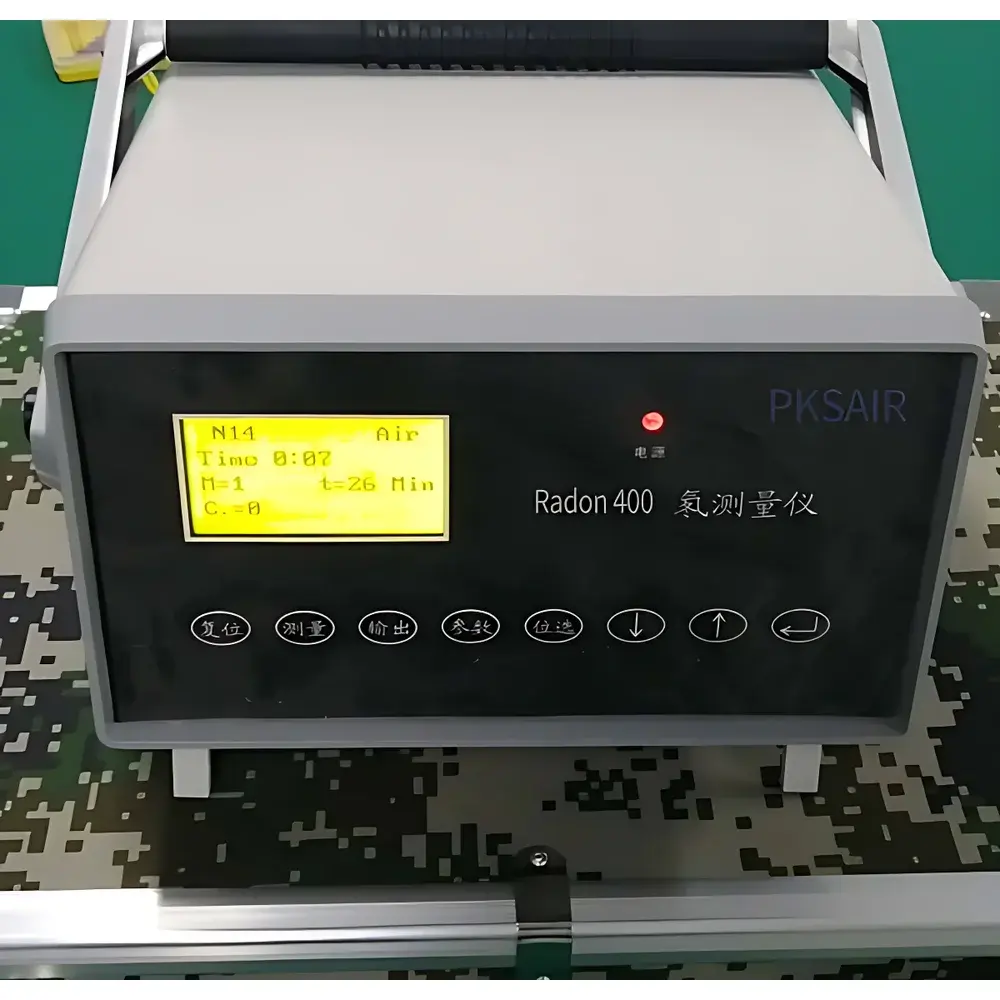
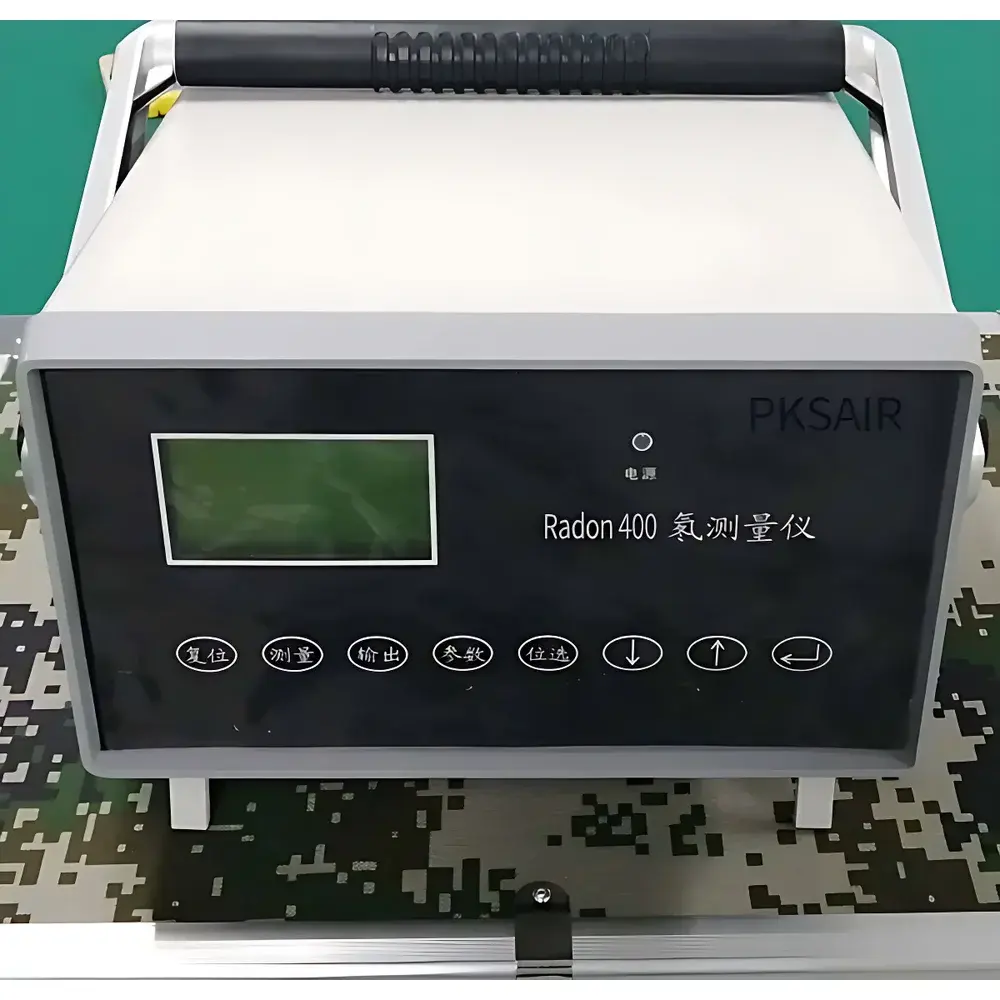
PKSAIR Radon 400 Continuous Alpha Spectrometric Radon Monitor for Air, Soil, and Water
| Brand | PKSAIR |
|---|---|
| Model | Radon 400 |
| Origin | Beijing, China |
| Detection Principle | Pump-Driven Electrostatic Collection of RaA (²¹⁸Po) |
| Measurement Range | 0–1,000,000 Bq/m³ |
| Minimum Detectable Concentration | 0.01 Bq/m³ |
| Response Time | Adjustable from 5 to 99 min (default fast mode: 15 min) |
| Detector Type | α-Sensitive Silicon Semiconductor Detector (γ-Insensitive) |
| Sensitivity | 50 cpm per Bq/m³ |
| Sampling Flow Rate | 1.0 L/min ±5% |
| Uncertainty | <15% (at Rn ≥ 200 Bq/m³) |
| Measurement Chamber Volume | 0.8 L |
| Data Storage Capacity | 1,000 records |
| Power Supply | Internal 7.4 V / 10,000 mAh Li-ion Battery |
| Operating Temperature | −20 °C to +45 °C |
| Relative Humidity Limit | ≤95% RH (non-condensing) |
| Dimensions | 390 × 380 × 245 mm |
| Weight | 6.4 kg |
| Compliance | GB/T 14582–1993, GB 50325–2020, JJG 825–2013 |
Overview
The PKSAIR Radon 400 is a field-deployable, continuous radon monitoring instrument engineered for quantitative measurement of radon-222 (²²²Rn) activity concentration in air, soil gas, and aqueous samples. It operates on the well-established electrostatic collection principle: radon progeny—specifically the short-lived alpha-emitting isotope polonium-218 (²¹⁸Po, half-life 3.1 min)—is selectively deposited onto a passivated silicon semiconductor detector surface via controlled electrostatic precipitation following active pump-driven sampling. This method ensures high specificity for radon decay products while rejecting background gamma radiation, as confirmed by its γ-insensitive detector architecture. The instrument complies fully with Chinese national standards GB/T 14582–1993 (determination of radon in environmental air), GB 50325–2020 (indoor environmental pollution control for civil construction projects), and JJG 825–2013 (verification regulation for radon meters). Its integrated 0.8 L measurement chamber, precision micro-vacuum pump (1.0 L/min flow), and on-board desiccant system mitigate humidity-induced counting losses—a critical factor in field-based radon metrology.
Key Features
- Active sampling via calibrated micro-pump with stable 1.0 L/min flow rate, enabling reproducible volumetric intake across variable ambient conditions
- Electrostatic collection chamber optimized for efficient deposition of ²¹⁸Po ions, minimizing recoil loss and maximizing alpha detection geometry
- High-resolution silicon semiconductor detector with energy discrimination capability, enabling selective identification of ²¹⁸Po alpha peaks (6.00 MeV) and rejection of interfering beta/gamma events
- Integrated desiccant drying system at the inlet to maintain relative humidity below detector saturation thresholds, ensuring measurement stability in humid environments (≤95% RH)
- Configurable measurement cycles: rapid mode (15 min), precision mode (5–99 min adjustable), and continuous 26-min cycle—tailored to site-specific radon variability and regulatory reporting requirements
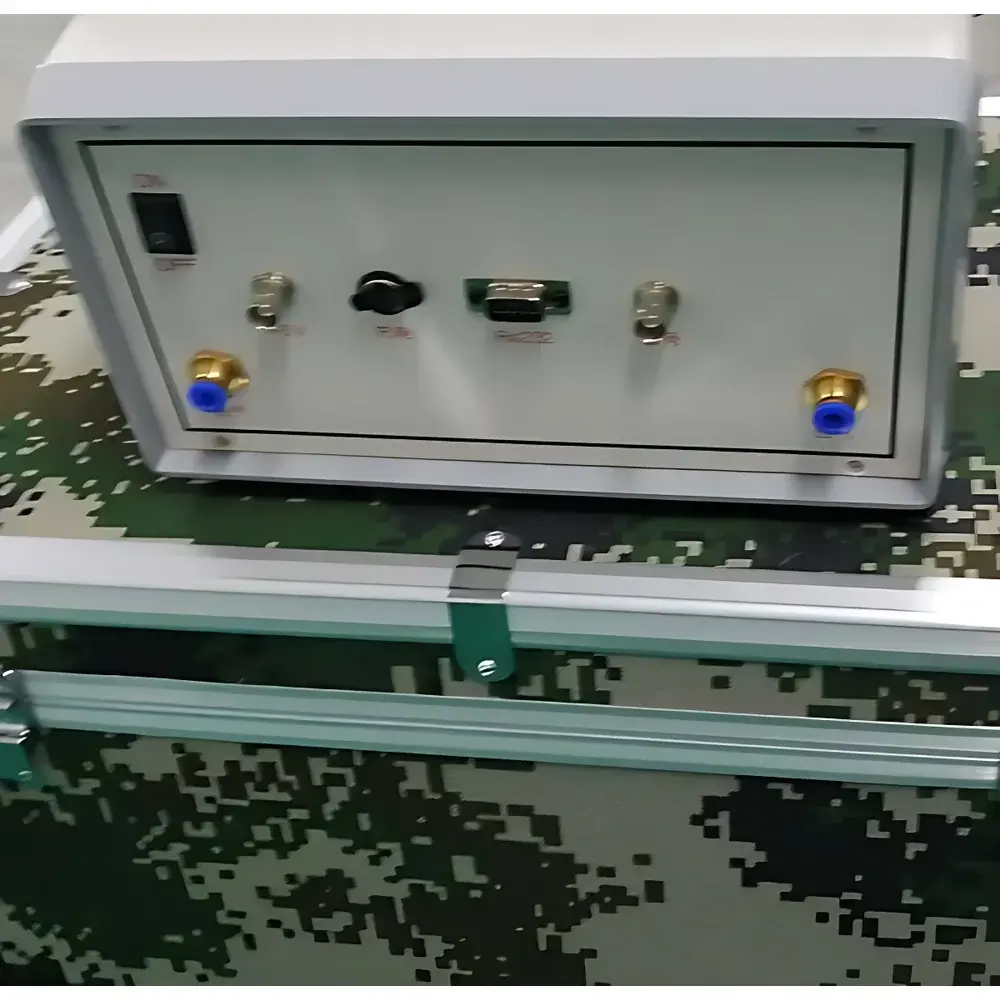
- On-device data logging (1,000 records), dual interface support (RS-232 serial + USB), and real-time output capability for integration into centralized environmental monitoring networks
Sample Compatibility & Compliance
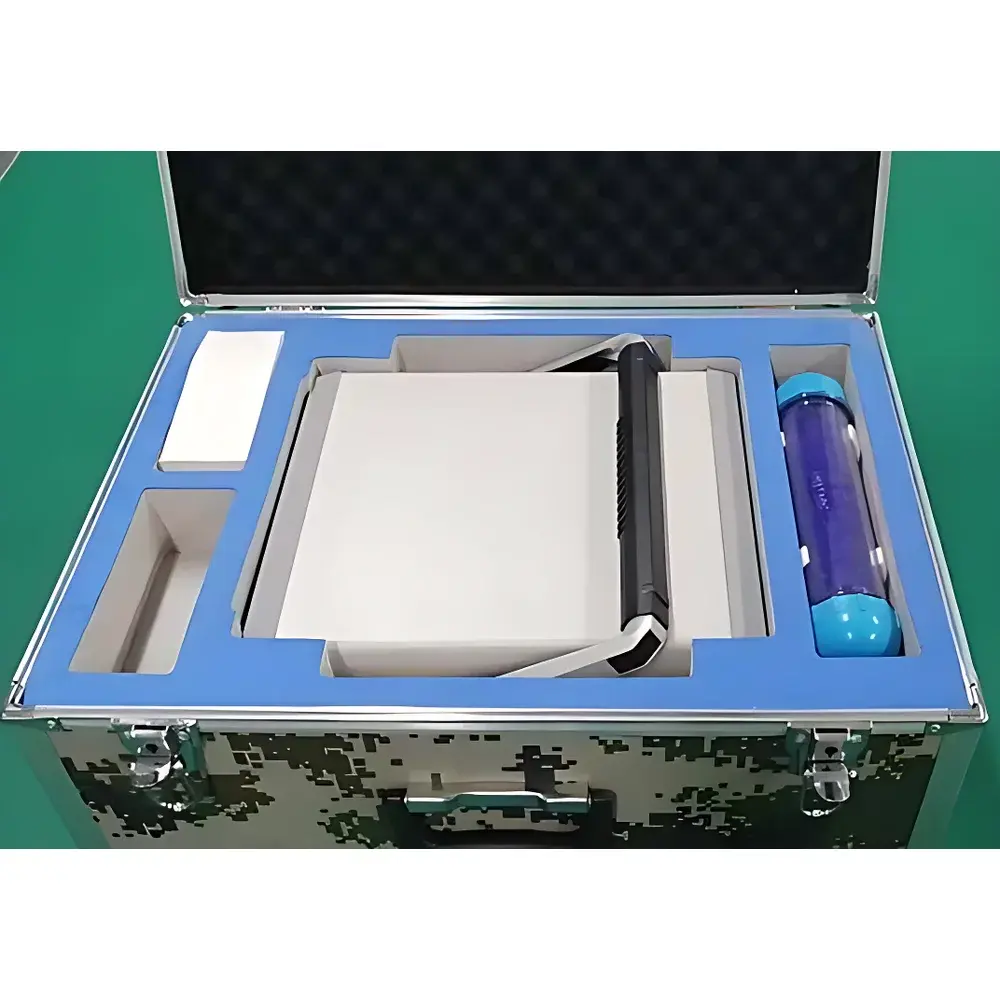
The Radon 400 supports three primary sampling matrices through modular accessories: ambient air (standard configuration), soil gas (via optional stainless-steel probe set with driving rod and sampler), and waterborne radon (using the dedicated bubbling apparatus—“drum blower” unit). All configurations maintain traceability to SI units via gravimetric or volumetric calibration protocols aligned with ISO/IEC 17025 principles. The instrument satisfies metrological verification requirements under JJG 825–2013, including linearity, lower limit of detection (LLD = 0.01 Bq/m³), and repeatability (RSD < 8% at 500 Bq/m³). For regulatory compliance in building safety assessments, it meets the performance criteria specified in GB 50325–2020 Annex D for soil radon surveys—including minimum sampling depth (≥50 cm), spatial resolution (≤10 m grid), and reporting uncertainty (<15% above 200 Bq/m³).
Software & Data Management
Data acquisition and analysis are managed through PKSAIR’s proprietary RadonView PC software (Windows-compatible), which provides spectral visualization, decay-corrected activity calculation, and automated report generation in PDF/CSV formats. Raw pulse-height spectra are stored alongside metadata (timestamp, temperature, humidity, flow rate, battery voltage) to support audit-ready documentation. The system implements basic ALARA-aligned data integrity safeguards: timestamped records, non-erasable internal memory, and user-accessible firmware versioning. While not certified for FDA 21 CFR Part 11 compliance, the software architecture supports GLP-aligned workflows—e.g., operator ID tagging, electronic signature placeholders, and exportable audit logs—making it suitable for academic research, environmental consultancy, and municipal health department use.
Applications
- Indoor radon risk assessment in residential and commercial buildings per GB 50325–2020 and WHO reference levels (100 Bq/m³)
- Soil gas radon mapping for uranium exploration, geological fault tracing, and seismic precursor studies
- Aquatic radon profiling in groundwater systems to identify subsurface recharge zones and geothermal anomalies
- Post-mitigation verification of radon reduction systems (e.g., sub-slab depressurization, membrane barriers)
- Educational laboratories conducting nuclear physics experiments on radioactive decay kinetics and alpha spectroscopy fundamentals
- Environmental impact assessments (EIAs) for infrastructure projects in radon-prone geological formations
FAQ
What sampling media can the Radon 400 measure?
It measures radon-222 in ambient air (standard), soil gas (with optional probe kit), and water (using the drum blower accessory for air-stripping).
How does the instrument handle high humidity?
An integrated desiccant cartridge removes moisture from the sampled air stream prior to electrostatic collection, preventing condensation on the detector surface and maintaining counting efficiency.
Is calibration traceable to national standards?
Yes—factory calibration is performed using NIM-traceable radon sources; users may perform field verification using certified check sources compliant with JJG 825–2013.
Can data be exported for third-party analysis?
Yes—raw counts, calculated concentrations, and environmental parameters are exportable via USB as CSV files compatible with Excel, MATLAB, and GIS platforms.
What is the battery life during continuous operation?
The 7.4 V / 10,000 mAh lithium-ion battery supports ≥12 hours of continuous sampling at 15-min cycle intervals, with low-power sleep mode extending standby time to 72 hours.
Related Products







