
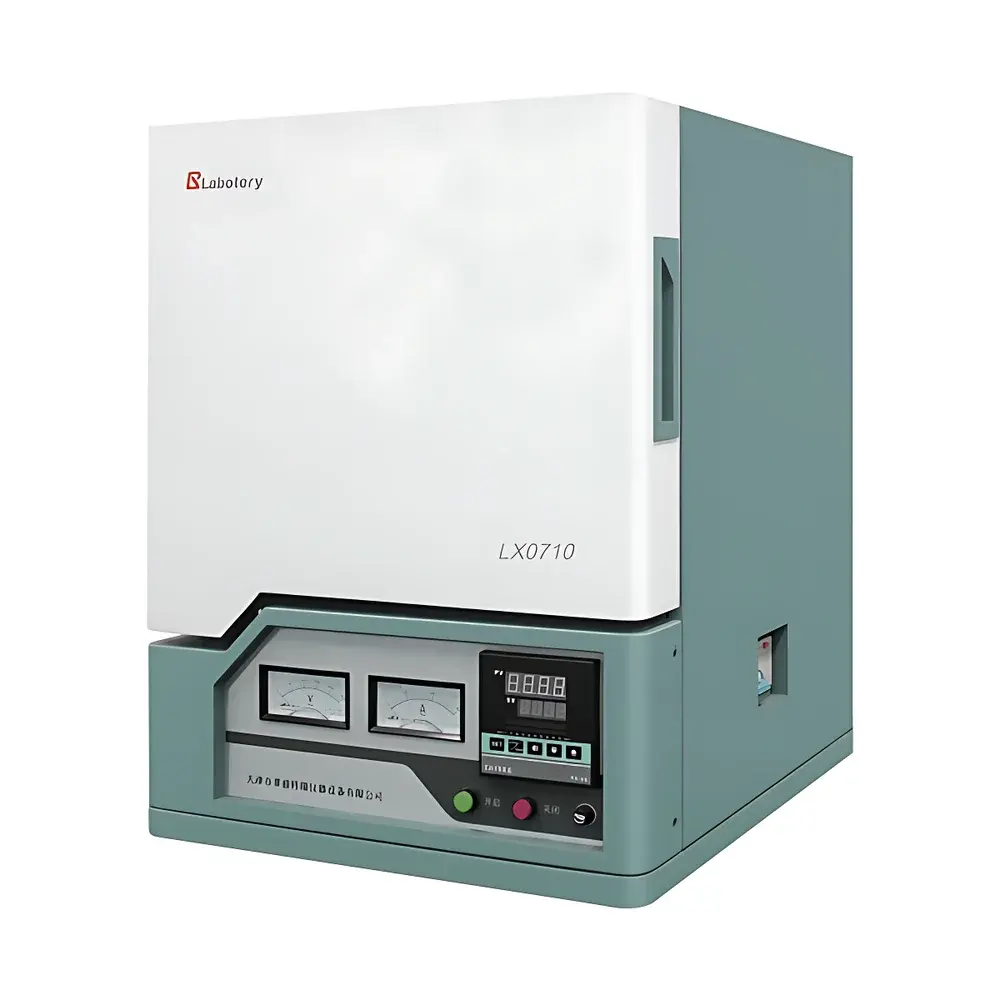
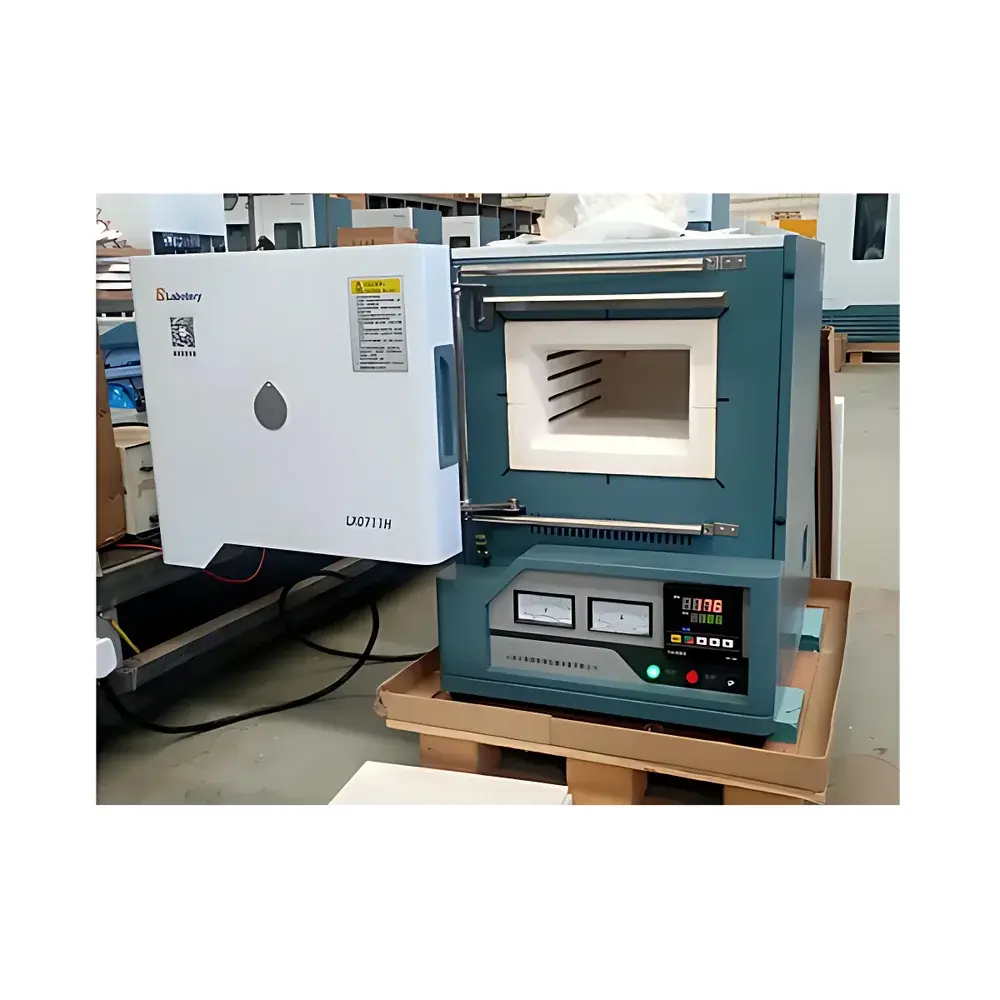
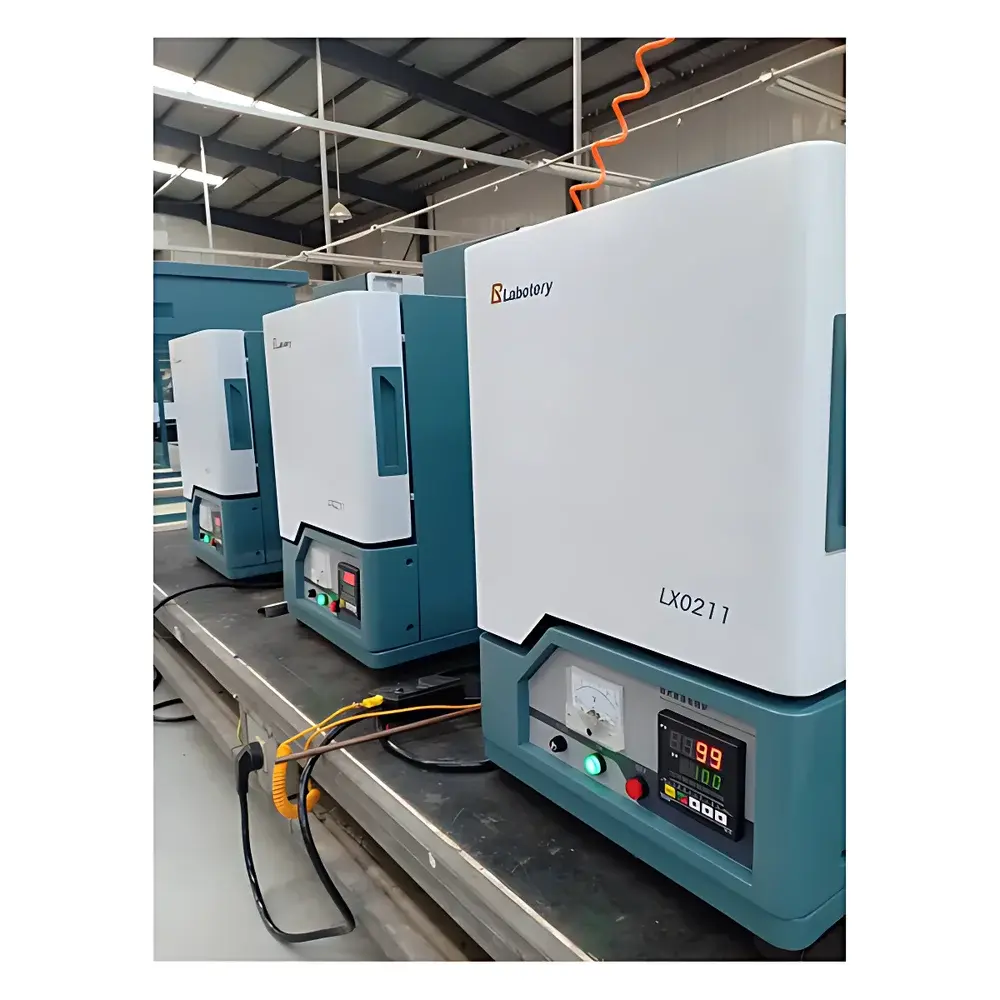
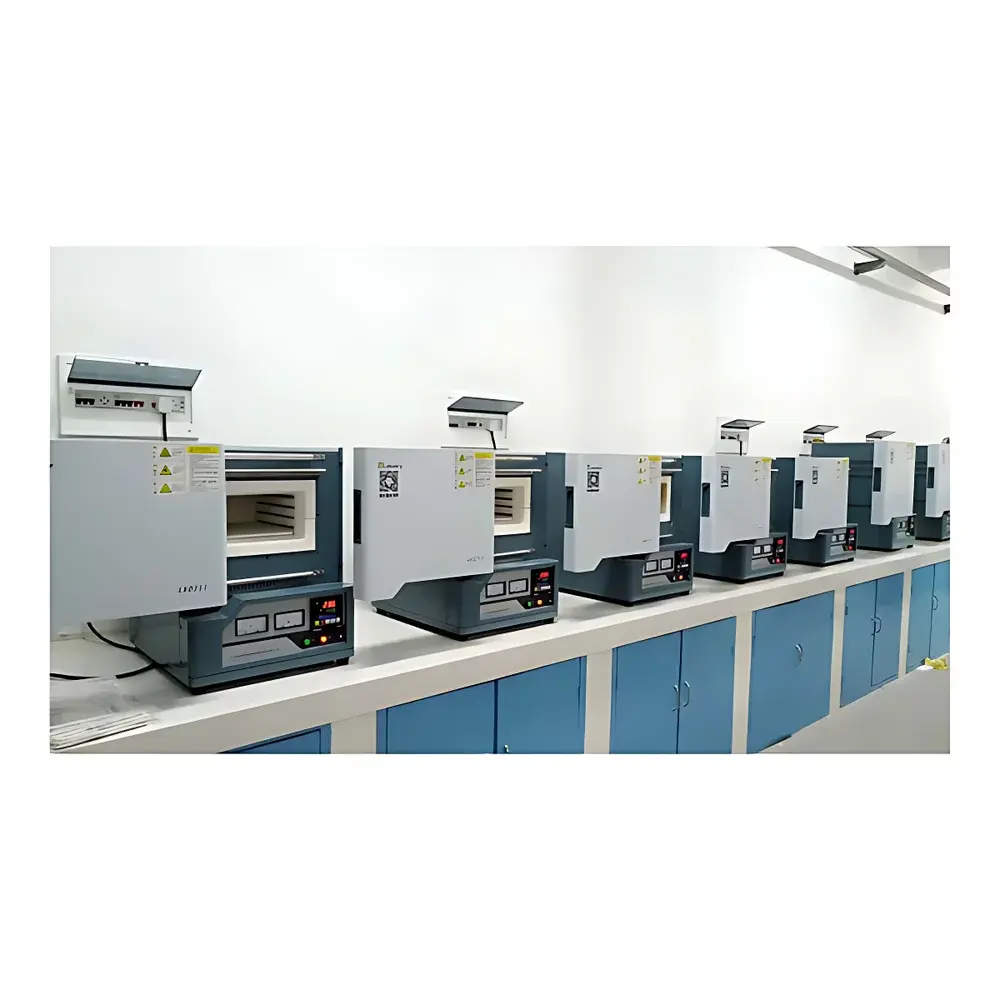
Labotery LX1811 Box-Type High-Temperature Resistance Furnace
| Brand | Labotery |
|---|---|
| Origin | Tianjin, China |
| Model | LX1811 |
| Instrument Type | Box Furnace |
| Max Temperature | 1200 °C |
| Temperature Control Accuracy | ±1 °C |
| Rated Power | 7.5 kW |
| Heating Rate (to Max Temp) | ≤20 °C/min |
| Heating Element | Alloy Wire |
| Internal Chamber Dimensions | 250 × 300 × 250 mm |
| Rated Voltage | 380 V |
| Working Temperature Range | 750–1100 °C |
| Chamber Volume | 18 L |
| Net Weight | 90 kg |
Overview
The Labotery LX1811 is a precision-engineered box-type high-temperature resistance furnace designed for controlled thermal processing in research laboratories, quality control environments, and materials development workflows. Operating on resistive heating principles, it utilizes high-stability alloy wire elements embedded within a monolithic multi-crystalline mullite fiber insulation matrix—fabricated via vacuum adsorption to ensure uniform density and thermal homogeneity across the entire chamber. With a maximum operating temperature of 1200 °C and a stable working range of 750–1100 °C, the LX1811 supports applications requiring precise thermal profiles, including ashing, heat treatment, sintering, calcination, and pre-conditioning of ceramic and metallic samples. Its robust dual-shell construction incorporates an air-gap insulating layer and intelligent forced-air cooling that activates automatically when inner shell surface temperatures exceed safe thresholds—ensuring external surface temperatures remain below 50 °C under continuous operation, thereby meeting IEC 61000-3-3 guidelines for operator safety and thermal management.
Key Features
- Monolithic mullite fiber chamber with vacuum-formed uniform density—minimizes thermal gradient deviation and eliminates cracking due to differential expansion.
- Dual-layer steel housing with integrated air-gap thermal barrier and programmable centrifugal cooling fan—reduces energy consumption by >60% compared to conventional refractory brick furnaces.
- Lateral sliding door mechanism: moves hot firebrick away from operator during access, eliminating direct radiant exposure and complying with ISO 13857 safety clearance requirements.
- Automatic power cutoff upon door opening—certified per EN 60519-2 for electrical safety in industrial heating equipment.
- Intelligent soft-start control circuitry: limits inrush current to <1.5× rated current, reducing localized grid voltage sag and extending component service life.
- Imported microprocessor-based controller with PID auto-tuning, fuzzy logic adaptation, and non-volatile parameter memory—supports up to 30 segment programmable ramp-soak profiles.
- Triple-stage safety system: independent overtemperature cut-off (mechanical backup), earth leakage protection (30 mA sensitivity), and real-time thermal runaway monitoring.
Sample Compatibility & Compliance
The LX1811 accommodates standard crucibles (alumina, quartz, silicon carbide) and sample boats up to 250 mm wide × 300 mm deep × 250 mm high. Its inert, low-outgassing chamber environment is suitable for oxidative, inert, or limited-reducing atmospheres (when used with optional gas purge kits). The furnace meets CE marking requirements under the Low Voltage Directive (2014/35/EU) and Electromagnetic Compatibility Directive (2014/30/EU). It supports GLP-compliant documentation through time-stamped temperature logging (via optional RS485/Modbus interface) and satisfies prerequisite conditions for ASTM E1112, ISO 8573-1 (compressed air purity), and USP heavy metal testing protocols where thermal pretreatment is specified.
Software & Data Management
While the LX1811 operates autonomously via its front-panel controller, optional communication modules enable integration into centralized lab management systems. The standard RS485 port supports Modbus RTU protocol for bidirectional data exchange—including setpoint synchronization, real-time PV transmission, alarm status reporting, and event-triggered data capture. When paired with Labotery’s optional ThermalLog Suite (v3.2+), users gain audit-trail functionality compliant with FDA 21 CFR Part 11—featuring electronic signatures, immutable session logs, and user-access-level permissions. All temperature profiles are timestamped and exportable in CSV or PDF format for regulatory submission.
Applications
- Ash content determination per AOAC 942.05 and ISO 2171 in food, feed, and pharmaceutical raw materials.
- Thermal gravimetric pre-treatment prior to XRD or SEM analysis of metal oxides and catalyst supports.
- Controlled oxidation of carbon-based composites in aerospace material qualification (per AMS 2750E Zone 2 requirements).
- Pre-firing of dental porcelain substrates and bioceramic implants under ISO 6872-defined thermal cycles.
- Calibration verification of thermocouples (Type S, R, B) using fixed-point reference methods at 961.78 °C (Ag freezing point).
FAQ
What is the recommended maintenance schedule for the LX1811 furnace?
Perform visual inspection of heating elements and insulation integrity every 200 operational hours; recalibrate temperature sensors annually or after 1,000 cycles using NIST-traceable reference thermocouples.
Can the LX1811 be operated under inert gas flow?
Yes—when equipped with the optional gas inlet/outlet ports and flow regulator kit, it supports continuous nitrogen or argon purging at ≤5 L/min, maintaining oxygen levels <100 ppm inside the chamber.
Is the controller compatible with SCADA systems?
Yes—the built-in Modbus RTU interface enables seamless integration with Siemens SIMATIC, Rockwell FactoryTalk, or Ignition SCADA platforms without additional gateways.
Does the furnace support ramp-hold programming?
Yes—up to 30 independent segments with customizable rate (0.1–30 °C/min), soak duration (0–99 h 59 min), and loop repetition count.
What safety certifications does the LX1811 carry?
CE-marked per EN 60519-2 (safety of industrial electroheating equipment) and EN 61000-6-4 (EMC emission limits); factory-tested for dielectric strength (2 kV AC/1 min) and protective conductor continuity (<0.1 Ω).



