
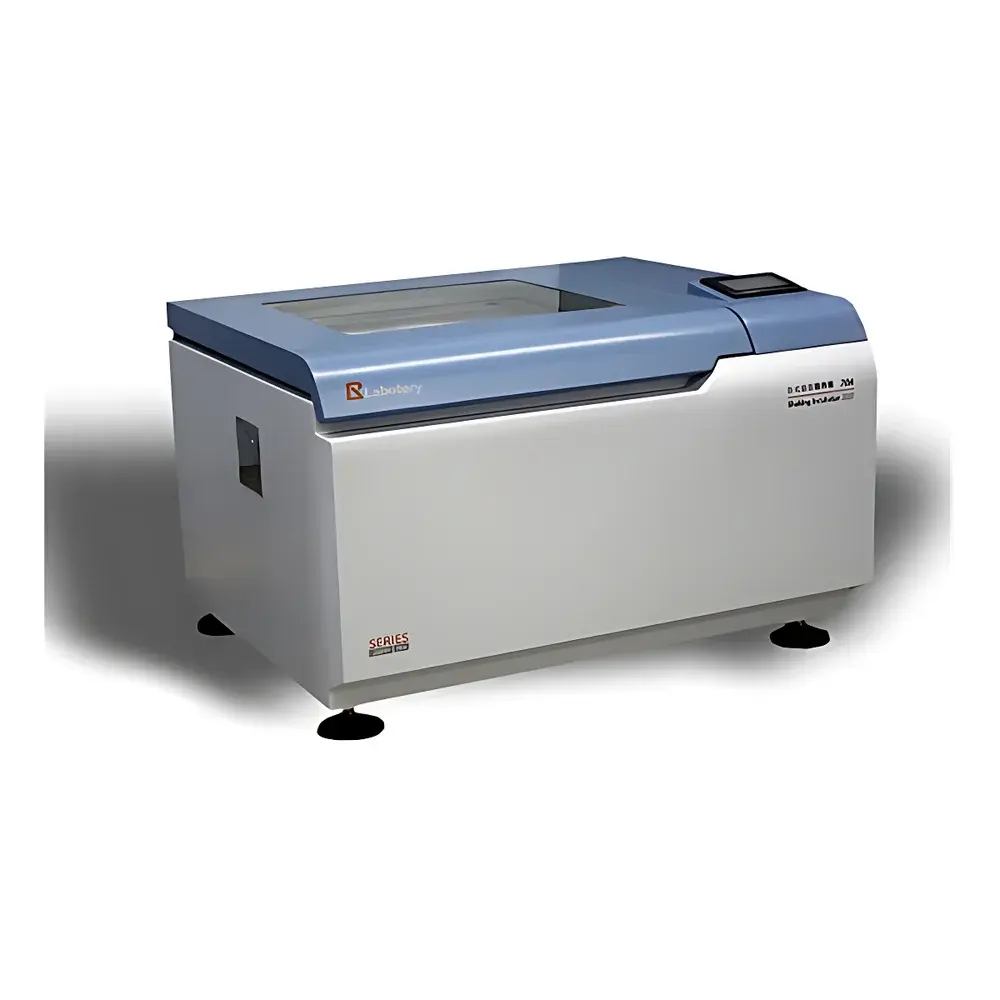
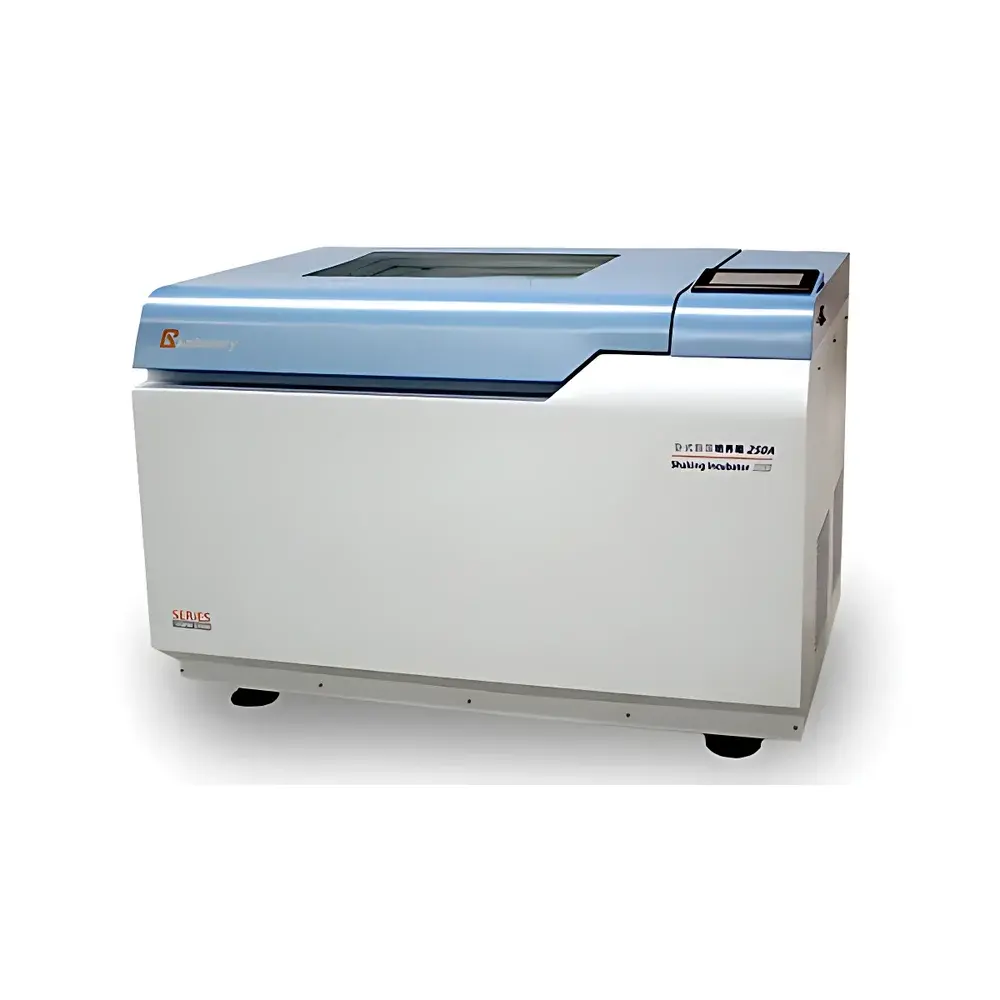
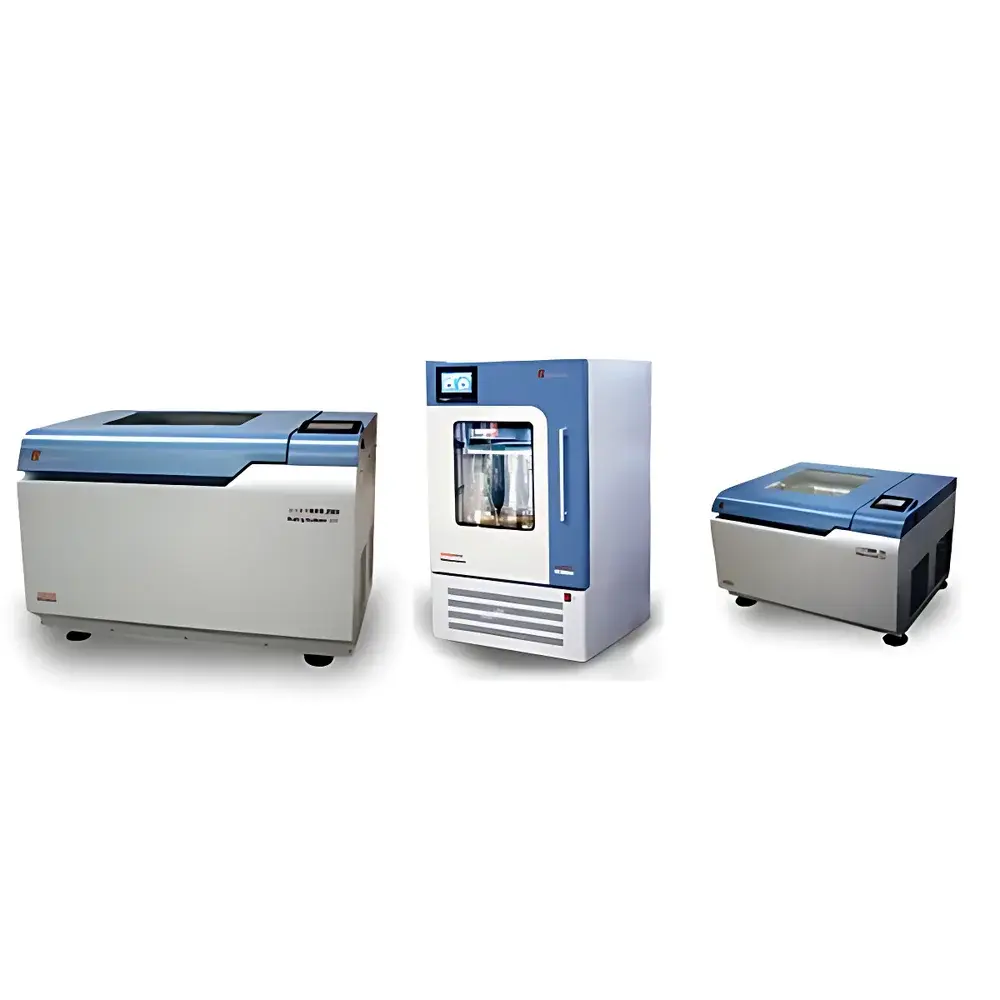
Labotery ZQPW-90G Precision Horizontal Illuminated Orbital Shaker Incubator
| Brand | Labotery |
|---|---|
| Origin | Tianjin, China |
| Model | ZQPW-90G |
| Shaker Type | Full-Temperature Orbital Incubator Shaker |
| Oscillation Frequency | 10–400 rpm |
| Oscillation Amplitude | Ø26 mm |
| Temperature Range (Dark) | 4–65°C |
| Temperature Range (Illuminated) | 10–65°C |
| Number of Shelving Plates | 1 |
| Illuminance Range (Standard) | 0–16,000 lx (multi-step adjustable) |
| Illuminance Range (Optional) | 0–30,000 lx |
| Temperature Resolution | 0.1°C |
| Temperature Uniformity | ±0.5°C at 37°C |
| Control System | 16-bit true-color touchscreen HMI |
| Timer Range | 0–999 h 59 min |
| Power Consumption | 0.7 kW |
| Input Voltage | AC 220 V ±10%, 50–60 Hz |
| External Dimensions (W×D×H) | 900 × 736 × 640 mm |
| Tray Dimensions | 520 × 430 mm |
| Standard Capacity Configurations | 100 mL × 25 |
Overview
The Labotery ZQPW-90G is a precision-engineered horizontal orbital shaker incubator designed for demanding life science applications requiring simultaneous temperature control, programmable illumination, and stable rotational agitation. Unlike conventional static incubators or non-temperature-controlled shakers, the ZQPW-90G integrates P.I.D.-regulated thermal management with full-spectrum LED lighting and high-fidelity orbital motion—enabling reproducible aerobic microbial cultivation, photobioreactor studies, plant tissue culture under controlled light regimes, and light-sensitive enzyme kinetics assays. Its horizontal configuration ensures uniform heat distribution and minimizes shear stress on shear-sensitive cultures (e.g., mammalian suspension cells, microalgae), while the sealed yet ventilated chamber—featuring a tempered glass observation door and spring-loaded air-permeable vents—maintains optimal O2/CO2 exchange without compromising temperature or humidity stability. The unit employs an imported fluorine-free compressor and a brushless servo motor drive system, delivering long-term operational reliability and energy efficiency compliant with IEC 61000-6-3 electromagnetic compatibility standards.
Key Features
- Integrated dual-function architecture: combines full-temperature incubation (4–65°C in dark mode; 10–65°C under illumination) with precise orbital shaking (10–400 rpm, ±1 rpm accuracy, Ø26 mm amplitude).
- Full-spectrum white LED illumination system with multi-step intensity adjustment (standard 0–16,000 lx; optional upgrade to 0–30,000 lx), optimized for photosynthetic efficiency and circadian rhythm studies.
- 16-bit true-color touchscreen HMI with intuitive interface: supports both fixed-value and multi-segment program modes; displays real-time temperature, speed, illumination, timer, and environmental temperature (via external probe).
- Comprehensive data logging: stores up to 12 months of timestamped operational history (temperature, speed, light intensity, alarm events); exportable via USB to CSV or image format (real-time/historical curves, screenshots).
- Robust mechanical and safety design: stainless steel mirror-finish interior chamber; electrostatically coated steel exterior; tempered double-glazed observation door; automatic motor stop upon door opening; over-temperature audiovisual alarm with auto-cutout.
- Advanced control integrity: password-protected interface lock; power-loss memory retention; self-diagnostic fault reporting; integrated UV germicidal lamp (optional activation) and task lighting.
Sample Compatibility & Compliance
The ZQPW-90G accommodates standard laboratory vessels—including Erlenmeyer flasks (100–1000 mL), culture bottles, and multi-well plates—via its universal spring-clamp tray (520 × 430 mm). Its temperature uniformity of ±0.5°C at 37°C meets ASTM E145 Class II performance criteria for laboratory incubators. While not certified to ISO 13485 or FDA 21 CFR Part 11 out-of-the-box, the system’s audit-trail-capable data logging (with user ID tagging, time stamps, and immutable event logs) supports GLP/GMP-aligned workflows when deployed with documented SOPs. Environmental operating conditions are specified for ambient temperatures of 5–25°C and relative humidity ≤80% RH (non-condensing), consistent with ISO/IEC 17025 clause 5.3.2 for equipment environmental validation.
Software & Data Management
The embedded firmware supports two operational paradigms: Fixed Mode (single-setpoint execution) and Program Mode (up to 20 segments with independent ramp/halt/hold parameters for temperature, speed, and illumination). All logged data—including real-time trend curves—are stored internally with millisecond-level timestamp resolution. USB export enables offline analysis in Excel, MATLAB, or LIMS-compatible platforms. Optional remote monitoring via Labotery’s secure cloud API (available as add-on module) provides TLS-encrypted access to live parameters and historical datasets—facilitating multi-site lab coordination and regulatory review readiness. Print output (via optional thermal mini-printer) includes calibrated measurement values, curve plots, and operator metadata—satisfying traceability requirements per ISO/IEC 17025 §7.7.
Applications
- Aerobic bacterial and yeast fermentation under defined photoperiods and thermal gradients.
- Microalgal growth optimization in photobioreactor mimicry trials (e.g., Chlorella, Nannochloropsis).
- Light-dependent secondary metabolite production in plant cell suspension cultures.
- Enzyme activity assays requiring simultaneous agitation and wavelength-specific irradiation.
- Environmental simulation studies: temperature–light–agitation interaction effects on biofilm formation or planktonic viability.
- QC/QA stability testing of biologics under ICH Q1A(R2)-aligned stress conditions (when paired with validated protocols).
FAQ
Does the ZQPW-90G support GLP-compliant data integrity?
Yes—when configured with password-protected operation, timestamped audit logs, and USB-exported immutable records, it fulfills core ALCOA+ principles (Attributable, Legible, Contemporaneous, Original, Accurate) for non-automated systems under GLP Annex 11 interpretation.
Can the illumination spectrum be customized beyond white LED?
No—the standard system uses broad-spectrum white LEDs (400–700 nm PAR range); narrowband monochromatic options (e.g., 450 nm blue, 660 nm red) require custom OEM integration and are not available off-the-shelf.
Is refrigeration performance validated under load?
Performance specifications (e.g., cooling rate, minimum temperature) are characterized per ISO 14644-3:2019 Annex D under no-load conditions at 20°C ambient; loaded validation must be performed per user-defined SOP using NIST-traceable probes.
What maintenance intervals are recommended for long-term reliability?
Annual verification of temperature uniformity, speed calibration, and illumination output (using calibrated lux meter) is advised; compressor and servo motor require no scheduled lubrication but benefit from quarterly airflow path inspection.
Is the unit compatible with third-party LIMS or SCADA systems?
Native Modbus RTU or TCP/IP communication is not built-in; however, the USB data export format (CSV + PNG) enables seamless ingestion into most LIMS platforms via scheduled script-based import pipelines.



