
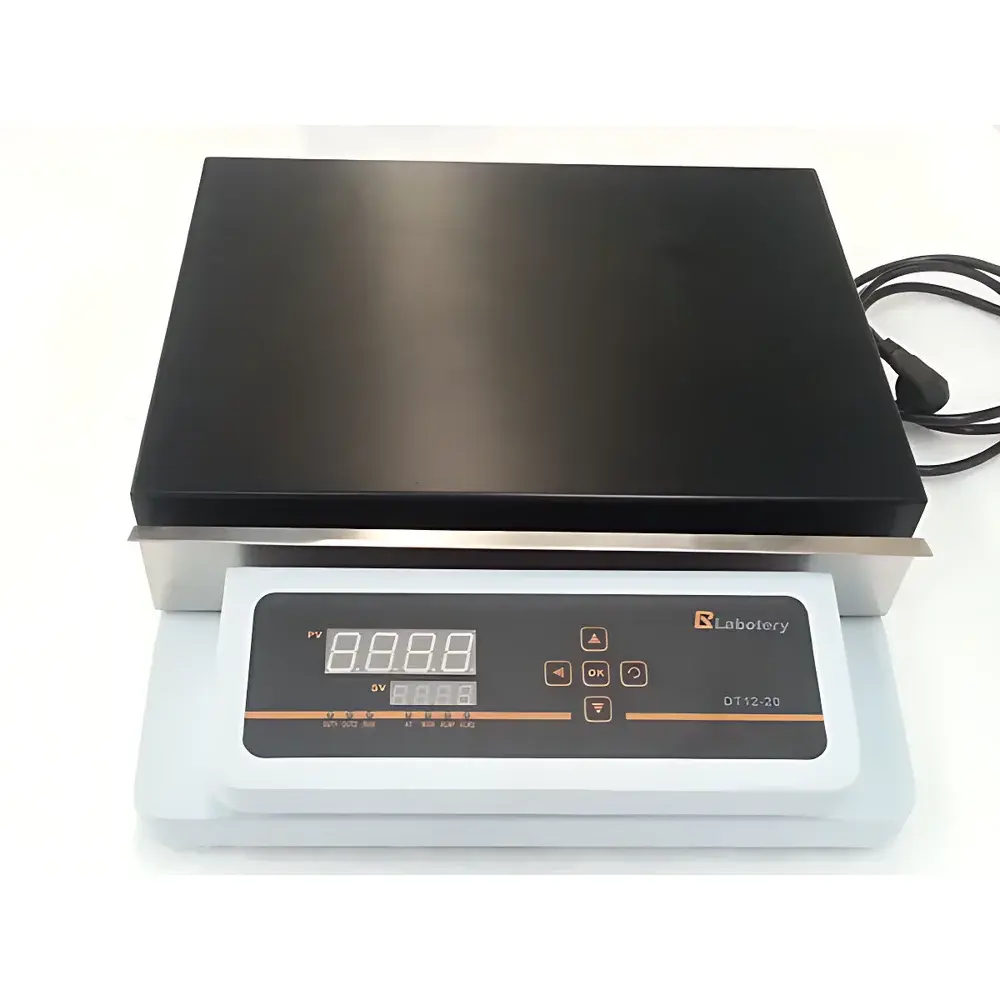
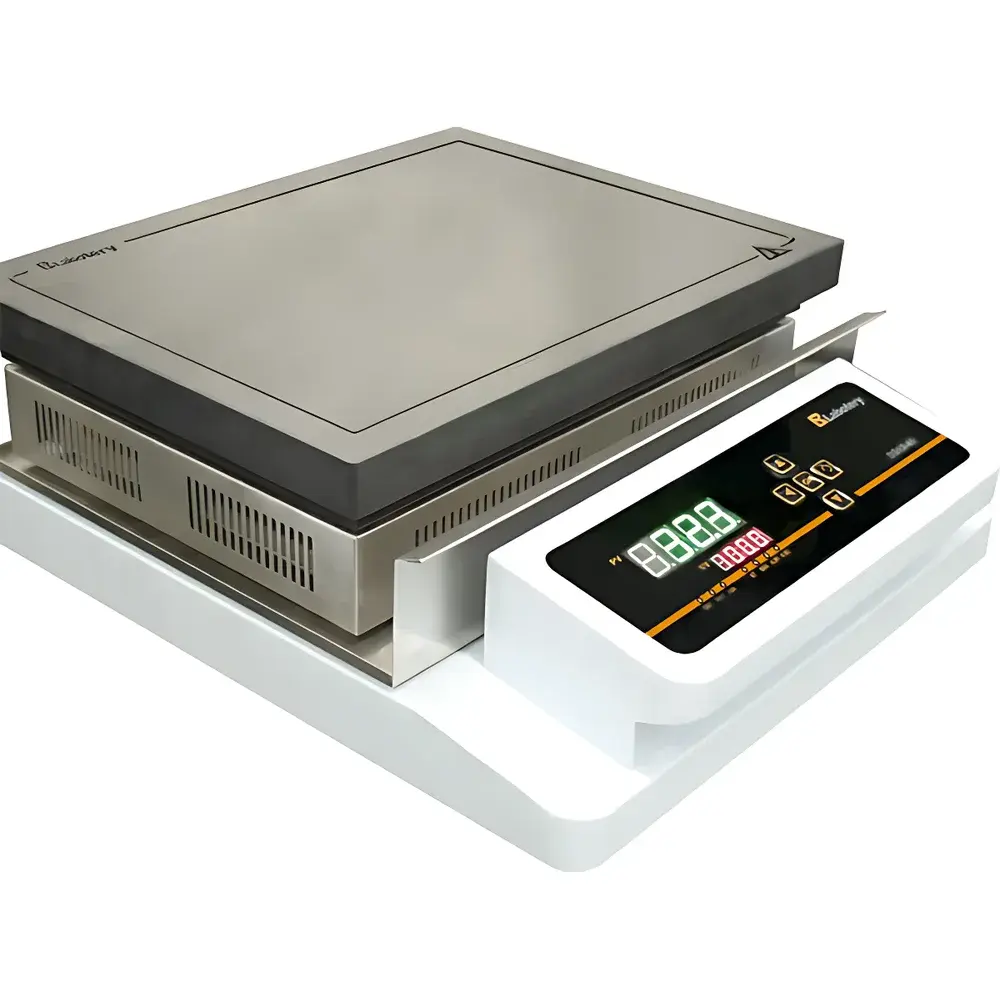
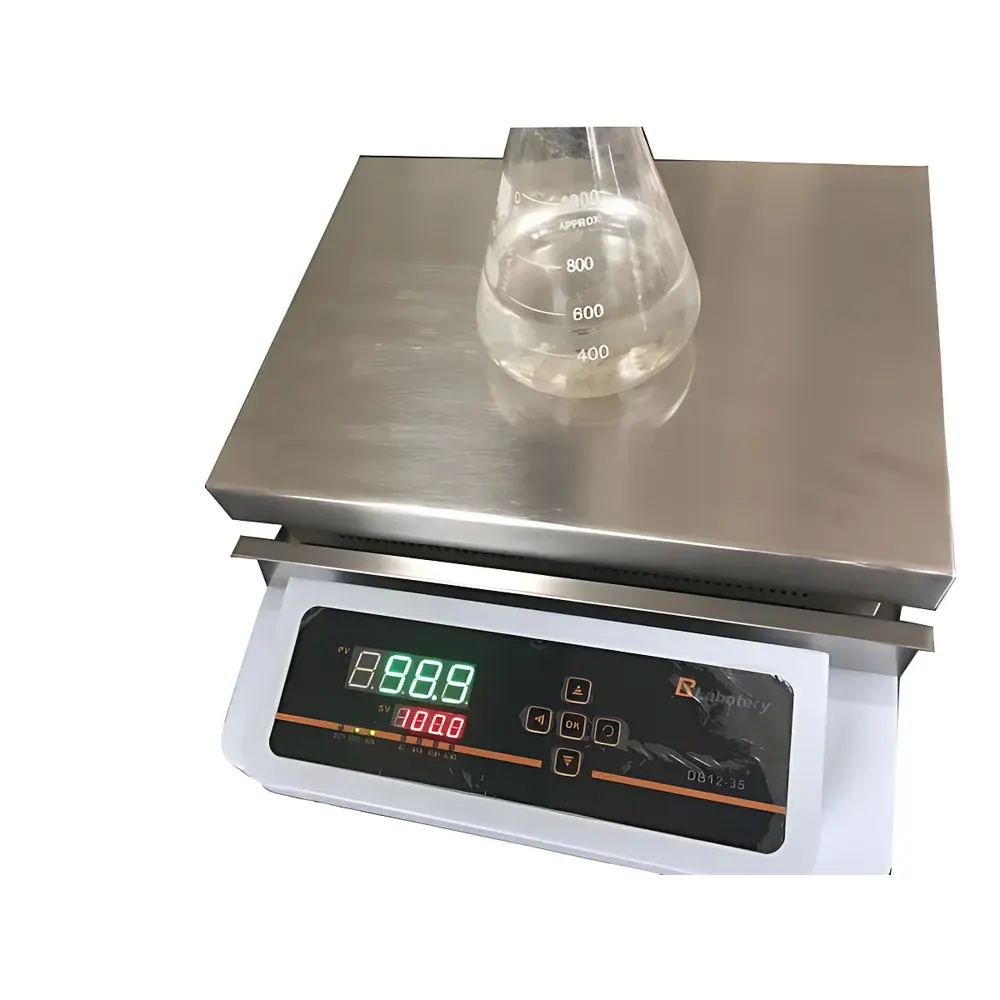
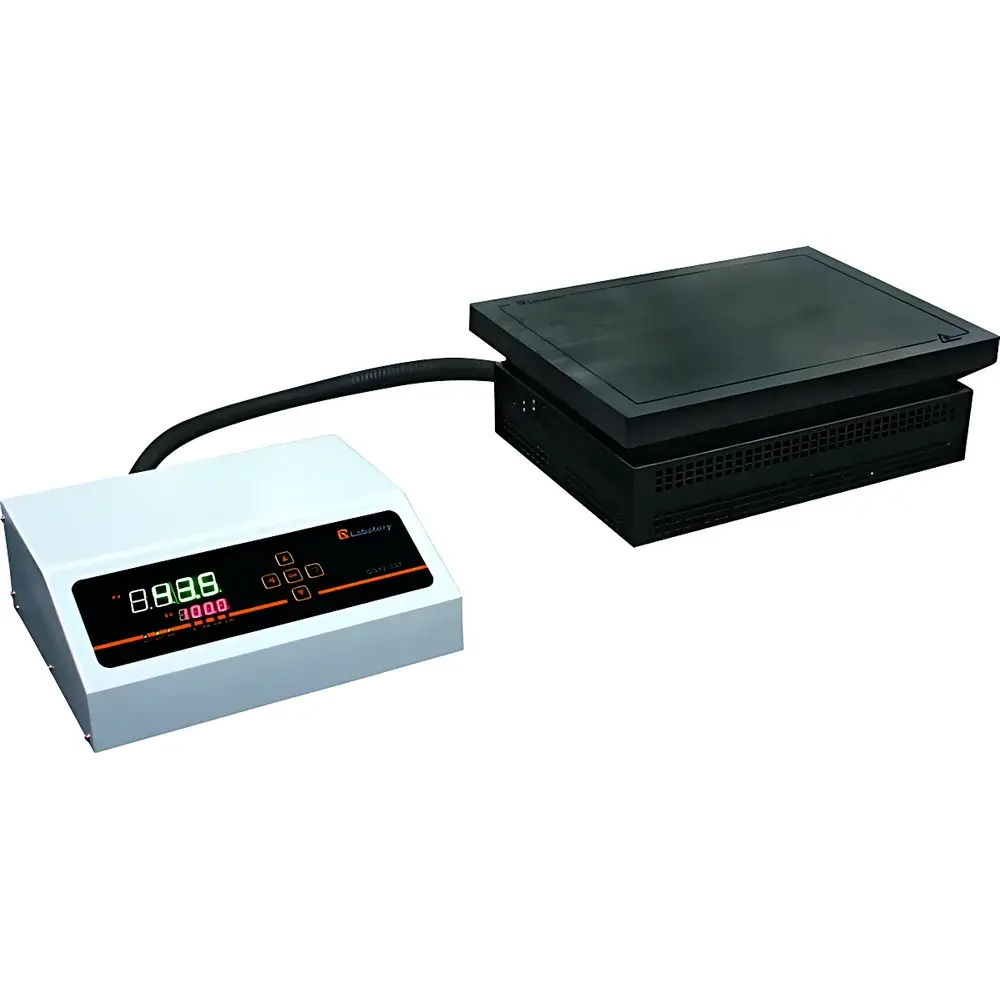
Labotery DS12-45F Isostatically Pressed Graphite Electric Heating Plate
| Brand | Labotery |
|---|---|
| Origin | Tianjin, China |
| Model | DS12-45F |
| Heating Power | 2–4.5 kW |
| Max. Temperature | 460 °C |
| Heating Surface Dimensions | 300 × 400 mm or 400 × 600 mm |
| Display | LCD |
Overview
The Labotery DS12-45F Isostatically Pressed Graphite Electric Heating Plate is a precision-engineered laboratory heating platform designed for demanding sample preparation workflows requiring uniform, stable, and chemically inert thermal treatment. Unlike conventional metal-surface hotplates, the DS12-45F features an isostatically pressed graphite heating surface—engineered for exceptional thermal homogeneity, rapid heat-up response, and outstanding resistance to aggressive acids (including HF, HNO₃, HCl, and aqua regia), alkalis, and high-temperature oxidative environments. Its operational range spans ambient to 460 °C with programmable temperature control, making it suitable for applications such as open-vessel acid digestion, solvent evaporation, gravimetric analysis pre-treatment, catalyst activation, and controlled drying of trace-metal-sensitive samples. The unit operates on standard 220 V/50 Hz single-phase power and integrates passive thermal mass design with active PID feedback regulation to minimize spatial temperature gradients (< ±3 °C across the working zone at 400 °C) and ensure reproducible thermal profiles essential for method-compliant sample prep.
Key Features
- Isostatically pressed graphite heating surface — rated for continuous operation up to 460 °C and certified for resistance to concentrated mineral acids and caustic solutions per ASTM D570 and ISO 178 standards
- Dual-zone configurable platform — available in two standard heating area options: 300 × 400 mm and 400 × 600 mm — both fully active and uniformly heated
- Adjustable power output (2–4.5 kW) via microprocessor-controlled solid-state relay, enabling fine-tuned energy delivery for low-thermal-mass crucibles or large-volume beakers
- LCD digital interface with real-time temperature display, setpoint memory, and user-programmable timer (0–99 h 59 min) with auto-shutdown and over-temperature alarm (audible + visual)
- Robust mechanical architecture: stainless steel housing (AISI 304), reinforced ceramic insulation layer, and non-slip rubber feet for vibration-damped stability on analytical balances or fume hood countertops
- No moving parts or consumables — maintenance-free operation with >10,000 h expected service life under GLP-compliant usage conditions
Sample Compatibility & Compliance
The DS12-45F accommodates a broad spectrum of laboratory vessels—including quartz, borosilicate glass, PTFE, PFA, and quartz-fused silica crucibles—as well as Teflon-lined digestion bombs and ceramic evaporation dishes. Its graphite surface eliminates galvanic corrosion risks associated with metal hotplates when used with chloride- or fluoride-containing matrices. The system complies with key regulatory frameworks governing analytical sample preparation: it supports USP , EPA Method 3050B/3051A/3052, ISO 11466, and ASTM D129 for sulfur determination. While not a standalone data-integrity device, its timer and temperature logging capability (via optional RS-485 output module) can be integrated into 21 CFR Part 11–compliant LIMS environments when paired with validated third-party software for audit-trail generation.
Software & Data Management
The DS12-45F operates as a stand-alone instrument with embedded firmware; no proprietary software is required for basic operation. For laboratories requiring electronic recordkeeping, an optional communication module enables serial (RS-485) connectivity to external PCs or PLCs. This allows remote parameter setting, real-time temperature streaming, and time-stamped event logging (start/stop, alarm triggers, setpoint changes). All logged data are exportable in CSV format for integration with ELN systems or statistical process control platforms. Firmware updates are performed via USB port using signed binaries verified against SHA-256 checksums—ensuring integrity during GxP-critical deployments.
Applications
- Open-beaker acid digestion of soil, sediment, and biological tissues prior to ICP-OES or ICP-MS analysis
- Controlled evaporation of digestate solutions to near-dryness without spattering or analyte loss
- Pre-concentration of aqueous environmental samples (e.g., wastewater, leachates) for heavy metal speciation
- Thermal conditioning of catalyst supports and adsorbent materials in materials science research
- Standardized drying of filter papers in gravimetric suspended solids (TSS) determination per ISO 11923
- Heating of reagent blanks and calibration standards in trace-element cleanrooms (Class 100–1000)
FAQ
What is the thermal uniformity specification across the heating surface?
At 400 °C, maximum deviation from setpoint is ≤ ±3 °C within the central 80% of the active zone, measured per ASTM E220 calibration protocol using NIST-traceable thermocouples.
Can this unit be used under a laminar flow hood or fume extraction system?
Yes—the DS12-45F generates no volatile emissions and has been tested for safe operation inside Class II A2 biosafety cabinets and ducted chemical fume hoods with face velocities between 0.3–0.5 m/s.
Is the graphite surface replaceable, and what is its typical service life?
The isostatically pressed graphite plate is field-replaceable using standard Torx tools; under routine use with proper cleaning (dilute nitric acid rinse, air-drying), service life exceeds 5 years or 8,000 operating hours.
Does the unit meet CE or UKCA marking requirements?
It conforms to IEC 61010-1:2010 for electrical safety and EMC Directive 2014/30/EU; CE marking is applied for export to EEA markets, subject to end-user risk assessment per Annex I.
How is temperature calibration verified and documented?
Each unit ships with a factory calibration certificate (traceable to NIM, China) covering three points: 100 °C, 250 °C, and 400 °C; users may perform in-house verification using a calibrated reference thermometer per ISO/IEC 17025 guidelines.



