
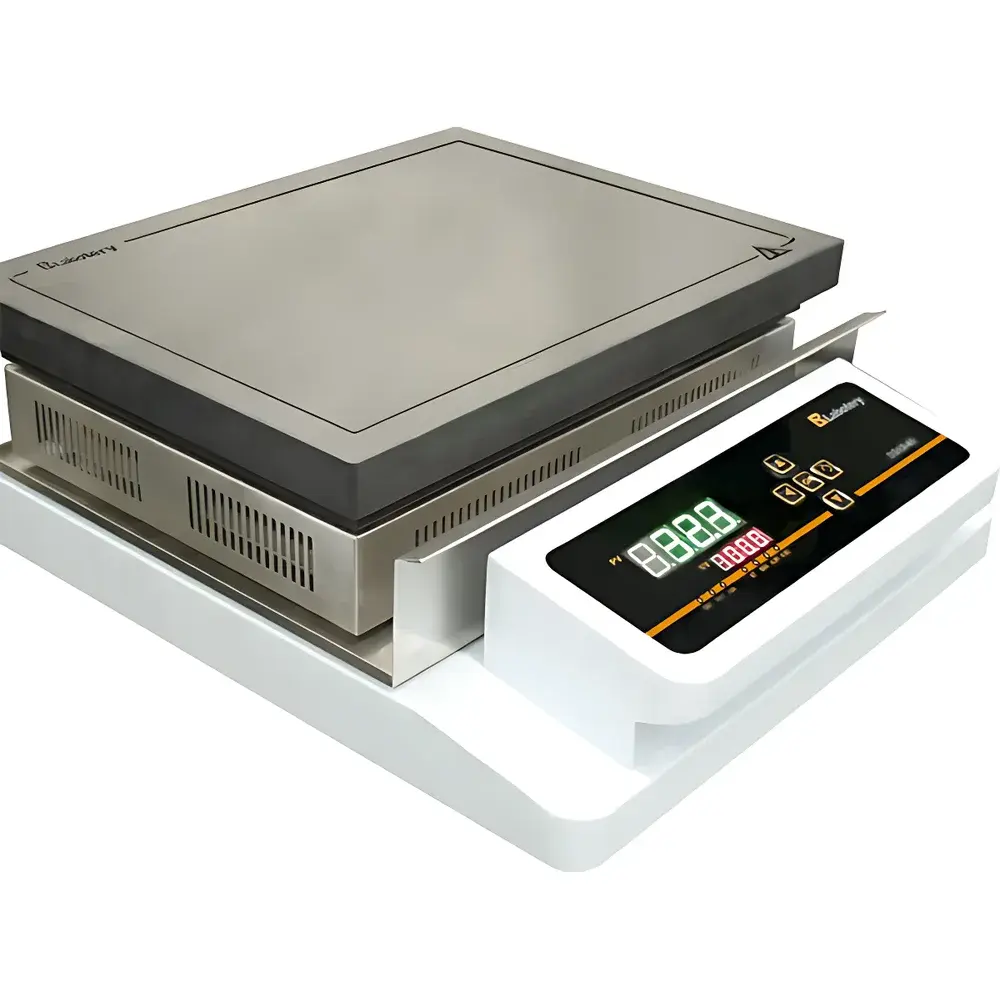
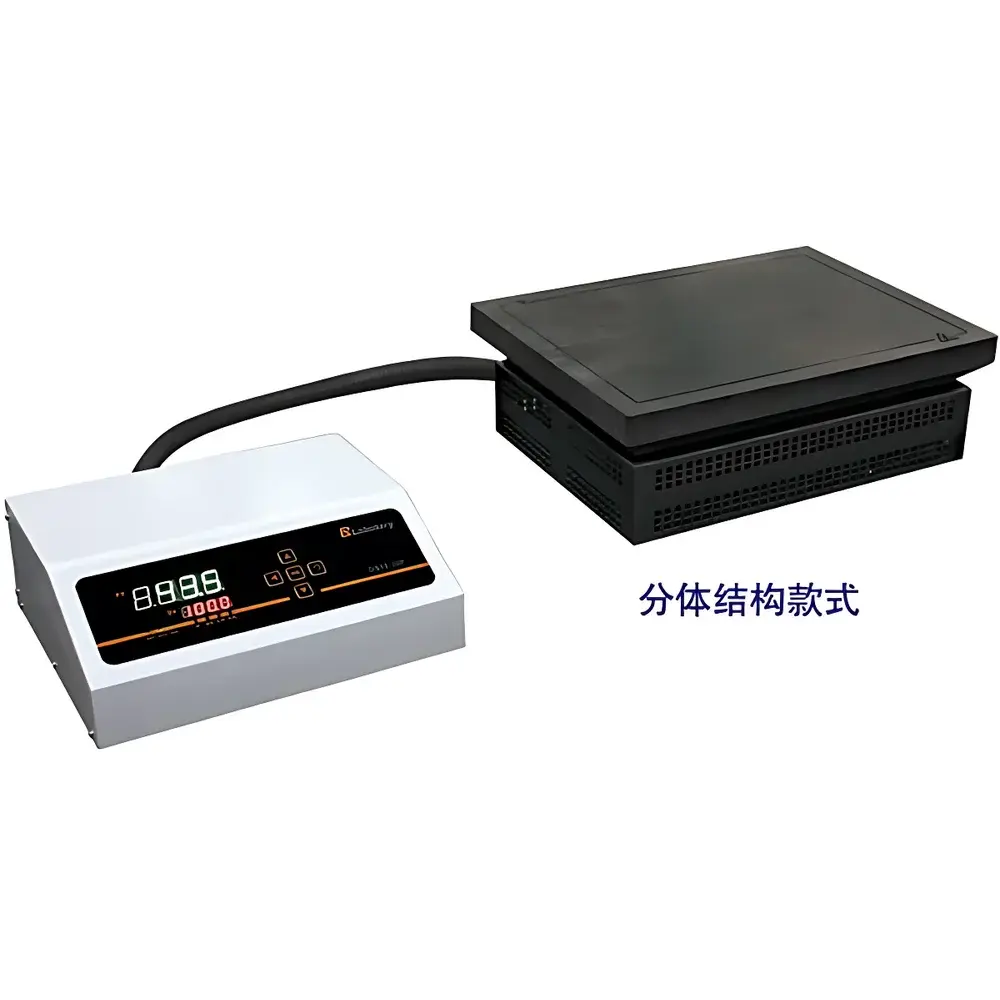
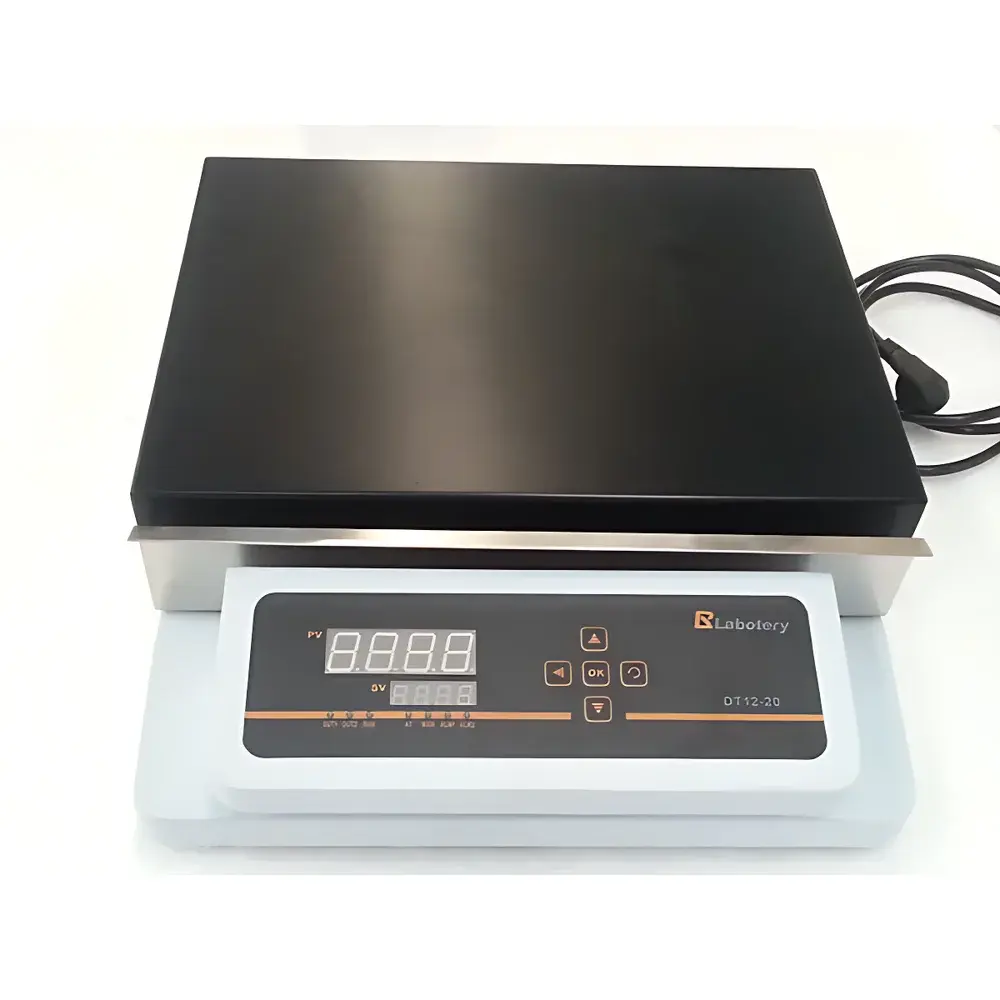
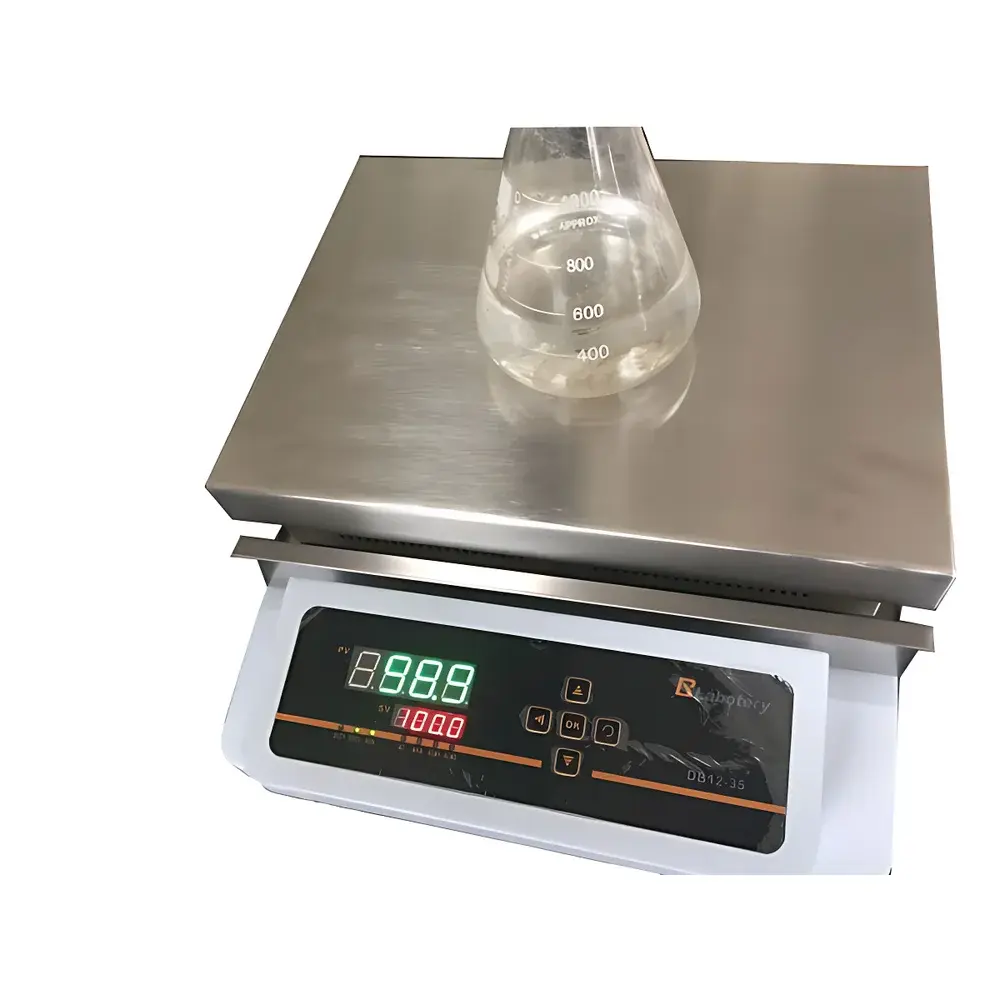
Labotery DS12-45 Isostatically Pressed Graphite Electric Heating Plate
| Brand | Labotery |
|---|---|
| Origin | Tianjin, China |
| Model | DS12-45 |
| Heating Power | 3.5 kW |
| Max Operating Temperature | RT + 5 °C to 460 °C |
| Temperature Uniformity | ±2 °C |
| Heating Surface Dimensions | 300 × 400 mm |
| Display Type | Digital LED |
Overview
The Labotery DS12-45 Isostatically Pressed Graphite Electric Heating Plate is a high-performance, laboratory-grade thermal platform engineered for precise, uniform, and chemically resistant heating in demanding sample preparation workflows. Designed specifically for open-vessel digestion, acid reflux, solvent evaporation, dry-down, and controlled thermal treatment of environmental, agricultural, geological, and biological samples, the DS12-45 leverages isostatically pressed graphite — a material renowned for exceptional thermal conductivity, mechanical stability at elevated temperatures, and outstanding resistance to strong acids (including HF, HNO₃, HCl, and aqua regia), alkalis, and oxidizing agents. Unlike conventional stainless steel or aluminum-heated plates, graphite construction eliminates galvanic corrosion risks and ensures long-term dimensional stability under repeated thermal cycling between ambient and 460 °C. The unit operates via embedded resistive heating elements uniformly distributed beneath the graphite surface, enabling rapid heat-up and minimal thermal gradient across the full 300 × 400 mm active zone.
Key Features
- Isostatically pressed graphite top plate — rated ★★★★★ for chemical resistance per ASTM D4397 and IEC 60674-2; fully inert to concentrated mineral acids and high-temperature fuming reagents
- Precise digital PID temperature control with ±2 °C uniformity across the entire heating surface (measured per ISO 17025-compliant calibration protocol)
- Wide operating range from ambient +5 °C up to 460 °C — suitable for low-temperature drying, medium-temperature digestion, and high-temperature ashing pre-treatment
- 3.5 kW high-efficiency heating system with thermal cut-off protection and over-temperature alarm (audible + visual)
- Programmable timer with delayed start and auto-shutdown functionality — supports unattended overnight operation under GLP-compliant conditions
- Rugged powder-coated steel chassis with non-slip rubber feet and integrated ventilation slots for sustained thermal management
- Front-panel digital LED display with intuitive keypad interface — no software driver required; real-time setpoint and actual temperature readout
Sample Compatibility & Compliance
The DS12-45 accommodates standard and custom digestion vessels including borosilicate glass beakers (50–1000 mL), PTFE (Teflon™) digestion cups, quartz crucibles, and ceramic boats. Its graphite surface eliminates metal ion leaching concerns, making it ideal for trace-metal analysis (e.g., EPA Method 3050B, 3051A, 3052) and ultra-low detection limit applications in ICP-MS and GF-AAS laboratories. The device conforms to IEC 61010-1:2010 safety standards for electrical equipment used in laboratory environments. While not certified for Class I Div 1 hazardous locations, its design meets general requirements for use in fume hoods and ventilated preparation areas. All materials comply with RoHS Directive 2011/65/EU and are free of intentionally added PFAS compounds.
Software & Data Management
The DS12-45 operates as a standalone instrument with no embedded firmware or network connectivity. Temperature logging requires external data acquisition — users may integrate the unit with third-party USB thermocouple loggers (e.g., Omega OM-DAQPRO-5300) or PLC-based SCADA systems via analog 0–5 V or 4–20 mA output (optional accessory module). For regulated environments, the unit supports manual entry into electronic lab notebooks (ELN) and satisfies basic FDA 21 CFR Part 11 requirements when paired with audit-trail-enabled recording systems. No proprietary software is bundled; all operational parameters are adjustable directly on-device without dependency on vendor platforms.
Applications
- Open-vessel acid digestion of soils, sediments, sludge, and plant tissues prior to elemental analysis
- Controlled evaporation of extracts in pesticide residue testing (AOAC 2007.01, EN 15662)
- Drying and charring steps in gravimetric analysis (e.g., total suspended solids, ash content per ISO 2171)
- Pre-concentration of aqueous environmental samples (e.g., wastewater, surface water) for anion/cation profiling
- Thermal activation of catalysts and sorbents in method development labs
- Heating baths for reaction monitoring in synthetic chemistry and polymer characterization
- Teaching laboratories requiring robust, low-maintenance thermal platforms for undergraduate analytical chemistry curricula
FAQ
What is the difference between isostatically pressed graphite and molded graphite?
Isostatic pressing produces graphite with isotropic grain structure, superior density (>1.80 g/cm³), lower porosity (<12%), and higher flexural strength — critical for dimensional stability during repeated thermal shock.
Can the DS12-45 be used under a fume hood with continuous airflow?
Yes — the unit is designed for installation in ventilated enclosures; ensure minimum 0.5 m clearance above the surface and avoid direct laminar airflow across the hot plate to maintain temperature accuracy.
Does this model support external temperature probe input for closed-loop feedback?
No — the DS12-45 uses internal Pt100 sensor only; external probe integration requires optional analog output module (sold separately).
Is calibration documentation provided with shipment?
A factory-as-tested calibration certificate (traceable to NIM, China) is included; users must perform periodic verification using accredited reference thermometers per ISO/IEC 17025.
What maintenance is required to sustain performance over time?
Wipe surface with dilute nitric acid after each use involving HF or mixed acids; inspect heating zone annually for micro-cracks or discoloration — graphite degradation manifests as localized darkening or pitting.
Related Products



