
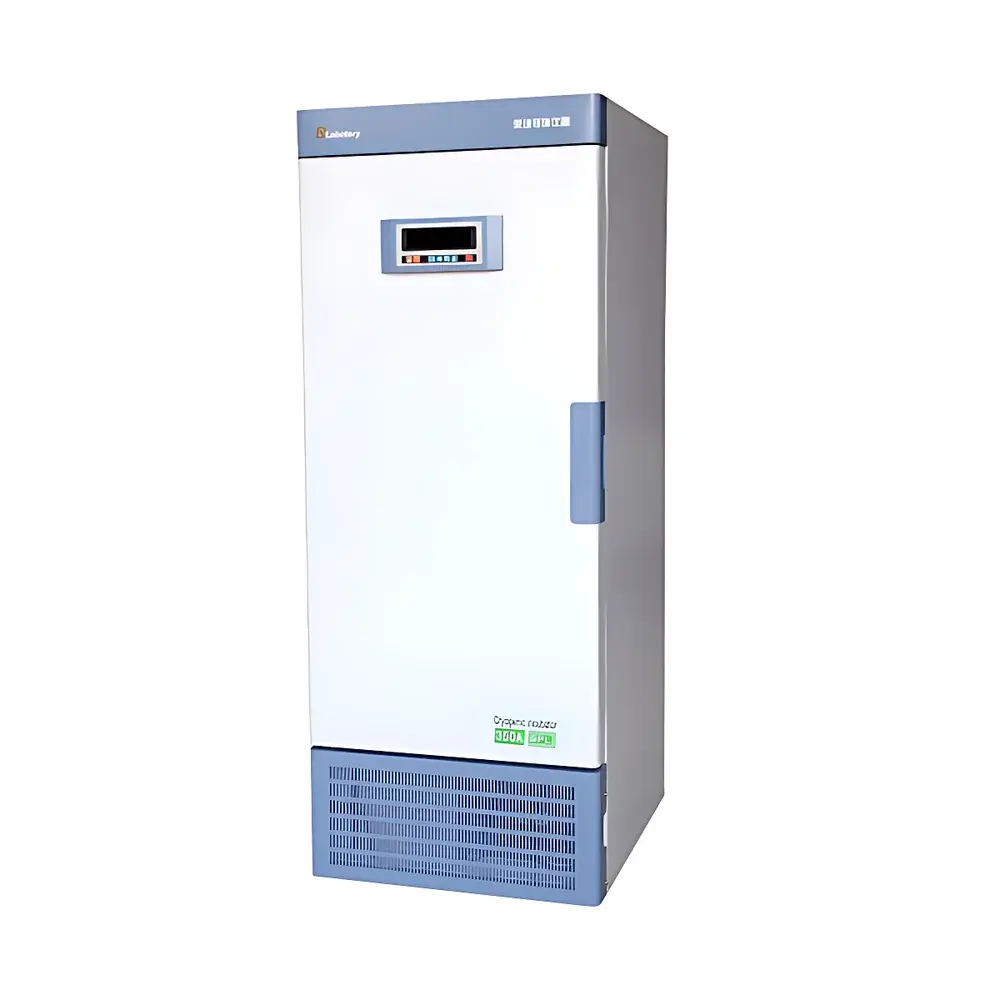
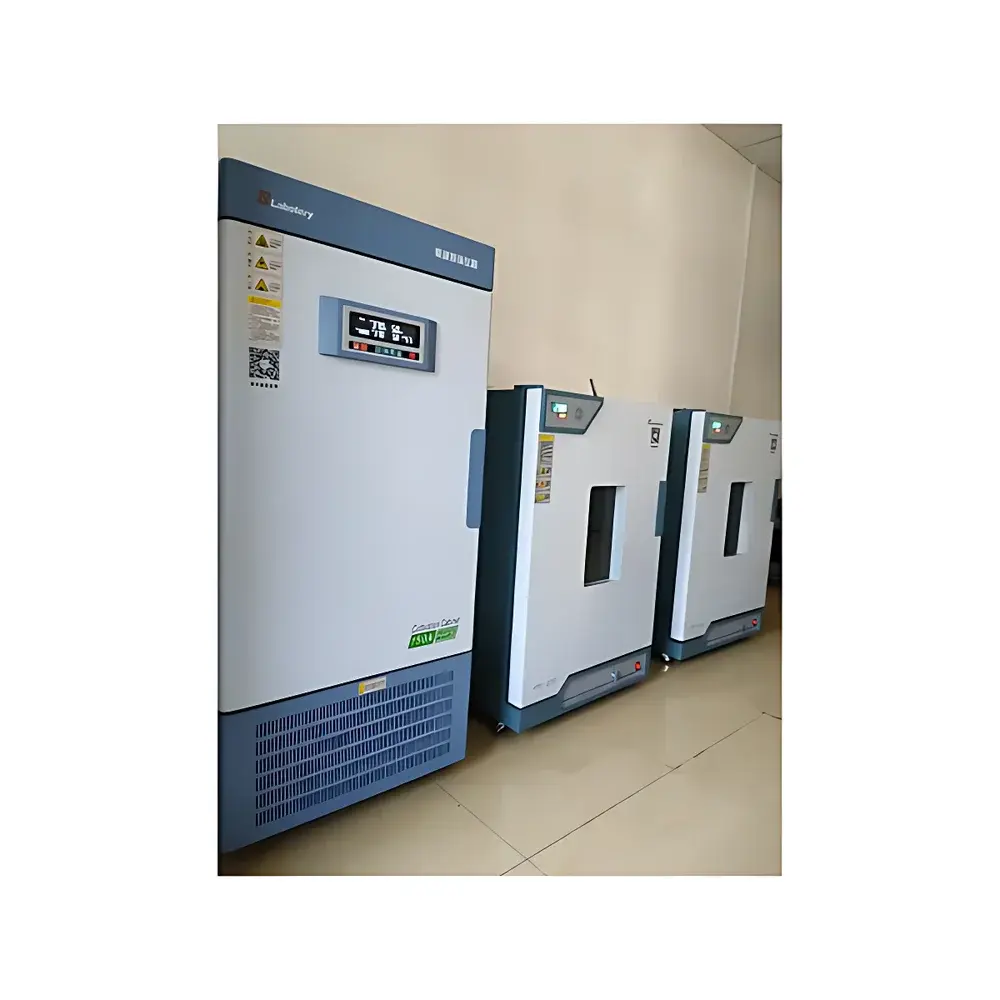
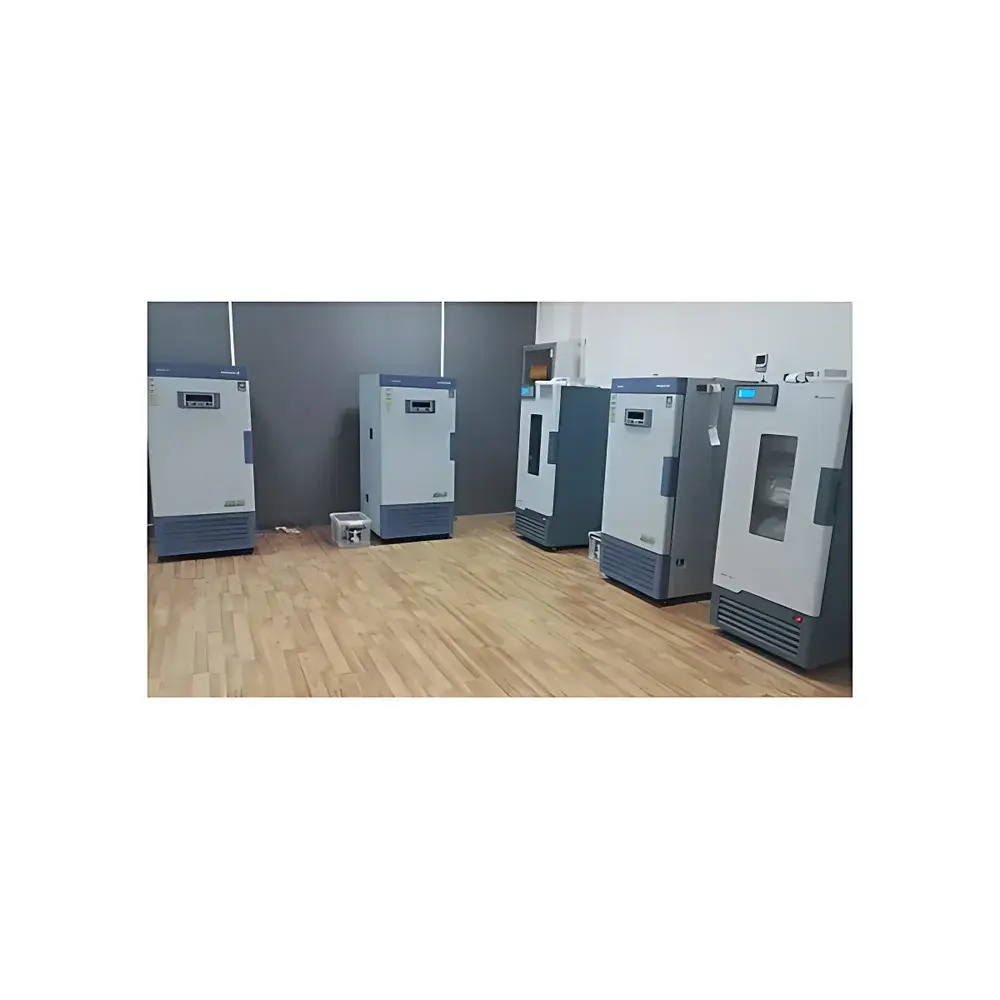
Labotery HWS-150A Precision Temperature and Humidity Controlled Incubator
| Brand | Labotery |
|---|---|
| Origin | Tianjin, China |
| Model | HWS-150A |
| Temperature Range (with Humidification) | 0–60 °C |
| Temperature Uniformity | ±1 °C |
| Humidity Range | 30–95 %RH |
| Chamber Capacity | 150 L |
| Temperature Resolution | 0.1 °C |
| Humidity Accuracy | ±3 %RH |
| Power Supply | AC 220 V, 50 Hz |
| Input Power | 1000 W |
| Operating Ambient | +5 to +35 °C |
| Standard Shelving | 3 stainless steel trays (304 grade) |
| Control Method | PID microcomputer-based digital control |
| Programmable Stages | Up to 30 segments, up to 99 cycles |
| Data Interface Options | RS485/USB (optional) |
| Compliance | Designed for GLP/GMP-aligned workflows |
Overview
The Labotery HWS-150A is a precision-engineered temperature and humidity controlled incubator designed for reproducible, long-term environmental simulation in life science laboratories and industrial R&D settings. It operates on a dual-loop control architecture—separate PID-regulated systems for thermal and hygral regulation—ensuring stable chamber conditions under dynamic load and ambient fluctuations. Unlike basic convection incubators, the HWS-150A integrates active humidification via an externally mounted, patent-pending wet-steam generator, minimizing condensation within the chamber while delivering rapid RH recovery after door openings. Its refrigeration system employs a hermetic, non-CFC compressor with dust-filtered intake, enabling continuous operation across the full 0–60 °C range while maintaining energy efficiency and extended service intervals. The unit is validated for applications requiring ISO 14644-1 Class 7 cleanroom-compatible surfaces and meets mechanical safety requirements per IEC 61010-1.
Key Features
- Patented external humidification module ensures precise RH delivery (30–95 %RH) with ±3 %RH accuracy and minimal internal moisture accumulation.
- One-piece seamless stainless steel chamber (304 grade) with radius-rounded corners eliminates microbial harborage points and simplifies cleaning validation.
- Triple-layer insulated double-door design: outer door with thermal break, inner tempered glass door for real-time visual monitoring without thermal disturbance.
- Three adjustable, tool-free stainless steel shelves—rated for ≥15 kg load each—with reinforced support brackets for uniform weight distribution.
- Programmable multi-stage control: up to 30 user-defined segments per cycle, with independent setpoints for temperature, humidity, dwell time, and ramp rate; supports infinite loop execution (cycle count = 0).
- Intelligent fault diagnostics: LCD interface displays alphanumeric error codes (e.g., E03 = low water, E07 = compressor overload), enabling rapid root-cause identification.
- Dual safety architecture: independent mechanical overtemperature cutoff (±5 °C deviation threshold) plus electronic alarm relay output for integration into facility monitoring systems.
- Full-cycle parameter retention: all user settings—including program sequences—are preserved during power interruption and restored automatically upon re-energization.
Sample Compatibility & Compliance
The HWS-150A accommodates standard microbiological containers (Petri dishes, flasks, multiwell plates), stability test packages (blister packs, vials, sachets), and textile/film specimens up to 550 mm (W) × 550 mm (D) × 850 mm (H). Its interior geometry and airflow profile comply with ASTM E2914–22 guidelines for uniformity assessment in environmental chambers. While not certified as a medical device, its construction and control fidelity align with key elements of ISO 13485 Annex A for equipment used in quality-controlled manufacturing environments. When configured with optional RS485/USB connectivity and Labotery LogView™ software, the system supports audit-trail-enabled data capture meeting FDA 21 CFR Part 11 requirements for electronic records and signatures—provided users implement appropriate access controls and backup protocols.
Software & Data Management
The HWS-150A’s embedded controller stores up to 30 days of minute-interval temperature/humidity logs internally. Optional Labotery LogView™ software (v3.2+) enables remote configuration, real-time graphing of up to four parameters simultaneously, and export to CSV or PDF formats. With the optional thermal printer module, hard-copy reports include timestamped chamber conditions, operator ID, and cycle verification stamps—supporting GMP documentation standards for stability studies (ICH Q1, USP ). USB data dumps retain full metadata (setpoint history, alarm events, calibration timestamps), and RS485 Modbus RTU integration allows centralized supervision via SCADA or LIMS platforms. All firmware updates are digitally signed and installed via secure USB handshake.
Applications
- Pharmaceutical stability testing per ICH Q1A(R3) and USP , including accelerated and long-term storage condition simulations (e.g., 25 °C/60 %RH, 30 °C/65 %RH, 40 °C/75 %RH).
- Microbial growth studies requiring tightly coupled thermo-hygrometric control—such as fungal sporulation assays or biofilm formation kinetics under variable RH gradients.
- Material aging tests for packaging components (e.g., barrier film permeability, adhesive integrity) and polymer-based medical devices.
- Seed germination trials, plant tissue culture acclimatization, and entomological rearing where diurnal RH cycling must be replicated.
- Textile and paper industry QC: conditioning samples to standardized atmospheres prior to tensile, colorfastness, or dimensional stability testing (ISO 139, ASTM D1776).
FAQ
What is the chamber’s validated temperature uniformity specification?
The HWS-150A achieves ±1 °C spatial uniformity across the entire working volume at 37 °C/50 %RH (per ISO 14644-3 Annex B methodology), verified using 9-point NIST-traceable sensor mapping.
Can the incubator operate continuously for 30 days without maintenance?
Yes—under nominal load (≤70 % capacity, ambient ≤30 °C), the unit supports uninterrupted operation; periodic inspection of the humidifier water reservoir and condensate drain is recommended every 72 hours.
Is the stainless steel chamber electropolished or passivated?
The interior surface undergoes chemical passivation per ASTM A967, with no electropolishing; surface roughness Ra ≤ 0.8 µm ensures compatibility with ISO 14644-1 particle-counting protocols.
Does the optional door heating function eliminate all condensation?
Door heating reduces surface dew point by ~8 °C, suppressing visible condensation during high-humidity (>80 %RH) operation at elevated temperatures (≥45 °C); it does not eliminate vapor migration entirely.
How is calibration traceability maintained?
Each unit ships with a factory calibration certificate referencing NIST-traceable standards; field recalibration requires dual-channel dry-well calibrators (e.g., Fluke 9143) and certified hygrometers (e.g., Rotronic HC2-S).



