
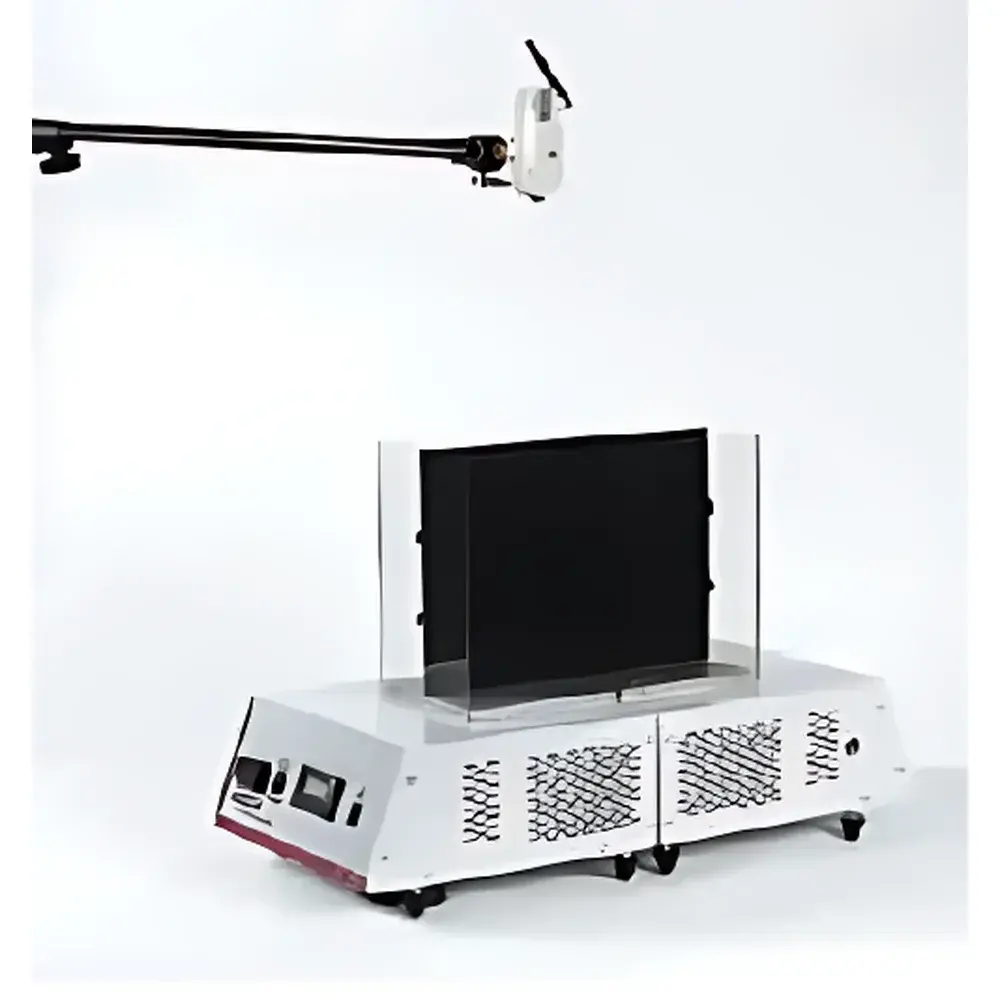
Thermal Place Preference System by Panlab
| Brand | Panlab |
|---|---|
| Origin | Spain |
| Model | Thermal Place Preference |
| Temperature Range | -3°C to 65°C (ambient: 20–25°C) |
| Temperature Control Accuracy | ±0.5°C |
Overview
The Thermal Place Preference System by Panlab is a validated, dual-zone thermal gradient apparatus engineered for unbiased assessment of thermosensory behavior and nociceptive thresholds in freely moving rodents. Unlike restraint-based thermal assays (e.g., hot plate or tail-flick tests), this system operates on the principle of voluntary spatial choice—leveraging innate thermotaxis to quantify temperature preference as a functional readout of peripheral and central thermosensation. The device maintains two physically separated but adjacent thermal zones, each independently regulated within a range of –3°C to +65°C, with precision control (±0.5°C) under standard ambient conditions (20–25°C). This architecture enables ethologically relevant paradigms where animals self-select preferred temperatures without physical constraint, thereby eliminating stress-induced confounds and improving translational fidelity for studies of pain modulation, TRP channel function, opioid analgesia, and genetic models of thermal hypersensitivity.
Key Features
- Dual independent thermal chambers with real-time PID-controlled temperature regulation and high-stability thermal plates
- No-restraint design ensures natural locomotor behavior and eliminates handling artifacts associated with manual testing
- Integrated high-resolution video tracking synchronized with thermal zone assignment and time-stamped position data
- Modular software architecture supporting protocol-driven temperature ramping, stepwise gradients, or static dual-zone configurations
- Simultaneous monitoring of up to two subjects per session with individualized zone assignment and behavioral metrics
- Export-ready data format compatible with MATLAB, Python (Pandas), and commercial statistical platforms (e.g., GraphPad Prism, SPSS)
Sample Compatibility & Compliance
The system is optimized for adult mice (C57BL/6, BALB/c, CD-1) and rats (Sprague-Dawley, Wistar), accommodating standard weight ranges (18–45 g for mice; 200–350 g for rats). Chamber dimensions and thermal plate geometry conform to NIH Office of Laboratory Animal Welfare (OLAW) guidelines for behavioral enrichment and minimize edge effects. All thermal protocols align with recommendations from the International Association for the Study of Pain (IASP) and the European Union Directive 2010/63/EU on protection of animals used for scientific purposes. Data acquisition workflows support audit trails and user-access logs when configured with optional GLP-compliant software modules, facilitating compliance with FDA 21 CFR Part 11 requirements for electronic records in preclinical pharmacology studies.
Software & Data Management
The optional Thermal Preference Analysis Suite provides a validated, GUI-based interface for experiment setup, real-time visualization, and post-hoc analysis. Users define zone-specific temperature setpoints, dwell-time thresholds, and movement criteria (e.g., minimum occupancy duration per zone). The software automatically computes key endpoints including: time spent per zone, transition frequency, latency to first entry, zone preference index (ZPI = [Thot – Tcold] / [Thot + Tcold]), and cumulative thermal exposure profiles. Raw data are stored in HDF5 format with embedded metadata (subject ID, protocol version, calibration timestamp, operator ID), ensuring traceability and reproducibility across longitudinal studies. Export functions include CSV, Excel (.xlsx), and JSON for integration into LIMS or ELN systems.
Applications
- Pharmacological characterization of TRPV1/TRPM8 modulators and opioid receptor agonists/antagonists
- Phenotyping transgenic and knockout mouse lines (e.g., TRPV1–/–, Nav1.7–/–) for altered thermal sensitivity
- Longitudinal assessment of neuropathic pain progression in chronic constriction injury (CCI) or spared nerve injury (SNI) models
- Evaluation of topical analgesics and localized drug delivery systems via dermal thermal response profiling
- Behavioral validation of optogenetic or chemogenetic manipulations targeting hypothalamic or spinal thermoregulatory circuits
FAQ
What species and strains are validated for use with this system?
The system has been experimentally validated for C57BL/6J, BALB/c, and CD-1 mice, as well as Sprague-Dawley and Wistar rats. Strain-specific baseline preference curves are available in the instrument’s reference database.
Can temperature gradients be dynamically adjusted during an assay?
Yes—when using the optional software, users may program multi-phase protocols with time-scheduled temperature ramps or step changes in either zone, enabling dynamic thermal challenge paradigms.
Is calibration traceable to NIST standards?
Each unit ships with a factory calibration certificate referencing PT100 sensor calibration against ISO/IEC 17025-accredited reference standards; annual recalibration services are available through Panlab’s EMEA service network.
How is animal identity tracked across sessions?
The software supports RFID tag integration (via optional reader module) or manual subject ID entry with biometric verification (e.g., coat pattern annotation), ensuring unambiguous longitudinal data linkage.
Does the system meet IACUC documentation requirements for protocol submission?
Yes—the system’s operational manual includes SOP templates, risk assessment matrices, and endpoint definition guidance aligned with AAALAC International accreditation criteria for behavioral instrumentation.





