
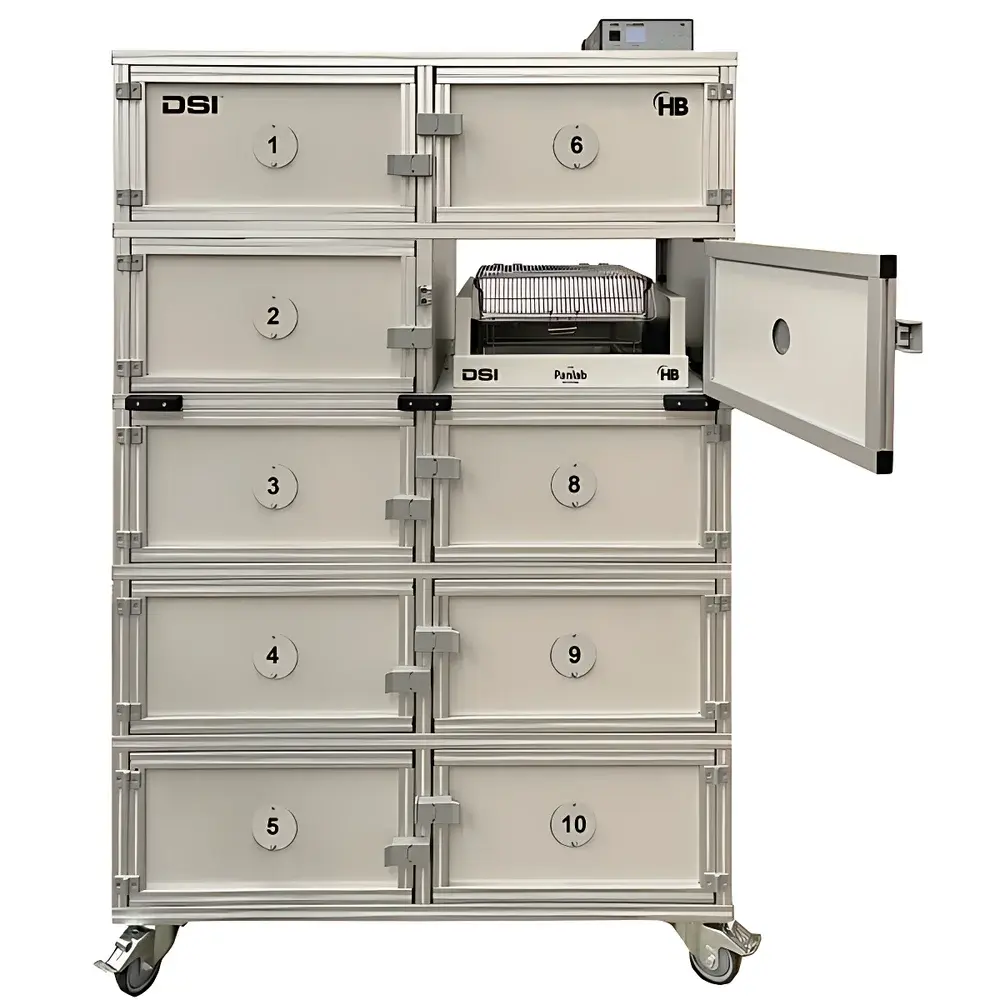

DSI x Panlab VivaMARS High-Throughput Animal Behavior Monitoring System
| Brand | Panlab |
|---|---|
| Country of Origin | Spain |
| Manufacturer Type | Authorized Distributor |
| Origin Category | Imported |
| Model | VivaMARS |
| Pricing | Available Upon Request |
Overview
The DSI x Panlab VivaMARS High-Throughput Animal Behavior Monitoring System is an integrated, GLP-compliant platform engineered for precise, scalable, and reproducible quantification of spontaneous locomotor activity in rodents. Built upon the industry-standard DSI Ponemah™ software architecture and Panlab’s 50+ years of behavioral phenotyping expertise, VivaMARS employs a high-density infrared beam array (horizontal and vertical) to detect discrete movement events—including ambulation, rearing, immobility bouts, and fine motor transitions—with sub-second temporal resolution. Unlike legacy photobeam systems with fixed grid spacing, VivaMARS utilizes configurable, tightly spaced IR emitters and detectors (beam pitch ≤ 1.2 cm), enabling detection of micro-movements such as grooming-related head turns or paw adjustments—critical for neuropharmacological and toxicological endpoints where subtle behavioral modulation must be resolved. The system operates on a validated signal acquisition paradigm: each beam break is timestamped, spatially mapped, and classified via embedded logic within the VivaMARS Controller before transmission to Ponemah for algorithmic event parsing, ensuring traceability from raw sensor input to final behavioral metrics.
Key Features
- High-throughput capacity: Supports up to 10 independently monitored cages per controller unit; modular design allows expansion to 100+ cages across multiple units without software reconfiguration.
- Dynamic experimental reconfiguration: Cage-to-cage protocol switching completed in <60 seconds via software-controlled IR beam mapping—no hardware recalibration required.
- Mobile laboratory architecture: Fully wheeled, self-contained system with integrated power management and Ethernet-over-Cat6 connectivity, enabling deployment across vivarium rooms while maintaining data integrity and network synchronization.
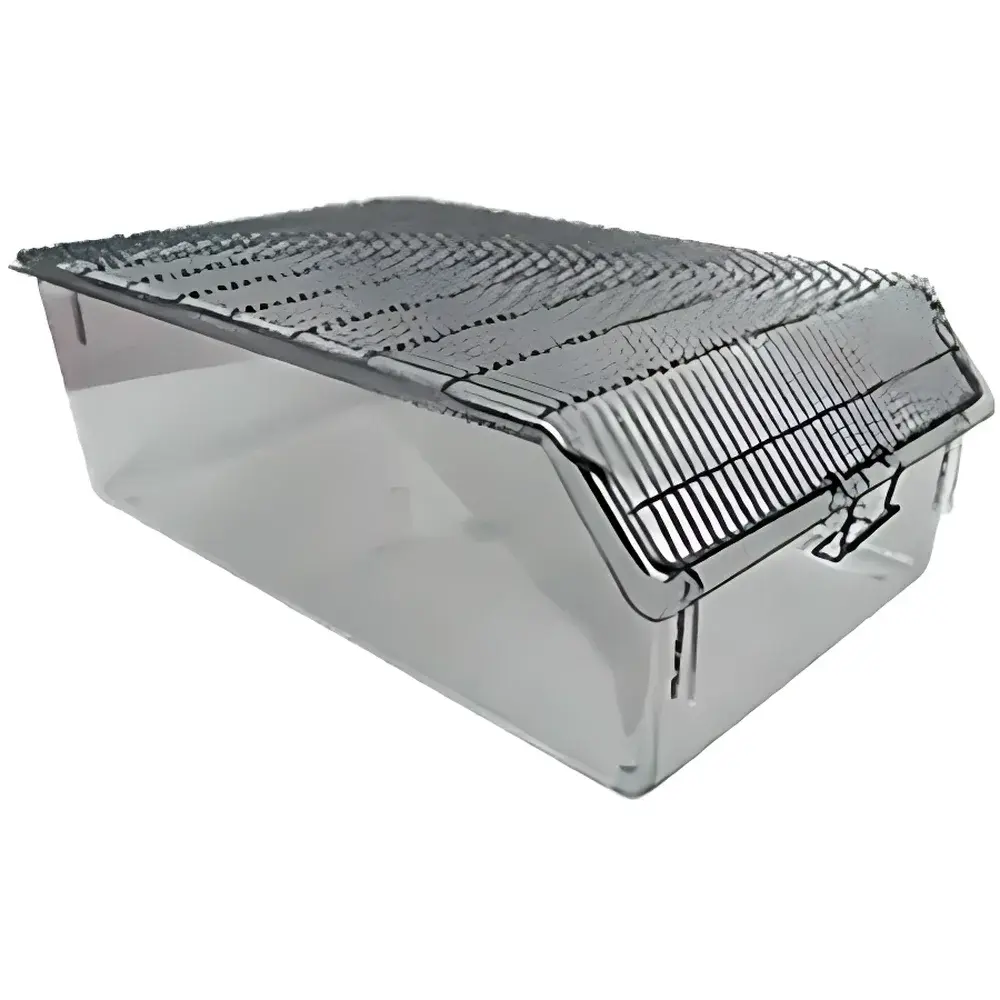
- Low-maintenance caging: VivaMARS bio-cages are constructed from autoclavable polycarbonate with non-porous surfaces; no cage cleaning between trials required—validated for ≥5 consecutive 24-hr sessions without cross-contamination or signal drift.
- Species- and age-flexible housing: Accommodates mice (18–60 g) and rats (PND 13 to >100 g) with adjustable floor height and removable divider plates for juvenile or post-surgical cohorts.
Sample Compatibility & Compliance
VivaMARS is validated for use with C57BL/6, BALB/c, Sprague-Dawley, and Wistar strains under standard IACUC-approved housing conditions (22 ± 2°C, 40–60% RH, 12-hr light/dark cycle). All hardware components comply with CE marking requirements (EN 61000-6-2/6-4) and meet ISO 17025-accredited calibration traceability standards for motion detection systems. The Ponemah software platform is designed to support 21 CFR Part 11 compliance through audit-trail-enabled user authentication, electronic signatures, and immutable data archiving—fully compatible with GLP audits and regulatory submissions to FDA, EMA, and PMDA. System validation packages (IQ/OQ/PQ) are available per client SOP requirements.
Software & Data Management
Data acquisition, processing, and reporting are managed exclusively through DSI Ponemah v6.5+, a validated, multi-threaded application certified for Windows Server 2019/2022 environments. Ponemah applies peer-reviewed algorithms—including adaptive thresholding for beam-break duration classification, spatial trajectory reconstruction via centroid interpolation, and burst-detection logic for rearing sequences—to generate standardized outputs (e.g., total distance, vertical counts, stereotypy index, rest/wake fragmentation scores). Raw binary files (.pnt) are stored with embedded metadata (animal ID, protocol version, environmental logs) and support batch export to CSV, HDF5, or MATLAB-compatible formats. Integrated API enables direct linkage to LIMS platforms (e.g., LabVantage, STARLIMS) and third-party statistical engines (R, Python pandas).
Applications
- Acute locomotor screening in CNS drug discovery (e.g., dopamine agonist/antagonist profiling)
- Neurotoxicity assessment per OECD TG 426 and ICH S7A guidelines
- Safety pharmacology core battery studies (ICH S7A Section 3.2.1)
- Behavioral phenotyping of transgenic models (e.g., APP/PS1, DAT-KO, Shank3 mutants)
- Chronic circadian rhythm monitoring under controlled photoperiods
- Post-operative recovery tracking following stereotaxic surgery or spinal cord injury
FAQ
Is VivaMARS compatible with existing Ponemah installations?
Yes—VivaMARS controllers integrate natively with Ponemah v6.3 and later via standard Ethernet interface; no driver installation or registry modification required.
Can beam configurations be customized per experiment?
Yes—Ponemah’s Beam Mapping Editor allows users to define custom grid topologies (e.g., 16×16, 24×8), assign functional zones (center/periphery), and apply dynamic masking for habituation or novelty-phase analysis.
What validation documentation is provided?
Each shipment includes Factory Acceptance Test (FAT) reports, IQ/OQ templates aligned with GAMP5, and a full traceable calibration certificate for IR emitter output intensity and detector sensitivity.
Does the system support real-time remote monitoring?
Yes—Ponemah’s Web Client module enables secure HTTPS-based live viewing of beam-break heatmaps, cumulative activity plots, and alarm-triggered notifications via institutional SSO authentication.
Are service contracts available for global sites?
DSI and Panlab jointly provide multi-year Preventive Maintenance Agreements (PMAs) with 24/7 remote diagnostics, on-site engineering support, and guaranteed 48-hour response for critical failures under SLA terms.
Related Products



