
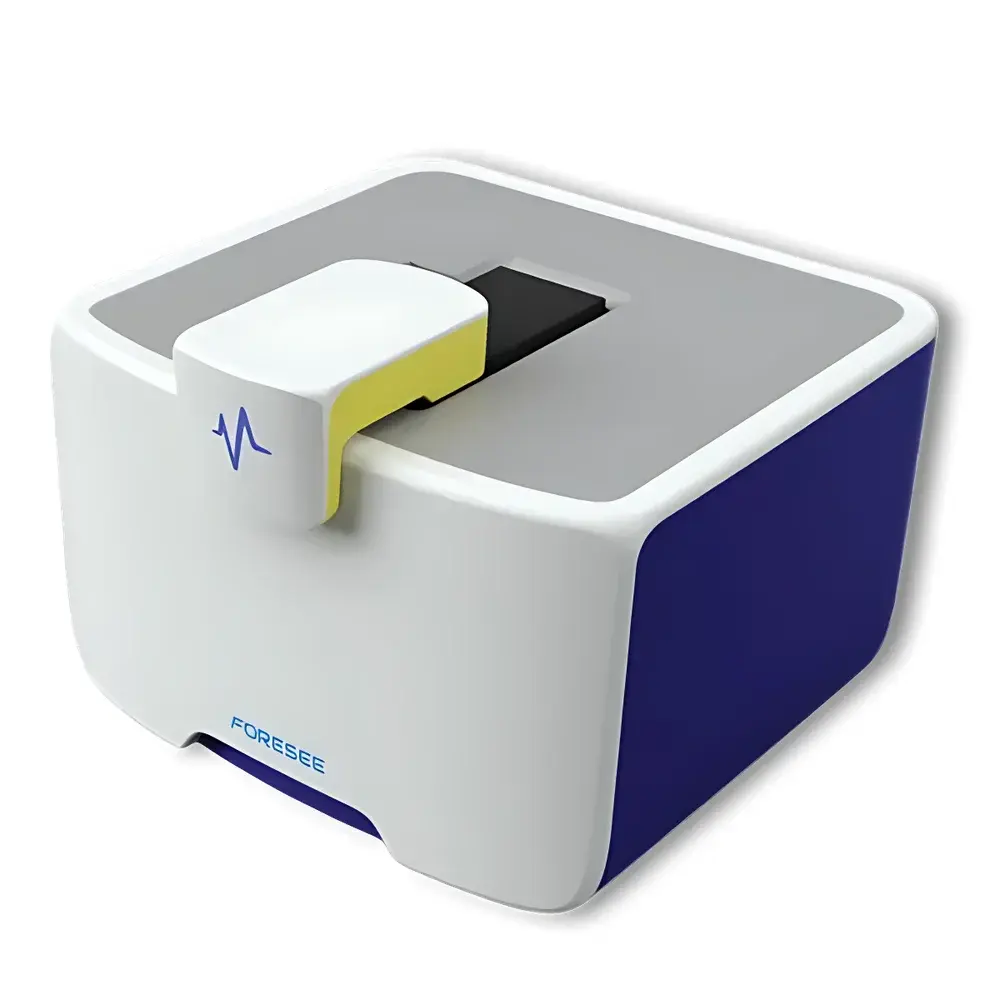
IntraCell Laser Optoporation Intracellular Electrophysiology Recording System
| Brand | Multi Channel Systems |
|---|---|
| Origin | Germany |
| Manufacturer | Multi Channel Systems GmbH |
| Product Type | Single-Well |
| Application | In Vitro |
| Electrode Spacing | 100 µm |
| Electrode Diameter | 30 µm |
| Electrode Layout | 8×8 Array |
| Electrode Count | 60 or 120 |
Overview
The IntraCell Laser Optoporation Intracellular Electrophysiology Recording System is an integrated, high-precision platform engineered for long-term, repeatable intracellular action potential (AP) recording from spontaneously beating cardiomyocytes cultured on microelectrode arrays (MEAs). Unlike conventional patch-clamp techniques—limited by low throughput, operator dependency, and cellular damage—the IntraCell system employs ultrafast (nanosecond) pulsed laser optoporation to transiently permeabilize the plasma membrane at defined subcellular locations. This non-invasive, contact-free method creates nanoscale pores that enable stable electrical access to the intracellular space while preserving cell viability and native electrophysiological behavior. The system operates in tandem with MEA-based extracellular field potential (FP) acquisition, permitting simultaneous intracellular AP and extracellular FP recording from the same biological preparation over durations exceeding 35 days. Its design adheres to core biophysical principles of transmembrane potential sensing and optical–electrical signal co-registration, making it particularly suited for chronic cardiac safety pharmacology, hiPSC-cardiomyocyte maturation studies, and human-relevant cardiac organoid electrophysiology.
Key Features
- Laser-guided optoporation: Fully automated, software-controlled laser targeting synchronized with MEA electrode geometry for precise, repeatable pore formation at selected electrodes.
- Simultaneous dual-mode recording: Seamless switching between extracellular field potential (FP) and intracellular action potential (AP) modes on the same culture—no hardware reconfiguration required.
- Long-term viability support: Demonstrated maintenance of spontaneous contractility and electrophysiological integrity across repeated optoporation events and multi-week monitoring periods.
- High-content multimodal integration: Native compatibility with high-speed video microscopy for real-time contractility analysis—enabling concurrent quantification of AP duration (APD), contraction amplitude, beat rate, and calcium transient kinetics.
- Scalable architecture: Modular design supports integration with MCS MEA preamplifiers including MEA2100 Mini 60, MEA2100 Mini 120, and MEA2100-256 systems; optional standalone IntraCell host unit available for existing MCS users.
- Compliance-ready operation: Built-in timestamping, audit trail logging, and metadata tagging align with GLP-compliant workflows and FDA 21 CFR Part 11 requirements when deployed with validated software configurations.
Sample Compatibility & Compliance
The IntraCell system is optimized for monolayer and 3D cultures of human induced pluripotent stem cell-derived cardiomyocytes (hiPSC-CMs), primary rodent cardiomyocytes, and cardiac microtissues/organoids. Its 100 µm inter-electrode spacing and 30 µm electrode diameter are calibrated for high-resolution spatial sampling across standard 8×8 MEA layouts (60- or 120-electrode variants). All protocols comply with the Comprehensive in vitro Proarrhythmia Assay (CiPA) initiative’s experimental framework, having been validated using benchmark ion channel modulators—including quinidine, verapamil, nifedipine, cisapride, terfenadine, and E-4031—demonstrating dose-dependent APD prolongation and arrhythmogenic burst activity consistent with gold-standard patch-clamp data. The system supports adherence to ISO 14155 (clinical investigation of medical devices), ASTM F3275 (standard guide for in vitro cardiac safety testing), and ICH S7B/S7B-M1 guidelines.
Software & Data Management
Acquisition and analysis are managed via MCS’s proprietary NeuroRighter-compatible software suite, which provides real-time laser calibration feedback, electrode-specific optoporation scheduling, synchronized video–electrophysiology alignment (sub-millisecond temporal resolution), and automated AP parameter extraction (e.g., upstroke velocity dV/dtmax, APD50/90, resting membrane potential). Raw data are stored in HDF5 format with embedded MIAME-compliant metadata, ensuring traceability and interoperability with third-party analysis tools (MATLAB, Python/Neo, Clampfit). Audit logs record user actions, laser pulse parameters, electrode selection history, and environmental timestamps—supporting full 21 CFR Part 11 compliance when deployed in regulated environments.
Applications
- Cardiac safety pharmacology: Detection of drug-induced proarrhythmic liabilities via quantitative APD, triangulation, and early afterdepolarization (EAD) incidence metrics.
- hiPSC-CM maturation assessment: Longitudinal tracking of electrophysiological maturation markers (e.g., AP morphology shift, conduction velocity, automaticity stability).
- Disease modeling: Functional phenotyping of genetically edited or patient-derived cardiomyocytes under chronic pacing or pharmacological challenge.
- Organoid electrophysiology: High-fidelity mapping of conduction heterogeneity and regional excitability gradients in 3D cardiac microtissues.
- 3R-aligned toxicology: Replacement of acute animal preparations with human-relevant, long-term in vitro models compliant with OECD TG 492 and EMA/CHMP/ICH/289255/2022 guidance.
FAQ
How does laser optoporation differ from traditional patch-clamp in terms of cell viability?
Laser optoporation induces transient, sub-micrometer membrane pores without mechanical intrusion or seal formation, resulting in significantly higher post-recording viability (>90% over 72 h) and enabling repeated measurements from the same cell across days.
Can IntraCell be used with non-MCS MEA platforms?
The system is designed and validated exclusively for MCS MEA substrates and preamplifiers; mechanical and electrical interface specifications are proprietary and not compatible with third-party MEA hardware.
What regulatory standards does the IntraCell system support?
When operated with validated software configurations and documented SOPs, the system meets data integrity requirements for GLP studies and supports submissions aligned with ICH S7B, CiPA, and FDA draft guidance on in vitro cardiac safety assessment.
Is optical imaging mandatory for IntraCell operation?
Video synchronization is optional but strongly recommended for contractility correlation; the core electrophysiology acquisition functions independently of imaging hardware.
What is the maximum recording duration per culture well?
Published studies report stable intracellular recordings for ≥35 days in continuously monitored hiPSC-CM monolayers under physiological culture conditions.



