
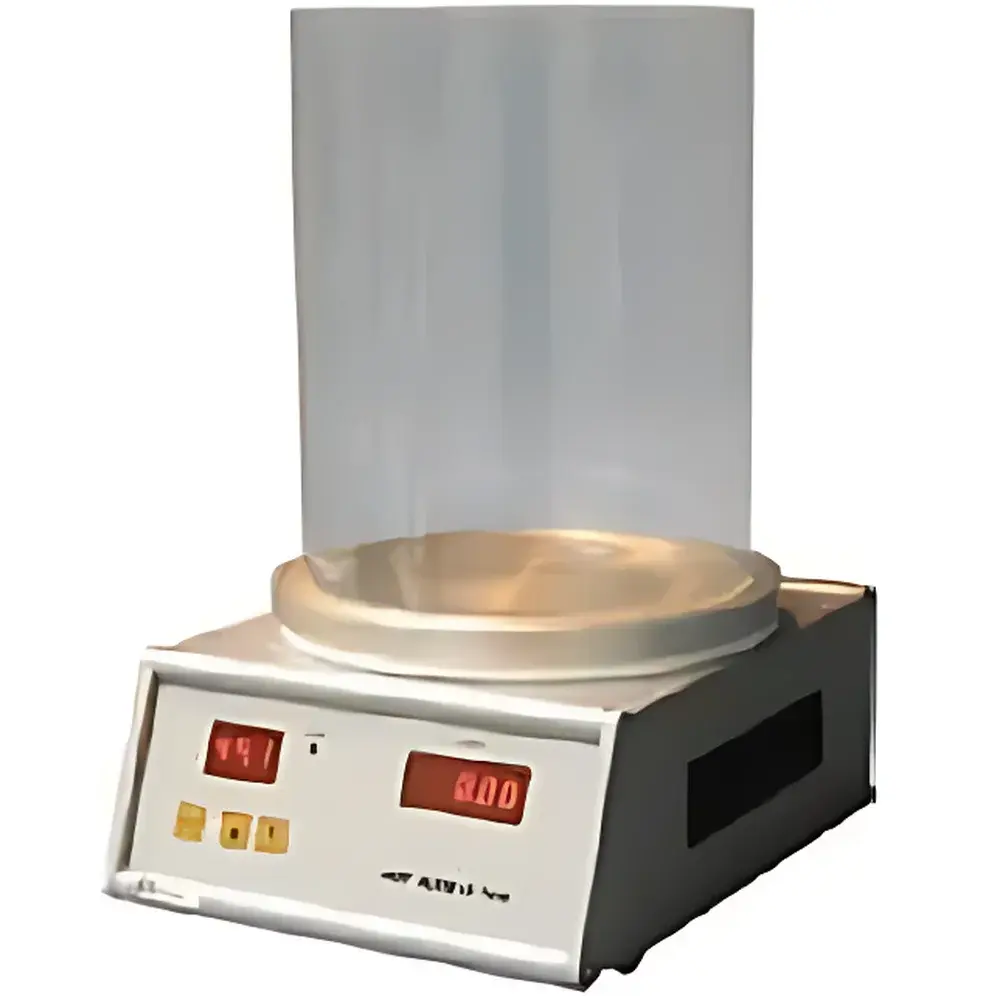
Panlab Hot-Plate Thermal Analgesia Meter
| Brand | Panlab |
|---|---|
| Origin | Spain |
| Model | Hot-Plate Thermal Analgesia Meter |
| Temperature Range | 45–62 °C |
| Temperature Accuracy | ±0.1 °C |
| Timer Resolution | 0.1 s |
| Heating Plate Material | 10 mm Aluminum |
| Safety Protection | Multi-circuit Electronic Over-Temperature Control |
| Interface | Built-in LCD Display + Footswitch Input + SEDACOM Software Connectivity |
Overview
The Panlab Hot-Plate Thermal Analgesia Meter is a precision-engineered instrument designed for standardized thermal nociception assessment in rodents and other small laboratory animals. It operates on the principle of radiant thermal stimulation applied via a uniformly heated aluminum surface, eliciting quantifiable behavioral endpoints—primarily hind-paw licking, shaking, or jumping—that correlate with central pain perception thresholds. First described by Eddy & Leimbach (1953), the hot-plate test remains a cornerstone assay in preclinical analgesic drug evaluation, neuropharmacology, and translational pain research. Unlike tail-flick or Hargreaves tests, this method engages supraspinal integration, making it particularly sensitive to centrally acting analgesics (e.g., opioids, cannabinoids) and less responsive to purely peripheral agents. The device’s 10 mm-thick anodized aluminum plate ensures rapid thermal equilibration and minimal spatial temperature gradient (<0.3 °C across surface), critical for inter-trial reproducibility and compliance with OECD Test Guideline 407 and ICH S5(R3) recommendations for repeat-dose toxicity studies involving sensory endpoints.
Key Features
- High-stability heating platform with PID-controlled thermal regulation, maintaining setpoint accuracy within ±0.1 °C over extended operation cycles.
- Dual-mode timing: built-in high-resolution digital timer (0.1 s resolution) with automatic cutoff at user-defined latency ceiling (default 60 s) to prevent tissue injury.
- Integrated footswitch interface enables hands-free trial initiation and endpoint recording, minimizing experimenter-induced stress artifacts and improving operator ergonomics.
- Real-time display of current plate temperature and elapsed latency on a backlit LCD screen; no external monitor required for basic operation.
- Multi-layer electronic safety architecture—including independent thermal cutoff sensors, redundant power monitoring, and fail-safe relay shutdown—ensures compliance with EN 61000-6-2 (EMC immunity) and IEC 61010-1 (electrical safety for laboratory equipment).
Sample Compatibility & Compliance
The system is validated for use with mice (18–30 g) and rats (150–250 g), supporting standard housing-acclimatized protocols per ARRIVE 2.0 guidelines. Plate dimensions (200 × 200 mm) accommodate simultaneous testing of up to two adult mice or one rat under controlled ambient conditions (20–24 °C, 40–60% RH). All thermal exposure durations adhere to institutional animal care and use committee (IACUC) and European Directive 2010/63/EU limits, with default cutoff at 60 s to prevent thermal injury. Calibration traceability follows ISO/IEC 17025 requirements through factory-certified NIST-traceable thermistors. Device firmware supports audit trail generation for GLP-compliant studies when used with SEDACOM software.
Software & Data Management
SEDACOM v4.x (Windows-compatible) provides full experimental control, automated latency logging, group-wise statistical comparison (ANOVA, Dunnett’s post-hoc), and export to CSV, Excel, or GraphPad Prism formats. The software enforces 21 CFR Part 11-compliant user authentication, electronic signatures, and immutable audit trails—including timestamped records of temperature setpoints, trial start/end events, and manual overrides. Raw data files are stored with SHA-256 checksums to ensure integrity verification during regulatory submissions. Integration with LabArchives ELN and OpenLab CDS is supported via standardized API hooks.
Applications
- Primary screening of novel opioid receptor modulators, TRPV1 antagonists, and NSAID derivatives.
- Phenotypic characterization of transgenic or knockout mouse models exhibiting altered nociceptive processing (e.g., BDNF, Nav1.7, or MOR-knockout lines).
- Chronic pain model validation (e.g., CFA-induced inflammation, SNL neuropathy) where thermal hyperalgesia develops over time.
- Drug interaction studies assessing tolerance development or cross-tolerance between analgesic classes.
- Behavioral pharmacokinetic-pharmacodynamic (PK/PD) correlation under fixed-dose regimens.
FAQ
What is the maximum recommended exposure time to avoid tissue damage?
The default cutoff latency is 60 seconds, aligned with ethical thresholds defined in Directive 2010/63/EU Annex VIII and NIH OLAW guidance. Prolonged exposure beyond this duration is prohibited without specific protocol amendment and ethics approval.
Can the device be calibrated in-house?
Yes—users may perform routine verification using certified reference thermometers (e.g., Fluke 1523 with 0.02 °C uncertainty); full recalibration requires return to Panlab-authorized service centers per ISO/IEC 17025 accreditation.
Is SEDACOM software compatible with macOS or Linux?
No—SEDACOM is a Windows-native application (tested on Windows 10/11, 64-bit). Virtualization or dual-boot setups are not validated and may compromise audit trail integrity.
Does the system support multiple temperature ramps within a single session?
No—the Hot-Plate Thermal Analgesia Meter maintains a static setpoint per trial. Dynamic ramping requires alternative platforms such as the Hargreaves apparatus or thermal gradient plates.
How often should the aluminum plate surface be cleaned?
After each animal trial using 70% ethanol and lint-free wipes; residual organic material must be removed to prevent thermal conductivity drift and cross-contamination.
Related Products




