
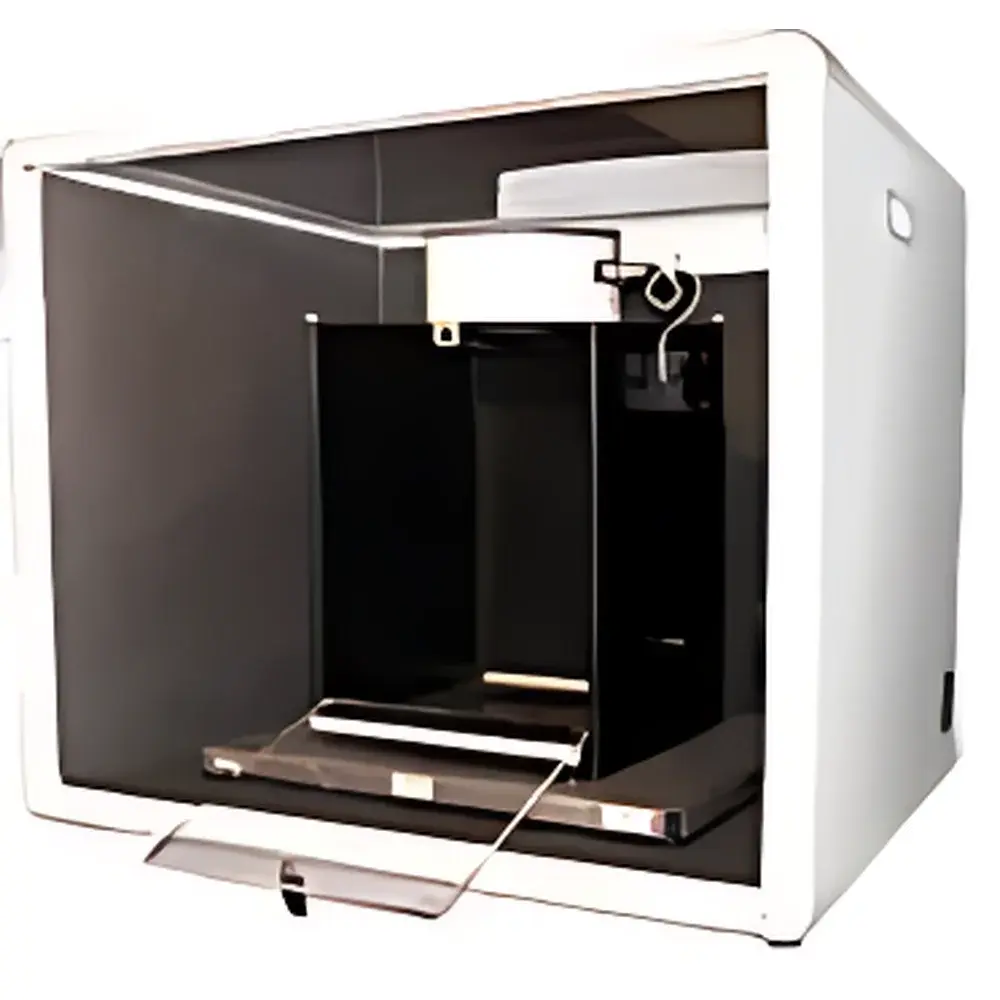
Panlab Fear Startle & Freezing System for Rodent Behavioral Analysis
| Brand | Panlab |
|---|---|
| Origin | Spain |
| Model | Fear |
| Animal Weight Range | 15–500 g |
| Interface | USB |
| Compliance | GLP-ready data traceability |
| Software Platform | PackWin 2.0 with Startle & Freezing Modules |
| Sensor Type | High-sensitivity load-cell-based motion transducer |
| Configurable Stimulus Outputs | Auditory (broadband noise, tone bursts), Visual (LED flash), and Aversive (foot shock via optional stimulator) |
| Enclosure Options | Acoustic isolation chamber (standard), transparent or opaque test cages |
Overview
The Panlab Fear Startle & Freezing System is a rigorously engineered platform for quantitative assessment of defensive behavioral responses in rodents—specifically acoustic startle reflex (ASR) and contextual/cued fear conditioning—within standardized neuroscience and pharmacological research paradigms. Built upon the well-established principles of sensorimotor gating and associative learning, the system measures transient whole-body motion displacement (startle magnitude) and sustained immobility (freezing duration and latency) as validated endophenotypes for anxiety-like states, sensorimotor integration deficits, and fear memory consolidation. The core architecture employs a precision load-cell transducer mounted beneath the test cage, calibrated to detect sub-milligram force variations induced by animal movement—ensuring high reproducibility across repeated trials and inter-laboratory studies. Designed for compliance with NIH and EMA preclinical behavioral testing guidelines, the system supports both Pavlovian fear conditioning protocols (e.g., tone-shock pairing) and prepulse inhibition (PPI) assessments critical in translational models of schizophrenia and neurodevelopmental disorders.
Key Features
- Universal rodent compatibility: Validated for mice (15–40 g) and rats (100–500 g) without mechanical recalibration—achieved via dynamic signal gain adjustment and adaptive baseline normalization.
- Integrated USB hub architecture: Single-cable connectivity links the transducer amplifier, stimulus controller, and PC—eliminating timing jitter and simplifying setup validation per IEEE 1588 precision time protocol standards.
- Dual-mode behavioral quantification: Simultaneous real-time acquisition of startle amplitude (in arbitrary units proportional to peak acceleration) and freezing episodes (defined as absence of movement exceeding 1.5 s, validated against video-based motion tracking).
- Modular stimulus delivery: Supports configurable auditory stimuli (20–120 dB SPL, 1–20 kHz bandwidth), visual cues (5-ms LED pulses, 1000 lux), and aversive foot shocks (0.05–0.8 mA, constant current, ISO 13485-certified stimulator interface).
- Acoustic isolation chamber (optional): Constructed with 40 mm mineral wool lining and laminated acrylic walls, achieving >45 dB insertion loss at 1 kHz—meeting ASTM E90-22 requirements for sound transmission loss in behavioral enclosures.
Sample Compatibility & Compliance
The system accommodates standard mouse (10 × 10 × 12 cm) and rat (20 × 20 × 30 cm) acrylic test cages with removable floors for rapid cleaning and cross-species adaptation. All hardware components comply with IEC 61000-4 electromagnetic immunity standards and CE marking for laboratory instrumentation. Data output adheres to MIAME-compliant metadata structures, including timestamped trial logs, stimulus parameter sets, and raw transducer voltage traces. Audit trails generated by PackWin 2.0 meet FDA 21 CFR Part 11 requirements for electronic records—supporting user authentication, session locking, and immutable export to CSV or HDF5 formats for downstream analysis in MATLAB, Python (SciPy), or R.
Software & Data Management
PackWin 2.0 serves as the central control and analysis environment, featuring a modular plugin architecture. The Startle module enables automated PPI ratio calculation (100 × [pulse-only response − prepulse+pulse response] / pulse-only response), while the Freezing module applies adaptive motion-threshold algorithms to distinguish true freezing from low-amplitude respiration artifacts. All experimental parameters—including inter-trial intervals, stimulus durations, and shock intensities—are stored in encrypted XML configuration files. Batch processing supports group-level statistics (ANOVA, RM-ANOVA, post-hoc Tukey tests) with graphical export of latency curves, habituation slopes, and extinction kinetics. Raw data archives include full-resolution analog waveforms sampled at 1 kHz, enabling retrospective re-analysis without loss of temporal fidelity.
Applications
- Preclinical evaluation of anxiolytic, antipsychotic, and nootropic compounds in genetic and pharmacologically induced rodent models.
- Investigation of neural circuitry underlying fear memory using optogenetic or chemogenetic interventions coupled with real-time behavioral readouts.
- Validation of auditory processing deficits in models of tinnitus or age-related hearing loss via gap-prepulse inhibition (GPI) protocols.
- High-throughput screening for sensorimotor gating impairments in large-scale mutagenesis or CRISPR-based phenotyping pipelines.
- Neurotoxicology studies assessing long-term behavioral sequelae following developmental exposure to environmental contaminants.
FAQ
What species and weight ranges are supported?
The system is validated for C57BL/6 and Sprague-Dawley rodents weighing 15–500 g, with automatic scaling of transducer sensitivity and stimulus intensity calibration.
Does the system support automated fear extinction protocols?
Yes—PackWin 2.0 includes programmable extinction schedules with variable inter-trial intervals, cue-only presentations, and session-based freezing decay curve fitting.
Can raw transducer data be exported for custom analysis?
Yes—full-resolution 16-bit analog waveforms (1 kHz sampling) and metadata are exportable in open-format CSV and HDF5 containers.
Is GLP-compliant audit logging enabled by default?
Yes—user login sessions, parameter changes, and data exports are automatically logged with digital signatures and tamper-proof timestamps.
Are third-party stimulus devices compatible?
The system provides TTL-compatible trigger outputs and analog voltage inputs, enabling synchronization with external equipment including fMRI-compatible shockers, infrared beam arrays, or wireless telemetry systems.
Related Products



