
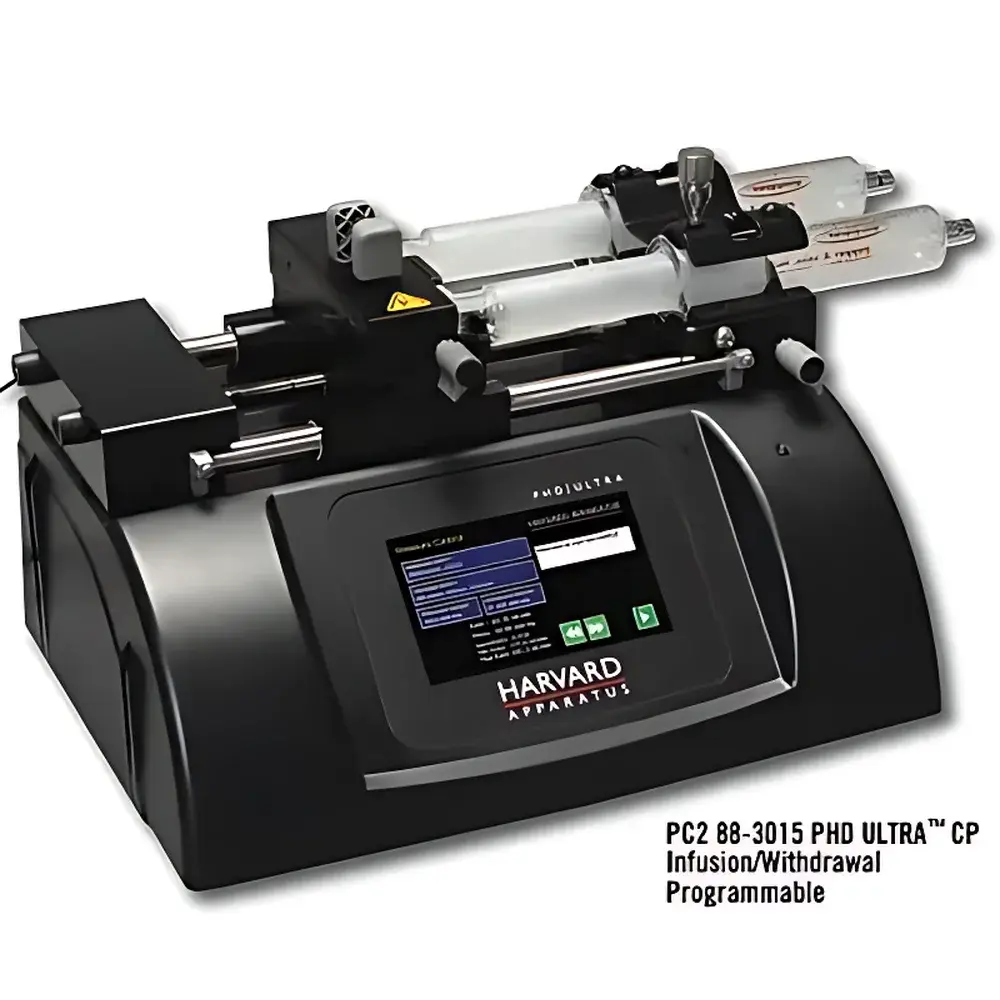
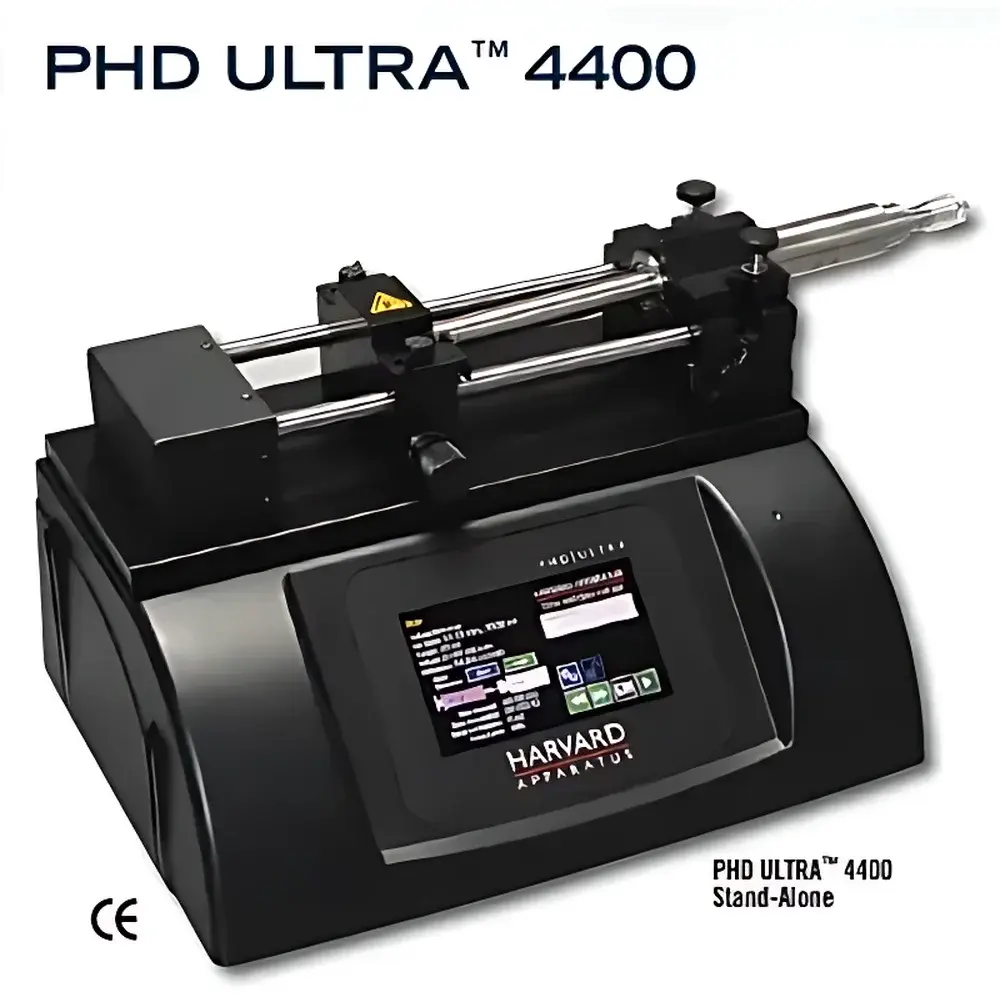
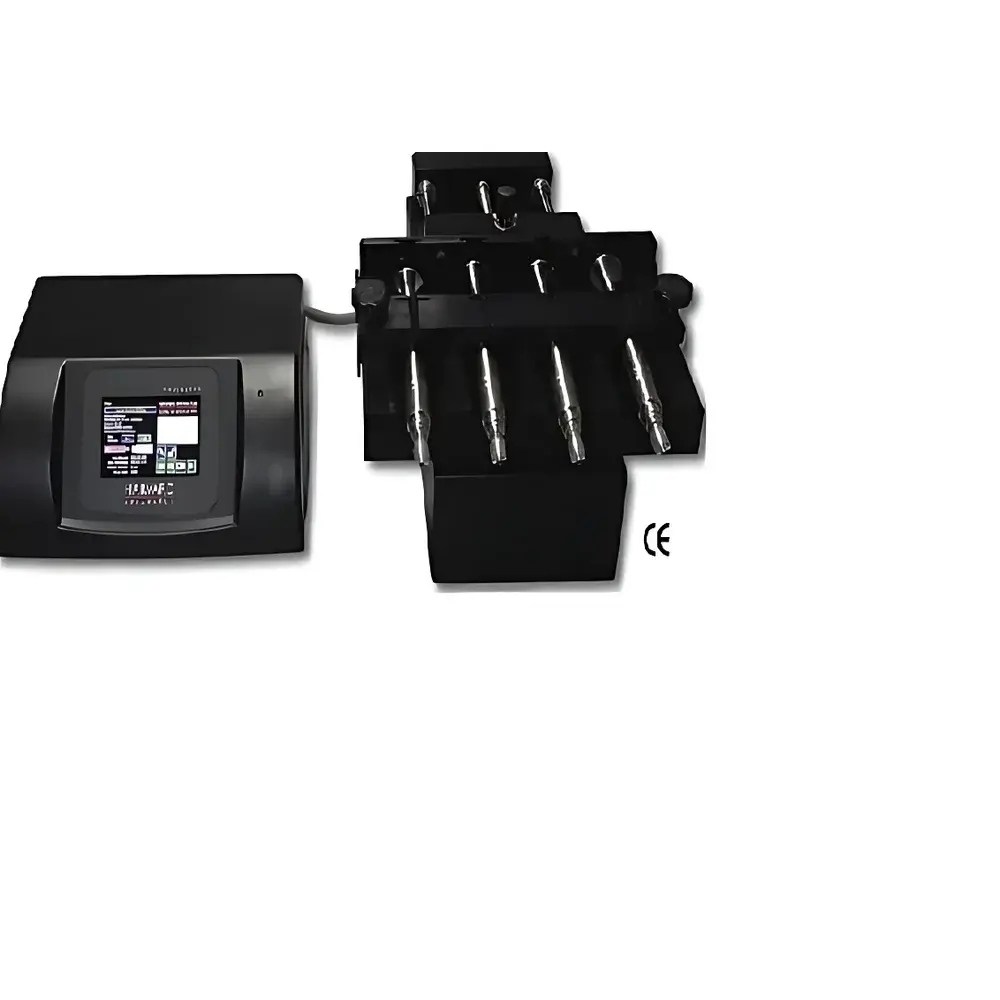
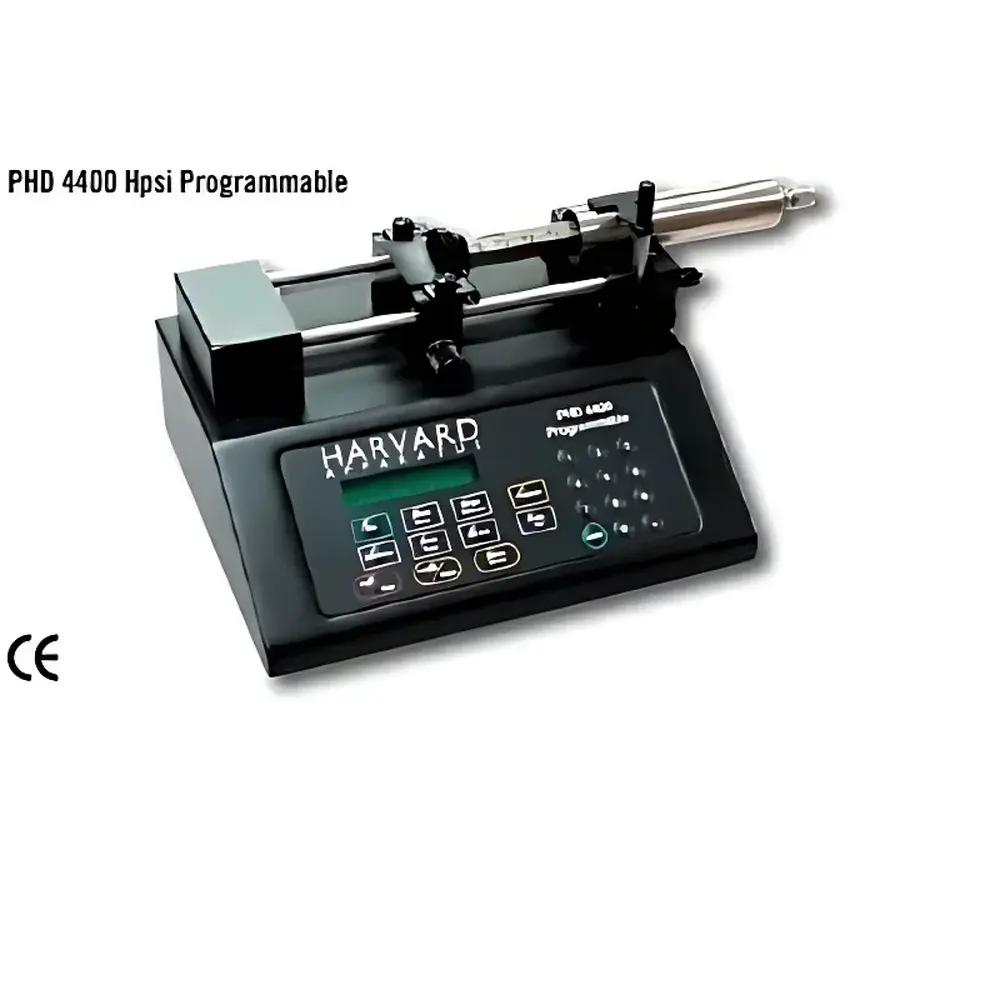
Harvard Apparatus New PHD ULTRA Constant Pressure Syringe Pump
| Brand | Harvard Apparatus |
|---|---|
| Origin | USA |
| Model | New PHD ULTRA Constant Pressure Syringe Pump |
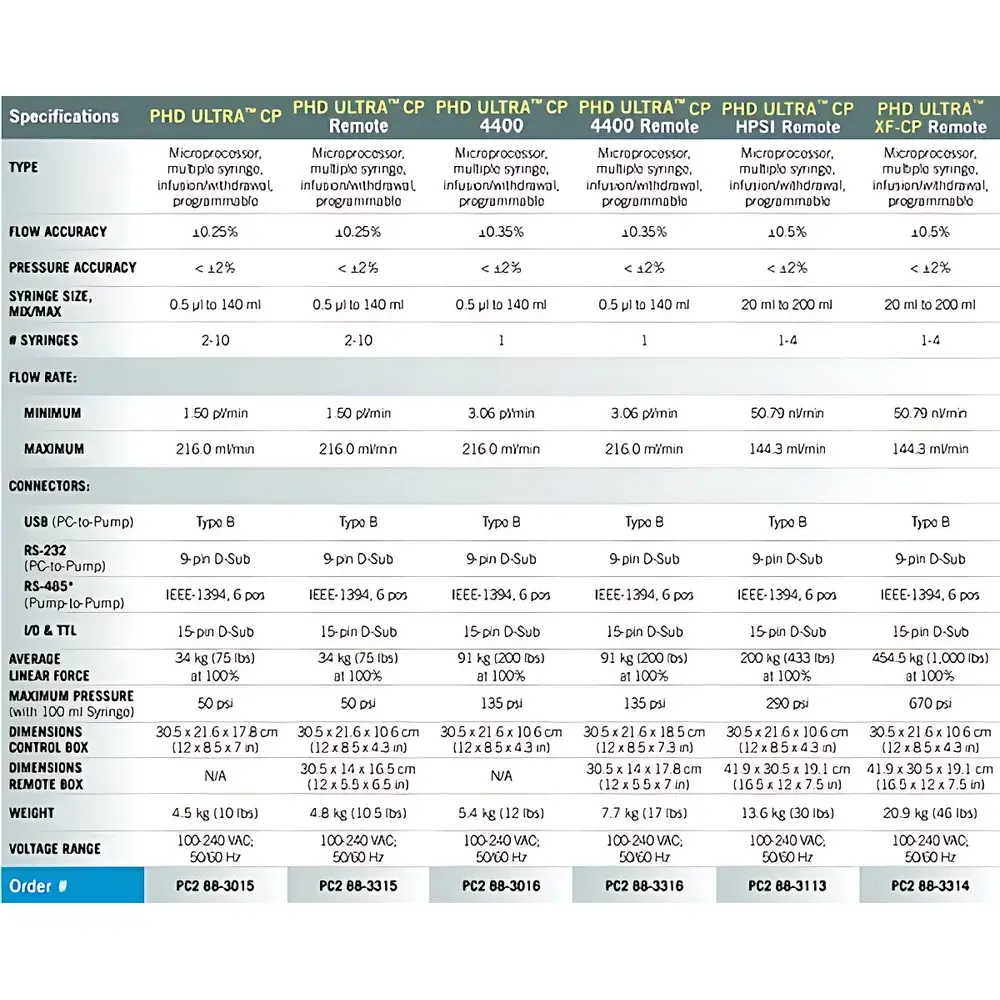
| Syringe Capacity Range | 0.5 µL to 200 mL |
| Minimum Flow Rate | 1.50 pL/min |
| Maximum Flow Rate | 216.0 mL/min |
| Maximum Linear Force | 454.5 kg |
| Interface | USB |
Overview
The Harvard Apparatus New PHD ULTRA Constant Pressure Syringe Pump is an advanced electromechanical precision fluid delivery system engineered for applications requiring stable, programmable pressure-controlled infusion—distinct from conventional volumetric or constant-flow operation. Unlike standard syringe pumps that regulate displacement speed, the PHD ULTRA CP series employs closed-loop force feedback control to maintain a user-defined pressure setpoint at the syringe plunger interface, enabling true constant-pressure operation across variable fluid resistance (e.g., microfluidic channels, porous media, or in vivo cannulae). This architecture is particularly critical in neuroscience (intracerebral microinfusion), drug delivery research, microvascular perfusion studies, and high-viscosity polymer dispensing where backpressure fluctuations would otherwise compromise dosing accuracy. The pump’s brushless DC motor, high-resolution lead screw, and integrated load cell deliver exceptional force resolution and long-term stability under dynamic load conditions.
Key Features
- True constant-pressure mode with real-time force feedback and adaptive speed adjustment to maintain target pressure regardless of fluidic resistance changes
- Wide operational force range: up to 454.5 kg (1000 lbf) maximum linear thrust, supporting high-resistance applications including capillary electrophoresis and dense hydrogel extrusion
- Ultra-low flow capability down to 1.50 pL/min—enabling nanoliter-scale neuropharmacological infusions with sub-femtoliter per second resolution
- Modular design accommodating syringes from 0.5 µL microsyringes (e.g., Hamilton 7000 series) up to 200 mL industrial barrels, with automatic syringe diameter calibration via optical encoder
- Integrated USB 2.0 interface compliant with CDC ACM class drivers; no proprietary hardware required for host communication
- Robust aluminum chassis with IP20-rated enclosure, designed for continuous duty cycles in ISO Class 5–7 laboratory environments
Sample Compatibility & Compliance
The PHD ULTRA CP supports all standard Luer-lock and small-bore plastic/glass syringes compatible with Harvard Apparatus’ syringe detection protocol. It accommodates chemically aggressive solvents (e.g., DMSO, chloroform, THF) when paired with PTFE- or stainless-steel syringe bodies and fluoropolymer seals. The system meets IEC 61010-1:2010 safety requirements for laboratory equipment and complies with electromagnetic compatibility standards per FCC Part 15 Subpart B and EN 61326-1:2013. While not certified for clinical use, its deterministic firmware architecture and non-volatile parameter storage support GLP-compliant workflows when deployed with audit-trail-enabled host software.
Software & Data Management
The pump operates natively with Harvard Apparatus’ PumpControl™ v4.x software (Windows/macOS), which provides graphical pressure/flow/time profiling, multi-pump synchronization, and script-based protocol automation. All commands—including pressure setpoints, ramp profiles, hold durations, and error thresholds—are logged with timestamped metadata in CSV and HDF5 formats. When used in regulated environments, optional integration with third-party LIMS or ELN platforms (via TCP/IP or REST API) enables full traceability aligned with FDA 21 CFR Part 11 requirements—including electronic signatures, user access controls, and immutable audit trails for pressure calibration events and infusion logs.
Applications
- Chronic intracerebroventricular (ICV) or intraparenchymal drug infusion in rodent models, where pressure stability prevents tissue damage during slow-release protocols
- Microfluidic chip priming and reagent loading under controlled backpressure to avoid bubble nucleation or channel delamination
- In vitro blood-brain barrier (BBB) model perfusion, maintaining physiological shear stress while compensating for membrane fouling-induced resistance drift
- High-viscosity biopolymer (e.g., alginate, hyaluronic acid) extrusion for 3D bioprinting scaffolds requiring consistent extrusion pressure over extended durations
- Calibration of pressure-sensitive sensors and transducers using traceable, stepwise pressure ramps with <0.1% linearity deviation
FAQ
Does the PHD ULTRA CP support closed-loop pressure regulation with external transducers?
Yes—the pump accepts analog 0–5 V or 4–20 mA input from third-party pressure sensors via optional analog I/O module (Part No. PC2-88-3201), enabling hybrid pressure feedback using external reference points.
Can multiple PHD ULTRA CP units be synchronized for parallel infusion with pressure coordination?
Yes—using PumpControl™ software or direct TTL/RS-485 daisy-chaining, up to 32 pumps can be phase-aligned with sub-millisecond timing resolution for multi-channel perfusion systems.
Is firmware upgradable in the field, and are version histories documented?
Yes—firmware updates are delivered via signed .hex files through Harvard Apparatus’ secure portal; each release includes a validated change log and regression test report per ISO/IEC 17025 guidelines.
What syringe detection method does the system use, and how is calibration performed?
Optical diameter sensing combined with user-confirmed syringe ID selection; automatic calibration occurs during initialization using factory-stored lead-screw pitch and encoder step mapping—no manual zeroing required.
How is mechanical overload protected during high-force operation?
Dual-stage protection: real-time current limiting on the motor driver plus hardware-based torque cutoff triggered by load-cell saturation—both independently logged and recoverable without system reset.



