
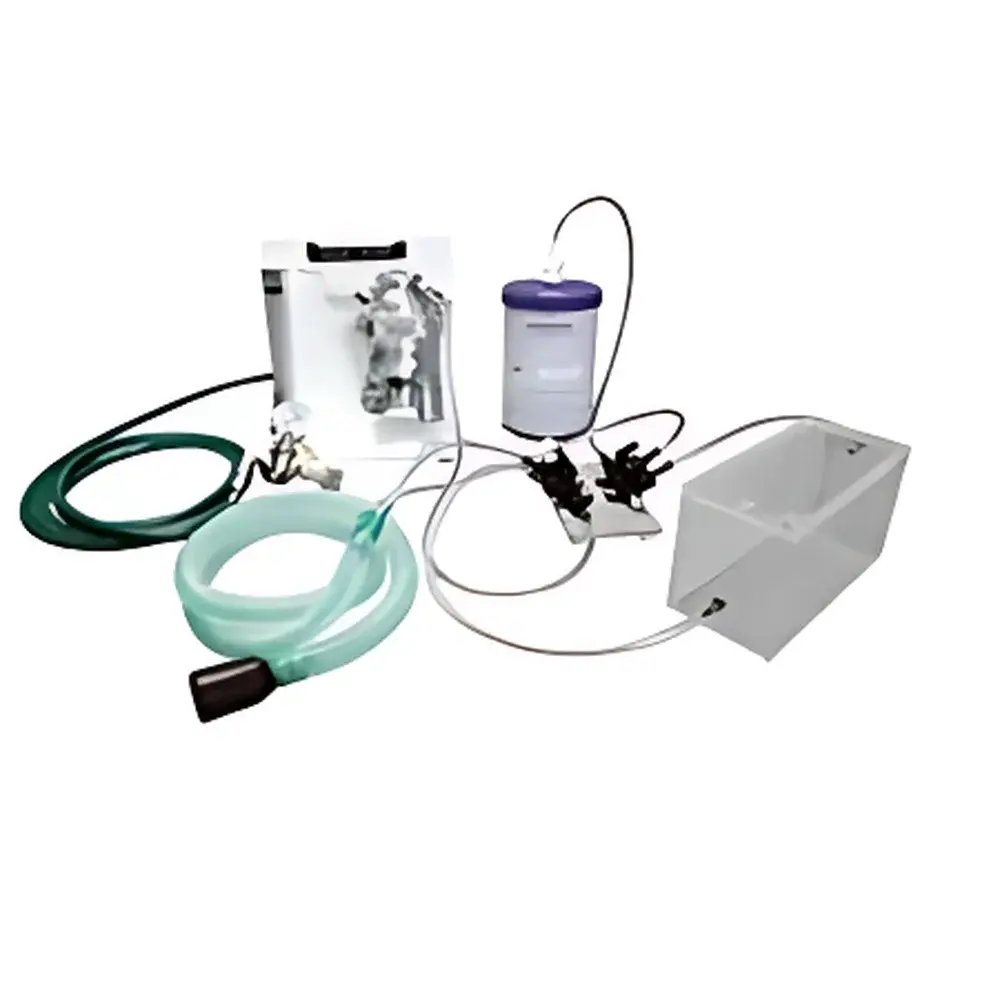
Harvard Apparatus ANESTHESIA Animal Anesthesia System
| Brand | Harvard Apparatus |
|---|---|
| Origin | USA |
| Manufacturer Type | Authorized Distributor |
| Origin Category | Imported |
| Model | ANESTHESIA |
| Pricing | Available Upon Request |
Overview
The Harvard Apparatus ANESTHESIA Animal Anesthesia System is a precision-engineered platform designed for reliable, controllable, and physiologically appropriate anesthetic delivery in preclinical research settings. Built upon decades of expertise in life science instrumentation, this system operates on the principle of calibrated vaporization and precise gas blending—typically utilizing isoflurane or sevoflurane in combination with medical-grade oxygen (O₂) and/or nitrous oxide (N₂O)—to achieve stable, titratable anesthetic depth across a broad range of laboratory animal species. Its architecture integrates flow-controlled carrier gas regulation, temperature-stabilized vaporizer technology, and fail-safe pressure monitoring to ensure consistent anesthetic concentration (vol% output), rapid induction/recovery kinetics, and compliance with institutional animal care and use committee (IACUC) protocols. The system is engineered for integration into vivarium workflows where reproducibility, operator safety, and regulatory traceability are critical.
Key Features
- Temperature-compensated, calibrated vaporizer module delivering accurate anesthetic agent concentration (0.5–5.0% isoflurane typical range) across variable ambient conditions
- Dual-gas mass flow control for independent regulation of O₂ and auxiliary gas (e.g., N₂O or air), enabling precise FiO₂ management and hypoxic/hyperoxic challenge studies
- Integrated upstream pressure relief valve and downstream scavenging port compliant with ISO 8573-1:2010 (compressed air purity) and ANSI Z9.9 ventilation standards
- Modular design supporting benchtop, mobile cart, or stereotaxic rig mounting; compatible with nose cones, induction chambers, and endotracheal intubation setups
- Real-time visual indicators for vaporizer status, gas flow rates, and system pressure—no external power or software required for core operation
- CE-marked and FDA-listed as Class II medical device (510(k) cleared for veterinary and research use); conforms to IEC 60601-1 and IEC 60601-2-13 safety standards
Sample Compatibility & Compliance
The ANESTHESIA system supports anesthesia delivery in rodents (mice, rats), lagomorphs (rabbits), ferrets, guinea pigs, and non-human primates (via appropriately sized circuits and interfaces). It accommodates both spontaneous breathing and controlled ventilation configurations when paired with compatible ventilators (e.g., Harvard Apparatus Rodent Ventilator). All wetted materials—including vaporizer housing, flow sensors, and gas pathways—are biocompatible, autoclavable (where specified), and certified per USP Class VI and ISO 10993-5 cytotoxicity requirements. The system meets GLP documentation requirements for pharmacokinetic, toxicology, and behavioral studies and supports audit-ready recordkeeping when integrated with validated data acquisition platforms.
Software & Data Management
While the base ANESTHESIA unit operates as a standalone analog system, optional digital modules—including the Harvard Apparatus Gas Monitoring Interface (GMI) and LabChart-compatible analog outputs—enable real-time logging of inspired/ expired anesthetic concentration (via IR sensor), O₂ partial pressure, respiratory rate, and tidal volume. Data streams adhere to IEEE 11073-10471 (anesthesia device communication standard) and support 21 CFR Part 11-compliant electronic signatures when deployed with validated LIMS or ELN systems. Firmware updates and calibration logs are timestamped and user-auditable, fulfilling ALF (Association for Assessment and Accreditation of Laboratory Animal Care) reporting expectations.
Applications
- Neuroscience: Stable anesthesia during fMRI, electrophysiology (e.g., in vivo patch-clamp), and optogenetic interventions
- Cardiovascular research: Hemodynamic monitoring under controlled anesthetic depth without autonomic interference
- Oncology & immunology: Long-duration surgical procedures requiring precise maintenance of physiological homeostasis
- Developmental biology: Neonatal and juvenile rodent anesthesia with low-flow pediatric circuit compatibility
- Toxicology: Repeat-dose studies requiring inter-session anesthetic consistency and minimal metabolic confounding
FAQ
Is the ANESTHESIA system suitable for use with non-rodent species such as swine or sheep?
Yes—when configured with large-animal vaporizer modules, high-capacity flowmeters, and species-specific breathing circuits, the platform supports USDA-covered agricultural and translational models.
Does Harvard Apparatus provide installation validation (IQ/OQ) documentation?
Yes—upon request, Harvard Apparatus supplies vendor-qualified IQ/OQ protocols aligned with GxP environments, including test scripts, acceptance criteria, and blank execution records.
Can the system be integrated with third-party ventilators or physiological monitoring systems?
Yes—the ANESTHESIA platform features standardized ¼” BSP gas ports, 0–5 V analog outputs, and RS-232/USB interface options for interoperability with major vendors including Kent Scientific, ADInstruments, and Buxco.
What maintenance schedule is recommended for the vaporizer module?
Annual calibration verification by an authorized service provider is recommended; internal temperature compensation eliminates daily recalibration but does not replace periodic traceable metrology checks.
Is training provided for new users?
Yes—Harvard Apparatus offers on-site or virtual operator certification programs covering safe handling of volatile anesthetics, leak testing procedures, emergency response protocols, and IACUC documentation best practices.



