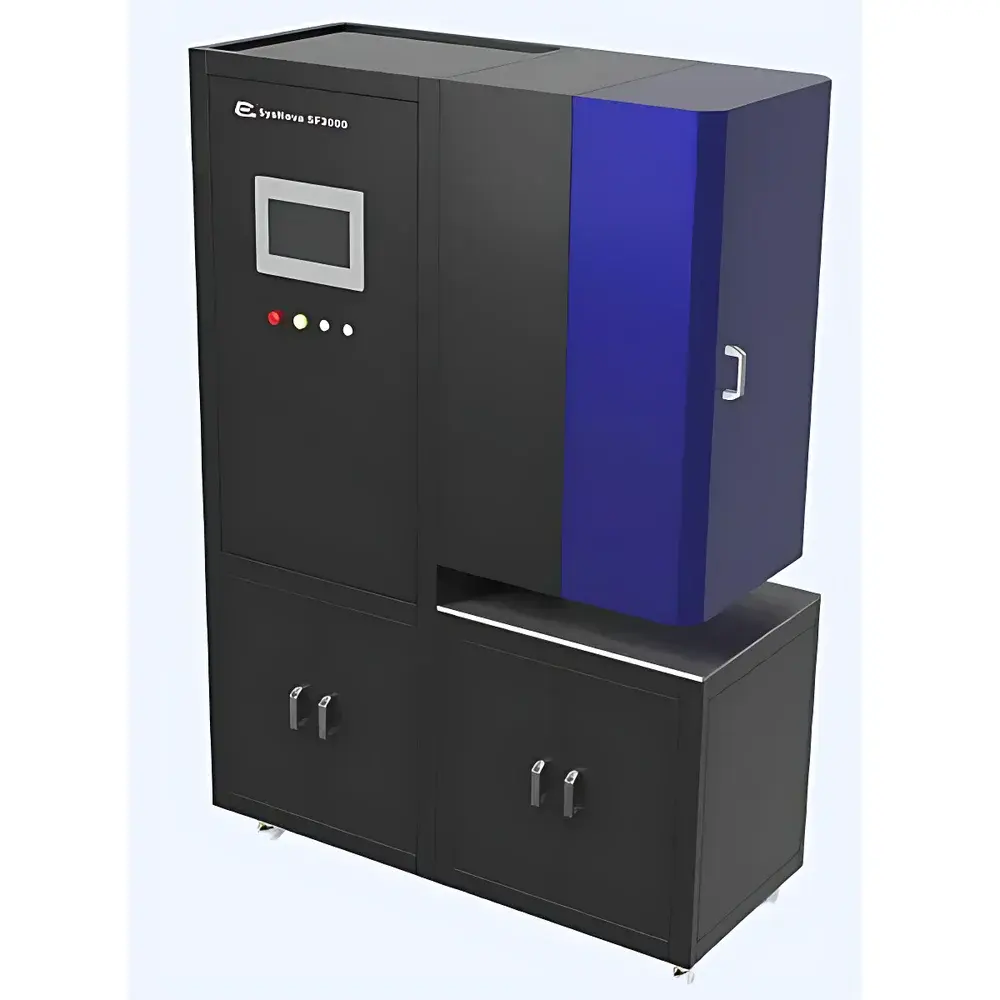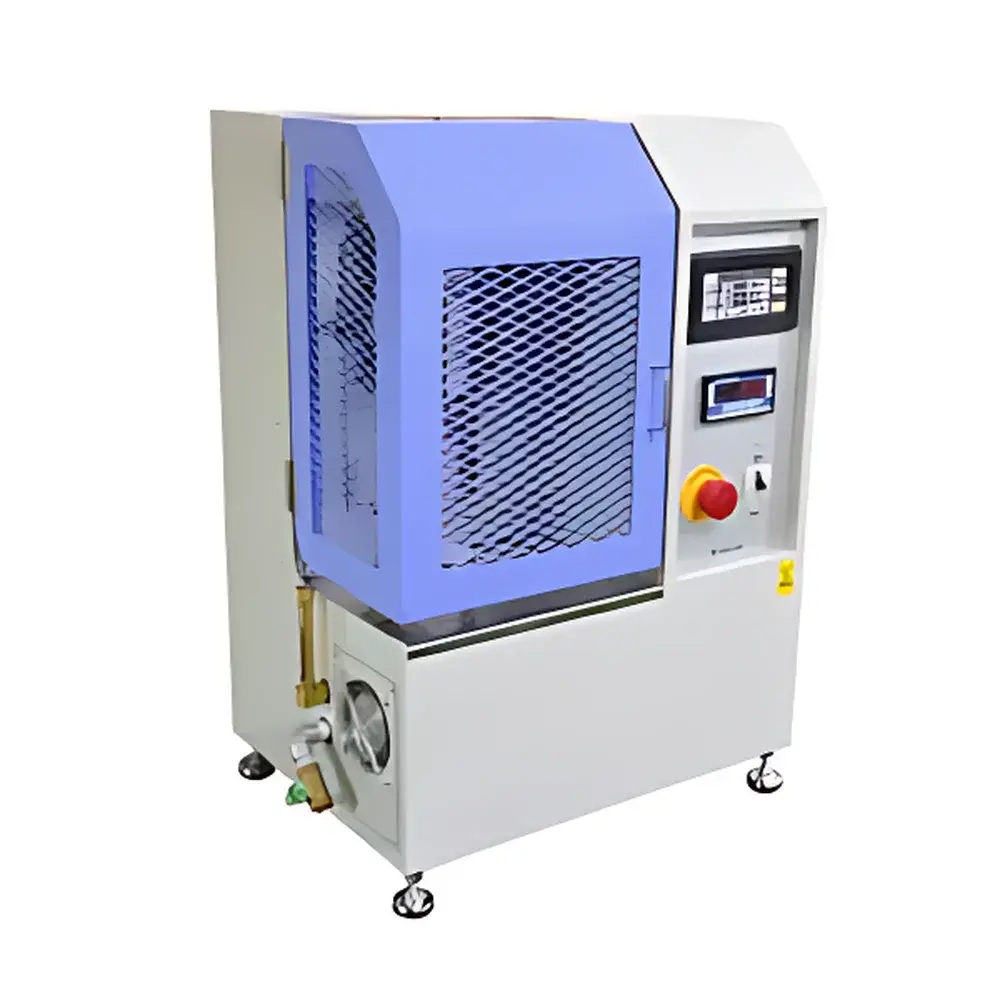
Yasuda No.153-GTR Continuous-Recording Gel Time Tester
| Brand | Yasuda |
|---|---|
| Origin | Japan |
| Model | No.153-GTR |
| Torque Range | Max. 20.0 mN·m |
| Temperature Range | Up to 200 °C (optional cryo-cooling unit: 10–200 °C) |
| Rotor Speed | 25 rpm (50 Hz) / 24 rpm (60 Hz) |
| Timer Capacity | Max. 999,999 s (or 99 h 59 min 59 s) |
| Rotor Dimensions | φ5 × 110 mm |
| Sample Tube Dimensions | φ12 × 90 mm (OD × L) |
| Power Supply | AC 100 V, 1-phase, 10 A, 50/60 Hz |
| Dimensions & Weight | Approx. W570 × D375 × H720 mm, ~30 kg |
| Accessories Included | 100 rotors, 100 sample tubes |
| Optional | Silicone oil (~2 L), dedicated software, strip-chart recorder |
Overview
The Yasuda No.153-GTR Continuous-Recording Gel Time Tester is a precision thermal-mechanical instrument engineered for real-time monitoring of gelation kinetics in thermosetting resins and reactive polymer systems. It operates on the principle of torque rheometry—measuring minute rotational resistance changes induced by molecular crosslinking during thermal curing. As the resin transitions from liquid to viscoelastic gel and finally to solid network, the instrument continuously records torque evolution versus time at a fixed temperature and controlled shear rate. This enables quantitative determination of critical process parameters including gel point (tgel), onset of viscosity rise, and cure profile shape—data essential for formulation optimization, batch consistency verification, and QC release testing in rubber compounding, epoxy encapsulation, and composite prepreg manufacturing.
Key Features
- High-sensitivity torsion transducer with full-scale range up to 20.0 mN·m, calibrated for sub-mN·m resolution in early-stage gelation detection.
- Thermally stabilized heating block with PID-controlled temperature regulation; standard operating range up to 200 °C, extendable to low-temperature operation (10–200 °C) via optional refrigerated cooling unit for studying cold-cure or latent-catalyzed systems.
- Fixed-speed motor drive delivering precise rotor rotation at 25 rpm (50 Hz) or 24 rpm (60 Hz), ensuring consistent shear history across replicates—critical for ASTM D2760-18 and ISO 3146 compliance in gel time measurement.
- Integrated high-resolution timer with dual display modes: total elapsed seconds (max 999,999 s) or conventional hh:mm:ss format (max 99:59:59), synchronized with torque acquisition for unambiguous time-zero referencing.
- Robust mechanical architecture featuring rigid aluminum frame, vibration-damped base, and sealed bearing assembly—designed for long-term stability in production lab environments subject to ambient thermal drift or floor-borne vibration.
Sample Compatibility & Compliance
The No.153-GTR accommodates standard cylindrical sample geometry: φ12 mm outer diameter × 90 mm length glass or metal test tubes, compatible with common resin volumes (typically 1.5–3.0 mL). The φ5 mm × 110 mm cylindrical rotor ensures uniform shear field development within the sample column while minimizing wall-slip artifacts. Instrument design conforms to fundamental requirements of ASTM D2760 (Standard Test Method for Gel Time of Thermosetting Resins), JIS K 6910, and ISO 3146 for thermal transition characterization. When operated with validated procedures and traceable calibration standards, data generated supports GLP-compliant reporting and internal quality audits per IATF 16949 and ISO 9001 frameworks.
Software & Data Management
Optional dedicated acquisition software provides real-time torque vs. time plotting, automatic gel point calculation using first-derivative inflection detection, and export to CSV or Excel-compatible formats. Audit-trail functionality logs operator ID, method name, temperature setpoint, start/stop timestamps, and calibration status—supporting alignment with FDA 21 CFR Part 11 requirements when deployed in regulated pharmaceutical or medical device manufacturing settings. Raw analog outputs (e.g., 0–10 V torque signal, PT100 temperature feedback) are available for integration into centralized SCADA or MES platforms.
Applications
- Quality control of unsaturated polyester, phenolic, epoxy, and silicone resins prior to molding or casting operations.
- Development and screening of catalysts, accelerators, and inhibitors in rubber vulcanization formulations.
- Process validation of autoclave cure cycles for aerospace composites and wind turbine blade matrices.
- Stability assessment of shelf-life-limited adhesives and encapsulants under accelerated aging protocols.
- Educational use in polymer science laboratories for hands-on demonstration of reaction kinetics and network formation theory.
FAQ
What defines the gel point in this instrument’s output?
The gel point is identified as the time at which the torque curve exhibits an inflection corresponding to the onset of elastic network formation—typically determined by maximum in the first derivative (dτ/dt) or 5% deviation from baseline linear viscosity rise.
Can the instrument operate under inert atmosphere?
Yes—sample tubes may be sealed with septa or crimp caps; optional nitrogen purge fittings can be integrated into the heating chamber for oxygen-sensitive systems.
Is calibration traceable to national standards?
Torque and temperature sensors are factory-calibrated using NIST-traceable reference standards; users receive calibration certificates with uncertainty budgets per ISO/IEC 17025 guidelines.
How frequently should rotor and tube sets be replaced?
Rotors are consumables subject to surface oxidation or resin residue buildup; replacement is recommended after 50–100 tests depending on resin aggressiveness and cleaning protocol efficacy.
Does the system support multi-step temperature ramping?
No—the No.153-GTR is configured for isothermal gel time measurement only; for dynamic thermal profiling, consider Yasuda’s GTR-2000 series with programmable ramp-hold capability.