
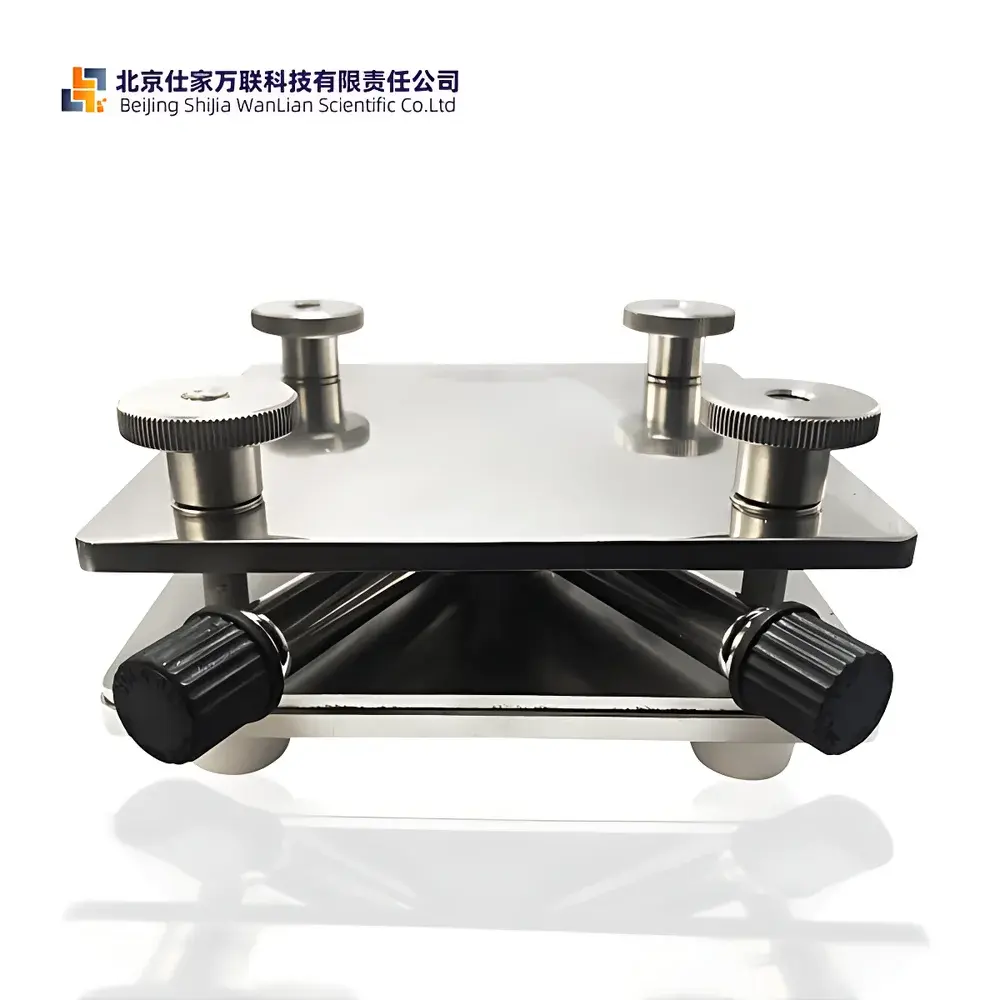
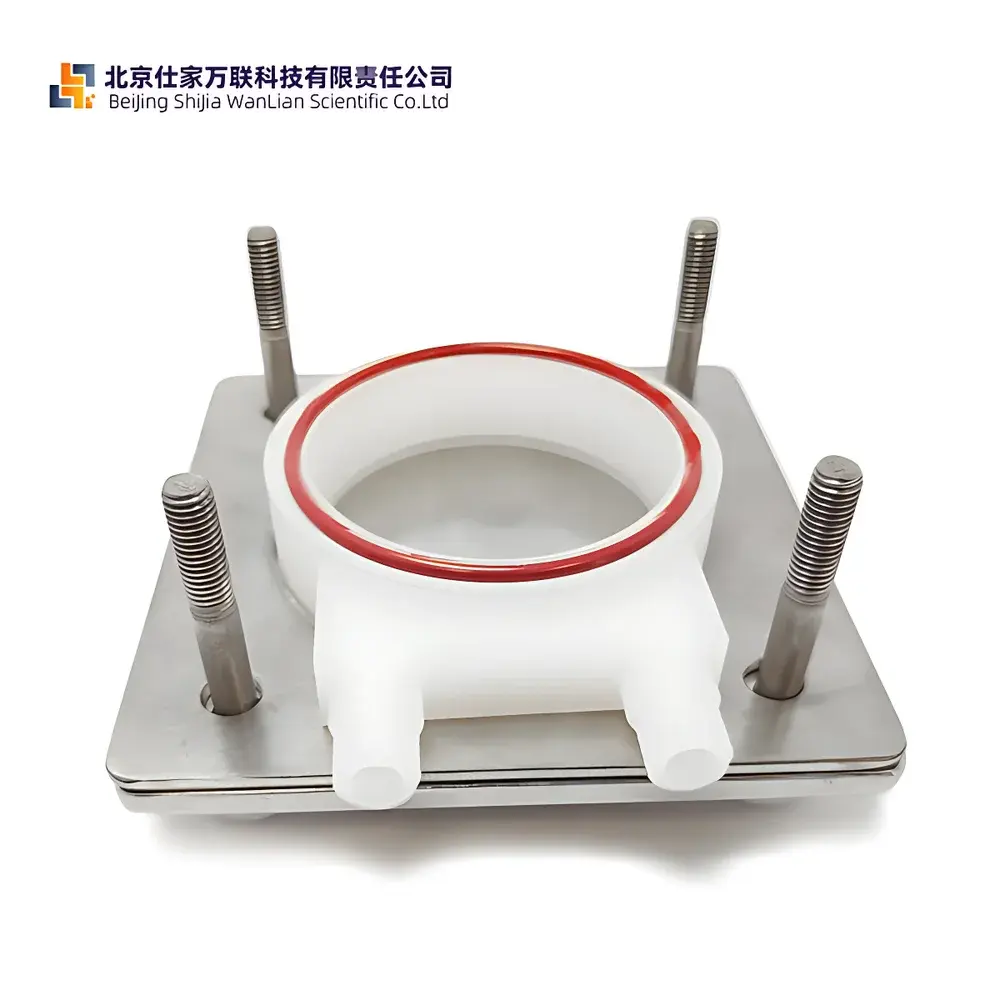
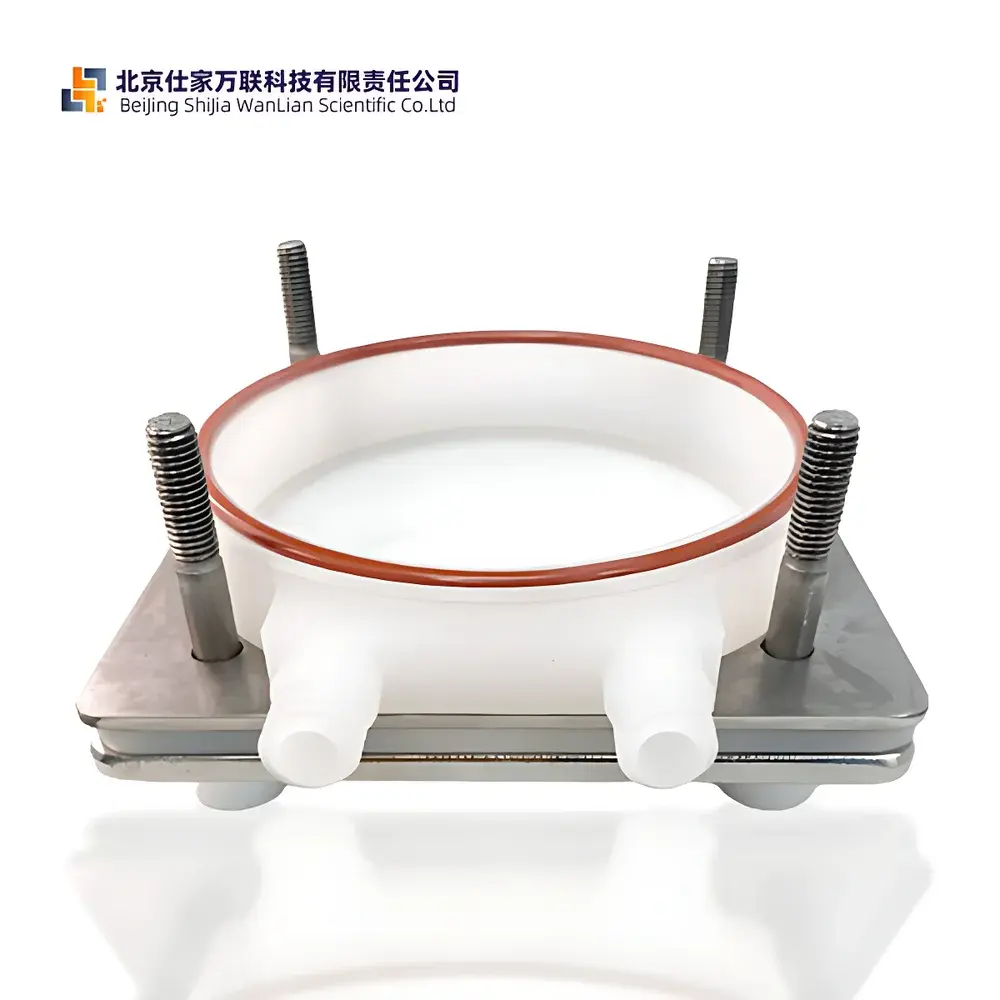
LABC Sieg-Mi-Flex B Chemical Migration Test Cell for Food Contact Materials
| Brand | LABC |
|---|---|
| Origin | Germany |
| Model | Sieg-Mi-Flex B |
| Construction Material | Chemically inert polymer composite (PEEK, PTFE, and fluorinated ethylene propylene—FEP) |
| Compliance | EN 1186-1 to -14, ISO 10993-12, GB 5009.156–2016 |
| Sealing | Dual O-ring (FEP-coated silicone), validated for static and dynamic migration testing up to 100 °C |
| Sample Exposure Configuration | Single-sided or double-sided contact mode |
| Volume Range | 10–200 mL |
| Surface Area Range | 0.05–2.0 dm² (single-sided) |
| Temperature Stability | ±0.5 °C over 24 h at 40 °C, 70 °C, and 100 °C |
| Pressure Rating | Ambient to 0.2 bar (non-pressurized design |
Overview
The LABC Sieg-Mi-Flex B Chemical Migration Test Cell is an engineered solution for standardized food contact material (FCM) migration testing under controlled physicochemical conditions. Designed in accordance with the core principles of diffusion-controlled mass transfer, it enables reproducible simulation of substance release from packaging substrates—including plastics, coated papers, adhesives, and multilayer laminates—into food simulants (e.g., 10% ethanol, 3% acetic acid, olive oil, or synthetic gastric fluid). Unlike conventional stainless steel or borosilicate glass cells, the Sieg-Mi-Flex B employs a fully inert polymer architecture—primarily PEEK structural components, FEP-lined sample chambers, and chemically stabilized O-rings—to eliminate background interference during trace-level analysis of heavy metals (e.g., Pb, Cd, Cr, Ni), primary aromatic amines (PAAs), photoinitiators, plasticizers (e.g., DEHP, DINP), and non-intentionally added substances (NIAS). Its modular geometry supports both single- and double-sided exposure configurations, allowing direct correlation between surface area-to-volume ratio and migration kinetics per ISO 10993-12 Annex C and EN 1186-1 Clause 5.
Key Features
- Chemically inert construction: No metallic leachables or silicate interference—validated for ICP-MS, GC-MS, and HPLC-UV quantification down to sub-ppb levels.
- Dual-mode exposure: Selectable single- or double-sided sample mounting eliminates ambiguity in surface-area normalization per EN 13130-1 and FDA Guidance for Industry #212.
- Thermally stable sealing system: Dual FEP-sheathed silicone O-rings maintain integrity across 5–100 °C, preventing simulant evaporation or cross-contamination during extended incubation (up to 10 days).
- Modular sizing: Seven interchangeable cell inserts (DN30 to DN120) cover surface areas from 0.05 to 4.0 dm² and volumes from 10 to 200 mL—fully aligned with EN 1186-3 Annex A dimensional tolerances.
- Traceability-ready design: Each unit bears laser-etched batch ID and calibration reference mark; compatible with GLP-compliant instrument logs and audit trails.
Sample Compatibility & Compliance
The Sieg-Mi-Flex B accommodates rigid and flexible packaging materials up to 3 mm thickness, including PET, PP, PE, PS, aluminum foil composites, and UV-cured ink layers. It has been independently verified for compliance with EN 1186-1:2020 (general requirements), EN 1186-3:2020 (cell specifications), EN 13130-1:2020 (determination of specific migration), and GB 5009.156–2016 (Chinese national standard for food packaging migration testing). All wetted parts meet USP Class VI biocompatibility criteria and are free of REACH SVHC substances. The cell is suitable for use in accredited laboratories operating under ISO/IEC 17025:2017 and subject to FDA 21 CFR Part 11 data integrity requirements when paired with compliant LIMS or chromatography data systems.
Software & Data Management
While the Sieg-Mi-Flex B is a passive, non-electronic test cell, its dimensional and exposure parameters are natively integrated into LABC’s optional MigrationCalc™ software suite (v3.2+). This desktop application automates surface-area/volume ratio calculations, migration limit conversions (mg/kg → mg/dm²), uncertainty propagation per GUM (JCGM 100:2008), and report generation aligned with EU Commission Regulation (EU) No 10/2011 Annex IV templates. Raw data export supports CSV, XML, and PDF/A-2 formats—with embedded digital signatures and time-stamped audit logs meeting ALCOA+ principles.
Applications
- Regulatory submission testing for EU Plastics Regulation (EU) No 10/2011 and Swiss Ordinance SR 817.023.21.
- Migration screening of recycled PET flakes used in food-grade bottles.
- Validation of barrier coatings on paperboard trays exposed to acidic fruit preparations.
- Leachables profiling of medical device packaging per ISO 10993-12 and USP .
- Method development for NIAS identification using high-resolution accurate-mass (HRAM) LC-QTOF.
FAQ
Is the Sieg-Mi-Flex B compatible with organic food simulants such as olive oil and sunflower oil?
Yes—its FEP-lined chamber and inert O-rings resist swelling and extractables formation in high-fat simulants, supporting full 10-day testing per EN 1186-14.
Can it be used for migration testing at elevated temperatures under partial vacuum?
No—the cell is designed for ambient-pressure static incubation only. Vacuum or pressurized protocols require alternative hardware per EN 13130-11.
Does LABC provide validation documentation for method transfer?
Yes—each shipment includes a Certificate of Conformance, dimensional verification report, and chemical compatibility matrix against 22 common food simulants and cleaning agents.
How often should O-rings be replaced to maintain seal integrity?
Under standard use (≤70 °C, aqueous simulants), replacement is recommended every 25 test cycles or annually—whichever occurs first. A wear-log template is included in the user manual.
Is the cell autoclavable?
No—thermal cycling above 120 °C degrades FEP lining and O-ring elasticity. Sterilization is limited to 70 °C dry-heat or 70% ethanol wipe-down only.






