
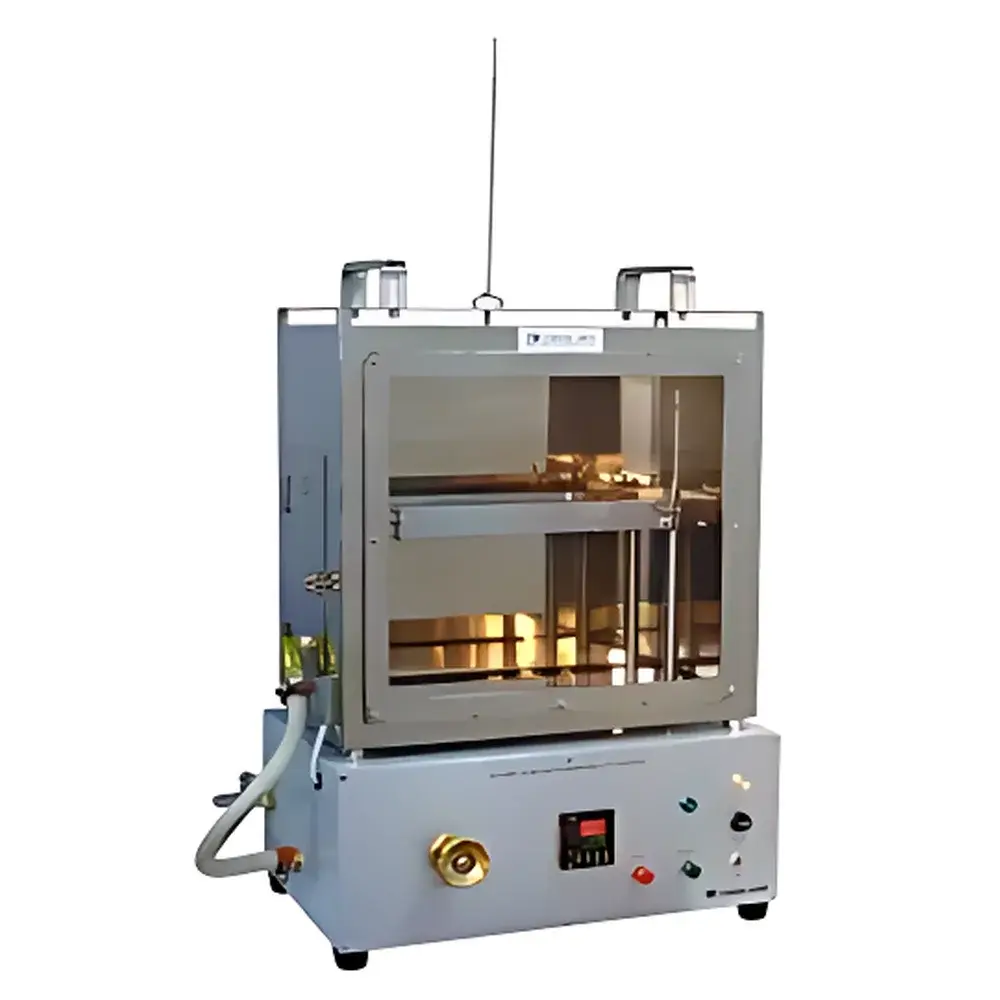
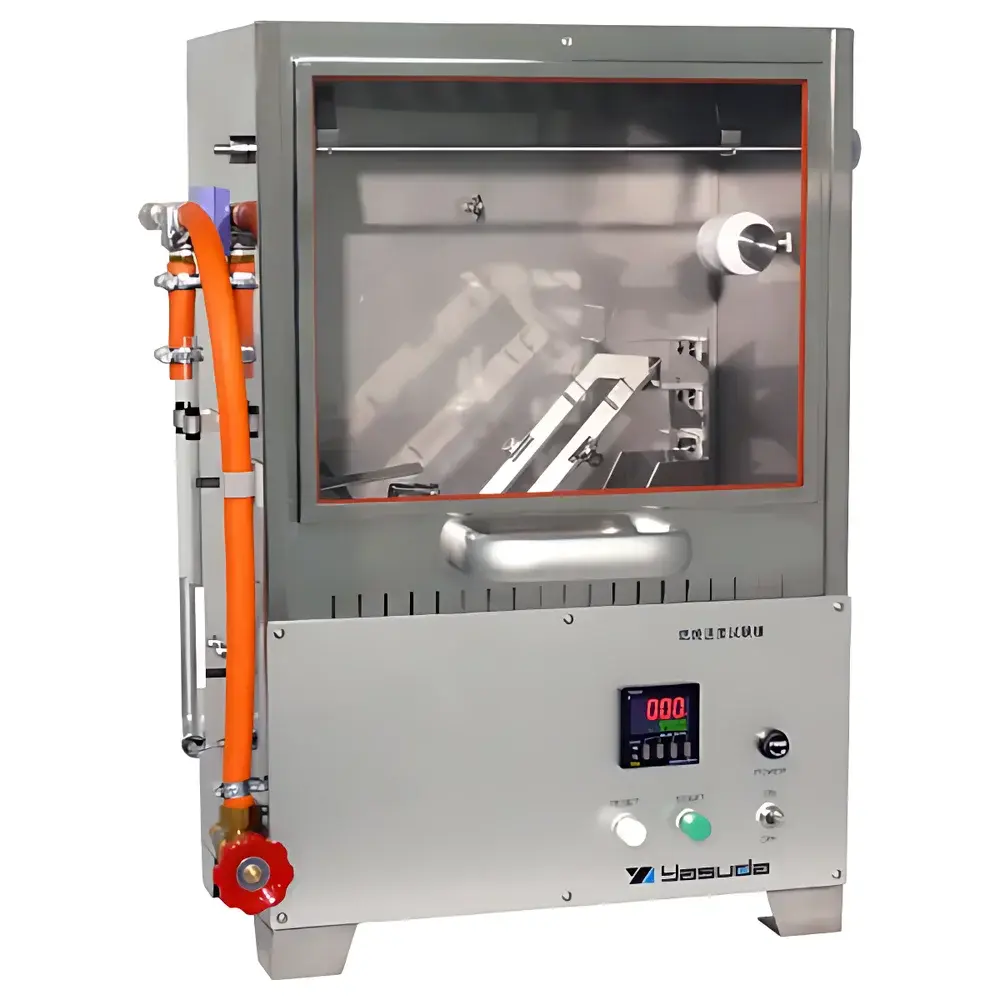
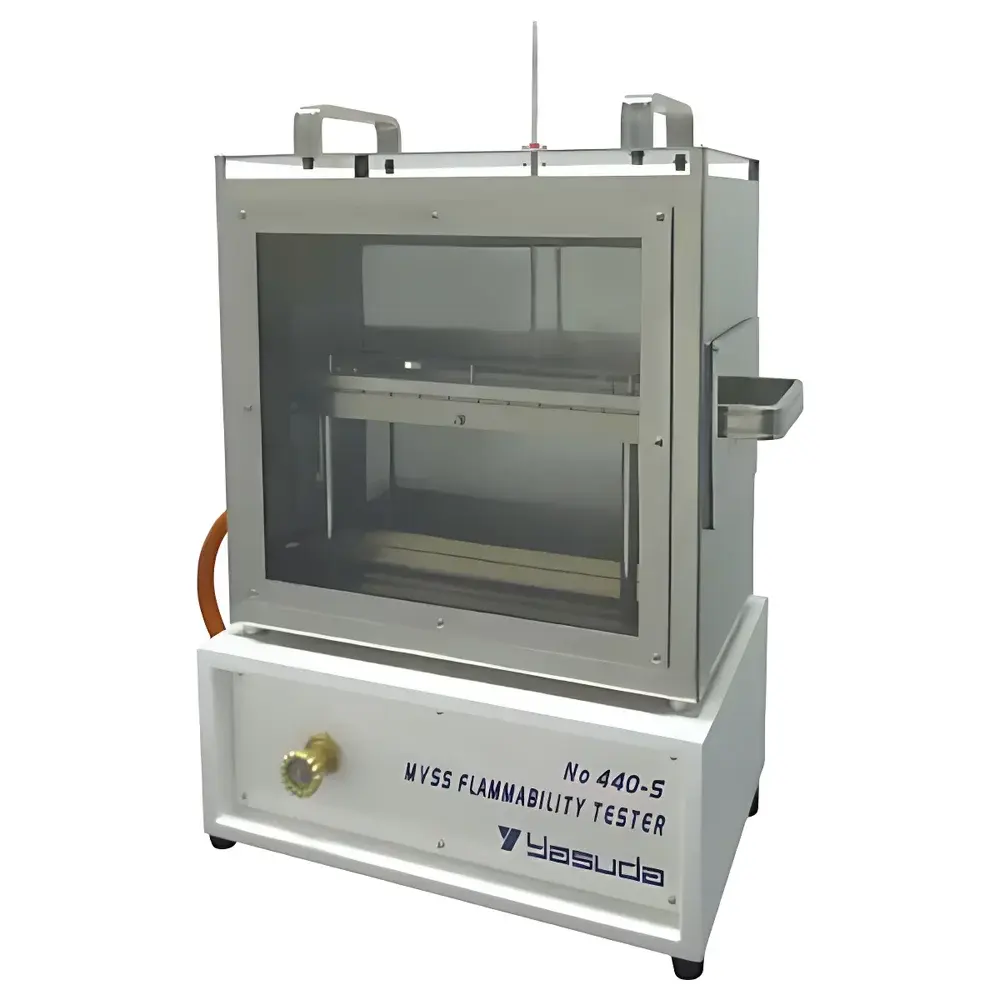
Yasuda No.440-S FMVSS Horizontal Burning Tester
| Brand | Yasuda |
|---|---|
| Origin | Japan |
| Model | No.440-S FMVSS |
| Applicable Standards | FMVSS 302, JIS D1201, JASO M404, ISO 3795, ASTM D5132 |
| Test Orientation | Horizontal |
| Flame Exposure Duration | 15 s |
| Sample Mounting | U-shaped holder |
| Measurement Output | Burn Rate (mm/min) |
| Compliance | Designed for regulatory conformance testing in automotive interior material qualification |
Overview
The Yasuda No.440-S FMVSS Horizontal Burning Tester is a precision-engineered combustion test apparatus designed specifically for evaluating the flammability characteristics of interior materials used in motor vehicles, agricultural tractors, and off-road machinery. It operates in strict accordance with the horizontal burning methodology defined in Federal Motor Vehicle Safety Standard No. 302 (FMVSS 302), as well as internationally harmonized standards including JIS D1201, JASO M404, ISO 3795, and ASTM D5132. The instrument utilizes a calibrated Bunsen-type burner delivering a defined flame height and thermal flux to the free end of a horizontally mounted specimen. After precisely 15 seconds of controlled flame exposure, the device measures the linear burn distance over time to calculate the burn rate in millimeters per minute — a critical pass/fail metric under all referenced regulatory frameworks.
Key Features
- High-reproducibility horizontal flame exposure system with adjustable burner alignment and certified gas flow control (propane or butane, per standard requirements)
- U-shaped stainless-steel specimen holder ensuring consistent sample geometry, edge alignment, and thermal boundary conditions during testing
- Integrated digital timer with ±0.1 s resolution synchronized to flame ignition and extinction events
- Non-contact optical burn front tracking capability (optional accessory) for automated measurement of flame propagation velocity
- Robust steel enclosure with tempered glass viewing window, ventilation interlock, and integrated flame arrestor for operator safety and environmental containment
- Compliance-ready design supporting audit trails, calibration documentation, and traceable test record generation per GLP and internal quality management protocols
Sample Compatibility & Compliance
The No.440-S accommodates flat sheet specimens measuring 356 mm × 102 mm (14″ × 4″) with thicknesses ranging from 0.5 mm to 13 mm — covering common automotive interior substrates such as polypropylene (PP), polyethylene terephthalate (PET), polyvinyl chloride (PVC), thermoplastic elastomers (TPE), laminated composites, and foam-backed textiles. Specimens are conditioned per ASTM D618 or ISO 291 prior to testing to ensure standardized moisture and temperature equilibrium. All mechanical and thermal parameters — including burner orifice diameter, fuel pressure, flame height (38 mm ± 1 mm), and ambient draft control (< 0.2 m/s air velocity at test zone) — conform to the dimensional and procedural tolerances specified in FMVSS 302 Annex and ISO 3795 Clause 6. The system is routinely verified using reference materials with certified burn rates (e.g., cellulose acetate control strips) to maintain measurement integrity across laboratory environments.
Software & Data Management
While the base No.440-S operates as a manually supervised benchtop instrument, optional PC-based data acquisition modules enable timestamped logging of ignition time, burn initiation, flame front position (via video analysis), and final burn length. Export formats include CSV and PDF test reports compliant with ISO/IEC 17025 documentation requirements. Audit trail functionality records user ID, calibration status, date/time stamps, and any parameter modifications — satisfying traceability expectations under FDA 21 CFR Part 11 when deployed in regulated quality assurance laboratories. All firmware and configuration files are version-controlled and support secure remote diagnostics via encrypted Ethernet interface.
Applications
This tester serves as a primary qualification tool for Tier 1 and Tier 2 automotive suppliers conducting pre-certification screening of seat fabrics, headliners, door panels, carpeting, insulation foams, and wiring harness wraps. It is also employed by national type-approval agencies (e.g., JATRAC in Japan, KATO in Korea, and TÜV SÜD’s automotive division) for official FMVSS 302 verification. Beyond OEM supply chains, the system supports R&D efforts in flame-retardant additive development, comparative polymer formulation studies, and failure root-cause analysis of non-conforming materials. Its adherence to multiple regional standards enables seamless cross-border technical file submission for UN ECE Regulation 118 and GB 8410 compliance pathways.
FAQ
What standards does the No.440-S FMVSS tester fully support?
FMVSS 302 (U.S. DOT), JIS D1201 (Japan), JASO M404 (Japanese Automotive Standards Organization), ISO 3795 (International Organization for Standardization), and ASTM D5132 (American Society for Testing and Materials).
Is flame height calibration required before each test?
Yes — burner flame height must be verified at 38 mm ± 1 mm using the supplied gauge prior to every test sequence, as mandated by Clause 6.3 of ISO 3795 and Section 5.2 of FMVSS 302.
Can the system be integrated into an existing LIMS or QMS platform?
Yes — optional RS-232/RS-485 and Ethernet interfaces support bidirectional communication with laboratory information management systems (LIMS) and quality management software (QMS) for automated result ingestion and electronic signature workflows.
Does the instrument include a gas pressure regulator and flowmeter?
Yes — factory-installed propane/butane pressure regulator and rotameter are included, pre-calibrated to deliver 38 mm flame height at specified fuel flow rates per ASTM D5025.
What maintenance intervals are recommended for long-term accuracy?
Burner nozzle inspection and cleaning every 50 tests; full calibration verification (including timer, flame geometry, and sample positioning) every six months or after 500 test cycles — documented per ISO/IEC 17025 clause 6.5.



