
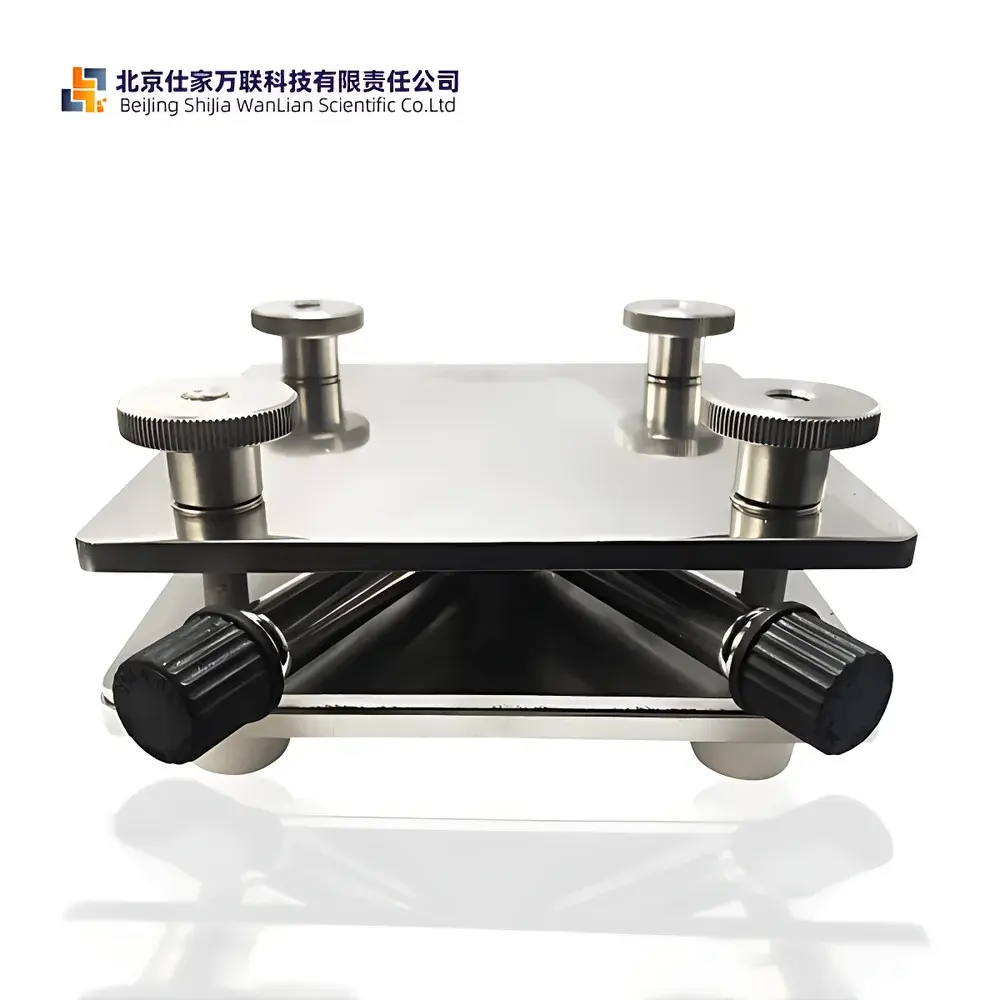
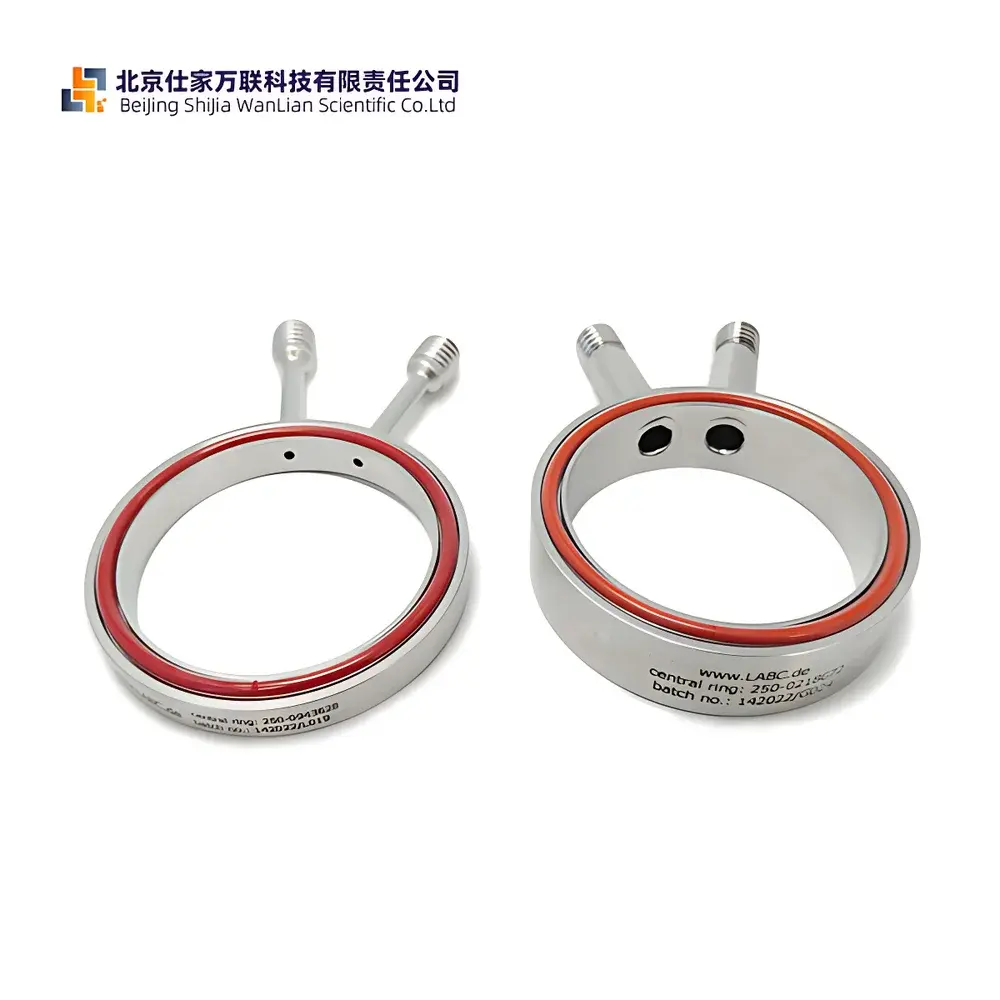
LABC Sieg-Mi-Flex A Stainless Steel Food Contact Migration Test Cell
| Brand | LABC |
|---|---|
| Origin | Germany |
| Model | Sieg-Mi-Flex A |
| Material | 316L stainless steel (body & center ring), FDA-compliant FKM O-rings |
| Temperature Range | −15 °C to +180 °C |
| Compliance | EN 1186-1 to -14, ISO 17790, GB 5009.156–2016, Regulation (EU) No 10/2011 |
| Center Ring Options | DN30 to DN120 (7 standard sizes) |
| Surface Area (single-sided) | 0.05–2.00 dm² |
| Approx. Volume Range | 10–200 mL |
| Sealing | Dual FKM O-ring compression seal with torque-controlled clamping mechanism |
| Configurations | Single-sided exposure, double-sided exposure, and inverted orientation support |
Overview
The LABC Sieg-Mi-Flex A Stainless Steel Migration Test Cell is an engineered solution for standardized food contact material (FCM) migration testing under controlled thermal, temporal, and chemical stress conditions. Designed in accordance with the fundamental principles of diffusion kinetics and mass transfer modeling, this test cell enables precise simulation of real-world food packaging interactions—where polymer-based, coated, or laminated materials are exposed to food simulants (e.g., 10% ethanol, 3% acetic acid, olive oil, or synthetic gastric fluid) at defined temperatures and durations. Its modular architecture allows reproducible sample mounting and uniform exposure geometry, critical for generating data compliant with regulatory decision trees outlined in EU Regulation (EC) No 1935/2004 and Commission Regulation (EU) No 10/2011. The device operates on a passive diffusion principle: no internal agitation or flow dynamics are introduced, preserving the integrity of static migration protocols required by EN 1186-1 and ISO 17790.
Key Features
- High-purity 316L stainless steel construction ensures corrosion resistance against aggressive simulants—including organic acids, alcohols, and fatty media—across the full operational temperature range (−15 °C to +180 °C).
- Dual FKM (fluoroelastomer) O-ring sealing system, qualified per ASTM D1418 and ISO 1629, delivers leak-tight performance under vacuum-assisted assembly and thermal cycling, minimizing evaporative loss and cross-contamination risk.
- Modular center ring design supports seven standardized nominal diameters (DN30 to DN120), each calibrated to deliver traceable single- or double-sided contact surface areas (0.05–2.00 dm²) and corresponding simulant volumes (10–200 mL), facilitating direct alignment with EN 1186-3 specimen area-to-volume ratio requirements.
- Torque-controlled clamping mechanism ensures consistent compressive load across all ring sizes, eliminating operator-dependent variability in seal integrity—a key factor in inter-laboratory reproducibility studies (as validated in collaborative trials reported in EFSA Journal 2021;19(5):e06525).
- Inverted configuration capability permits testing of flexible films, pouches, or laminates without sagging or delamination artifacts during prolonged incubation.
Sample Compatibility & Compliance
The Sieg-Mi-Flex A accommodates rigid and semi-rigid substrates (e.g., PET trays, PP lids, aluminum foil composites) as well as flexible multilayer structures up to 500 µm total thickness. Its open-face geometry supports both planar sheet mounting and edge-sealed pouch emulation. All wetted surfaces comply with FDA 21 CFR §177.1520 (for polyolefins) and EC 10/2011 Annex I monomer restrictions. Validation documentation includes material certificates of conformance (EN 10204 3.1), dimensional inspection reports (calibrated CMM traceable to PTB), and extractables testing data (ICP-MS and GC-MS screening per ISO 10993-12). The system meets GLP audit requirements for migration study conduct, including instrument logbook maintenance, calibration frequency (annually or per 200 cycles), and raw data retention protocols aligned with OECD Principles of Good Laboratory Practice.
Software & Data Management
While the Sieg-Mi-Flex A is a manually operated, non-instrumented test cell, its design integrates seamlessly into digital laboratory workflows. Each center ring carries a laser-etched alphanumeric ID linked to a master reference database containing certified surface area, volume tolerance (±2.5%), and historical validation records. Users may import these parameters directly into LIMS platforms (e.g., LabWare LIMS, Thermo Fisher SampleManager) via CSV or XML schema. For fully auditable study execution, the system supports 21 CFR Part 11–compliant electronic batch records when paired with validated incubators (e.g., Memmert IN 280) and temperature mapping software (e.g., DeltaTrak Vision Pro). Traceability extends to simulant lot numbers, exposure duration timestamps, and post-test handling logs—all essential for regulatory submission dossiers (EFSA, FDA, MFDS).
Applications
- Regulatory migration testing for plastic, paper, ink, and adhesive components under EU, Chinese (GB), and Korean MFDS frameworks.
- Migration kinetics profiling (time-series sampling at 10 min, 1 h, 24 h, 10 days) to derive diffusion coefficients (Dm) and partition coefficients (K)
- Accelerated aging studies simulating shelf-life conditions (e.g., 40 °C/75% RH for 10 days → equivalent to 2-year ambient storage)
- Validation of barrier coatings (SiOx, AlOx) and nanocomposite packaging films
- Extractables screening for pharmaceutical primary packaging (per USP and ) using modified simulant matrices
FAQ
Is the Sieg-Mi-Flex A compatible with olive oil as a food simulant?
Yes—its 316L stainless steel body and FKM seals resist swelling and degradation in high-fat simulants up to 180 °C, satisfying EN 1186-14 requirements.
Can I perform simultaneous double-sided migration testing on a single film sample?
Yes—the dual-exposure configuration enables symmetrical contact of both film surfaces with identical simulants, supporting assessment of asymmetric laminates or metallized layers.
Does LABC provide calibration or verification services for the center rings?
Yes—certified dimensional verification (surface area and volume) is available upon request, with NIST-traceable uncertainty budgets per ISO/IEC 17025.
How is cleaning and residue removal validated between runs?
A documented cleaning protocol (acetone rinse → isopropanol sonication → nitrogen purge) is supplied, with blank run verification (GC-MS or ICP-MS) required before each new study series.
Are replacement O-rings and center rings available as consumables?
Yes—genuine LABC FKM O-ring kits (P/N SMI-O-RING-KIT) and center rings (P/N SMI-RING-DNXX) are stocked globally with lead times under 5 business days.





