
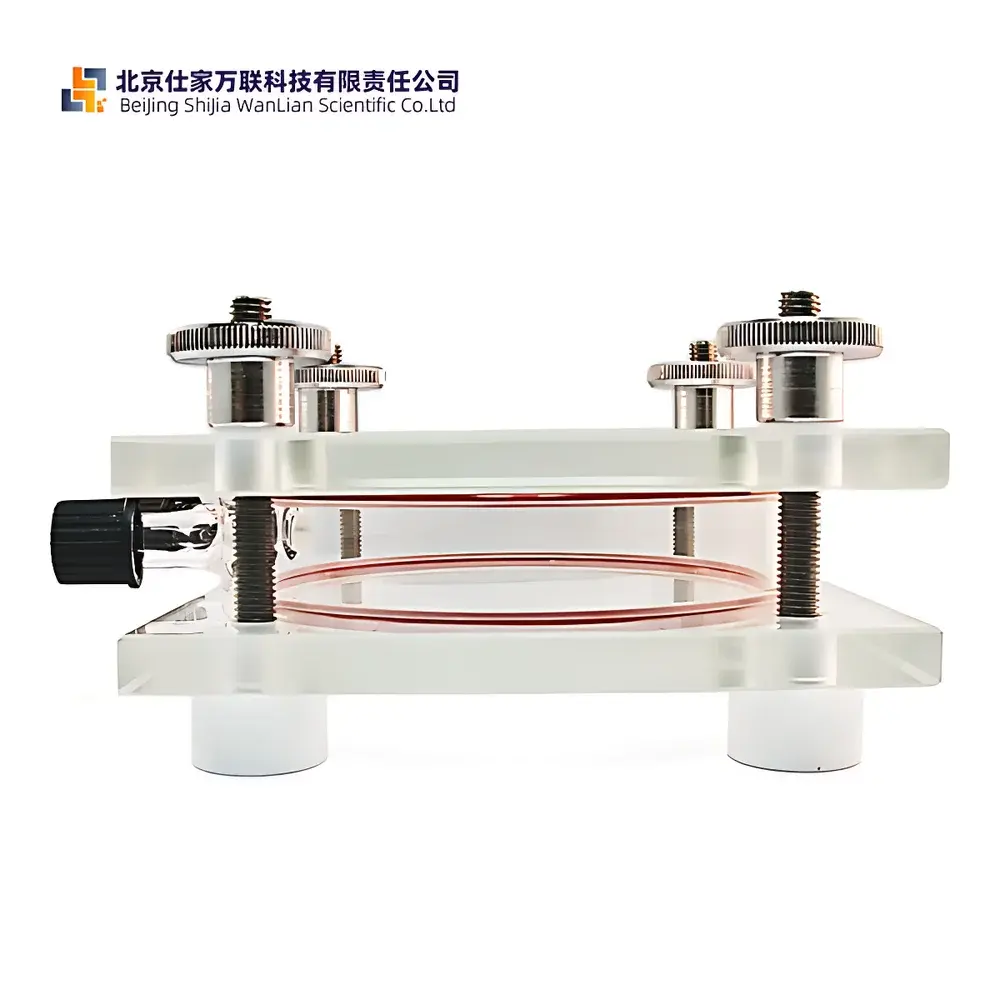
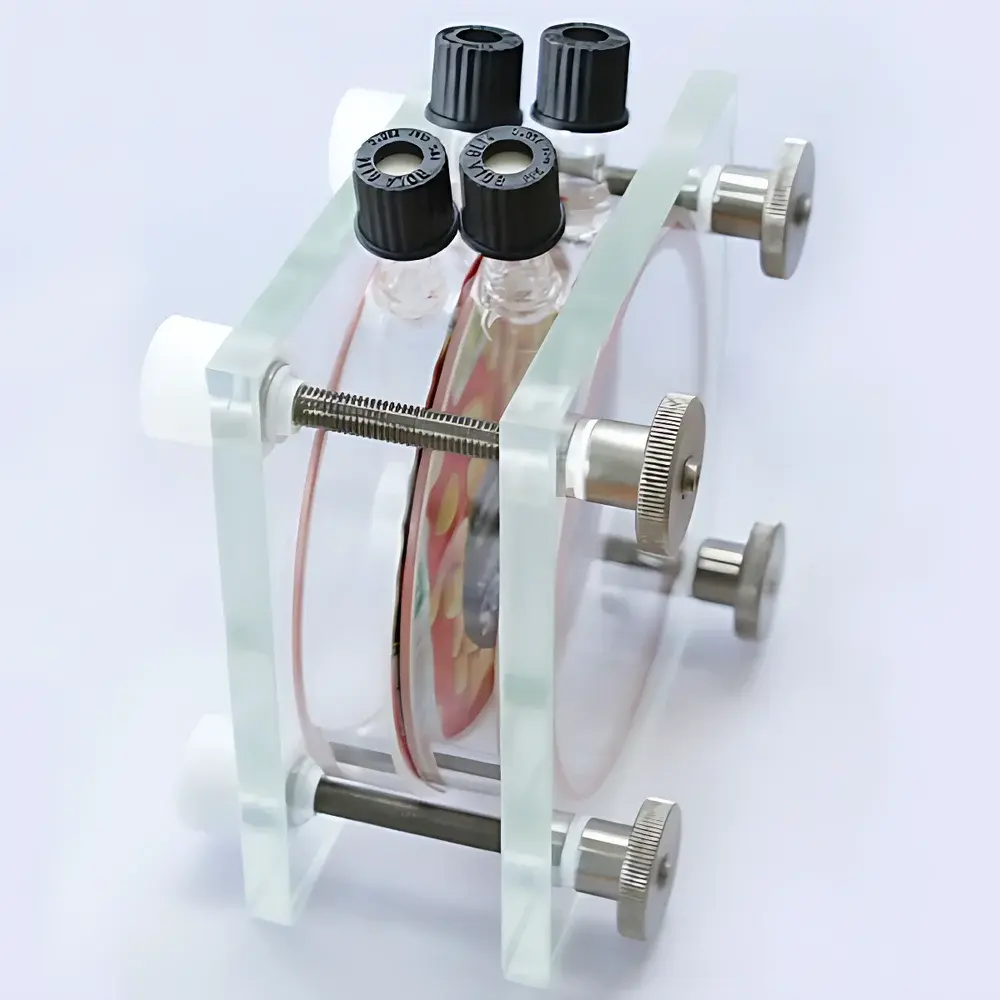
LABC Sieg-Mi-Flex C Transparent Chemical Migration Test Cell
| Brand | LABC |
|---|---|
| Origin | Germany |
| Model | Sieg-Mi-Flex C |
| Material | Chemically Resistant Optical-Grade Polymer (e.g., Fluorinated Acrylic or ETFE) |
| Temperature Range | −15 °C to +130 °C |
| Seal Type | Dual O-Ring Compression Seal (FKM or FFKM Elastomer) |
| Surface Contact Options | Single-Sided or Double-Sided Exposure |
| Compliance Standards | EN 1186 Parts 1–15, GB 5009.156–2016, FDA 21 CFR §170–189, ISO 10993-12 |
| Center Ring Configurations | 8 Standard DN30–DN120 Sizes with Defined Contact Area & Nominal Volume (10–200 mL) |
| Max. Pressure Rating | 0.3 bar (gauge) at 130 °C |
| Optical Clarity | >92% Transmittance (400–800 nm) |
Overview
The LABC Sieg-Mi-Flex C Transparent Chemical Migration Test Cell is an engineered solution for standardized food contact material (FCM) migration testing under controlled physicochemical conditions. Designed in accordance with the core principles of diffusion-driven mass transfer, it enables precise simulation of substance release from packaging substrates—including plastics, coatings, adhesives, and multilayer laminates—into food simulants (e.g., 10% ethanol, 3% acetic acid, olive oil, or synthetic gastric fluid). Its transparent construction facilitates real-time visual monitoring of simulant clarity, phase separation, or particulate formation without cell disassembly—critical for GLP-compliant experimental integrity. The device operates on a static immersion principle, where temperature, exposure time, and simulant composition are independently regulated per test protocol, ensuring reproducible boundary conditions aligned with regulatory kinetic models (e.g., Fickian diffusion approximation under finite sink conditions).
Key Features
- Optically transparent cell body fabricated from high-purity, halogen-free fluoropolymer-acrylic hybrid material—exhibiting exceptional resistance to hydrolysis, oxidation, and organic solvent swelling across the full operational range (−15 °C to 130 °C).
- Dual concentric O-ring sealing system (FKM/FFKM) with calibrated compression force ensures leak-tight integrity at elevated temperatures and low vapor pressure differentials—validated per EN 1186-1 Annex B pressure-hold criteria.
- Modular center ring design allows rapid interchange of eight standardized configurations (DN30 to DN120), each with traceably certified contact surface area (0.05–2.0 dcm²) and nominal simulant volume (10–200 mL), enabling strict adherence to surface-area-to-volume ratio requirements in ISO 10993-12 and EU Regulation (EC) No 10/2011.
- Single- or double-sided exposure capability permits direct evaluation of asymmetric packaging structures (e.g., metallized PET, barrier-coated paperboard) without specimen reorientation—reducing inter-test variability and handling-induced contamination risk.
- Chemical compatibility verified against ICH Q5C stability reference simulants and ASTM D4295 surrogate media; no measurable leachables detected in blank runs under accelerated aging protocols (72 h @ 100 °C).
Sample Compatibility & Compliance
The Sieg-Mi-Flex C accommodates rigid and semi-rigid flat specimens up to 2 mm thickness and 130 mm diameter. Compatible substrates include polyolefins, PET, PS, PVC, cellulose derivatives, aluminum foil composites, and UV-cured acrylic coatings. All configurations comply with the geometric and dimensional specifications mandated by EN 1186-3 (test cell geometry), EN 1186-11 (exposure duration definitions), and GB 5009.156–2016 (Chinese national standard for FCM migration testing). Device documentation includes full traceability to DIN EN ISO/IEC 17025-accredited calibration procedures for contact area verification and thermal uniformity mapping (±0.5 °C across chamber volume).
Software & Data Management
While the Sieg-Mi-Flex C is a passive, non-electronic test cell, its design integrates seamlessly into regulated laboratory workflows. Each unit carries a unique serial number linked to a digital Certificate of Conformance (CoC), including material lot traceability, dimensional inspection reports, and chemical resistance validation data. When used with validated incubation systems (e.g., Memmert INB or Binder ED Series), the cell supports full audit trails under FDA 21 CFR Part 11 via compatible LIMS platforms—ensuring electronic records of test parameters (temperature log, duration stamp, simulant ID) meet GLP/GMP documentation requirements.
Applications
- Regulatory submission testing for EU Commission Regulation (EC) No 10/2011 compliance dossiers.
- Migration screening of novel biopolymer packaging (PLA, PHA, starch blends) under acidic, alcoholic, and fatty food simulant conditions.
- Accelerated aging studies to predict long-term migrant profiles using Arrhenius-based extrapolation models.
- Validation of barrier layer performance in vacuum-metallized films and SiOx/AlOx coated substrates.
- Interlaboratory method transfer studies under ISO 5725-2 precision testing frameworks.
FAQ
Can the Sieg-Mi-Flex C be autoclaved?
Yes—fully compatible with steam sterilization cycles at 121 °C for 20 minutes; repeated autoclaving does not compromise optical clarity or seal integrity.
Is the cell suitable for fatty food simulant testing (e.g., olive oil or synthetic triglyceride mixtures)?
Yes—material selection and O-ring formulation have been validated for extended exposure (>10 days) to non-polar simulants at 40 °C and 70 °C per EN 1186-14 protocols.
How is contact surface area verified for regulatory reporting?
Each center ring undergoes coordinate measuring machine (CMM) inspection per ISO 1101 geometrical tolerancing; certified values are supplied in the CoC and referenced in test reports.
Does LABC provide method development support for non-standard simulants?
Yes—application engineers offer protocol adaptation guidance aligned with EFSA Scientific Opinions and USP / cytotoxicity correlation frameworks.
Are replacement O-rings available as consumables?
Yes—FKM and FFKM O-ring kits (ISO 3601-1 NBR/FKM/FFKM variants) are stocked with batch-specific certificates of analysis.




