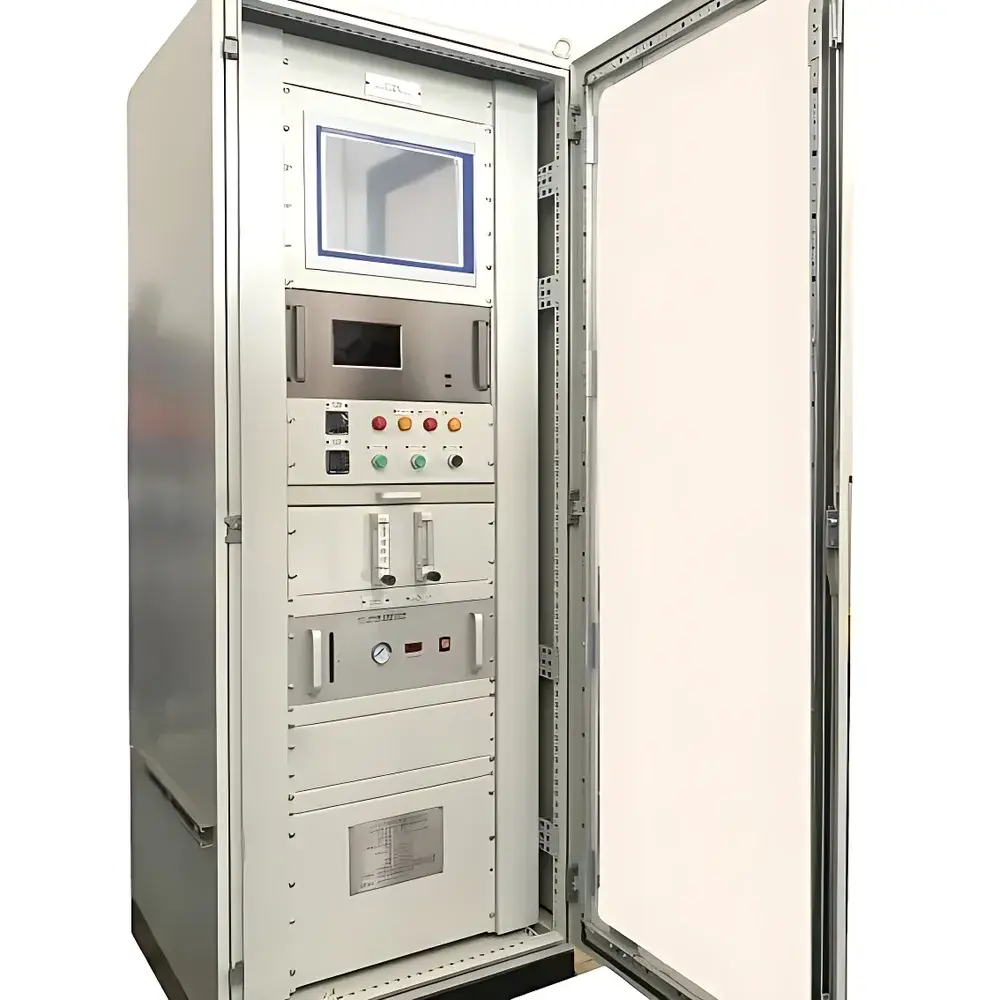
SIGAS SGC-100 CEMS-VOC Online VOC Emission Monitoring System for Flue Gas
| Brand | SIGAS |
|---|---|
| Origin | Jiangsu, China |
| Manufacturer Type | Authorized Distributor |
| Country of Origin | China |
| Model | SGC-100 CEMS-VOC |
| Pricing | Upon Request |
Overview
The SIGAS SGC-100 CEMS-VOC Online VOC Emission Monitoring System is a fully integrated, regulatory-grade continuous emission monitoring system (CEMS) engineered for real-time quantification of volatile organic compounds (VOCs) in industrial flue gas streams. Designed in accordance with Chinese national standards (e.g., HJ 1013–2018, HJ 75–2017, HJ 76–2017) and aligned with international best practices for stack gas analysis, the system employs gas chromatography with flame ionization detection (GC-FID) as its primary analytical methodology. This technique delivers high selectivity, wide linear dynamic range (typically 0.01–10,000 ppmC), and robust reproducibility for hydrocarbon species—including total hydrocarbons (THC), methane (CH₄), non-methane hydrocarbons (NMHC), BTEX (benzene, toluene, ethylbenzene, xylenes), alkylbenzenes, esters, and other odorant or hazardous VOCs. The system operates under continuous duty cycle, supporting unattended 24/7 operation in demanding industrial environments such as semiconductor fabrication cleanrooms, pharmaceutical manufacturing exhaust ducts, petrochemical refinery stacks, and automotive painting booths.
Key Features
- GC-FID core analyzer: High-sensitivity flame ionization detector with auto-ignition and hydrogen cutoff upon flame failure—compliant with intrinsic safety principles for Class I, Division 1 hazardous areas when configured with explosion-proof enclosures.
- Multi-stage condensate management: Integrated thermoelectric and refrigerated cold traps maintain sample gas dew point below −10 °C, preventing water condensation in sampling lines and chromatographic columns—critical for long-term stability in high-humidity flue gas applications.
- Full-temperature heated sample path: Optional fully heated (180 °C) sampling train—including probe, line, and valve manifold—eliminates VOC adsorption and fractional condensation, ensuring quantitative recovery of semi-volatile and polar compounds.
- Automated calibration & diagnostics: Onboard standard gas delivery module enables scheduled multi-point calibration (zero/span/NIST-traceable standards); self-diagnostic routines monitor detector response, column integrity, carrier gas pressure, and FID flame status.
- Modular architecture: Supports field-upgradable configurations—e.g., addition of PID or FTIR modules for parallel speciation, integration with NOₓ/SO₂/CO CEMS platforms, or deployment in mobile trailer-based monitoring units.
- Embedded control logic: Real-time data acquisition at 1-second intervals; configurable alarm thresholds per compound; automatic report generation compliant with local environmental authority templates (e.g., Jiangsu Provincial Ecological Environment Department format).
Sample Compatibility & Compliance
The SGC-100 CEMS-VOC accommodates flue gas matrices with particulate load ≤10 mg/m³, moisture content ≤20 vol%, temperature ≤200 °C (with optional high-temp probe), and corrosive component concentrations within ISO 16000-6 and EPA Method 18 limits. It meets technical requirements for China’s “Technical Specifications for Continuous Emission Monitoring of Fixed Pollution Sources” (HJ 75–2017/HJ 76–2017) and supports audit-ready documentation for GLP/GMP-aligned facilities. Data integrity conforms to ALCOA+ principles (Attributable, Legible, Contemporaneous, Original, Accurate, Complete, Consistent, Enduring, Available), with electronic signatures and audit trails available via optional 21 CFR Part 11-compliant software add-on.
Software & Data Management
The embedded SIGAS VOC-View™ software provides browser-based remote access (HTTPS/TLS 1.2), real-time chromatogram visualization, peak integration using ASTM D6348–22-compliant algorithms, and automated calculation of NMHC = THC − CH₄. Raw chromatographic data (time-stamped .CDF files), calibration logs, maintenance records, and QA/QC reports are stored locally on industrial-grade SSD with RAID 1 redundancy. Export formats include CSV, PDF, and Excel-compatible XML; historical datasets integrate seamlessly with enterprise SCADA, DCS, or EMS platforms via OPC UA or Modbus TCP. All user actions—including method edits, calibration events, and alarm acknowledgments—are time-stamped and logged for regulatory review.
Applications
- Regulatory compliance monitoring for VOC emission permits under China’s “Three-Year Action Plan for VOCs Control” (2020–2022) and provincial levies (e.g., Beijing, Shanghai, Jiangsu).
- Process optimization in semiconductor photolithography tool exhaust abatement systems.
- Batch release testing of solvent-laden off-gas from API synthesis reactors in GMP-certified pharmaceutical plants.
- Odor impact assessment near municipal wastewater treatment plants using targeted sulfide and terpene profiling.
- Leak detection and repair (LDAR) program support through high-frequency stack screening for fugitive emissions.
- Verification of thermal oxidizer destruction efficiency (DRE) for halogenated VOCs in chemical manufacturing.
FAQ
What regulatory standards does the SGC-100 CEMS-VOC comply with?
It adheres to HJ 1013–2018 (determination of VOCs in stationary source exhaust gas by GC-FID), HJ 75–2017 (technical specification for CEMS installation), and HJ 76–2017 (performance verification). Optional firmware enables alignment with EU EN 15267-3 and US EPA PS-8 protocols.
Can the system quantify individual BTEX isomers separately?
Yes—the GC column configuration and temperature programming resolve ortho-, meta-, and para-xylene, as well as ethylbenzene and styrene, with baseline separation per HJ 1013–2018 Annex A.
Is remote troubleshooting supported?
Field engineers can initiate secure remote desktop sessions via encrypted VPN; diagnostic logs, chromatograms, and hardware status metrics are accessible in real time without compromising network perimeter security.
What maintenance interval is recommended for routine operation?
FID nozzle cleaning and detector alignment every 90 days; GC column reconditioning every 6 months; full system performance verification annually per HJ 76–2017 Section 7.2.
Does the system support dual-range detection for low-ppb ambient-level and high-ppm process-level measurements?
Not natively—but optional dual-loop sampling valves and programmable split ratios enable dynamic range extension from 0.05 ppmC to 5,000 ppmC within a single analytical sequence.