
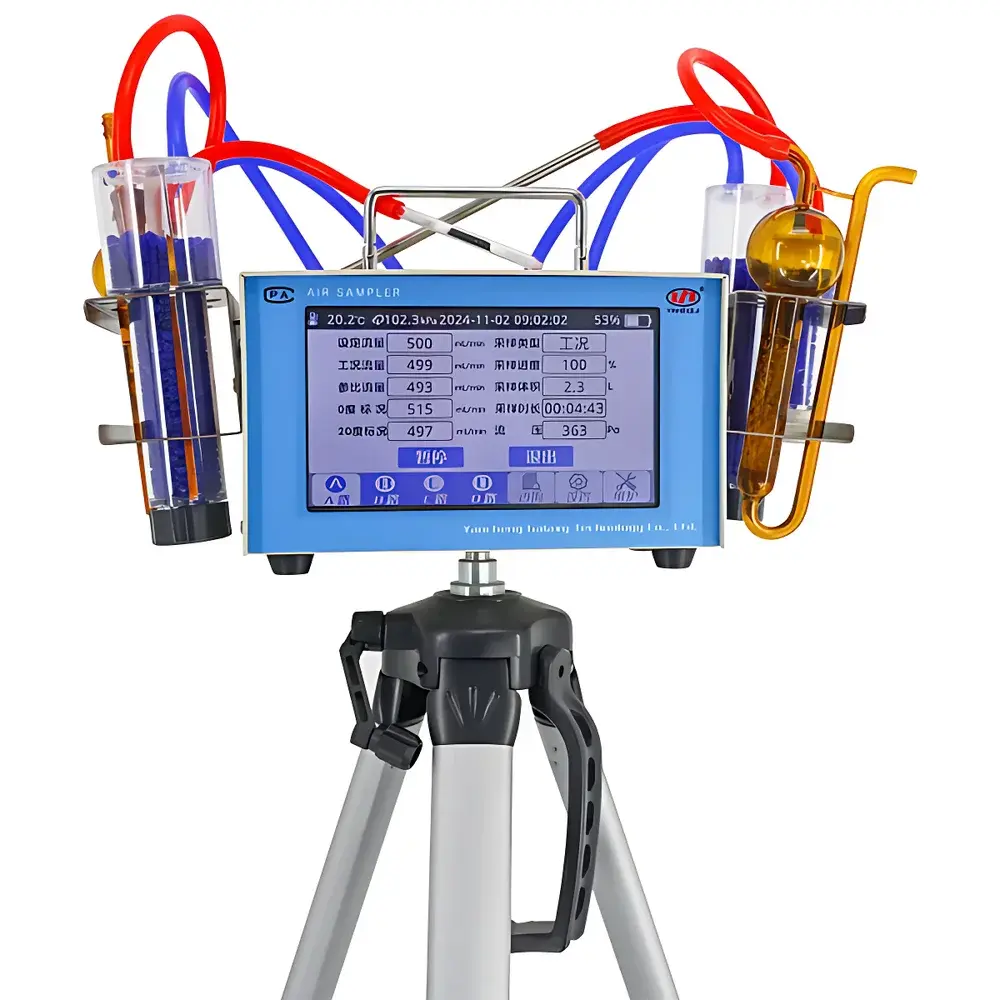
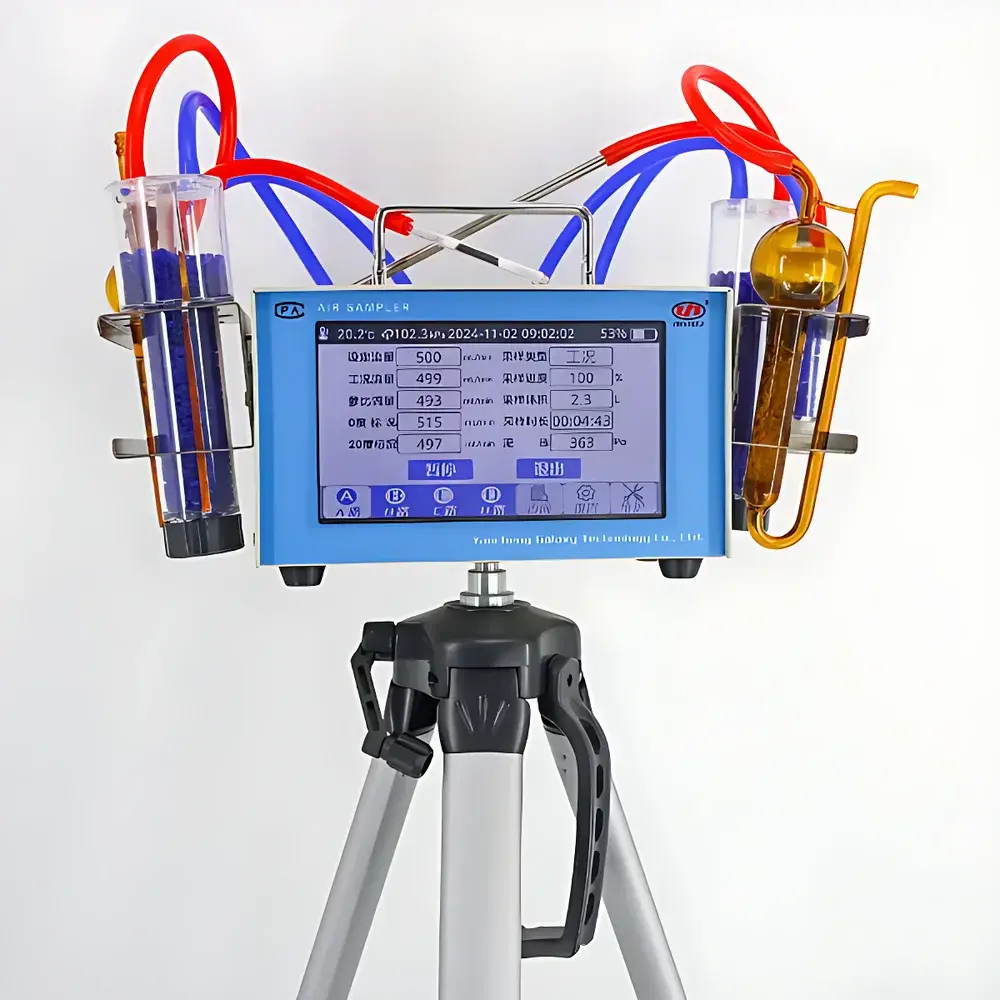
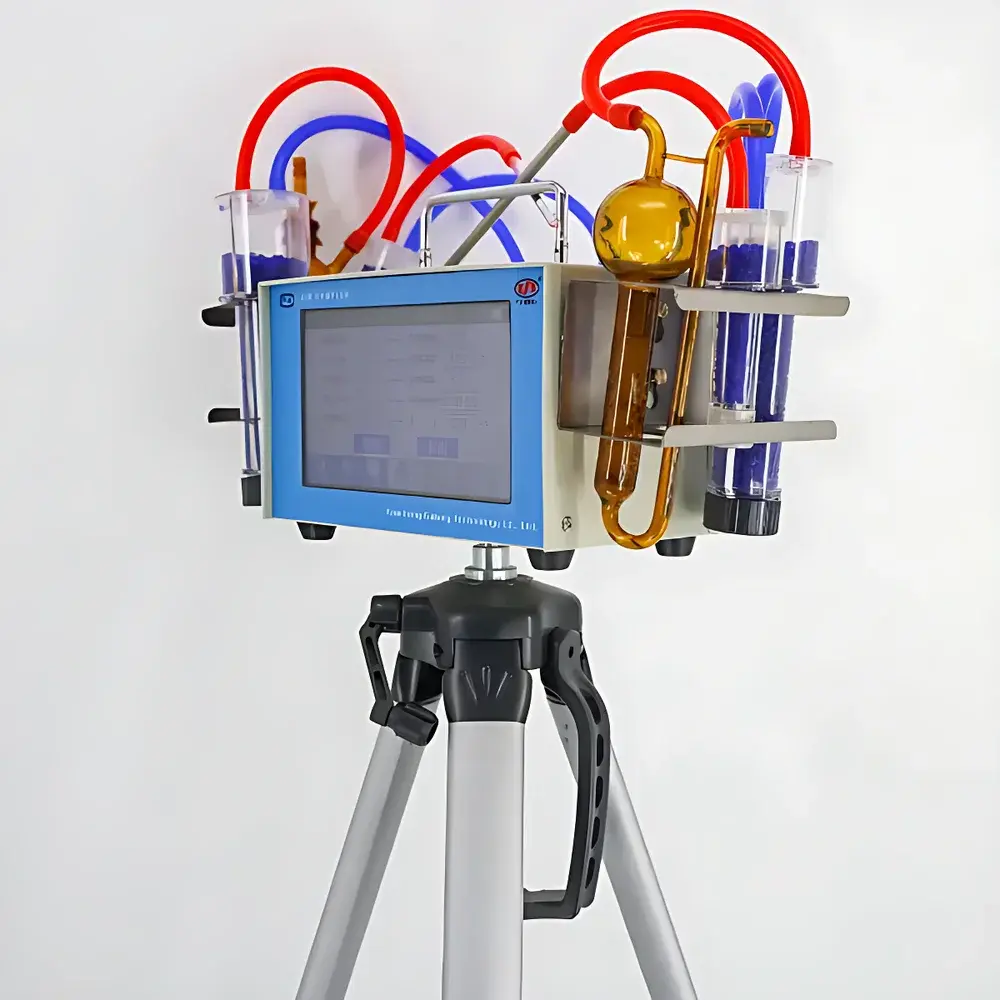
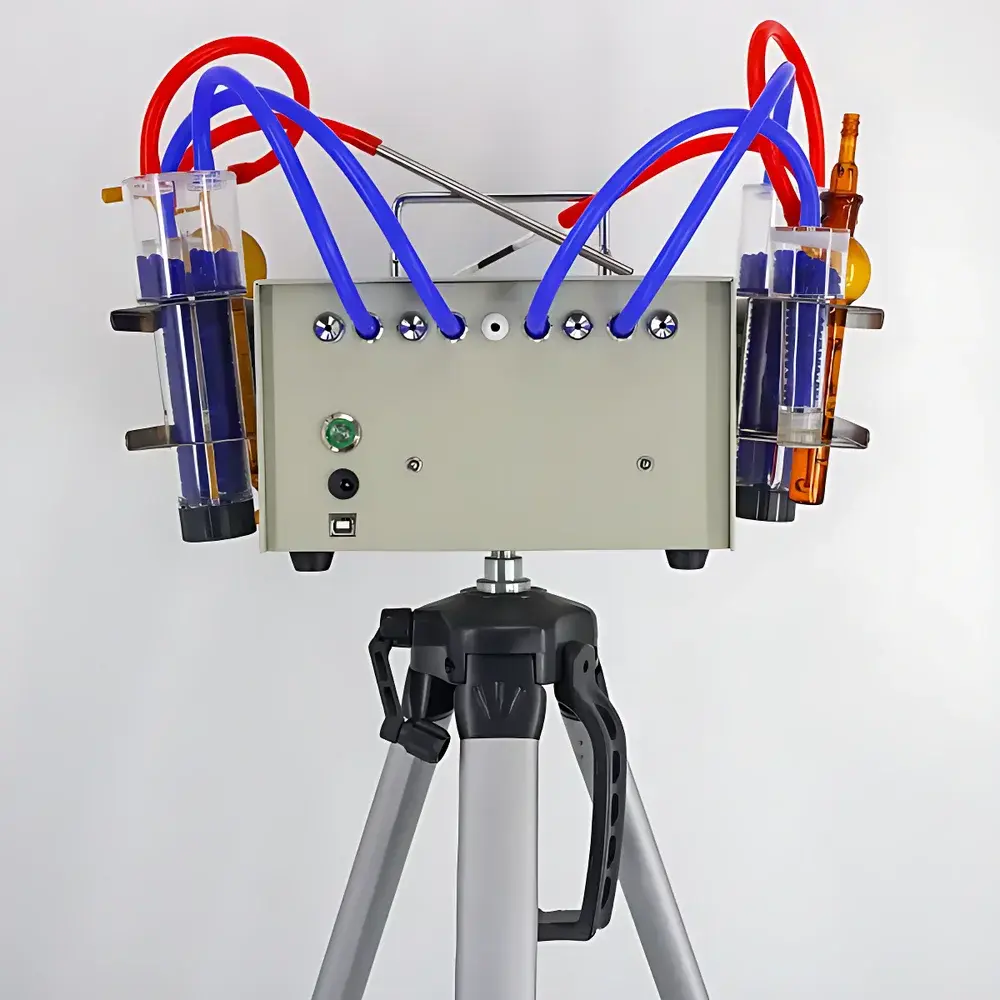
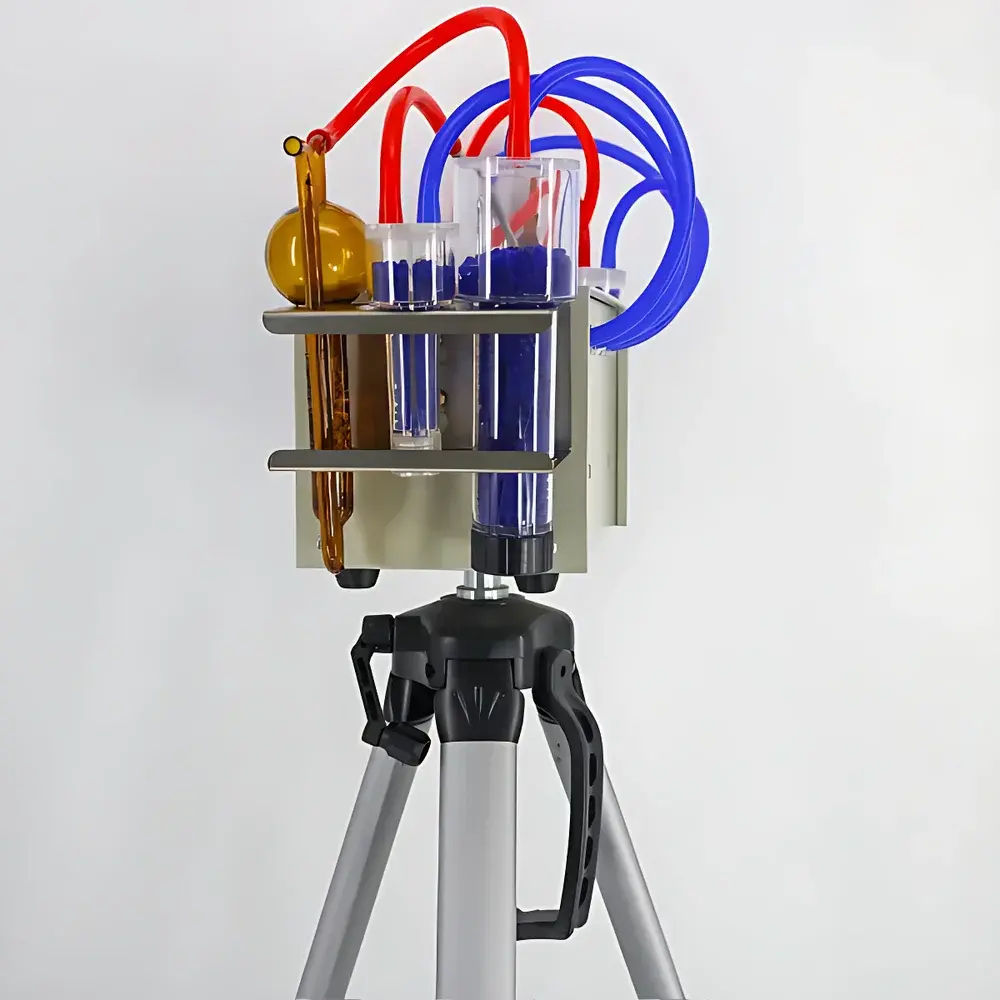
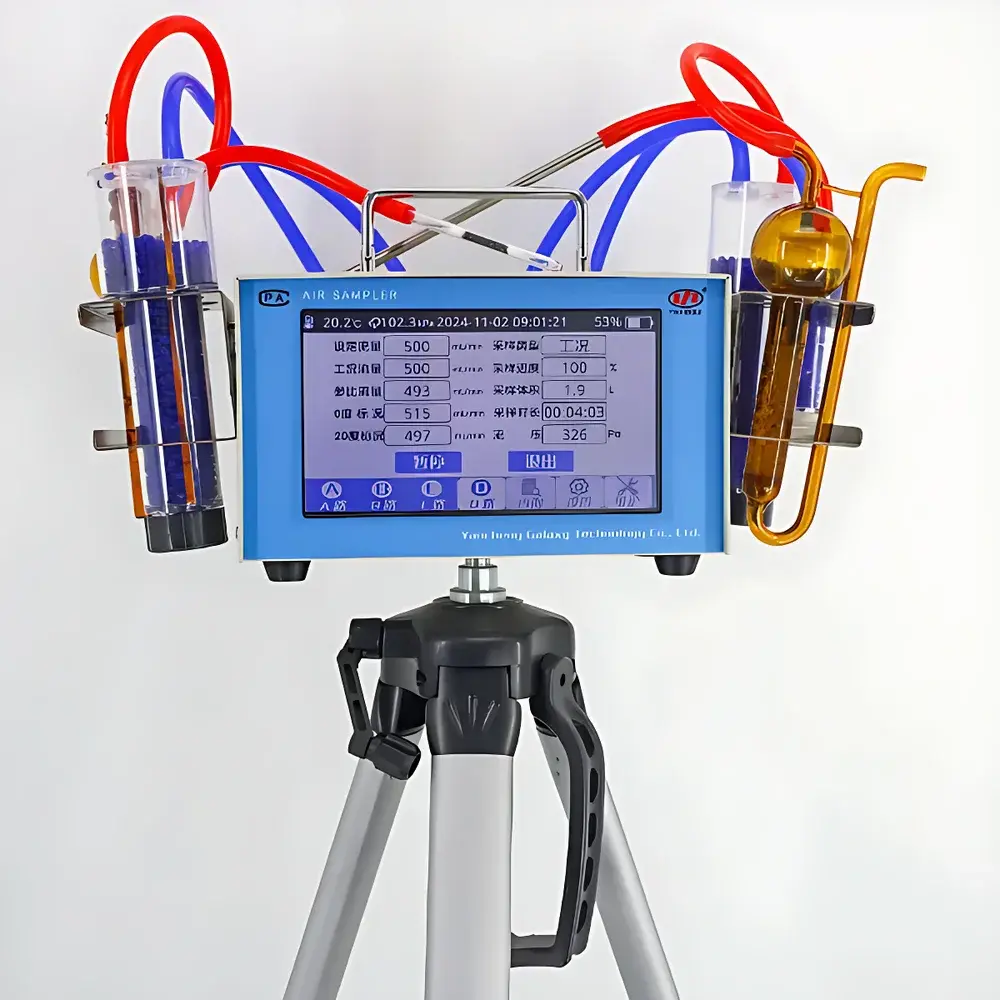
YINHEKEJI QCS-6000(A) Quad-Channel Constant-Flow Air Sampler
| Brand | YINHEKEJI |
|---|---|
| Origin | Jiangsu, China |
| Model | QCS-6000(A) |
| Flow Ranges | (20–500) mL/min |
| Vacuum Pressure | ≥35 kPa |
| Flow Stability | ≤±5% over 1 h |
| Flow Accuracy | ±2.5% FS |
| Service Life at Max Load | ≥5000 h |
| Continuous Operation at Max Flow & Resistance | 8–18 h with ≤±5% flow deviation |
| Flow Resolution | 1 mL/min |
| Display | 7-inch resistive touchscreen |
| Data Storage | 400 sampling records (100 per channel) |
| Operating Temperature | −10 to +50 °C |
| Relative Humidity | ≤95% RH |
| Dimensions | 220 × 145 × 105 mm |
| Weight | 1.4 kg |
| Compliance | GB 50325–2020, JJG 956–2013, HJ 194–2017, GB/T 18883–2022 |
Overview
The YINHEKEJI QCS-6000(A) Quad-Channel Constant-Flow Air Sampler is a precision-engineered instrument designed for regulatory-compliant, multi-point air sampling in occupational health, environmental monitoring, and indoor air quality (IAQ) assessment. It operates on digital closed-loop constant-flow control—leveraging real-time pressure and flow feedback to maintain setpoint accuracy independent of inlet resistance fluctuations or supply voltage variations. This architecture ensures metrological traceability across diverse sampling media, including activated carbon tubes, Tenax® sorbent tubes, impingers, and glass fiber filters. Unlike open-loop pumps subject to drift under variable backpressure, the QCS-6000(A) dynamically adjusts motor output to sustain user-defined volumetric flow rates within ±2.5% full-scale accuracy—even when sampling through high-resistance media at up to 35 kPa vacuum load. Its four independent channels support simultaneous, asynchronous sampling protocols, enabling parallel collection for method validation, duplicate analysis, or multi-analyte workflows.
Key Features
- Digital closed-loop constant-flow control per channel—immune to voltage sags, temperature drift, and filter loading effects
- Four fully isolated sampling paths with independent parameter configuration (flow rate, duration, mode)
- 7-inch resistive touchscreen interface with real-time display of calibrated flow, elapsed time, standard-condition volume (STP), battery level, ambient temperature/pressure, and system status
- On-device data logging: 400 total records (100 per channel), supporting recall, deletion, and USB export to PC for audit-ready reporting
- Extended operational autonomy: >20 hours typical runtime on internal rechargeable battery; 8–18 hours at maximum flow/resistance while maintaining ≤±5% flow stability
- User-accessible calibration interface—supports field verification and adjustment per JJG 956–2013 requirements without proprietary software or service tools
- Robust mechanical design: compact footprint (220 × 145 × 105 mm), lightweight chassis (1.4 kg), IP54-rated enclosure for field deployment
- Comprehensive sampling mode support: timed, cyclic, intermittent, manual, and delayed-start operation
Sample Compatibility & Compliance
The QCS-6000(A) is validated for use with standardized sorbent tubes (e.g., charcoal, silica gel, Tenax TA), impingers (for formaldehyde, ozone, SO₂), and particulate filters (e.g., PVC, PTFE, quartz fiber). Its ≥35 kPa vacuum capability accommodates high-backpressure configurations required by EPA TO-17, NIOSH methods 1501/2500/5515, and ISO 16000-6. Instrument performance aligns with national and international reference standards: GB 50325–2020 (indoor formaldehyde/benzene/toluene detection), GB/T 18883–2022 (IAQ criteria), HJ 194–2017 (manual ambient air monitoring), and JJG 956–2013 (verification protocol for flow accuracy, timing, and stability). All flow measurements are referenced to standard temperature and pressure (0 °C, 101.325 kPa), with automatic compensation for local barometric pressure and ambient temperature during volumetric calculation.
Software & Data Management
No external software installation is required for basic operation or data retrieval. Sampling metadata—including start/stop timestamps, actual flow profiles, STP-corrected volumes, battery voltage history, and user-defined IDs—is stored in non-volatile memory with timestamped entries. Data export occurs via USB-C connection to Windows/Linux systems using standard mass-storage mode; exported CSV files contain columnar fields compliant with LIMS ingestion requirements (e.g., sample ID, channel number, flow setpoint, mean measured flow, STP volume, temperature, pressure, operator code). Audit trail integrity is preserved through immutable record timestamps and absence of editable metadata fields. The device supports GLP-aligned documentation practices through its built-in clock synchronization, password-protected settings lockout, and tamper-evident log structure.
Applications
- Occupational hygiene monitoring:定点 (fixed-location) sampling for VOCs, aldehydes, metals, and acid gases in industrial workspaces per OSHA/NIOSH guidelines
- Indoor air quality surveys: concurrent collection across multiple zones (e.g., office, classroom, hospital ward) to assess spatial variability of TVOC, benzene, or PM-bound PAHs
- Environmental compliance: ambient air monitoring networks requiring parallel sampling for QA/QC duplication or method comparison studies
- Emergency response: rapid-deployment sampling during chemical spills or fire-related off-gassing events, leveraging portability and long battery life
- Research-grade method development: evaluation of new sorbent materials, filter media efficiency, or breakthrough characteristics under controlled flow conditions
FAQ
Does the QCS-6000(A) meet U.S. EPA or ISO certification requirements for field use?
The instrument complies with core metrological principles outlined in ISO 5725 (accuracy/trueness) and ASTM D1357 (air sampling pump performance), though it is not individually EPA-certified. Its adherence to JJG 956–2013 and GB 50325–2020 enables equivalency assessments for international projects under mutual recognition frameworks.
Can flow calibration be performed in-house without sending the unit to a lab?
Yes—the open calibration menu allows users to perform span and zero adjustments using a NIST-traceable primary flow calibrator (e.g., dry calibrator or bubble meter), with full audit logs retained on-device.
What is the recommended maintenance interval for the internal pump and filters?
Under normal use (≤8 h/day, clean ambient air), the brushless DC pump requires no scheduled maintenance for ≥5000 operating hours; inlet particulate filters should be inspected before each sampling campaign and replaced if visibly loaded.
Is STP volume calculation automatically applied during sampling?
Yes—real-time correction uses integrated temperature and pressure sensors per ISO 10780 and EPA Method 1, outputting both actual and standard-condition volumes simultaneously on-screen and in stored records.
How does the instrument handle battery depletion during extended sampling?
The system provides progressive low-battery warnings (visual + audible), auto-saves current session data upon critical voltage threshold, and maintains clock integrity for time-stamping continuity during AC recharging.
Related Products







