
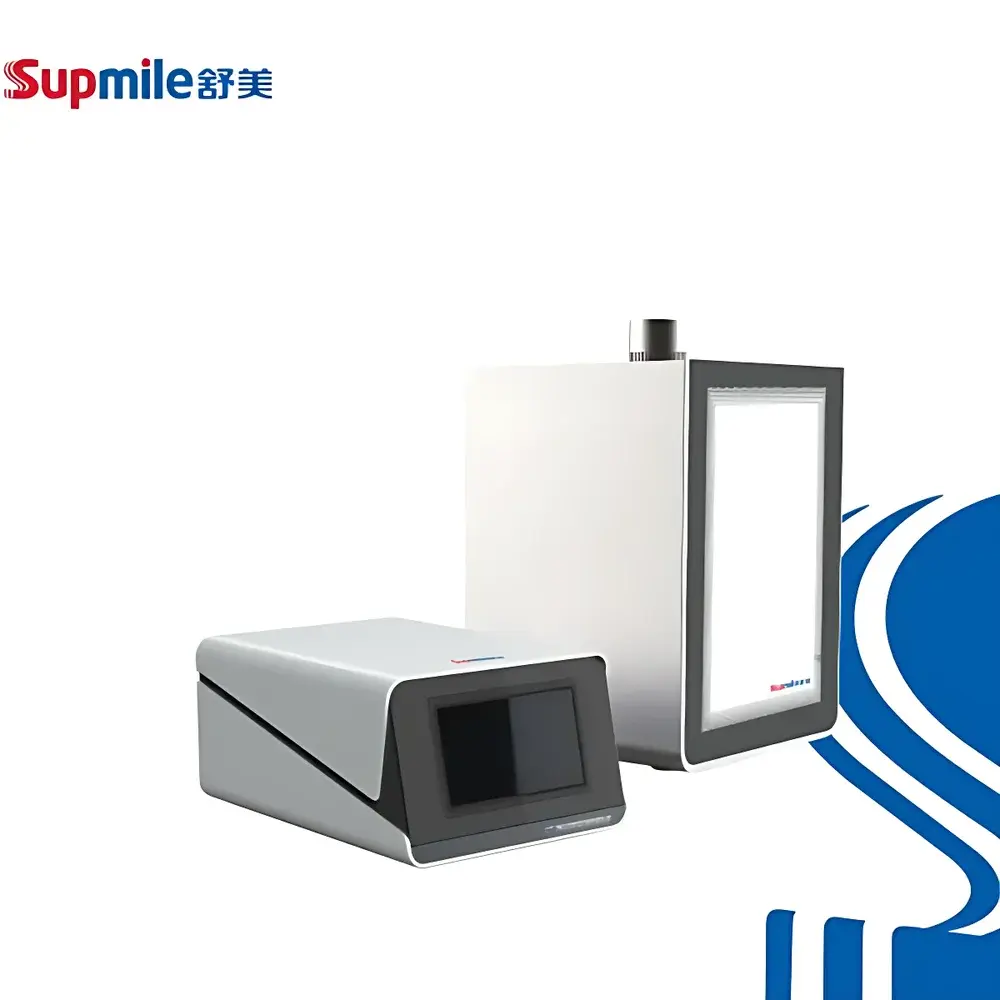
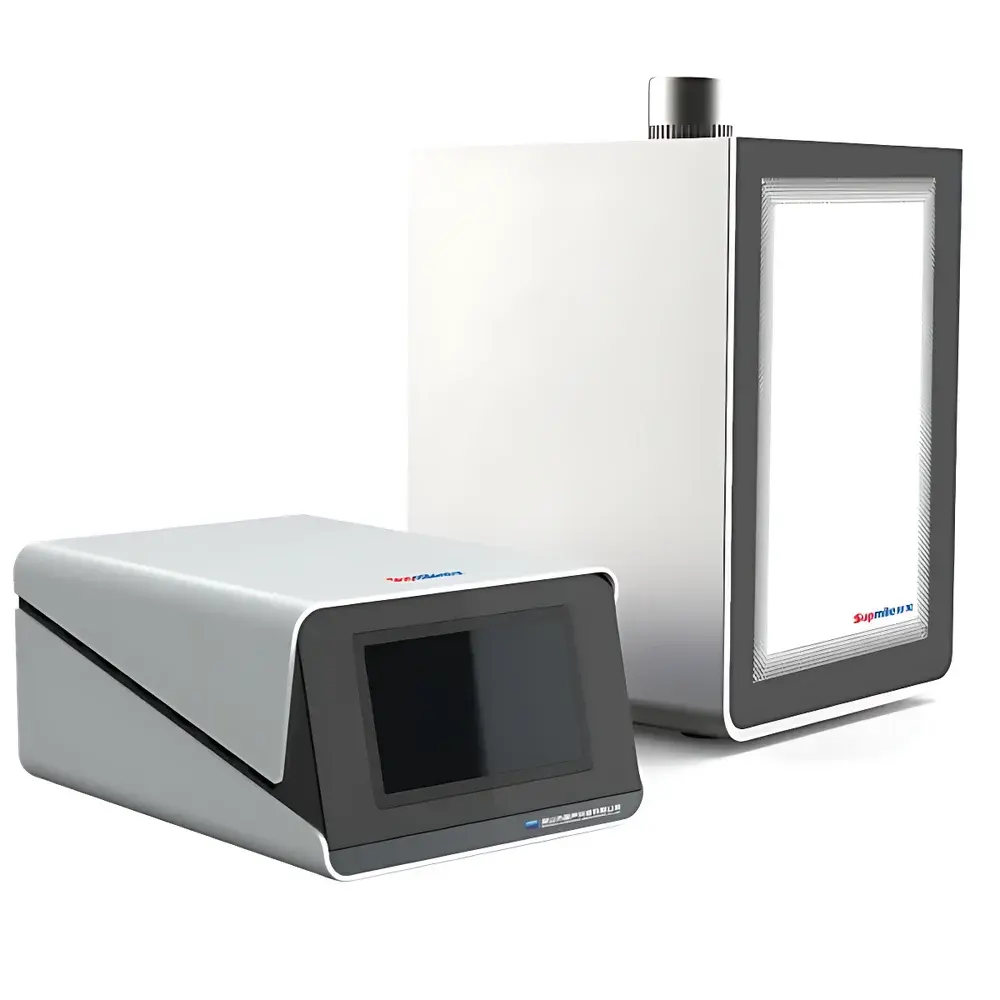
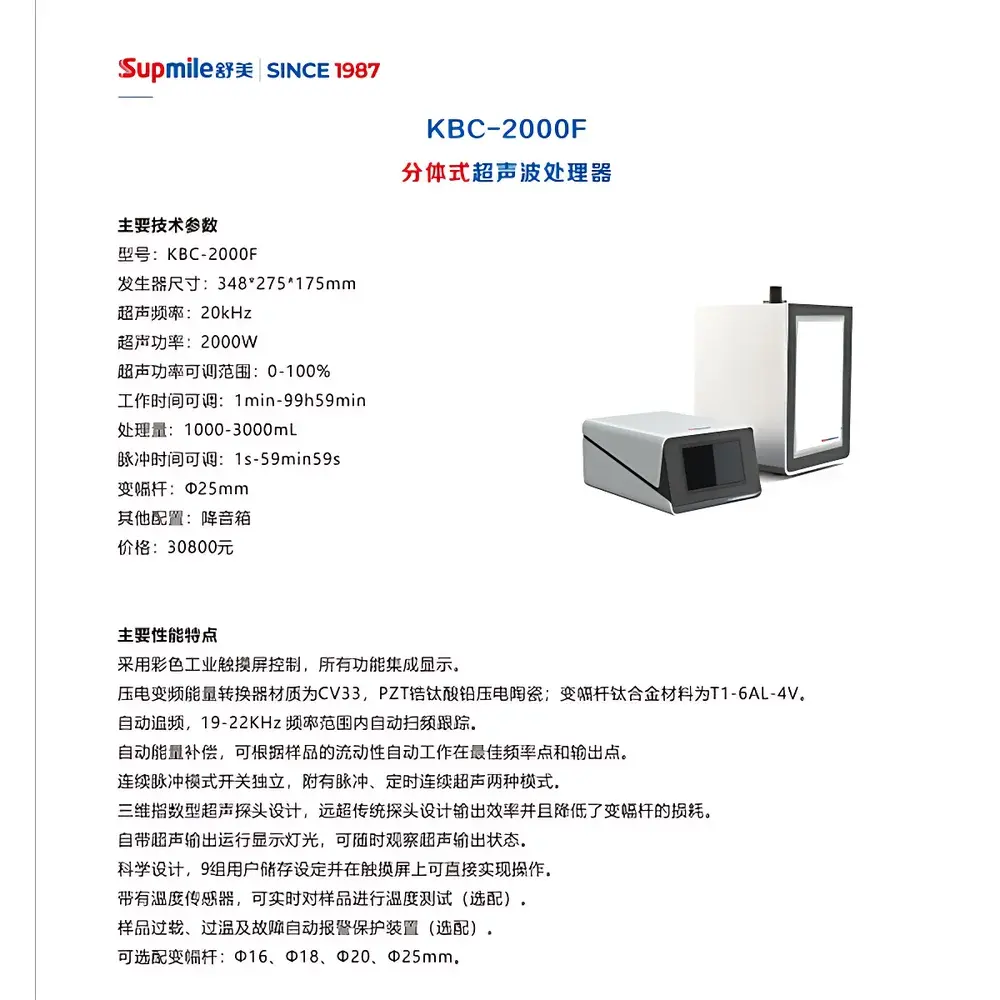
Shumei KBC-2000F Split-Type Ultrasonic Processor
| Brand | Shumei |
|---|---|
| Origin | Jiangsu, China |
| Manufacturer Type | Direct Manufacturer |
| Country of Origin | China |
| Model | KBC-2000F |
| Price | USD 4,300 (approx.) |
| Generator Dimensions | 348 × 275 × 175 mm |
| Ultrasonic Frequency | 20 kHz (auto-tracking range: 19–22 kHz) |
| Output Power | 2000 W (0–100% adjustable) |
| Processing Volume | 1000–3000 mL |
| Timer Range | 1 min – 99 h 59 min |
| Pulse Duration | 1 s – 59 min 59 s |
| Horn Diameter Options | Φ16, Φ18, Φ20, Φ25 mm |
| Horn Material | Ti-6Al-4V titanium alloy |
| Transducer Material | CV33 piezoelectric ceramic with PZT (lead zirconate titanate) |
| Control Interface | Color industrial touchscreen |
| Operating Modes | Continuous & pulsed ultrasonication |
| User Memory Slots | 9 programmable protocols |
| Optional Accessories | Cooling chamber (sound-dampening enclosure), temperature probe, overload/overheat/fault protection circuitry |
Overview
The Shumei KBC-2000F Split-Type Ultrasonic Processor is an industrial-grade high-power sonication system engineered for reproducible, scalable sample disruption, homogenization, emulsification, and cell lysis in research laboratories and pilot-scale production environments. It operates on the principle of piezoelectric transduction: electrical energy is converted into high-frequency mechanical vibrations (20 kHz nominal) via a CV33-class PZT ceramic stack, amplified through a precision-machined Ti-6Al-4V titanium alloy horn, and transmitted directly into liquid media to generate intense cavitation fields. Unlike integrated benchtop units, its split architecture separates the generator and transducer/horn assembly—enabling flexible installation, improved thermal management, and compatibility with custom reactors or jacketed vessels. The system features real-time frequency auto-tracking across a 19–22 kHz band, ensuring optimal impedance matching under varying load conditions (e.g., viscosity shifts, temperature drift, or volume changes), thereby maintaining consistent acoustic energy delivery and minimizing transducer stress.
Key Features
- Industrial color touchscreen interface with intuitive navigation and full parameter visualization—including real-time power output, frequency tracking status, elapsed time, and pulse cycle counters.
- High-efficiency piezoelectric transducer using CV33-grade PZT ceramic for stable electromechanical coupling and extended service life under continuous duty cycles.
- Ti-6Al-4V titanium alloy horn (standard Φ25 mm; optional Φ16/Φ18/Φ20 mm) offering superior fatigue resistance, corrosion tolerance, and acoustic transmission efficiency compared to stainless steel or aluminum alternatives.
- Intelligent energy compensation algorithm that dynamically adjusts operating frequency and drive amplitude to maintain peak cavitation intensity regardless of sample rheology or temperature fluctuations.
- Dual operational modes: continuous ultrasonication for rapid processing and precisely programmable pulse mode (1 s – 59 min 59 s on/off intervals) to mitigate thermal buildup during heat-sensitive applications.
- Three-dimensional exponential horn geometry optimized for uniform energy distribution and reduced lateral vibration—lowering mechanical wear and improving probe longevity by up to 40% relative to linear-profile designs.
- Nine user-defined protocol slots stored locally on the controller, supporting method standardization and GLP-compliant workflow replication without external software dependency.
- Integrated visual status indicators (LEDs) showing active ultrasonic output, fault conditions, and operational mode—facilitating rapid system diagnostics in shared lab environments.
Sample Compatibility & Compliance
The KBC-2000F accommodates aqueous, organic, and viscous suspensions within 1–3 L working volumes. Its robust mechanical design meets general laboratory safety requirements per IEC 61000-6-3 (EMC emission standards) and IEC 61000-6-2 (immunity). While not certified to ISO/IEC 17025 or FDA 21 CFR Part 11 out-of-the-box, the system supports audit-ready operation when paired with optional temperature monitoring (PT100 probe) and digital logging modules—enabling traceable temperature/power/time records required for GMP-aligned processes. Overload, overtemperature, and short-circuit protection circuits are factory-installed; optional thermal cutoff and acoustic impedance failure detection enhance process safety during unattended runs.
Software & Data Management
The embedded control firmware provides local data persistence for all executed protocols, including timestamp, total runtime, cumulative energy delivered (kWh-equivalent), and error logs. No proprietary PC software is required for basic operation; however, RS-485 and optional USB-to-serial interfaces permit integration with third-party SCADA or LIMS platforms for centralized monitoring. When configured with the optional temperature sensor, real-time thermal profiles can be exported as CSV files for post-processing in MATLAB, Python, or Excel. All user-modifiable parameters—including pulse timing, power ramp rates, and auto-restart logic—are configurable without firmware updates, supporting method transfer across multiple instruments.
Applications
This processor is routinely deployed in pharmaceutical R&D for nanoparticle dispersion and liposome formation; in biotechnology for bacterial and yeast cell lysis prior to protein extraction; in materials science for graphene exfoliation and nanocomposite synthesis; and in food science for enzyme activation studies and microbial inactivation validation. Its high power density (up to 0.67 W/mL at 3 L volume) and precise temporal control make it suitable for kinetic studies requiring millisecond-level sonication resolution. The split configuration also allows integration into flow-through systems—enabling continuous ultrasonic treatment of recirculated streams in pilot-scale homogenization trials.
FAQ
What is the recommended maintenance interval for the Ti-6Al-4V horn?
Inspect the horn tip for pitting or erosion every 200 hours of cumulative operation; replace if surface roughness exceeds Ra 3.2 µm or if axial cracks are visible under 10× magnification.
Can the KBC-2000F be operated inside a fume hood?
Yes—provided adequate ventilation is maintained and the generator unit remains outside the hood to prevent condensation-related electrical hazards; use only the optional sound-dampening chamber for noise reduction.
Is calibration traceable to NIST or other national standards?
Transducer output power is factory calibrated against reference hydrophones per ASTM E1000-19; full system calibration certificates (including frequency response and acoustic intensity mapping) are available upon request with additional lead time.
Does the system support remote start/stop via PLC signals?
Yes—dry-contact inputs (24 VDC) are provided for external trigger initiation and emergency stop, compatible with standard industrial PLC I/O modules.
How does automatic frequency tracking improve reproducibility?
By continuously scanning 19–22 kHz and locking onto the resonant peak impedance minimum, the system compensates for load-dependent frequency shifts—ensuring constant cavitation bubble collapse energy and reducing inter-run coefficient of variation (CV) to ≤3.5% under controlled conditions.
Related Products



