
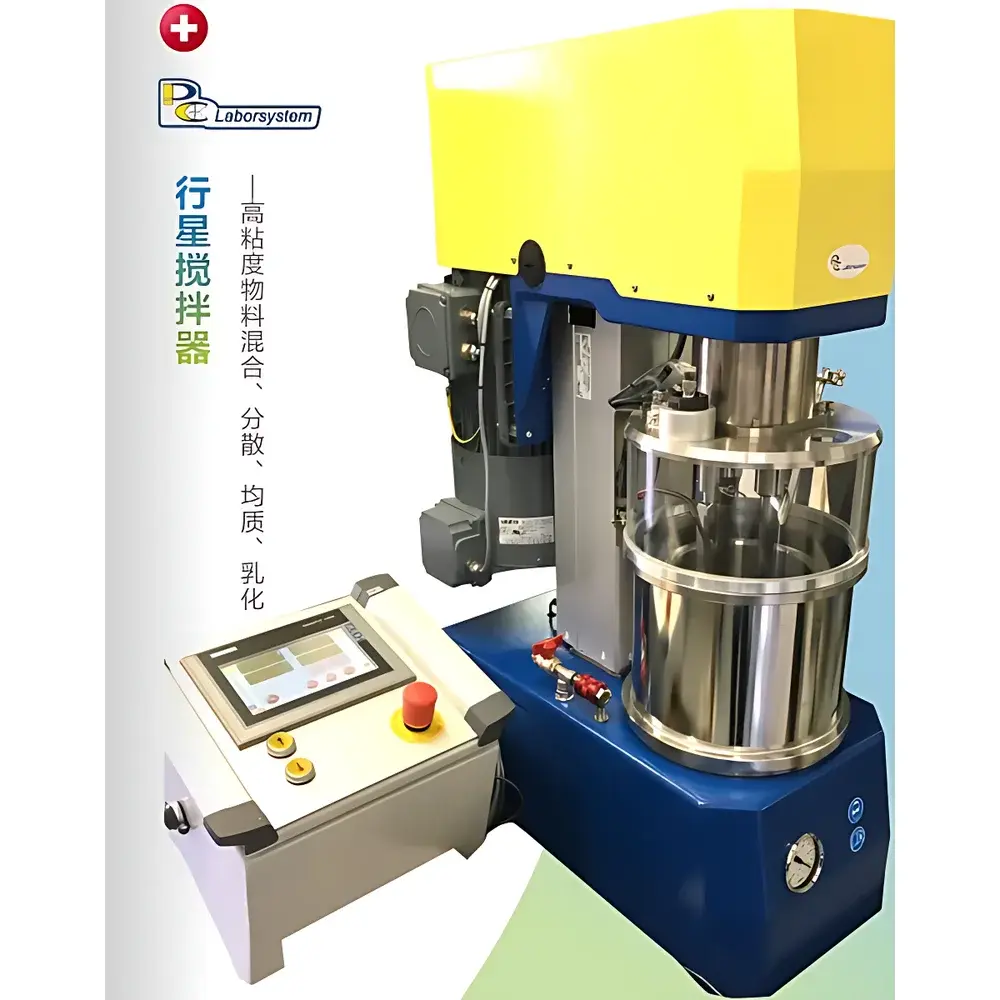
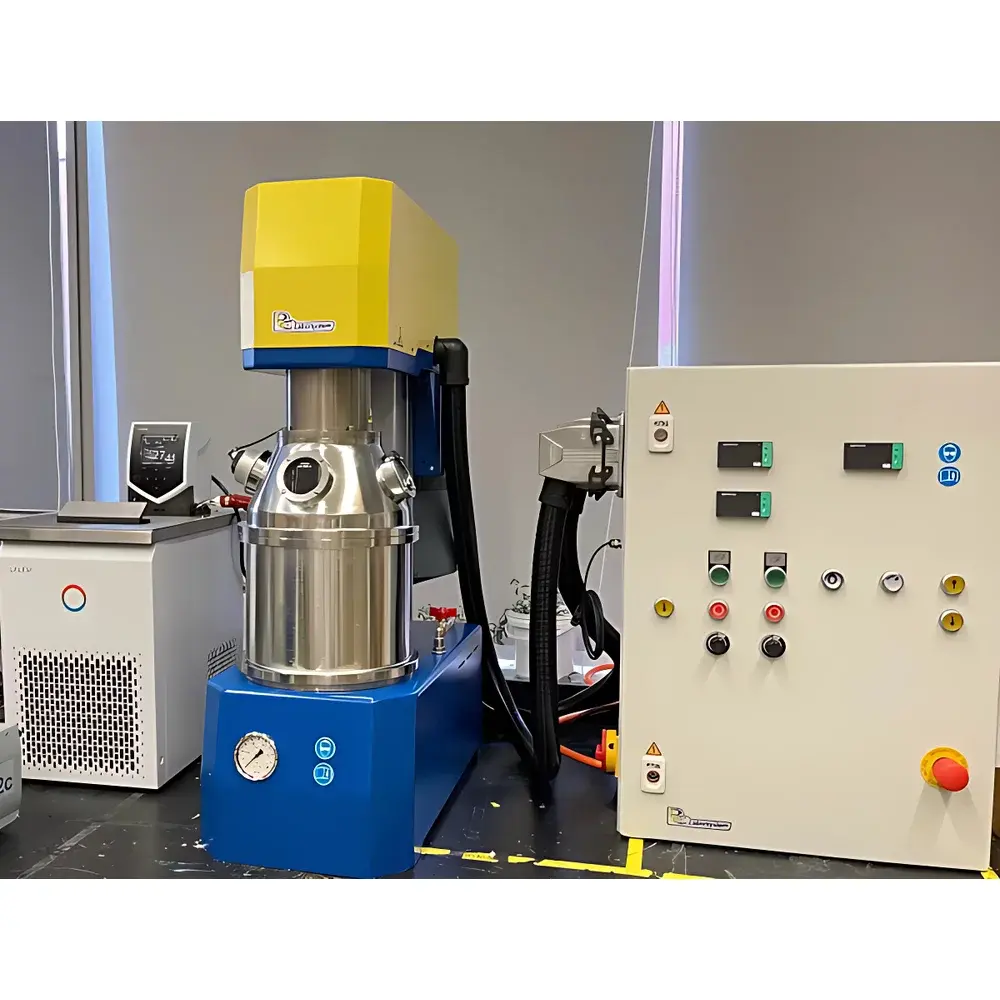
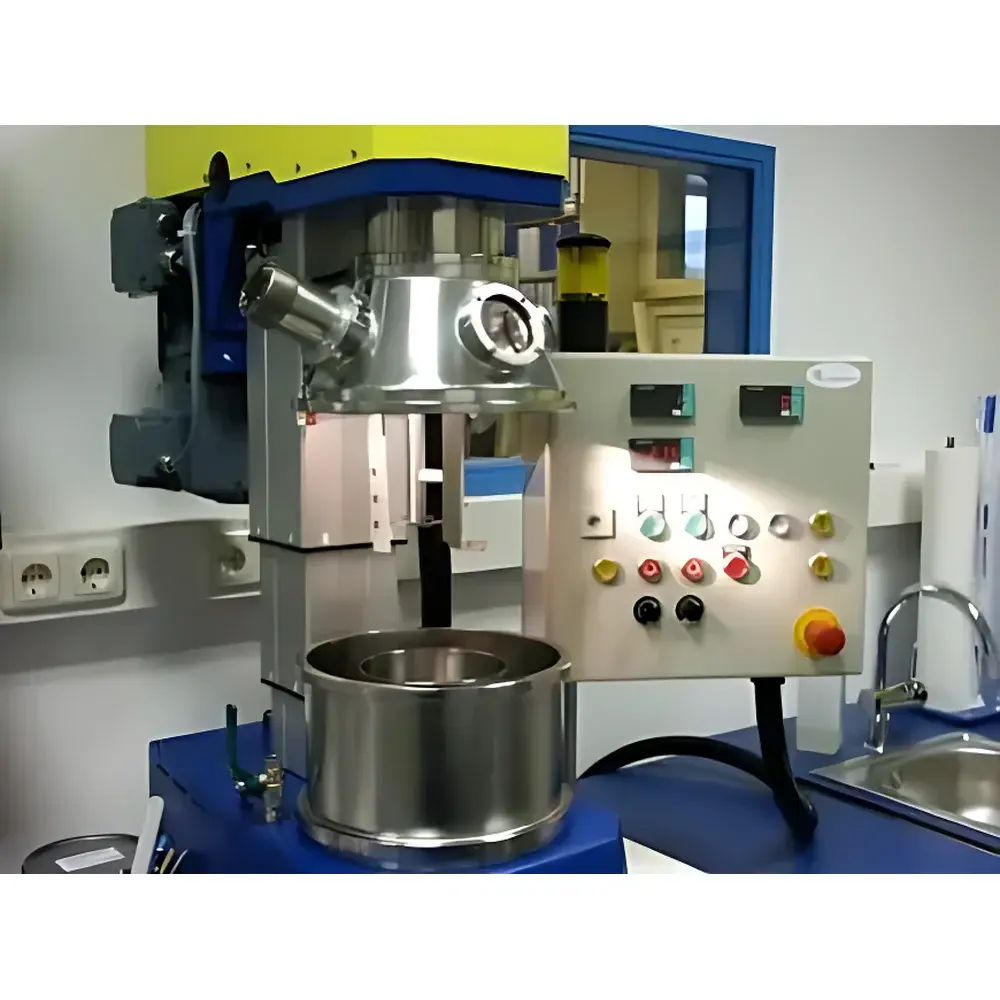
PC Laborsystems Labotop Universal Planetary Mixer
| Brand | PC Laborsystems |
|---|---|
| Origin | Switzerland |
| Model | Labotop Universal Planetary Mixer |
| Maximum Mixing Volume | 80 L |
| Speed Range | 60–6000 rpm (dual-speed motor: 600 rpm / 0.75 kW low-speed |
| Jacket Temperature Control Range | −50 to +200 °C |
| Vacuum Capability | −0.1 MPa (−1000 mbar) |
| Construction Material | AISI 304 (1.4301) stainless steel, optional glass, tinplate, or polymer vessels |
| Drive System | Dual-axis planetary motion with independent orbital and rotational control |
| Safety Features | Emergency stop, vacuum relief sensor, lift lock, high-speed impeller recognition & interlock |
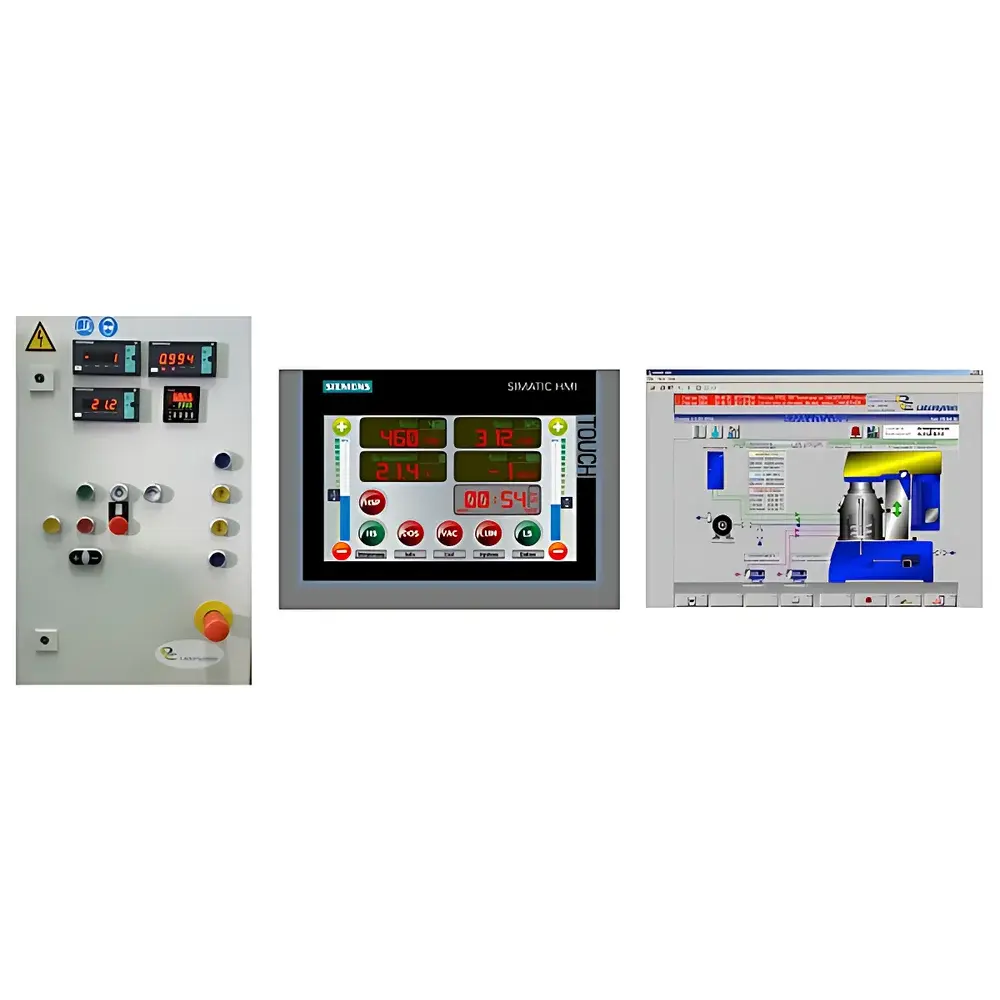
| Controller | PLC-based 7″ capacitive touchscreen HMI with data logging to USB |
Overview
The PC Laborsystems Labotop Universal Planetary Mixer is an engineered solution for high-precision, multi-modal mixing and dispersion in R&D, pilot-scale, and quality-controlled laboratory environments. Based on the fundamental principles of planetary motion kinematics—where a mixing tool simultaneously rotates on its own axis while orbiting the vessel center—the system generates controlled shear, extensional, and convective flow fields across a wide viscosity spectrum (from 10⁶ mPa·s pastes and viscoelastic gels). This dual-motion architecture ensures uniform energy input distribution, minimizes dead zones, and enables reproducible processing of heterogeneous systems containing solids, powders, fibers, viscous liquids, and temperature-sensitive actives. Unlike conventional stirrers or simple dispersers, the Labotop integrates mechanical acceleration, thermal management, vacuum operation, and real-time process monitoring into a single platform compliant with GLP-aligned workflows.
Key Features
- Dual-speed, dual-power drive system: Independent low-speed (60–600 rpm, 0.75 kW) and high-speed (600–6000 rpm, 4.0 kW) spindles enable optimized torque delivery for both gentle homogenization and high-shear dispersion.
- Full planetary kinematics: Vessel rotation (up to 10 rpm) synchronized with tool orbiting and spinning ensures complete volumetric sweep and eliminates stratification—even in non-Newtonian or thixotropic media.
- Integrated thermal management: Double-jacketed vessel with direct contact heating/cooling via external LAUDA circulators (−50 to +200 °C), supported by embedded PT100 sensors in scraper blades and jacket walls for closed-loop PID control.
- Vacuum-assisted processing: Stainless steel vacuum chamber (AISI 304, 1.4301) with borosilicate glass viewport and pressure-rated sealing (0.3 MPa positive, −0.1 MPa negative) enables degassing, solvent removal, and moisture-sensitive formulation.
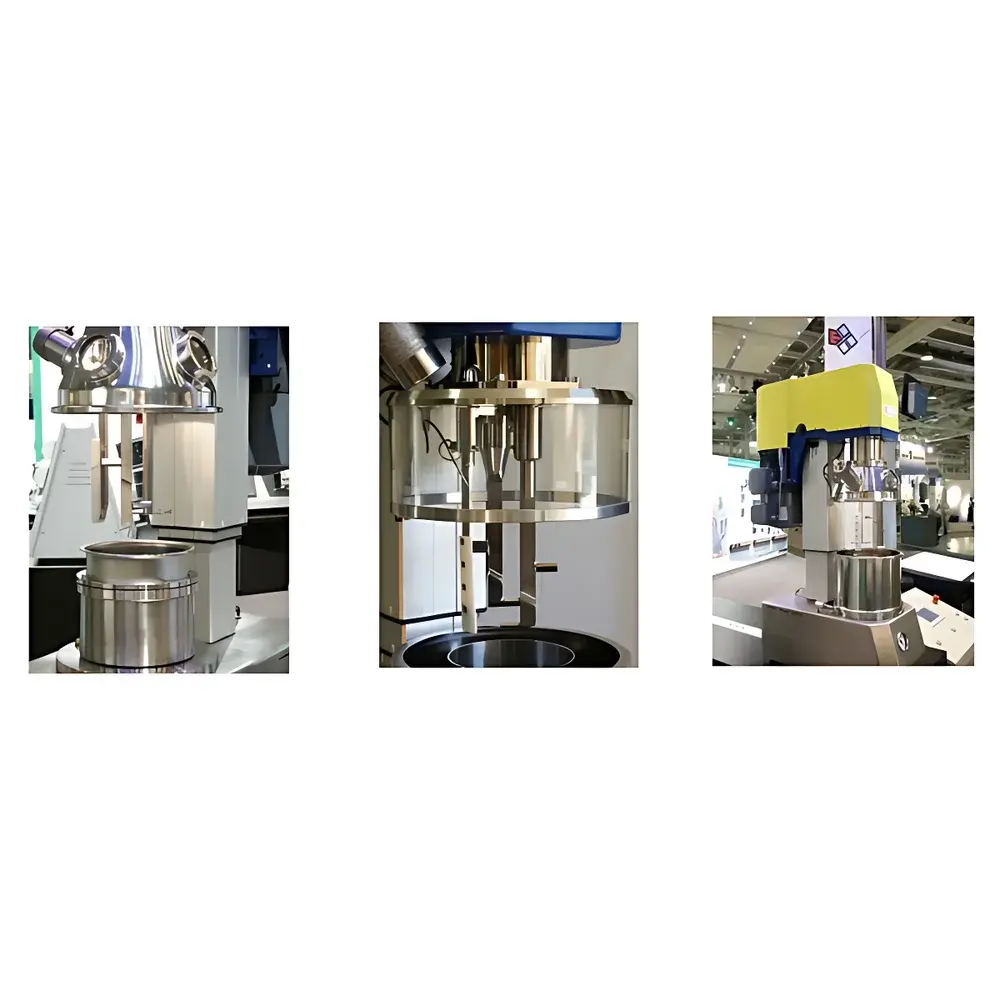
- Tool versatility: Interchangeable configurations—including dual-disc dispersers, butterfly paddles, fork-type agitators, and PTFE-coated scrapers—allow adaptation to rheological demands without hardware reconfiguration.
- Safety-integrated control architecture: PLC-driven HMI with emergency stop, vacuum overpressure relief detection, motor interlocks, lift position sensing, and automatic high-speed tool identification prevent operational hazards and ensure audit-ready operation.
Sample Compatibility & Compliance
The Labotop accommodates materials ranging from low-viscosity solvents to highly filled composites, including adhesives, battery slurries, pharmaceutical suspensions, cosmetic emulsions, ceramic pastes, and polymer melts. Vessels are available in AISI 304 stainless steel (standard), borosilicate glass (DIN 28120), tinplate, or food-grade polymers—each validated for chemical resistance per ISO 10993-5 and USP Class VI. Vacuum and thermal performance meet ASTM E2912 (vacuum integrity) and ISO 17025 traceability requirements when paired with calibrated LAUDA circulators and VACUUBRAND pumps. The system supports 21 CFR Part 11-compliant electronic records when configured with optional audit trail logging and user access controls.
Software & Data Management
The 7″ industrial touchscreen HMI runs a deterministic real-time PLC kernel (Siemens S7-compatible logic) and provides simultaneous display of speed, torque, temperature (vessel core and jacket), vacuum level, elapsed time, and orbital phase angle. All parameters are timestamped at ≤100 ms intervals and exportable in CSV format directly to USB storage. Optional Ethernet/IP or Modbus TCP interfaces enable integration into centralized LIMS or MES platforms. Process recipes—including ramp profiles for speed, temperature, and vacuum—can be saved, versioned, and recalled with user authentication. Data integrity safeguards include write-protection, checksum validation, and automatic backup on power loss.
Applications
- Electrode slurry preparation for Li-ion batteries (homogeneous carbon-black/NMC dispersion in NMP)
- High-solid-content dental composites and orthopedic bone cements requiring void-free mixing under vacuum
- Pharmaceutical ointments and topical gels where API stability mandates low-heat, low-shear incorporation
- UV-curable coatings and encapsulants processed under inert atmosphere to prevent premature polymerization
- Lab-scale synthesis of silicone elastomers and polyurethane prepolymers requiring precise stoichiometric blending and degassing
- Quality assurance testing of adhesive rheology (G′, G″, yield stress) prior to scale-up
FAQ
What vacuum level can the Labotop achieve, and how is it maintained during operation?
The system achieves a base pressure of −0.1 MPa (−1000 mbar) using certified VACUUBRAND MZ2C NT or PC3001 VARIO Select diaphragm pumps. A pressure transducer continuously monitors chamber integrity, triggering automatic pump shutdown and venting if vacuum drift exceeds ±5 mbar over 30 s.
Can the Labotop operate under inert gas, and is gas purging integrated?
Yes—optional gas inlet/outlet ports (ISO-KF 25) support continuous nitrogen or argon sparging. Flow rate and purge duration are programmable via the HMI, with pressure regulation up to 0.3 MPa gauge.
Is temperature measurement traceable to national standards?
All PT100 sensors are factory-calibrated to DIN EN 60751 Class A (±0.15 °C at 0 °C) and supplied with individual calibration certificates. Field recalibration is supported using external reference probes per ISO/IEC 17025 procedures.
How does the system handle high-viscosity materials that adhere to vessel walls?
PTFE-coated scraper blades rotate synchronously with the vessel wall, maintaining constant clearance (≤0.3 mm) and ensuring full material turnover. Torque feedback modulates scraper speed to avoid stalling while preserving shear history fidelity.
Are spare parts and technical documentation available globally?
PC Laborsystems maintains a central spare parts warehouse in Magden, Switzerland, with 48-hour air freight to EEA, North America, and APAC regions. Full English-language manuals—including electrical schematics, mechanical drawings, and firmware update protocols—are accessible via secure customer portal with login credentials issued upon purchase.



