
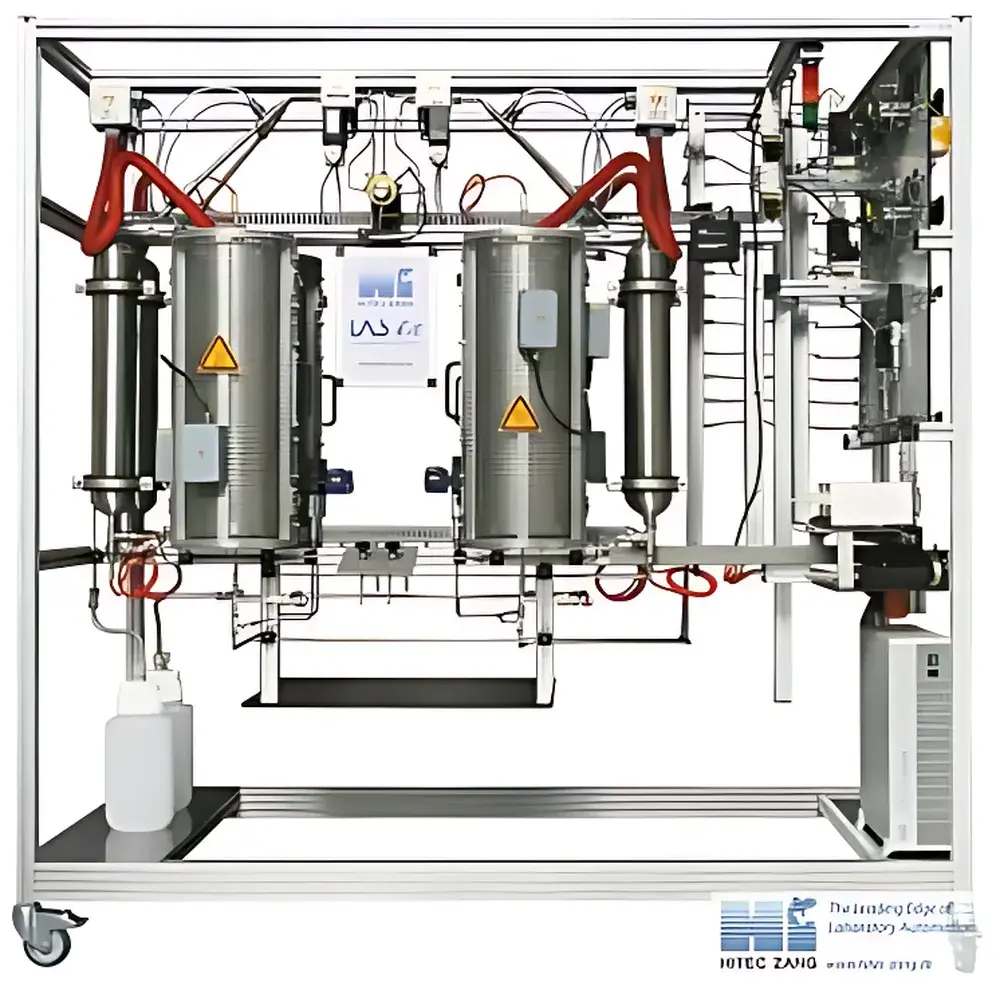
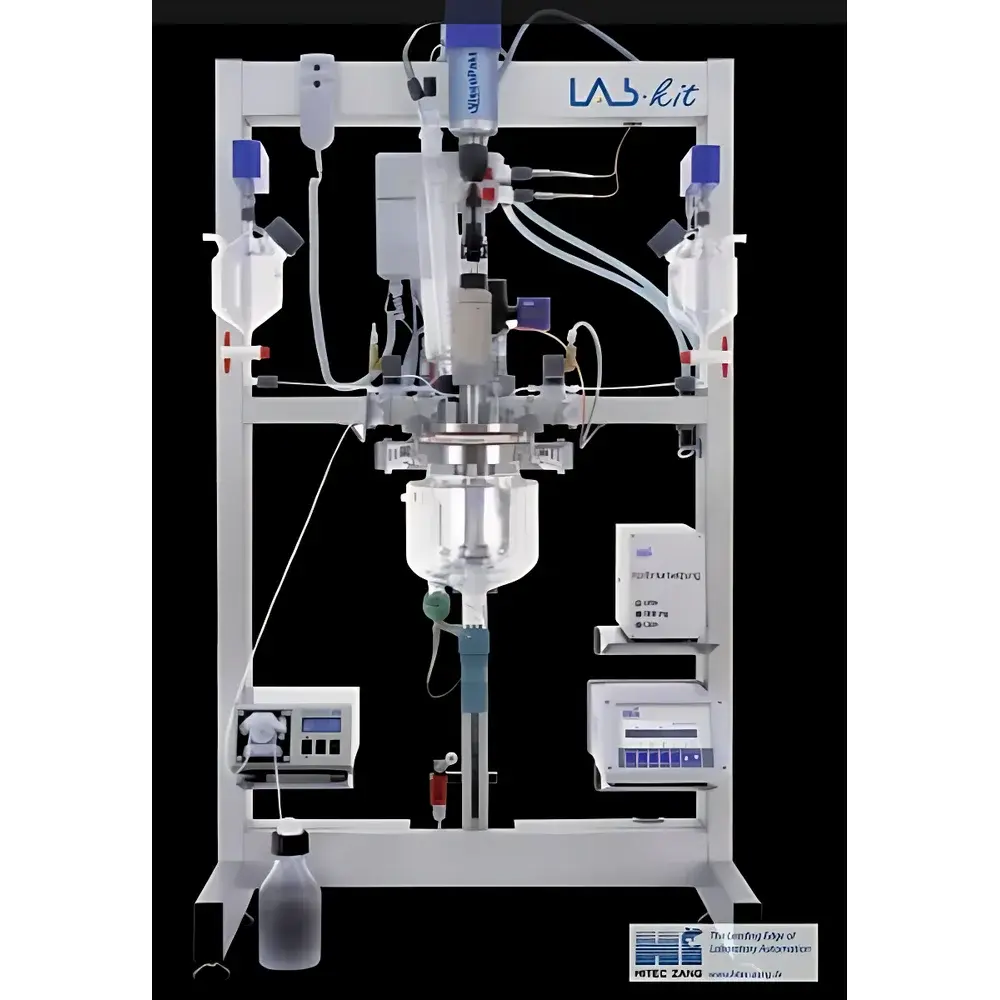
HiTec Zang LabKit™-ALR1 & LabKit™-ALR2 Automated Laboratory Reactor Systems
| Brand | HiTec Zang |
|---|---|
| Origin | Germany |
| Model | LabKit™-ALR1, LabKit™-ALR2 |
| Vessel Capacity | 1 L / 2 L |
| Construction Material | Stainless Steel 1.4571, Borosilicate Glass (Duran®), PTFE/PFA/ETFE/PVDF, Perfluoroelastomer Seals |
| Operating Pressure | Low-pressure (up to ambient) |
| Vacuum Capability | ≤8 mbar |
| Jacket Temperature Range | –40 °C to +200 °C |
| Stirring Speed Range | 40–2000 rpm (ALR2) / 50–1000 rpm (ALR1) |
| Torque | 57 N·cm (ALR2), 40 N·cm (ALR1) |
| Automation Platform | LabManager® OS with NAMUR-compliant I/O architecture |
| Compliance | Designed for GLP documentation, 21 CFR Part 11-ready data integrity (with optional audit trail module), ISO/IEC 17025-aligned process recording |
Overview
The HiTec Zang LabKit™-ALR1 and LabKit™-ALR2 are fully automated, modular laboratory reactor systems engineered for precise, reproducible, and safe execution of chemical synthesis, process development, and reaction calorimetry under controlled thermal, mechanical, and atmospheric conditions. Based on Couette-type stirred-tank reactor principles with jacketed temperature control, magnetic or mechanical drive coupling, and integrated gravimetric dosing, these systems enable closed-loop automation of multi-step reactions—including exothermic screening, distillation, reflux, pH-controlled addition, and vacuum-assisted solvent removal. Unlike legacy benchtop reactors limited to manual or semi-automated operation, the LabKit™-ALR platform implements a deterministic control architecture compliant with NAMUR NE 107/NE 113 standards, ensuring unambiguous device state reporting, fault-tolerant sequencing, and deterministic event logging—critical for regulatory traceability in pharmaceutical, fine chemical, and academic R&D environments.
Key Features
- Modular hardware architecture: Standardized aluminum frame with DIN-rail-mounted PLC, interchangeable reactor vessels (1 L or 2 L), electrically actuated vessel lifting (ALR2), and tool-less sensor integration points.
- NAMUR-compliant automation stack: LabManager® OS provides real-time control logic execution, configurable recipe management, and deterministic I/O handling across analog (4–20 mA, 0–10 V), digital, and serial (RS232) domains.
- Gravimetric liquid handling: Dual GraviDos® dosing modules (ALR2) or single-channel configuration (ALR1) with ±0.1 g accuracy, PTFE/PFE-sealed valves, and temperature-compensated load cells for mass-based reagent addition.
- Multi-parameter process monitoring: Up to 8 Pt100 inputs (ALR2), pressure transducer, pH/redox electrodes, condensate temperature, and reflux flow rate—all time-synchronized and logged at user-defined intervals.
- Thermal management system: External circulation chiller/heater with ±0.1 °C stability over –40 °C to +200 °C range; optimized heat transfer via high-conductivity thermal oil (–90 °C to +200 °C).
- GLP-ready documentation: Automatic generation of electronic batch records including timestamps, operator ID, parameter setpoints, deviations, and alarm history—exportable as PDF or CSV with cryptographic hash integrity verification.
Sample Compatibility & Compliance
The LabKit™-ALR series accommodates heterogeneous reaction mixtures—including slurries, viscous media, gas-evolving systems, and air/moisture-sensitive chemistries—through chemically inert wetted materials: borosilicate glass (DIN 7080), stainless steel 1.4571 (ASTM A240), PTFE, PFA, ETFE, PVDF, and perfluoroelastomer (FFKM) seals. All fluid-contact components meet USP Class VI and FDA 21 CFR 177.1550 requirements. The system supports operation under inert atmosphere (N₂/Ar purge), reduced pressure (≤8 mbar), or mild overpressure (≤2 bar gauge, with optional pressure-rated variants). It is designed to align with ISO 14040 (LCA), ASTM E2554 (reaction calorimetry), and ICH Q5C (stability-indicating methods), and its software architecture permits validation per GAMP 5 for computerized system qualification in GxP environments.
Software & Data Management
LabManager® serves as the central orchestration layer, featuring a touch-enabled HMI with real-time trend visualization, alarm suppression logic, and role-based access control (RBAC). Data acquisition occurs at up to 10 Hz per channel and is stored locally on an industrial SSD with RAID 1 redundancy. Optional Hilims™ integration enables LIMS linkage for sample tracking and metadata association. For regulatory compliance, the system supports 21 CFR Part 11 Mode B implementation—including electronic signatures, audit trails with immutable timestamps, and change control workflows. Raw data export adheres to ASTM E2500-15 format, enabling direct ingestion into MATLAB®, Python (via HDF5), or commercial process analytics platforms (e.g., SIMCA, DeltaV Historian).
Applications
- Kinetic profiling of catalytic hydrogenations, nitrations, and Grignard reactions under controlled addition rates and temperature ramps.
- Process safety evaluation: Reaction calorimetry (RC1-style), adiabatic temperature rise prediction, and MTSR (Maximum Temperature of Synthesis Reaction) determination.
- DoE-driven optimization: Automated variation of stoichiometry, residence time, and cooling profiles across parallel or sequential experiments.
- Continuous flow precursor synthesis: Integration with microreactor modules via standardized tubing interfaces and synchronized pump control.
- Stability studies: Long-duration (72+ h) degradation testing under controlled O₂/H₂O partial pressures and photolytic conditions (with optional UV-transparent jackets).
- Training and method transfer: Reproducible execution of SOPs across multiple sites using identical LabManager® recipe files and calibration certificates.
FAQ
What level of automation validation support is provided?
HiTec Zang supplies IQ/OQ protocols, factory calibration certificates (traceable to DKD/DAkkS), and a URS template aligned with GAMP 5. Site-specific PQ documentation is supported through joint protocol review and witness testing.
Can the system operate unattended overnight?
Yes—equipped with UPS-backed power supply, thermal runaway detection, emergency venting logic, and remote notification via SMTP/SMS gateways. All critical alarms trigger automatic reaction quenching or cooldown sequences.
Is third-party sensor integration possible?
All analog and digital I/O ports conform to NAMUR NE 43/NE 107 signal conventions. Custom drivers for PAT tools (e.g., FTIR, Raman probes) can be implemented via LabManager®’s open DLL interface.
How is scalability addressed beyond single-vessel operation?
The LabKit™ platform supports master-slave configurations via EtherCAT or PROFIBUS DP. Up to four ALR units can be synchronized for parallel reaction screening with centralized recipe dispatch and consolidated data aggregation.
What maintenance intervals are recommended for the stirring system?
Magnetic couplings require no scheduled maintenance; mechanical stirrers (Easystirrer/Viscopakt®) undergo annual torque verification and seal inspection per ISO 13374 condition monitoring guidelines.



