
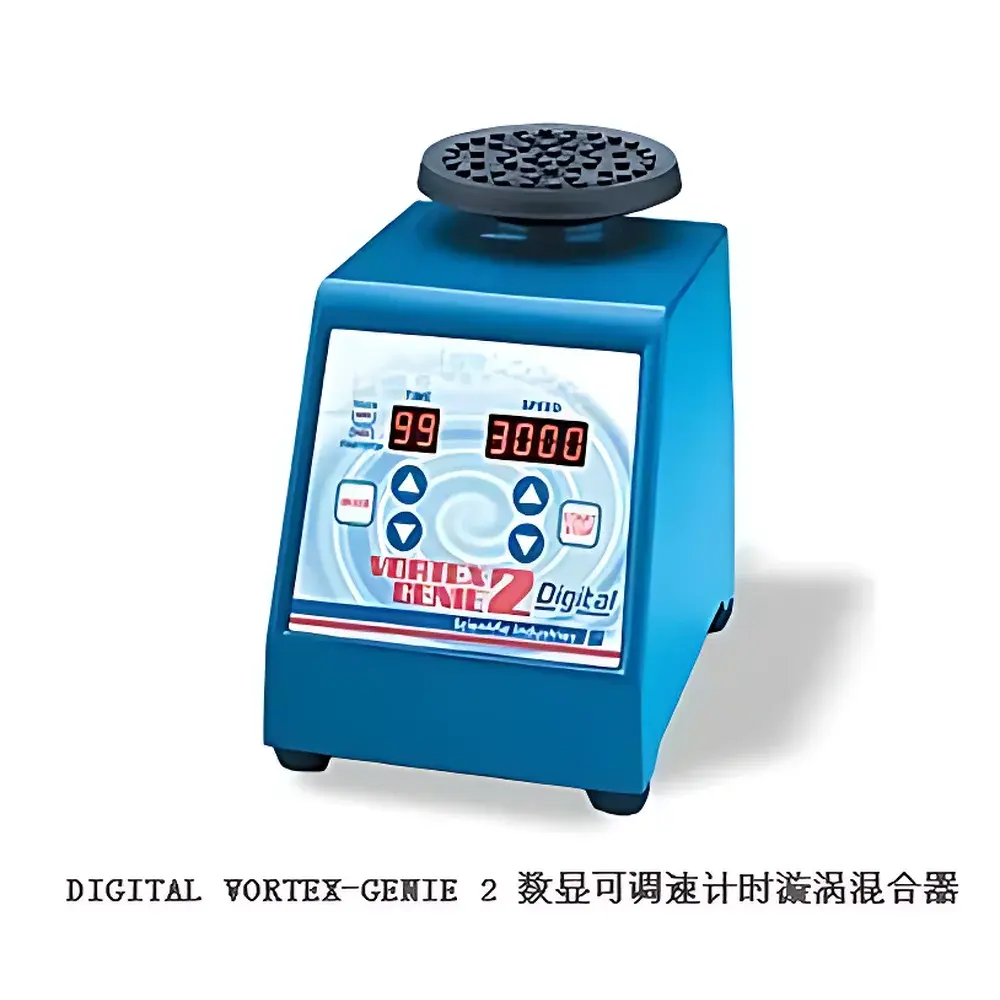
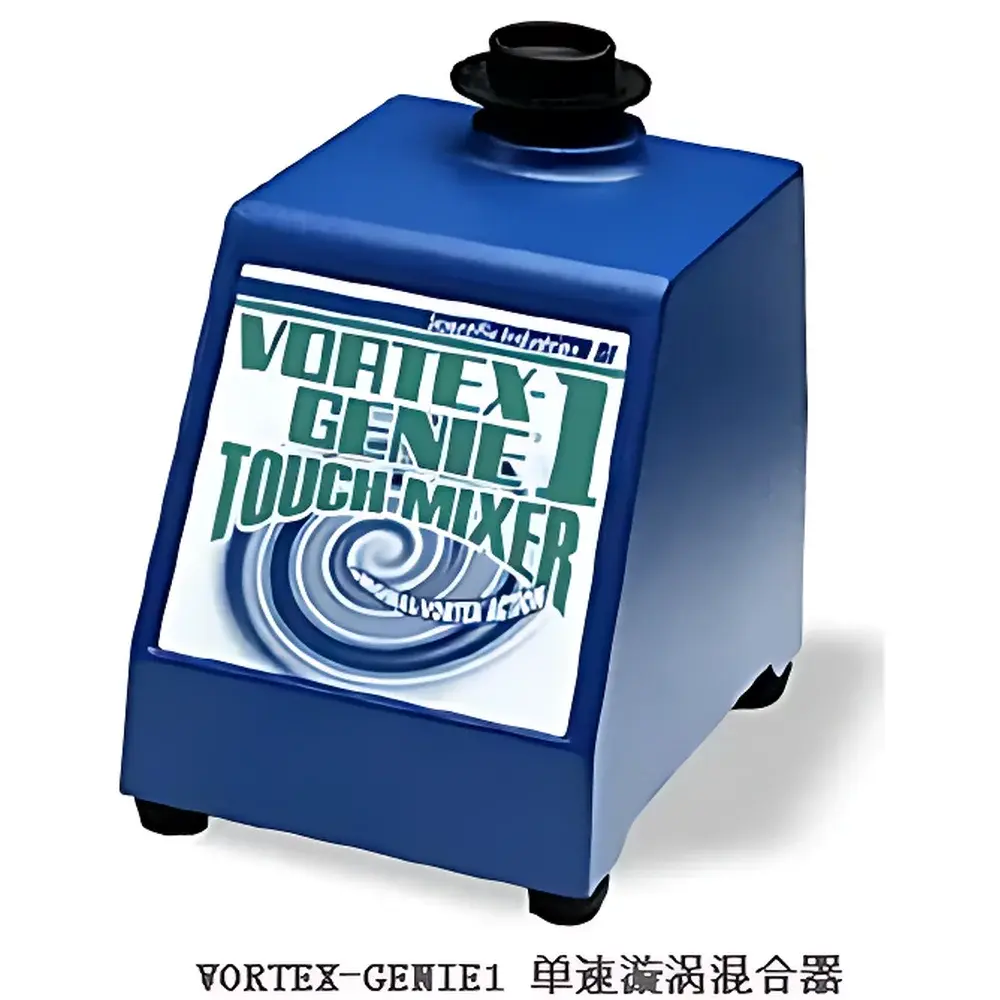
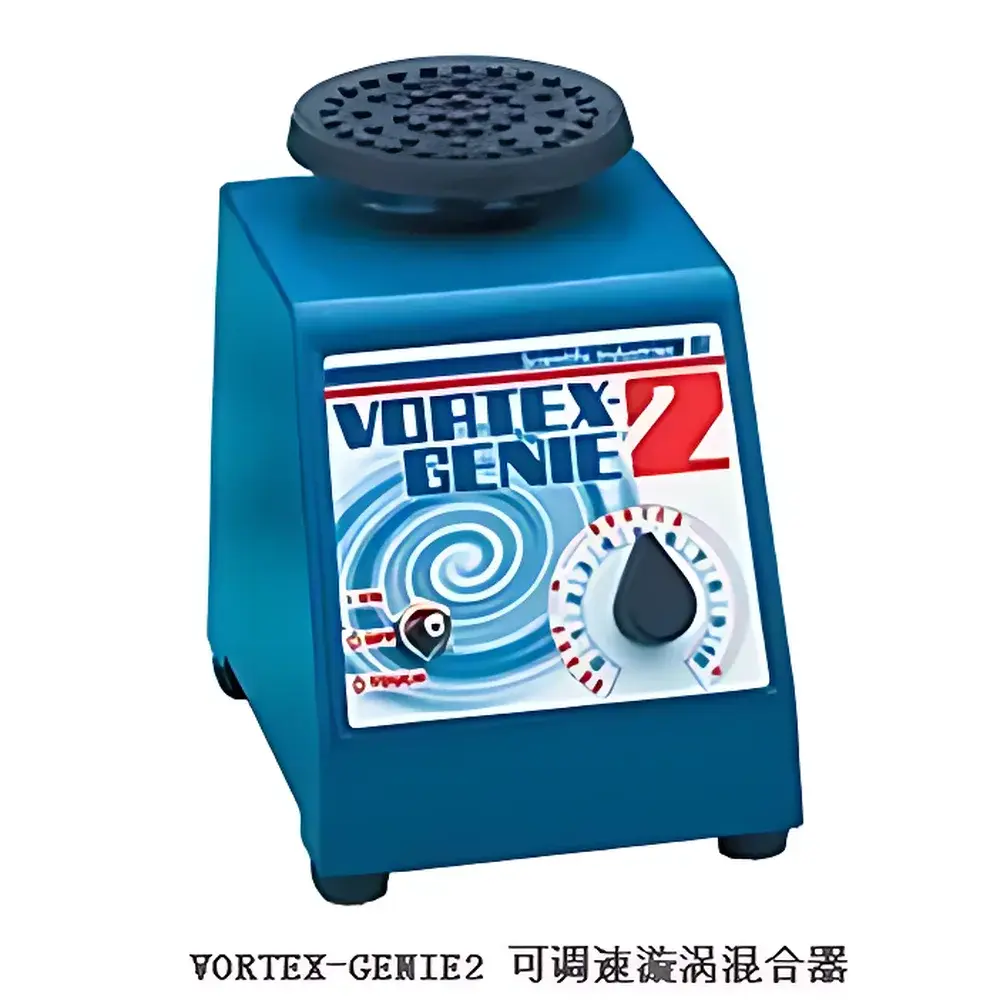
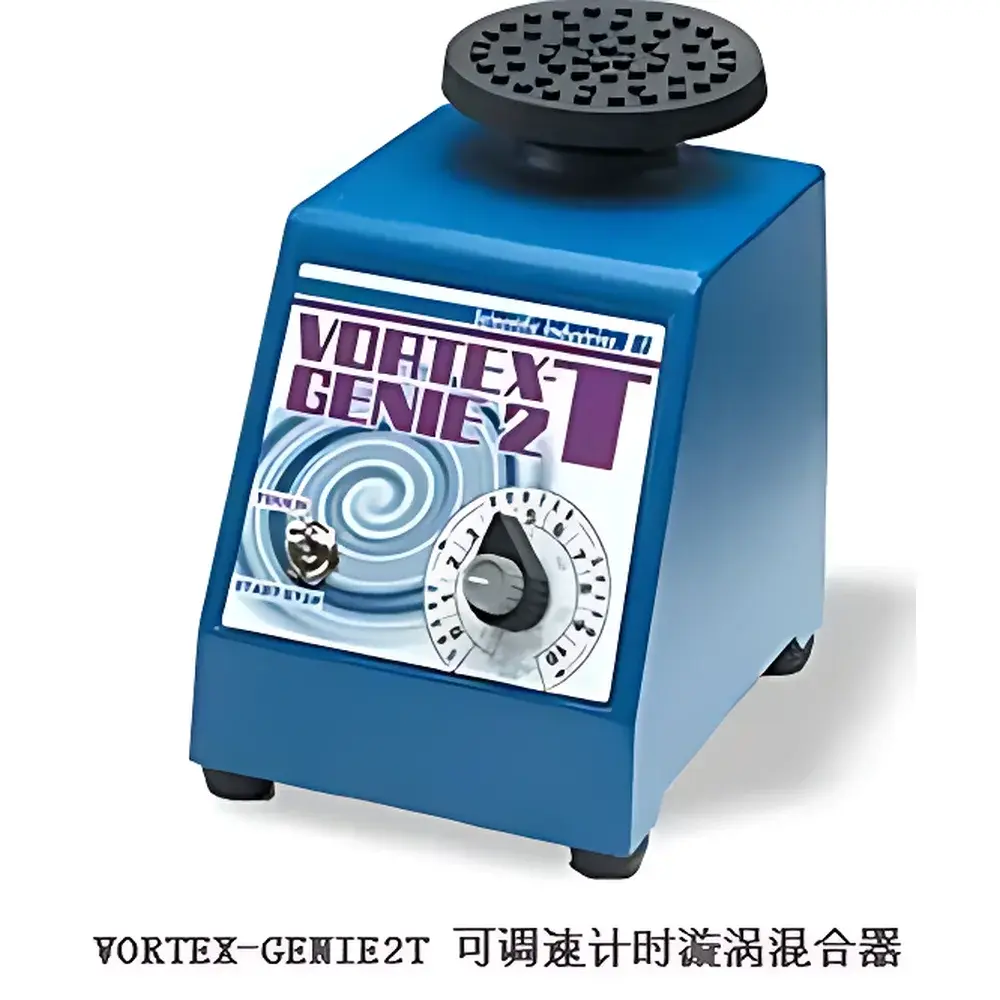
Scientific Industries Vortex-Genie 2 Advanced Variable-Speed Vortex Mixer
| Brand | Scientific Industries |
|---|---|
| Origin | USA |
| Model | Vortex-Genie 2, Vortex-Genie 1, Vortex-Genie 2T, Digital Vortex-Genie 2 |
| Speed Range | 500–3200 rpm |
| Timing Range (Digital Models) | Touch-mode: 1–99 s |
| Continuous-mode | 1–99 min or continuous operation |
| Orbit Diameter | 6 mm |
| Construction | Die-cast metal housing with non-slip rubber feet |
| Compliance | ETL, CE |
| Weight | 4 kg |
| Dimensions (W×D×H) | 122 × 165 × 165 mm |
Overview
The Scientific Industries Vortex-Genie 2 is a precision-engineered variable-speed vortex mixer designed for reproducible, high-intensity orbital mixing in life science and analytical laboratories. It operates on the principle of eccentric orbital motion—driving samples in a rapid circular path at controlled rotational speeds—to achieve efficient homogenization, suspension reconstitution, and thorough dispersion of viscous or particulate-laden solutions. Unlike simple shakers, the Vortex-Genie 2 generates consistent shear forces across tube geometries without requiring manual intervention, making it indispensable for applications demanding strict protocol adherence, such as cell resuspension prior to flow cytometry, enzymatic reaction initiation, or nucleic acid extraction workflows. Its robust die-cast aluminum construction ensures mechanical stability under repeated load cycles, while the 6 mm orbit diameter provides optimal energy transfer for standard microcentrifuge tubes (0.2–50 mL), culture flasks, and conical vials. The instrument is validated for uninterrupted operation inside refrigerated environments—including cold rooms (4 °C) and CO₂ incubators—enabling temperature-sensitive protocols without compromising mixing fidelity.
Key Features
- Variable speed control (500–3200 rpm) with analog dial or digital display, enabling fine-tuned optimization for diverse sample viscosities and container types
- Dual-mode operation: “Touch” mode delivers instantaneous activation upon sample tube contact; “Continuous” mode sustains preset speed until manually terminated or timer expires
- Modular platform design accommodates interchangeable accessories—including standard cup adapters, 3-inch flat platforms, and specialized holders for PCR strips or multi-well plates—ensuring compatibility across assay formats
- ETL- and CE-certified electrical architecture compliant with IEC 61010-1 safety standards for laboratory use
- Low-noise, brushless motor with thermal overload protection extends service life and supports unattended overnight runs
- Compact footprint (122 × 165 × 165 mm) and lightweight chassis (4 kg) facilitate integration into biosafety cabinets, laminar flow hoods, and constrained benchtop spaces
Sample Compatibility & Compliance
The Vortex-Genie 2 supports routine handling of aqueous buffers, protein lysates, bacterial suspensions, blood derivatives, and polymer solutions across standard labware: 0.2–2.0 mL microtubes, 15–50 mL conical tubes, glass vials, and small-volume culture flasks. Its mechanical design meets ASTM D2709 (standard test method for water separation characteristics of fuels) and ISO 8573-7 (compressed air purity—part 7: viability testing of microbial contaminants) requirements when used in QC/QA validation workflows. For regulated environments—including GLP-compliant analytical labs and pharmaceutical manufacturing facilities—the Digital Vortex-Genie 2 variant supports audit-ready operation via time-stamped event logging (start/stop/timer expiry) and user-defined speed presets, aligning with FDA 21 CFR Part 11 data integrity expectations when paired with validated LIMS integration.
Software & Data Management
While the base Vortex-Genie 2 operates as a standalone electromechanical device, the Digital Vortex-Genie 2 model incorporates an integrated LED interface displaying real-time speed (rpm) and elapsed/remaining time with ±1 s resolution. This digital feedback loop enhances experimental repeatability by eliminating operator interpretation error associated with analog dials. Though no proprietary software suite is required, timestamped operational logs can be manually recorded into electronic lab notebooks (ELNs) such as LabArchives or Benchling. For automated data capture, optional RS-232 or USB-to-serial interfaces (available via third-party adapters) enable integration with custom Python- or LabVIEW-based control scripts—facilitating synchronization with spectrophotometers, plate readers, or centrifuges in semi-automated assay pipelines.
Applications
- Resuspension of lyophilized reagents, cell pellets, and precipitated DNA/RNA prior to downstream quantification or sequencing library prep
- Homogenization of tissue homogenates and bacterial cultures for colony-forming unit (CFU) enumeration per ISO 7218
- Emulsification of immiscible phases in solvent extraction protocols (e.g., phenol-chloroform isolation)
- Dispersion of nanoparticles and colloidal suspensions in nanotoxicology studies
- Activation of enzyme-linked immunosorbent assay (ELISA) plates during wash and incubation steps
- Pre-analytical sample agitation in clinical chemistry workflows adhering to CLSI EP25-A2 pre-examination variables guidelines
FAQ
Can the Vortex-Genie 2 be operated inside a CO₂ incubator?
Yes—the instrument’s sealed motor housing and absence of volatile organic components permit safe, continuous operation at 37 °C and 5% CO₂, provided ambient humidity remains below 80% RH.
What is the maximum recommended tube volume for optimal vortexing performance?
For consistent vortex formation, fill volumes should not exceed 75% of nominal capacity: ≤1.5 mL in 2.0 mL tubes, ≤35 mL in 50 mL conical tubes. Overfilling dampens orbital energy transfer and reduces mixing efficiency.
Is calibration required for regulatory compliance?
While not mandated for general research use, speed verification using a NIST-traceable tachometer is recommended annually—or after impact events—for GLP/GMP applications. Scientific Industries provides calibration certificates upon request.
How does the “Touch” mode differ from “Continuous” mode in practice?
“Touch” mode activates only while downward pressure is applied to the cup platform—ideal for brief, repeatable pulses during serial dilutions. “Continuous” mode maintains constant speed until stopped manually or by timer expiration—suited for extended incubation-mixing protocols.
Are replacement parts and accessories available globally?
Yes—standard cup adapters (Cat. No. SI-0800), 3-inch flat platforms (SI-0810), and universal tube holders (SI-0820) are stocked by authorized distributors in >60 countries and shipped with full traceability documentation.



