
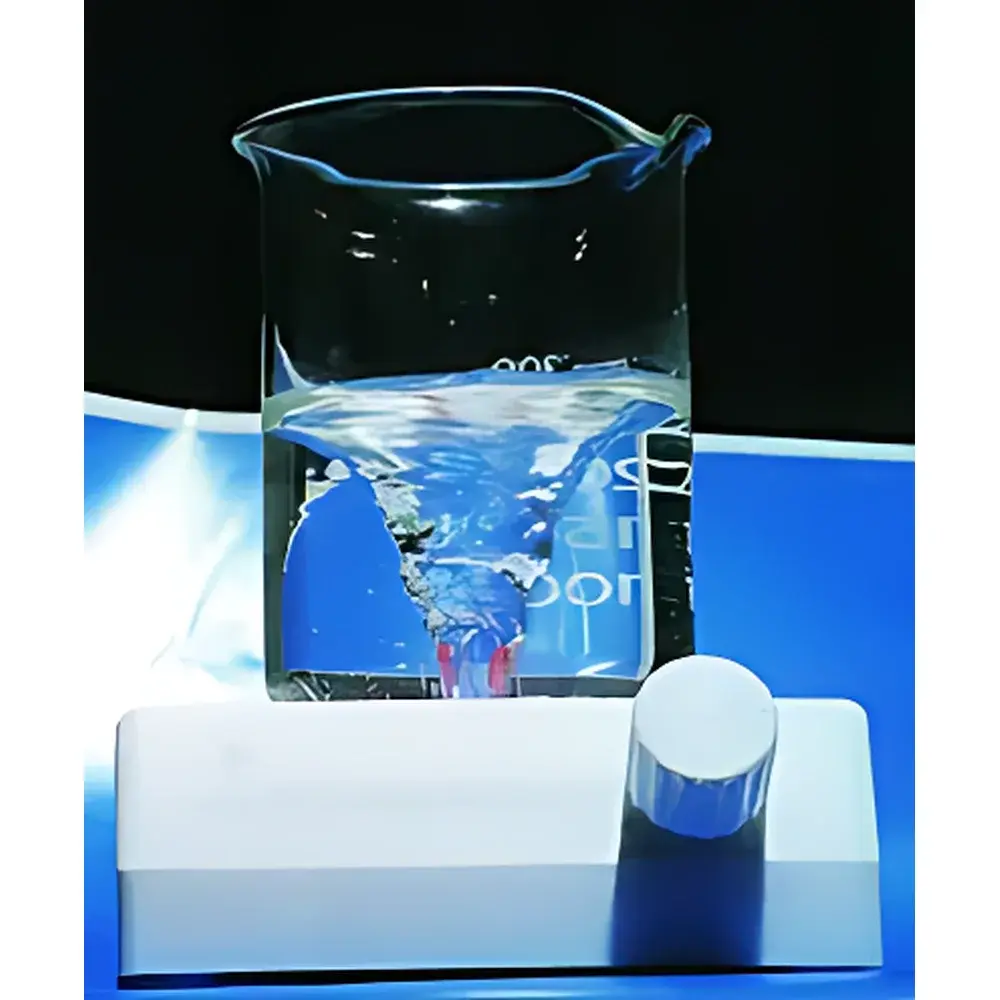
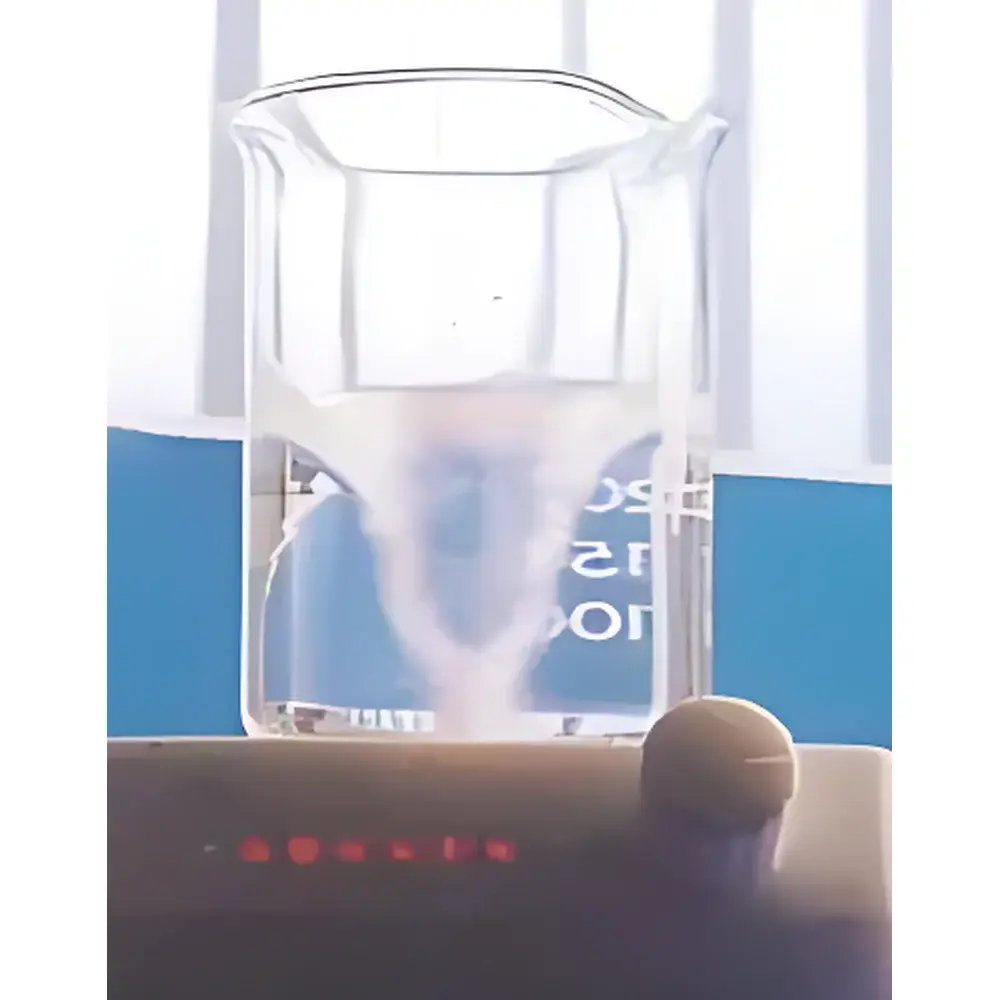
COWIE PTFE-Coated Magnetic Stirrer with PTFE Stir Bars
| Brand | COWIE |
|---|---|
| Origin | United Kingdom |
| Manufacturer Type | Authorized Distributor |
| Import Status | Imported |
| Housing Material | Fully PTFE-Coated Surface |
| Speed Range (Standard) | 50–800 rpm |
| Speed Range (Biological Mode) | 10–160 rpm |
| Max. Working Volume | 2 L |
| Dimensions | 130 × 130 × 50 mm |
| Weight | 1.3 kg (incl. power supply) |
| Operating Ambient Temperature | 0–40 °C |
| Compliance | BS EN ISO 9001:2008 certified |
| PTFE Material | FDA-compliant per 21 CFR §177.1550 |
Overview
The COWIE PTFE-Coated Magnetic Stirrer is an engineered solution for laboratories requiring chemical inertness, thermal stability, and long-term operational reliability in aggressive solvent environments. Designed around a robust permanent-magnet drive system, it operates on the principle of magnetic coupling—transferring rotational torque from an external rotating magnet to a PTFE-encapsulated stir bar placed within the sample vessel—without physical penetration of the container wall. This non-contact mixing mechanism eliminates contamination risk, prevents leakage in sealed systems, and supports operation under inert atmospheres or vacuum conditions. The unit’s fully PTFE-coated housing provides exceptional resistance to strong acids (e.g., concentrated HNO₃, HF), alkalis, halogens, and organic solvents—including chlorinated hydrocarbons and fluorinated ethers—making it suitable for synthesis, analytical sample preparation, and corrosion-prone QC workflows. Unlike conventional stainless-steel or ceramic-coated stirrers, this design avoids metal ion leaching and surface degradation during prolonged exposure to oxidizing media.
Key Features
- Fully PTFE-coated housing and control panel—resistant to chemical attack, UV degradation, and thermal cycling up to 260 °C (short-term)
- Dual-speed operating modes: Standard (50–800 rpm) for general mixing; Biological (10–160 rpm) for shear-sensitive suspensions, cell cultures, or enzymatic reactions
- LED digital speed display with ±2 rpm resolution and real-time feedback—no analog dials subject to parallax error
- Reversible rotation function—enables controlled vortex reversal to break surface films or re-suspend settled particulates
- No heat conduction from motor to base plate—critical for temperature-sensitive applications where ambient thermal drift must be minimized
- Compact footprint (130 × 130 × 50 mm) and low mass (1.3 kg) facilitate integration into fume hoods, gloveboxes, or automated workstations
- Complies with BS EN ISO 9001:2008 quality management standards; all PTFE components meet FDA 21 CFR §177.1550 for repeated food-contact and pharmaceutical use
Sample Compatibility & Compliance
This stirrer is validated for use with glass, quartz, PFA, and ETFE vessels across volumes up to 2 L. Its inert surface ensures compatibility with high-purity reagents used in trace-metal analysis (e.g., ICP-MS sample digestion), electrochemical cell conditioning, and semiconductor wafer cleaning protocols. The PTFE stir bars—available in cylindrical, oval, and cross-shaped geometries—are sintered under controlled atmosphere to eliminate porosity and internal voids that could trap analytes or promote biofilm formation. All accessories are manufactured to ISO 8502-3 cleanliness specifications for chloride ion content (<1 µg/m²). For regulated environments, the device supports GLP-compliant documentation through third-party calibration certificates (traceable to UKAS-accredited labs) and optional audit-ready log files when paired with compatible data acquisition interfaces.
Software & Data Management
While the base model operates via front-panel controls only, it is compatible with COWIE’s optional RS-232/USB interface module (part no. C-DCM-01), enabling remote speed setpoint adjustment and runtime logging via LabVIEW™, MATLAB®, or custom Python scripts. When integrated into networked lab infrastructure, the stirrer supports timestamped event recording—including start/stop commands, speed changes, and fault alerts—for alignment with 21 CFR Part 11 electronic record requirements. Firmware updates are delivered via signed binary packages verified against SHA-256 checksums to ensure integrity during deployment.
Applications
- Acid digestion of geological and environmental samples prior to ICP-OES/ICP-MS analysis
- Mixing of fluorinated electrolytes in Li-ion battery R&D (e.g., LiPF₆ in FEC/EMC)
- pH adjustment and homogenization of protein buffers without foaming or denaturation
- Preparation of nanoparticle dispersions in chlorobenzene or o-dichlorobenzene for thin-film deposition
- Controlled agitation during ASTM D4097 (standard test method for copper strip corrosion)
- Long-duration dissolution testing per USP using FDA-compliant PTFE vessels and stir bars
FAQ
Is the PTFE coating applied as a spray or molded integral layer?
The housing is injection-molded from virgin PTFE granules, then precision-machined to final dimensions—ensuring zero interfacial delamination risk.
Can this stirrer be used inside a nitrogen-purged glovebox?
Yes—its sealed electronics, absence of venting slots, and non-outgassing PTFE construction meet ISO 10648-2 Class 1 cleanroom compatibility requirements.
What is the maximum continuous operating temperature of the base unit?
Ambient-rated to 40 °C; short-term exposure to 60 °C is permissible if airflow is maintained—no internal heating elements are present.
Are replacement stir bars supplied with lot-specific CoA documentation?
Yes—each batch undergoes FTIR verification and extractables testing per USP , with CoAs including residual metal content (ICP-MS), particle count (light obscuration), and dimensional tolerance reports.
Does the unit support programmable ramp profiles?
Not natively—but when connected via the C-DCM-01 interface, external software can execute multi-step speed ramps with dwell times and slope control.



