
DIEHM Lab-Scale Glass Reactor (DN60–DN150)
| Brand | DIEHM |
|---|---|
| Origin | Germany |
| Reactor Diameter | DN60–DN150 |
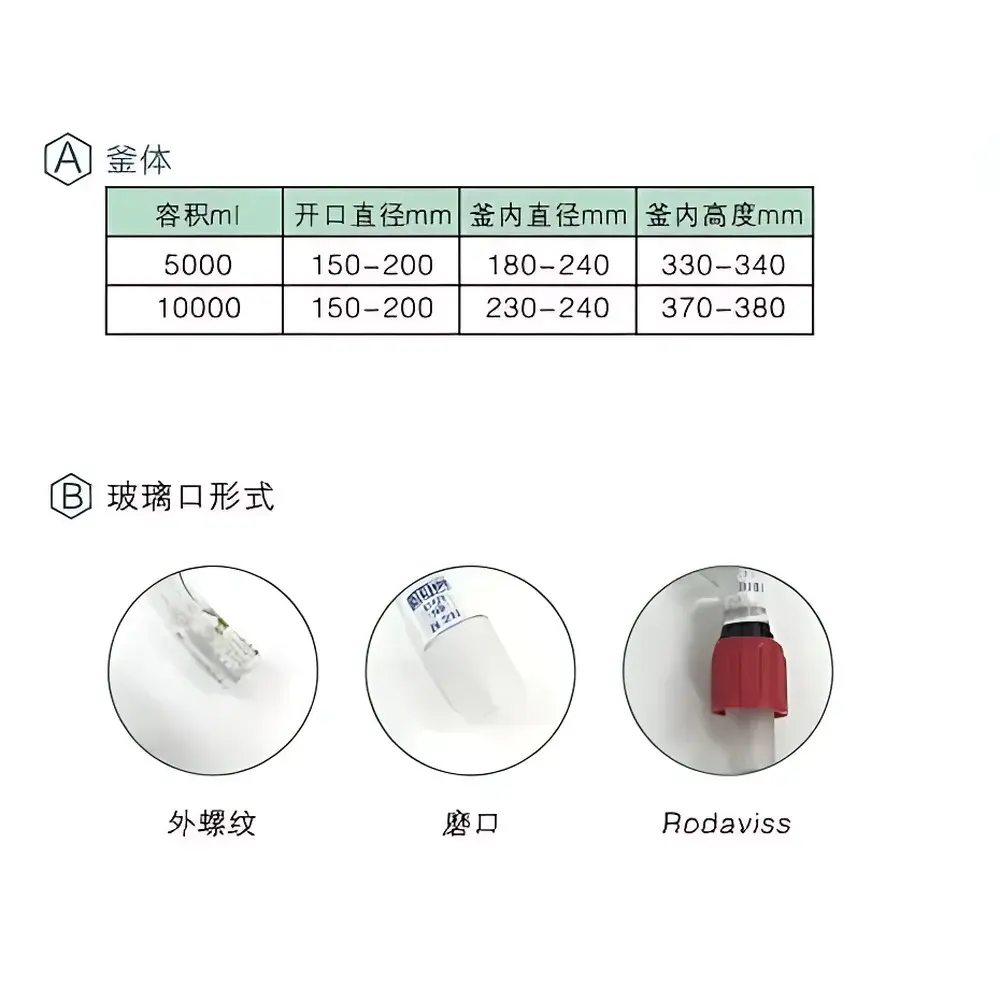
| Volume Range | 100 mL–10 L (graduated) |
| Construction Material | Borosilicate Glass 3.3 (DIN ISO 3585) |
| Operating Pressure | Low-pressure (≤0.5 bar gauge) |
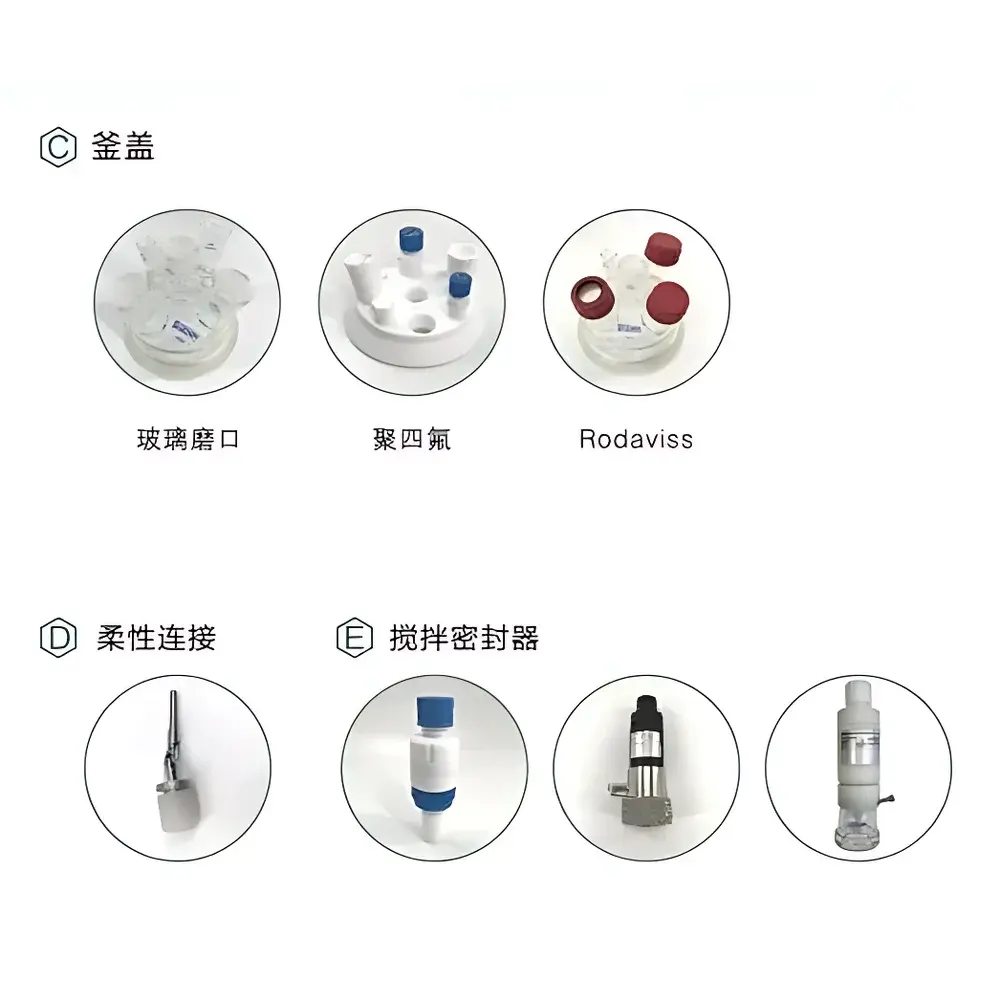
| Lid Ports | 4–6 standard ground-glass joints with Rodaviss red locking nuts |
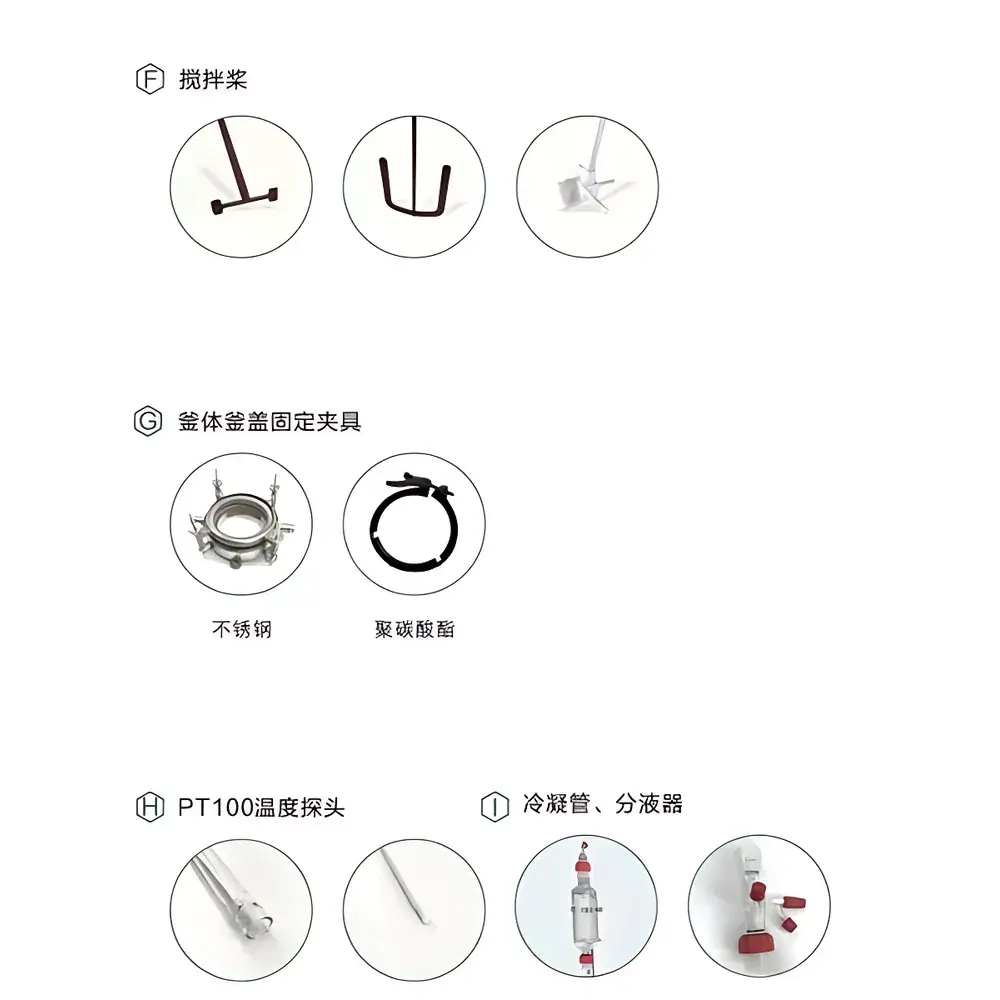
| Stirrer Types | Reverse, Anchor, Propeller, and custom configurations |
| Stirrer Shaft Materials | Glass, SS316L, or PTFE-coated |
| Mounting Options | Three-clamp, Hinged, or POM flexible coupling |
| Temperature Control Interface | Compatible with external heating/cooling circulators (e.g., LAUDA) |
| Support Frame | Benchtop or freestanding vertical stand |
| Compliance | Designed per DIN 12575, DIN EN ISO 1773, and VDI 2263 guidelines for laboratory glass apparatus |
Overview
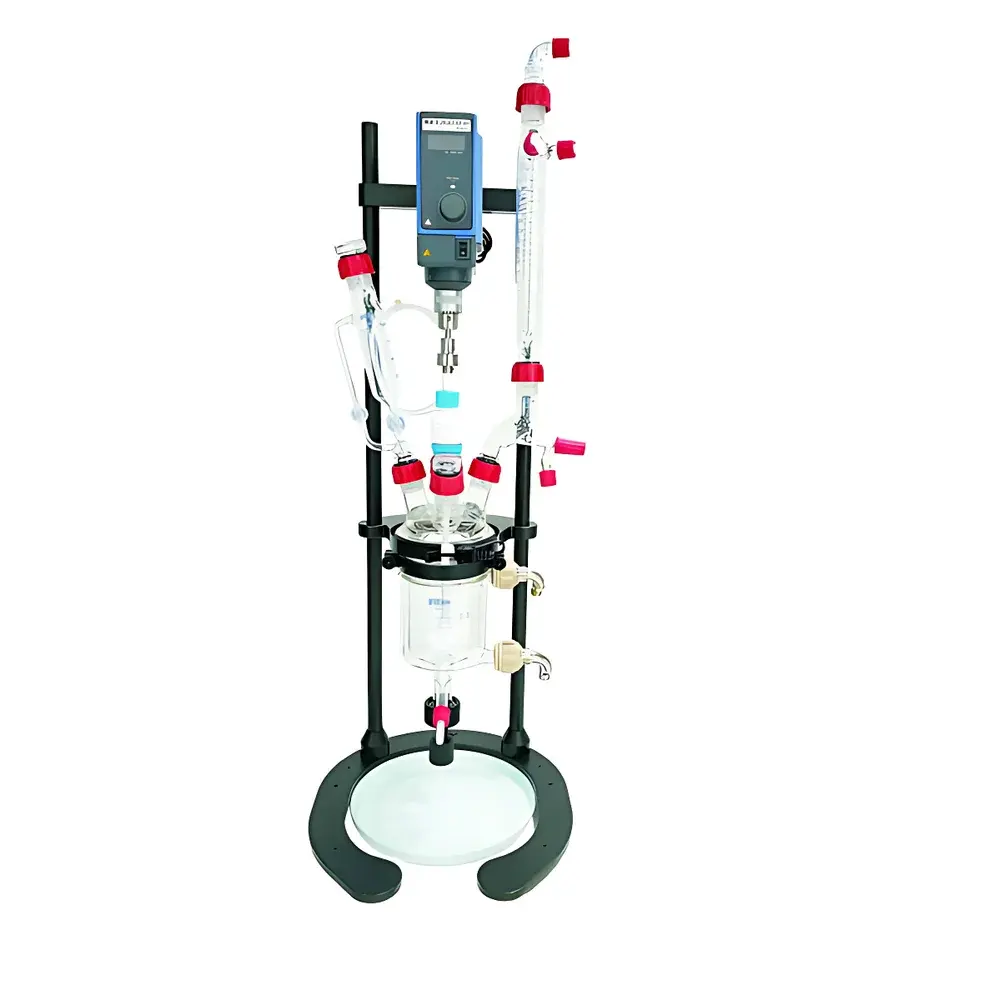
The DIEHM Lab-Scale Glass Reactor (DN60–DN150) is a modular, low-pressure reaction system engineered for precision synthesis, process development, and small-batch chemical transformation under controlled atmospheric and thermal conditions. Constructed entirely from high-purity borosilicate glass 3.3 (compliant with DIN ISO 3585), the reactor enables real-time visual monitoring of reaction progress, phase separation, crystallization, and gas evolution without compromising chemical inertness. Its design adheres to fundamental principles of batch reaction engineering—balancing mass transfer, heat exchange, and mixing efficiency within geometrically constrained volumes (100 mL–10 L). The reactor operates safely at ambient to moderate elevated temperatures (–20 °C to +200 °C, dependent on external thermal control unit) and pressures up to 0.5 bar gauge, making it suitable for applications including solvent reflux, vacuum-assisted distillation, inert-atmosphere reactions (N₂/Ar purging), and mild exothermic processes.
Key Features
- Graduated borosilicate glass vessel with etched volume markings (±2% accuracy per DIN 12575) for precise volumetric dosing and reaction scaling.
- Modular lid assembly with 4–6 interchangeable ISO-standard ground-glass ports (24/29, 29/32, 34/45), secured via Rodaviss red-thread locking nuts for leak-tight, repeatable sealing under low-pressure operation.
- Interchangeable impeller systems—including reverse, anchor, and propeller geometries—optimized for viscosity ranges from 10,000 mPa·s (slurries, pastes); shaft materials include chemically resistant glass, electropolished SS316L, or PTFE-sheathed variants.
- Flexible mounting architecture: three-clamp universal support, hinged lid for rapid access, or POM-based flexible coupling to dampen mechanical resonance during high-speed agitation.
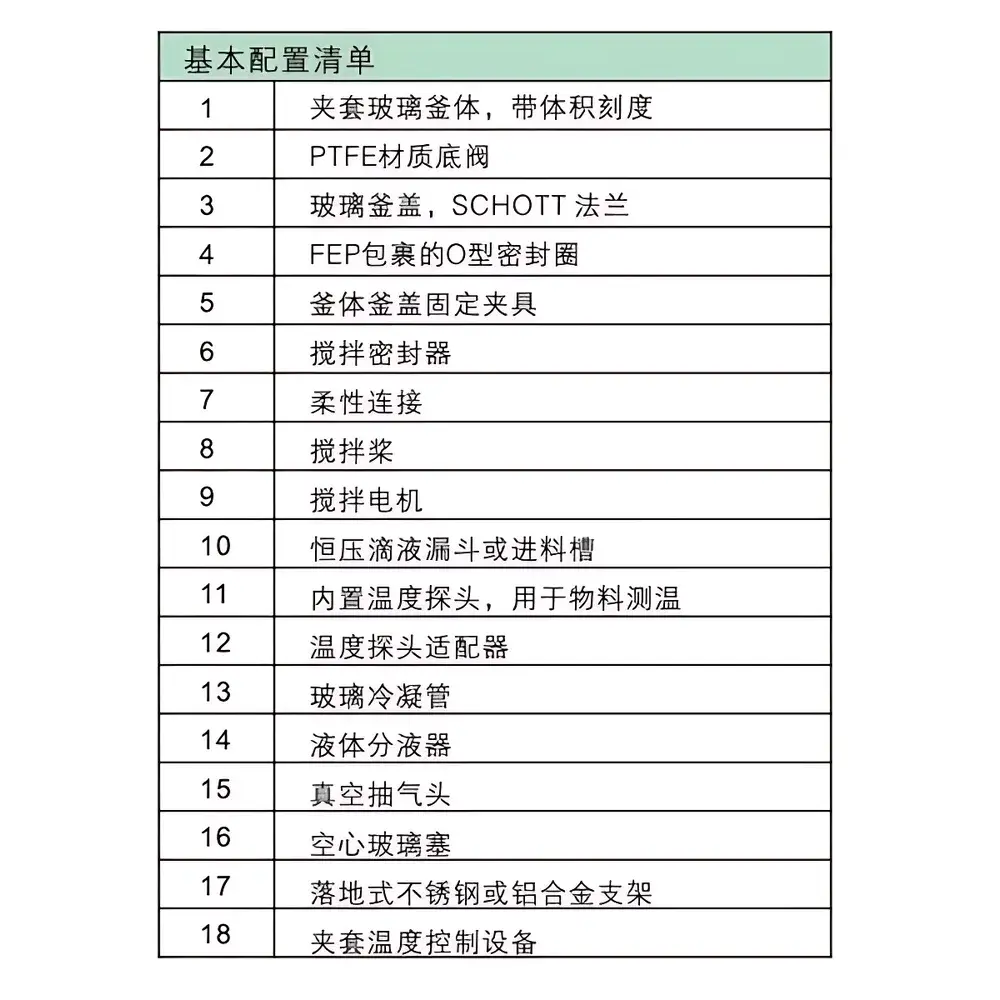
- Direct integration capability with external temperature control units (e.g., LAUDA refrigerated/heating circulators) via jacketed or double-wall configurations; optional vapor condenser, separatory funnel, and dropping funnel kits available as accessories.
- Compliance-ready mechanical design supporting GLP-aligned documentation: all glass components traceable via batch-specific DIN certification; no adhesives or organic seals in primary wetted path.
Sample Compatibility & Compliance
The reactor exhibits broad chemical compatibility with organic solvents (e.g., THF, toluene, DMF), aqueous acids/bases (pH 1–13, short-term), and halogenated compounds—limited only by thermal and pressure constraints of borosilicate glass 3.3. It is not intended for use with hydrofluoric acid, hot concentrated phosphoric acid, or alkali metals. Mechanical integrity conforms to DIN EN ISO 1773 (glass apparatus safety classification) and VDI 2263 (design rules for laboratory-scale glass reactors). All standard configurations meet CE marking requirements for laboratory equipment (2014/30/EU EMC Directive and 2014/35/EU Low Voltage Directive). When operated with validated temperature controllers and documented SOPs, the system supports audit readiness for ISO/IEC 17025, USP , and FDA 21 CFR Part 11–compliant data workflows (when paired with compliant acquisition software).
Software & Data Management
As a hardware platform, the DIEHM glass reactor does not embed proprietary firmware or onboard controllers. Instead, it interfaces seamlessly with third-party instrumentation ecosystems: analog/digital outputs from external temperature circulators, pressure transducers, and digital stirrer drives can be logged via SCADA-compatible DAQ systems (e.g., LabVIEW, MATLAB Data Acquisition Toolbox, or Delta Tau PMAC). Optional RS485 or 0–10 V analog interfaces enable closed-loop setpoint synchronization across heating, stirring, and cooling subsystems. Audit-trail functionality—including user login, parameter change logs, and timestamped event records—is implemented at the supervisory software layer, satisfying ALCOA+ data integrity criteria when deployed in regulated environments.
Applications
- Synthesis of fine chemicals, pharmaceutical intermediates, and specialty polymers under reflux or reduced pressure.
- Kinetic studies requiring visual observation of nucleation, precipitation, or color change during reaction progression.
- Process optimization trials for scale-up to pilot-plant reactors (e.g., correlating mixing energy input vs. particle size distribution).
- Distillation and fractional separation of low-boiling azeotropes using integrated condensers and receiver flasks.
- Development of catalyst slurries and heterogeneous catalytic reactions with real-time gas evolution monitoring.
- Teaching laboratories for unit operations courses covering mass/heat transfer, reaction kinetics, and safety protocols in glass apparatus handling.
FAQ
What is the maximum allowable operating temperature for the glass vessel?
The borosilicate glass 3.3 body is rated for continuous service up to +200 °C; however, safe upper limits depend on thermal gradient control and mechanical loading—consult DIN 12575 derating curves for sustained operation above 150 °C.
Can the reactor be used under vacuum for solvent removal?
Yes; it is routinely employed for rotary-evaporation–level vacuum distillations (down to 10 mbar absolute) when fitted with appropriate cold traps and vacuum-rated ground-glass joints.
Is custom port configuration or non-standard impeller geometry available?
DIEHM offers OEM engineering support for application-specific modifications, including drilled lids, side-arm adaptations, and CFD-validated impeller designs—subject to minimum order quantities and lead-time validation.
Does the system comply with explosion-proof requirements?
No intrinsic explosion protection is built-in; for flammable solvent handling, users must implement external ATEX-compliant enclosures, purge systems, or inert-gas blanketing per IEC 60079-10-1.
What documentation accompanies each unit?
Each reactor ships with a DIN-certified material test report (MTR), dimensional drawing package, assembly instructions, and conformity declaration per EU Machinery Directive 2006/42/EC.



