
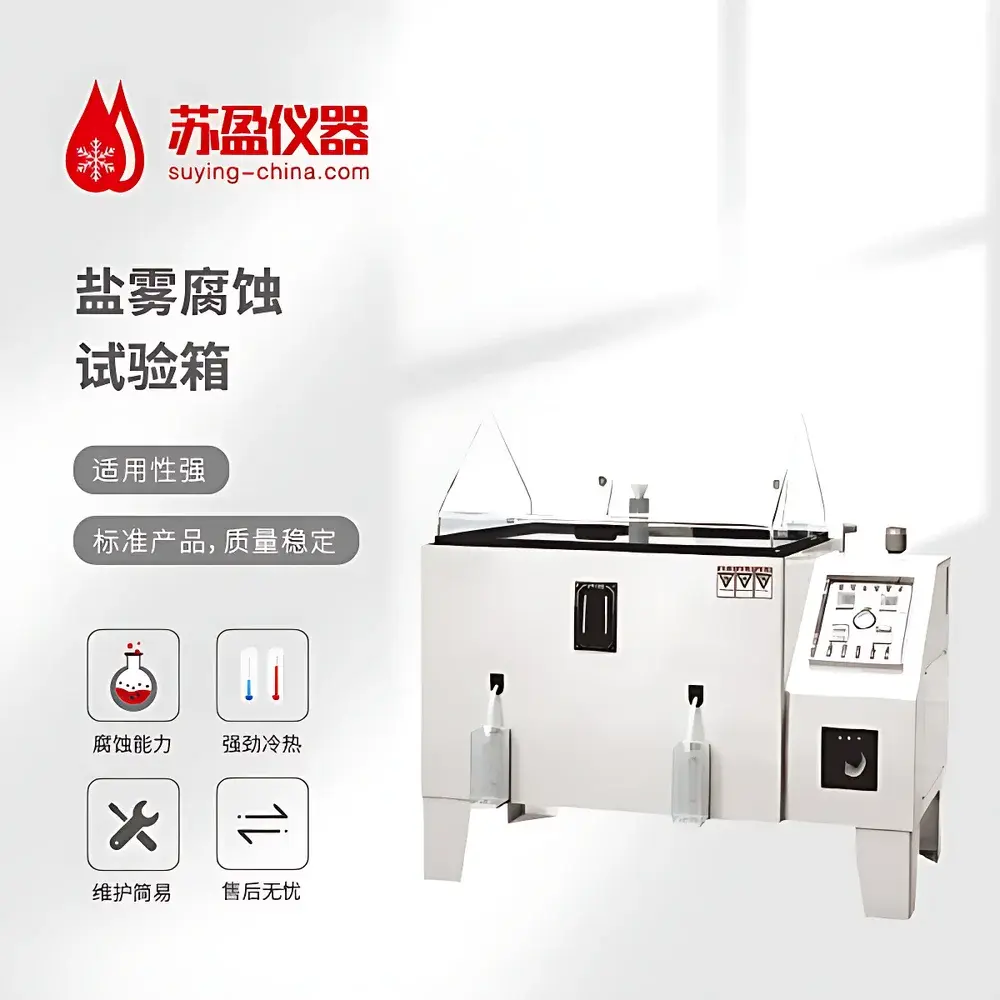
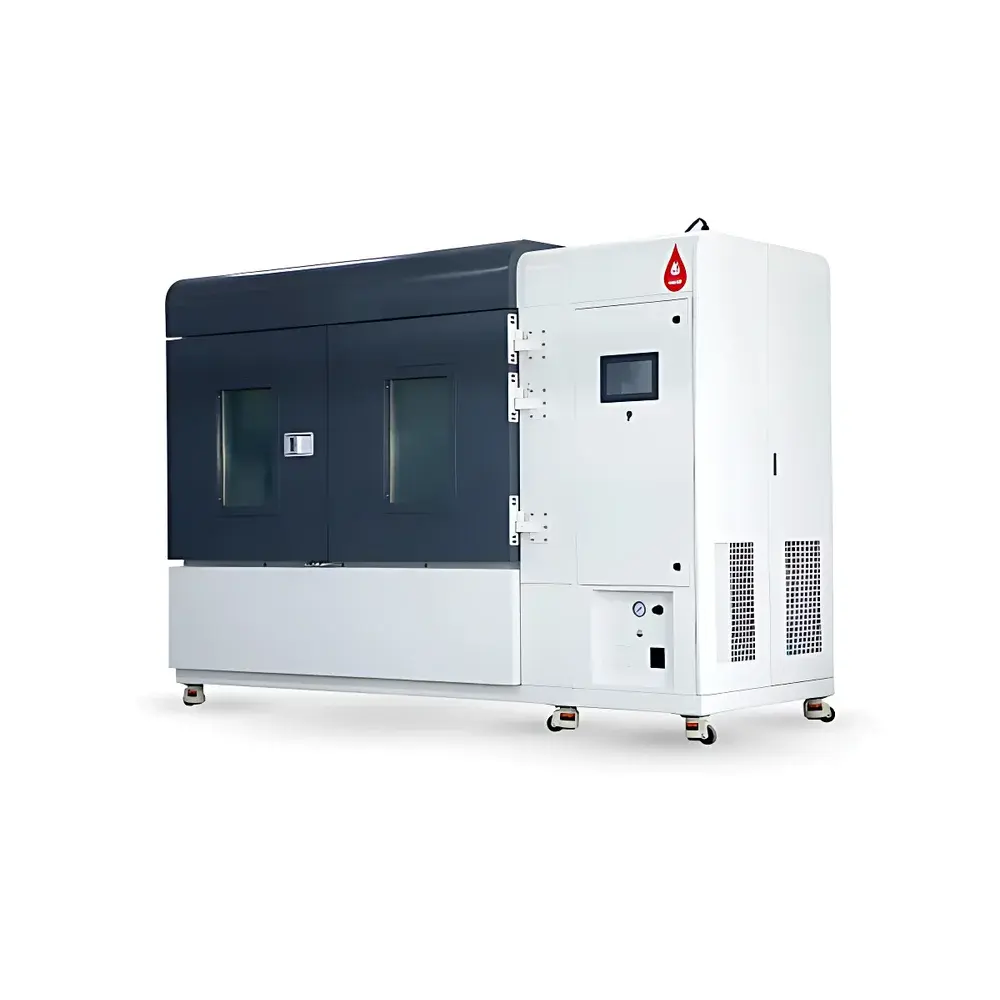
Suying SY-SSC Series Salt Spray Test Chamber
| Brand | Suying |
|---|---|
| Origin | Shanghai, China |
| Manufacturer Type | Manufacturer |
| Model | SY-SSC Series |
| Temperature Range | 5–55 °C |
| Compliance Standards | GB/T 2423.17, GB/T 10587, GB/T 5170.8, ASTM B117, ISO 9227, JIS Z2247, CNS 1401 |
Overview
The Suying SY-SSC Series Salt Spray Test Chamber is an engineered environmental test system designed for accelerated corrosion evaluation of metallic substrates, coated components, and surface-treated materials under controlled saline aerosol conditions. It operates on the principle of continuous or cyclic salt fog generation—using compressed air atomization of a standardized sodium chloride (NaCl) solution—to simulate aggressive coastal or industrial marine atmospheres. Unlike natural exposure testing—which may require months or years to yield measurable degradation—the SY-SSC chamber enables reproducible, time-compressed assessment of corrosion resistance by elevating chloride ion concentration up to 50× that of typical ambient environments. This facilitates rapid comparative analysis of protective coatings, electroplated layers, anodized finishes, and rust-inhibiting oils across industries including automotive, electronics, aerospace, and hardware manufacturing.
Key Features
- Corrosion-resistant double-wall construction: Inner chamber and outer casing fabricated from high-grade PVC-coated steel or optional PP (polypropylene), ensuring long-term structural integrity and zero leakage under sustained salt fog exposure.
- Tapered roof design (110–112° apex angle): Prevents condensate accumulation and subsequent dripping onto test specimens—critical for eliminating localized wetting artifacts and maintaining uniform corrosion patterns.
- Tower-type spray system with quartz glass nozzles: Delivers fine, gravity-settled mist distribution across the full test volume; nozzle geometry and airflow dynamics comply with ASTM B117 nozzle calibration requirements.
- Double-jacketed air-heated chamber: Enables rapid thermal stabilization and ±0.5 °C uniformity across the working volume (5–55 °C operating range), verified per GB/T 5170.8 temperature uniformity protocols.
- Integrated water-seal lid mechanism: Eliminates salt fog leakage while maintaining atmospheric pressure equilibrium—essential for consistent test repeatability and laboratory safety compliance.
- Dual PID digital controllers with auto-tuning: Independent regulation of chamber temperature and saturation chamber (pre-heater) temperature ensures precise control of fog generation thermodynamics and droplet size distribution.
- Embedded over-temperature protection circuitry: Redundant thermal cutoff at both controller and line-board levels meets IEC 61000-4-5 surge immunity and EN 60204-1 safety standards.
Sample Compatibility & Compliance
The SY-SSC accommodates flat panels, fasteners, PCB assemblies, stamped metal parts, and small subassemblies up to 600 mm × 450 mm × 400 mm (W × D × H). Fixtures are non-metallic (PVC or rigid acrylic) to prevent galvanic interference. The system is fully compliant with internationally recognized salt spray test methodologies—including ASTM B117 (Neutral Salt Spray), ISO 9227 (NSS, AASS, CASS variants), JIS Z2247, and GB/T 2423.17—supporting both qualification and routine quality assurance testing. Calibration documentation aligns with ISO/IEC 17025 traceable procedures, and chamber validation reports include temperature uniformity mapping, fog deposition rate verification (per ASTM D1654), and pH/conductivity monitoring of collected solution.
Software & Data Management
While the base SY-SSC model employs standalone digital controllers, optional RS485/Modbus RTU interface enables integration into centralized lab management systems. Logged parameters—including elapsed test time, cumulative spray duration, chamber temperature, and saturation chamber temperature—are timestamped and exportable as CSV files. For regulated environments (e.g., automotive Tier-1 suppliers or medical device component QA labs), optional firmware upgrade supports 21 CFR Part 11–compliant electronic signatures, audit trails, and user-level access control—fully aligned with GLP and GMP documentation requirements.
Applications
- Evaluation of zinc, nickel, chromium, and tin plating adhesion and porosity on ferrous and non-ferrous substrates.
- Comparative lifetime screening of organic coatings (epoxy, polyurethane, acrylic) applied via spray, dip, or electrodeposition.
- Validation of passivation efficacy on stainless steel components per ASTM A967.
- Corrosion performance benchmarking of aluminum alloys subjected to chromate or trivalent chromium conversion coatings.
- Pre-shipment conformance testing for connectors, switches, relays, and printed circuit board assemblies in automotive ECUs and infotainment modules.
- Process capability studies during electroplating line commissioning or coating formulation development.
FAQ
What standards does the SY-SSC chamber support out-of-the-box?
It is factory-configured and validated for ASTM B117, ISO 9227 (NSS), GB/T 2423.17, and JIS Z2247. Optional firmware enables AASS and CASS modes.
Is fog deposition rate adjustable?
Yes—via calibrated air pressure regulation (0.7–1.0 bar) and pre-heater temperature tuning (35–47 °C), enabling compliance with specified collection rates of 1.0–2.0 mL/80 cm²/h.
Can the chamber operate continuously for 96+ hours?
Yes—designed for unattended operation with dual reservoirs (main solution tank + overflow recovery sump) and low-level alarm outputs.
Does it include calibration certificates?
Standard delivery includes a factory-issued temperature uniformity report and fog deposition verification sheet. NIST-traceable third-party calibration is available upon request.
What maintenance intervals are recommended?
Daily: Drain and clean the saturator chamber; weekly: Inspect nozzles for crystallization; quarterly: Replace humidifier wicks and verify pressure regulator accuracy.



