
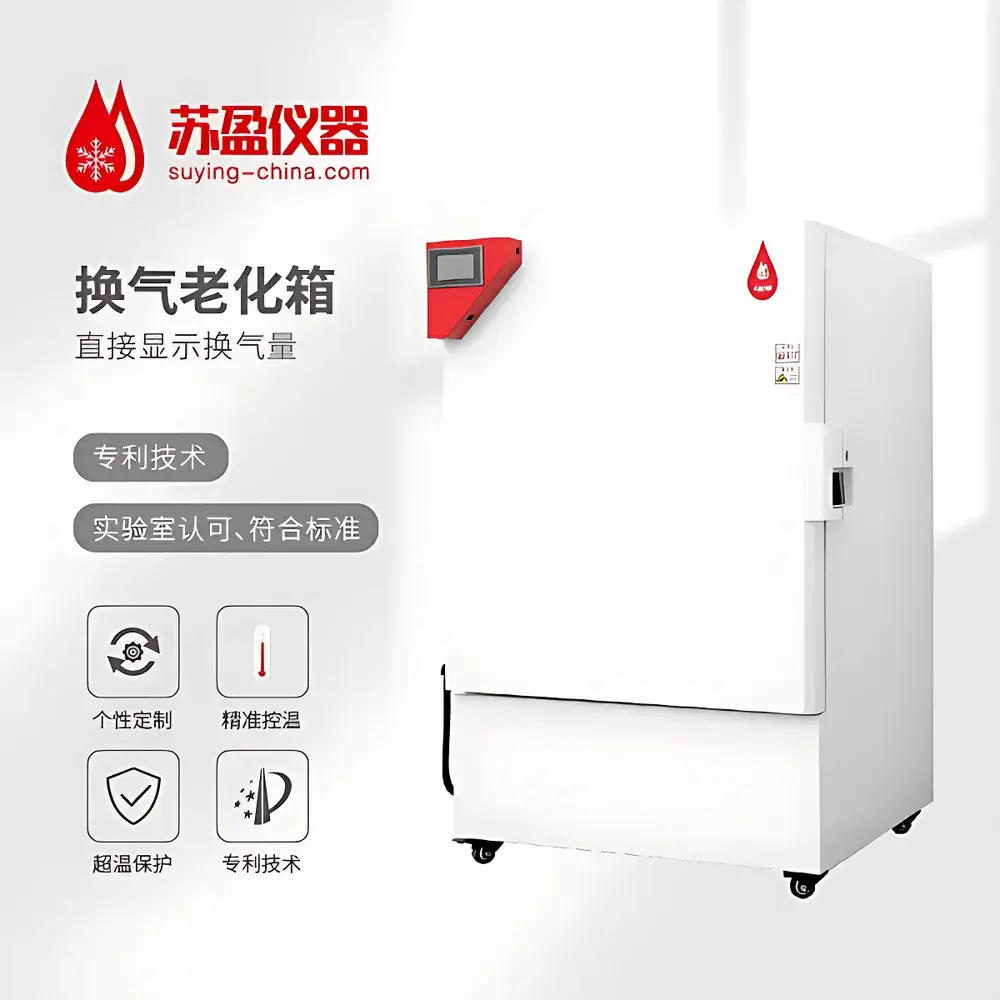
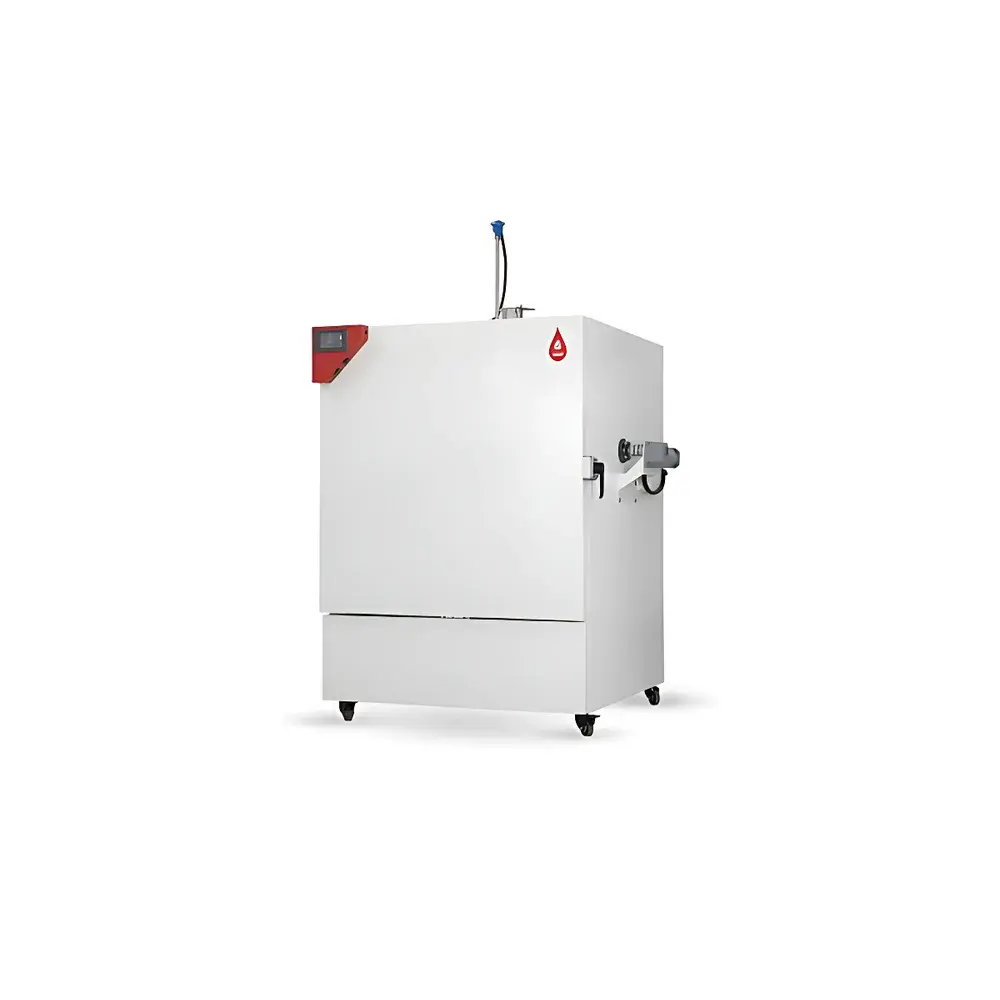
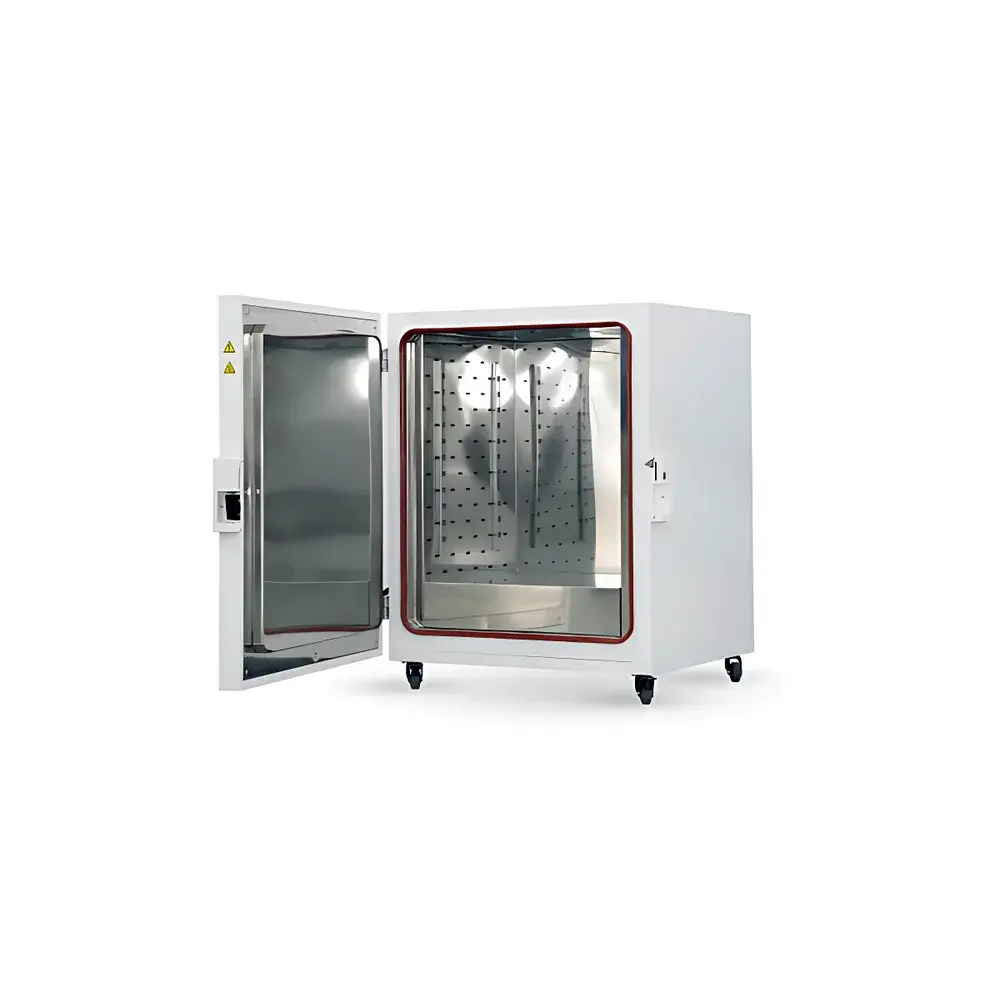
Suying PH-Series High-Temperature Aging Test Chamber
| Brand | Suying |
|---|---|
| Origin | Shanghai, China |
| Model Series | PH-100 / PH-250 / PH-500 / PH-1000 |
| Temperature Range | RT+10°C to 300°C |
| Max Operating Temperature | 300°C |
| Temperature Uniformity | ±2°C |
| Temperature Fluctuation | ±0.5°C |
| Temperature Deviation | ±2°C |
| Control Accuracy | ±0.1°C |
| Construction | Interior – AISI 304 stainless steel (TIG-welded) |
| Air Circulation | Dual-axis forced convection (horizontal + vertical) with adjustable multi-blade centrifugal fan |
| Controller | Microprocessor-based PID controller with over-temperature deviation protection and real-time digital display |
| Sealing | High-temperature silicone gasket (rated to 350°C) |
| Safety Compliance | Meets IEC 60068-2-2 (Test B: Dry Heat), GB/T 2423.2, and JIS C 60068-2-2 |
Overview
The Suying PH-Series High-Temperature Aging Test Chamber is an engineered environmental test system designed for accelerated thermal aging of materials and components under controlled, stable, and reproducible elevated temperature conditions. Based on the principle of convective heat transfer within a sealed, insulated chamber, it enables precise simulation of long-term thermal stress exposure—critical for evaluating material degradation, polymer cross-linking stability, electrical insulation performance, and component reliability. Unlike general-purpose ovens, this chamber integrates industrial-grade thermal management architecture—including dual-axis forced-air circulation, high-integrity stainless-steel construction, and microprocessor-driven PID control—to meet the stringent repeatability and traceability requirements of QC laboratories, R&D centers, and production line validation environments in automotive, electronics, aerospace, and medical device manufacturing.
Key Features
- Robust chamber construction: Interior fabricated from fully welded AISI 304 stainless steel; exterior finished with corrosion-resistant powder-coated carbon steel.
- Precision temperature control: Digital PID controller with ±0.1°C setpoint accuracy, real-time monitoring, and programmable ramp/soak profiles.
- Uniform thermal distribution: Horizontal and vertical forced-air circulation system ensures ±2°C temperature uniformity across the working volume per IEC 60068-2-2 Annex A.
- Over-temperature safety protection: Independent mechanical over-temperature cut-off circuit with audible/visual alarm and automatic power disconnection.
- High-reliability electro-mechanical components: Fuji-brand miniature relays (28 VDC/220 VAC rated, 10⁵ operations life) and Schneider TeSys AC contactors (20 million mechanical cycles, TH-rated for humid environments).
- Long-life sealing: High-purity silicone gasket certified for continuous operation up to 350°C, minimizing leakage and maintaining chamber integrity over extended test durations.
Sample Compatibility & Compliance
The PH-Series accommodates a broad range of sample types—including PCB assemblies, semiconductor packages, elastomeric seals, cable insulation, adhesives, and molded plastic housings—within standardized working volumes (PH-100: 0.1 m³ to PH-1000: 1.0 m³). It supports compliance-driven testing per ASTM D3045 (Standard Practice for Heat Aging of Plastics), IEC 60749-22 (Integrated Circuit Reliability Testing), MIL-STD-883 Method 1008 (Temperature Cycling and Life Testing), and ISO 11358 (Plastics — Thermogravimetry). The chamber’s design adheres to GLP-relevant instrumentation requirements, including audit-trail-capable data logging (when integrated with optional external recorder), calibration traceability to NIST or CNAS-accredited standards, and documented verification of temperature uniformity and stability per ISO/IEC 17025 clause 5.4.3.
Software & Data Management
While the base configuration features a standalone microprocessor controller with local display and manual parameter entry, optional RS485/Modbus RTU or Ethernet interfaces enable integration into centralized laboratory information management systems (LIMS) or SCADA platforms. When paired with compliant third-party software (e.g., WinQMS, LabVIEW-based DAQ modules), the system supports automated test sequencing, time-stamped temperature logging at user-defined intervals (1–60 s), real-time deviation alerts, and export of CSV/Excel-formatted reports suitable for FDA 21 CFR Part 11-compliant environments—provided electronic signatures, audit trails, and role-based access controls are implemented at the host software layer.
Applications
- Electronics reliability assessment: Burn-in testing of capacitors, transformers, and power modules per JEDEC JESD22-A108.
- Automotive material qualification: Thermal endurance evaluation of interior trim, wiring harnesses, and under-hood components per SAE J2238 and GMW15635.
- Pharmaceutical packaging stability: Accelerated aging of blister foil, HDPE containers, and adhesive labels under ICH Q1A(R2) guidelines.
- Polymer and elastomer R&D: Oxidative degradation kinetics studies, vulcanization optimization, and shelf-life modeling using Arrhenius extrapolation.
- Quality assurance in manufacturing: Final verification of curing profiles for epoxy encapsulants, conformal coatings, and solder paste reflow processes.
FAQ
What is the maximum allowable operating temperature for the PH-Series chambers?
The PH-Series is rated for continuous operation up to 300°C, with standard models configured for RT+10°C to 250°C or 300°C ranges depending on insulation grade and heating element specification.
Does the chamber support programmable temperature ramps and holds?
Yes—the microprocessor PID controller supports up to 99 segments of programmable ramp-and-soak profiles, with ramp rates adjustable between 0.1°C/min and 10°C/min.
Is calibration documentation provided with shipment?
Each unit ships with a factory calibration certificate covering temperature uniformity, fluctuation, and deviation verification at three load points (center, upper corner, lower corner) per ISO/IEC 17025 methodology.
Can the chamber be validated for GMP or ISO 13485 environments?
Yes—when equipped with optional data logging and operated under documented IQ/OQ protocols, the system meets foundational requirements for equipment qualification in regulated medical device and pharmaceutical settings.
What maintenance intervals are recommended for long-term reliability?
Fan bearings and door gaskets should be inspected quarterly; heating elements and relay contacts require annual functional verification; full recalibration is recommended every 12 months or after 2,000 operational hours.



