
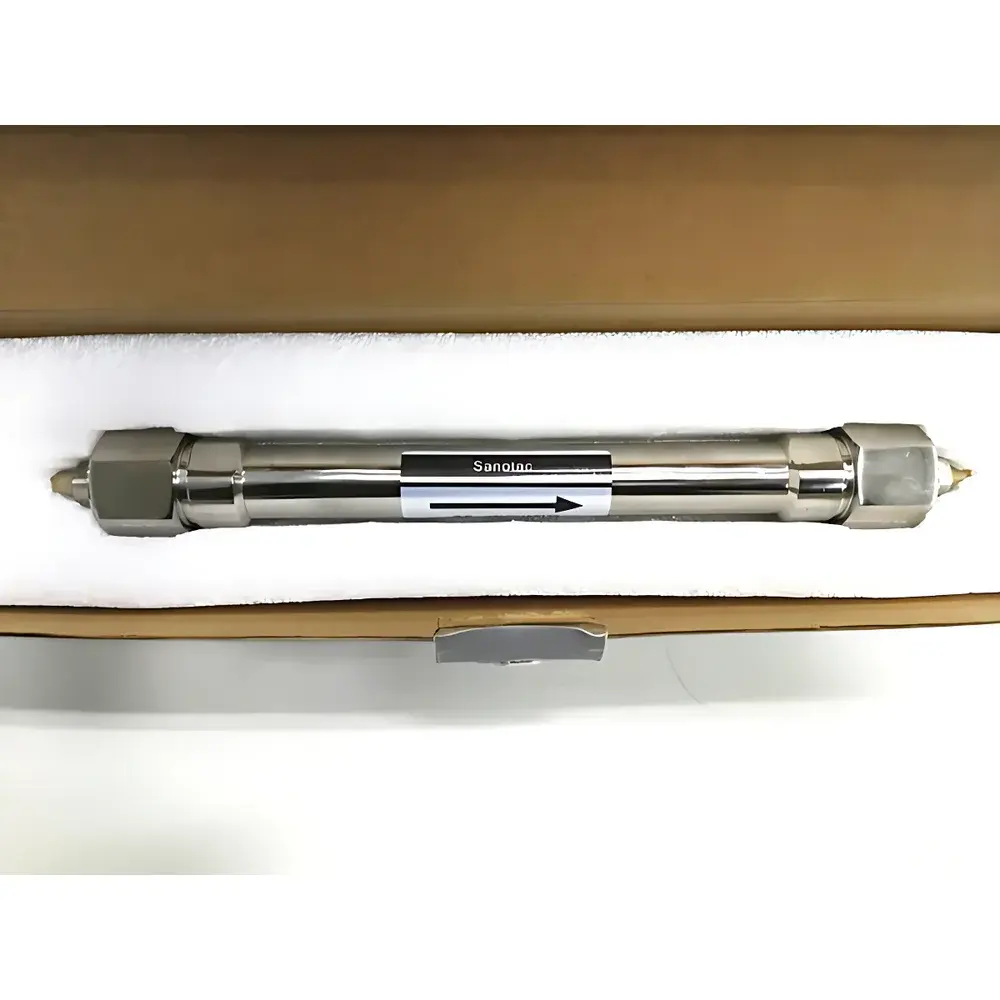
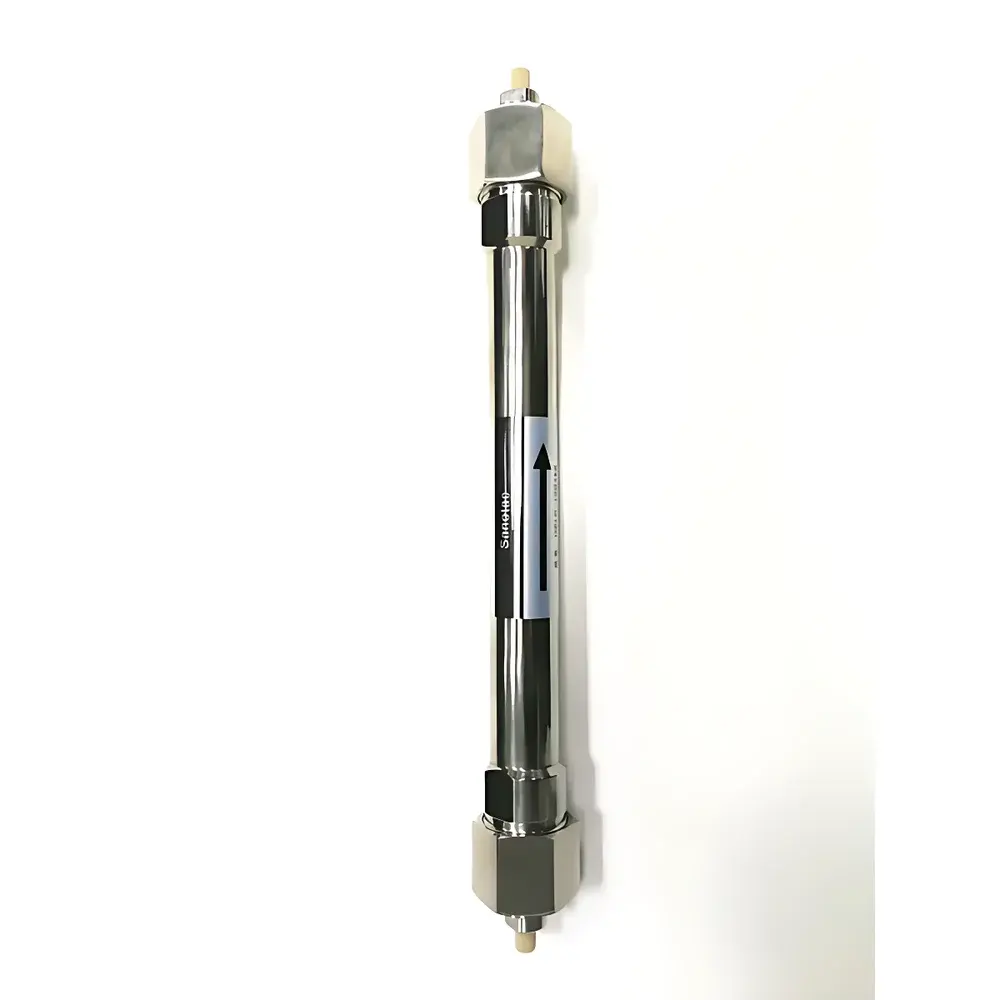
Sanotac HPLC-10C18E Preparative Liquid Chromatography Column (Prepacked)
| Brand | Sanotac |
|---|---|
| Origin | Shanghai, China |
| Manufacturer Type | Direct Manufacturer |
| Origin Category | Domestic (China) |
| Model | HPLC-10C18E |
| Application Level | Laboratory Grade |
| Instrument Type | High-Pressure Preparative LC System |
| Flow Rate Range | 0.01–100.00 mL/min |
| Flow Accuracy | ±1% |
| Flow Precision (RSD) | ≤0.5% |
| Maximum Pressure Rating | 10 MPa |
| Wavelength Range | ±1 nm |
| Wavelength Repeatability | 0.2 nm |
| Baseline Noise | ±0.5×10⁻⁵ AU (254 nm, TC = 1 s) |
| Data Acquisition Frequency | 10 Hz |
Overview
The Sanotac HPLC-10C18E is a prepacked preparative liquid chromatography column engineered for high-capacity, high-resolution fractionation of complex mixtures in laboratory-scale purification workflows. Designed for integration into high-pressure preparative HPLC systems, this column utilizes fully endcapped C18 silica-based stationary phase with 10 µm particle size and optimized pore structure (typically 120 Å), enabling robust separation of small molecules, natural product isolates, synthetic intermediates, and early-stage pharmaceutical compounds. Its construction adheres to ISO 9001-certified manufacturing protocols, ensuring batch-to-batch reproducibility and mechanical stability under sustained operation at up to 10 MPa. Unlike analytical columns, the HPLC-10C18E is dimensionally scaled—available in internal diameters from 10 mm to 50 mm—to accommodate loading capacities ranging from milligram to multi-gram quantities while maintaining linear velocity control and minimizing band broadening.
Key Features
- Prepacked with premium-grade, imported C18 bonded silica (10 µm, 120 Å), fully endcapped for enhanced pH stability and reduced silanol activity
- Optimized column hardware: 316L stainless steel body with zero-dead-volume fittings and precision-machined frits (2 µm porosity)
- Validated pressure tolerance up to 10 MPa, compatible with standard preparative HPLC pump modules meeting ASTM D7212 and USP <621> system suitability requirements
- Wide operational pH range (pH 2–8), supporting method transfer from analytical to preparative scale without significant retention shift
- High dynamic binding capacity (>15 mg/cm² for typical small molecules), enabling efficient throughput in repeated loading cycles
- Consistent column-to-column reproducibility (k’ RSD < 2.5%, N ≥ 5 columns per lot), certified via factory QC chromatograms using caffeine/acetophenone test mixture
Sample Compatibility & Compliance
The HPLC-10C18E supports diverse sample matrices including organic-soluble APIs, polar glycosides, moderately hydrophobic peptides, and thermally labile natural extracts. It is routinely employed in workflows compliant with ICH Q5A (impurity profiling), USP <211> (chromatographic purification validation), and GLP-regulated isolation studies. Column cleaning and regeneration protocols follow ISO 17025-aligned SOPs, with documented compatibility with common solvents (acetonitrile, methanol, water, 0.1% TFA, 10 mM ammonium acetate). All columns undergo leak testing at 1.5× maximum rated pressure and are supplied with full Certificate of Conformance listing lot-specific performance data, packing density, and backpressure profile at 5 mL/min in 80:20 ACN:H₂O.
Software & Data Management
While the column itself is hardware-only, its performance is fully traceable within modern preparative LC software environments—including Waters FractionLynx, Shimadzu LabSolutions Prep, and third-party platforms such as Chromeleon CDS. Retention time stability, peak symmetry (Asymmetry factor 0.9–1.3), and resolution (Rs ≥ 1.5 for critical pairs) are automatically logged during system suitability tests. Audit trails comply with FDA 21 CFR Part 11 requirements when deployed on validated instrument control systems. Raw UV trace data (254 nm, 10 Hz acquisition) is stored in open-format .csv or .cdf files, facilitating post-run integration with chemometric tools (e.g., MATLAB, Python SciPy) for peak tracking and fraction decision logic.
Applications
- Purification of synthetic organic compounds prior to NMR characterization or biological assay
- Isolation of active constituents from plant extracts under cGMP-aligned pilot-scale processes
- Desalting and buffer exchange of peptide fractions following solid-phase synthesis
- Removal of residual catalysts (e.g., Pd, Ru) from cross-coupling reaction mixtures
- Chiral resolution support when used in conjunction with chiral guard columns or as a polishing step post-chiral SFC
- Method development bridge: analytical methods (e.g., USP monographs) are directly scalable to HPLC-10C18E using constant linear velocity and mass-overload principles
FAQ
What is the recommended maximum flow rate for a 30 mm i.d. HPLC-10C18E column operating at 8 MPa?
For optimal efficiency and minimal axial dispersion, the upper limit is 35 mL/min—calculated based on linear velocity of 3–5 mm/s and column void volume. Exceeding this may compromise resolution and increase backpressure variability.
Can this column be used with 100% aqueous mobile phases long-term?
Yes, but only with pH-stabilized buffers (e.g., 50 mM phosphate, pH 2.5–7.0); prolonged exposure to pure water below pH 3 or above pH 8 risks silica dissolution and phase collapse.
Is column regeneration possible after exposure to proteinaceous samples?
Regeneration is feasible using gradient washes (e.g., 0–100% isopropanol over 15 min, then 100% ACN), followed by equilibration. However, irreversible fouling may occur above 10 mg/mL protein load; use of guard columns is strongly advised.
Does Sanotac provide column lifetime validation data under GMP conditions?
Yes—certified lifetime reports (≥200 injections, 500 h runtime) are available upon request for qualified customers, including accelerated aging studies per ICH Q1A(R2).





