
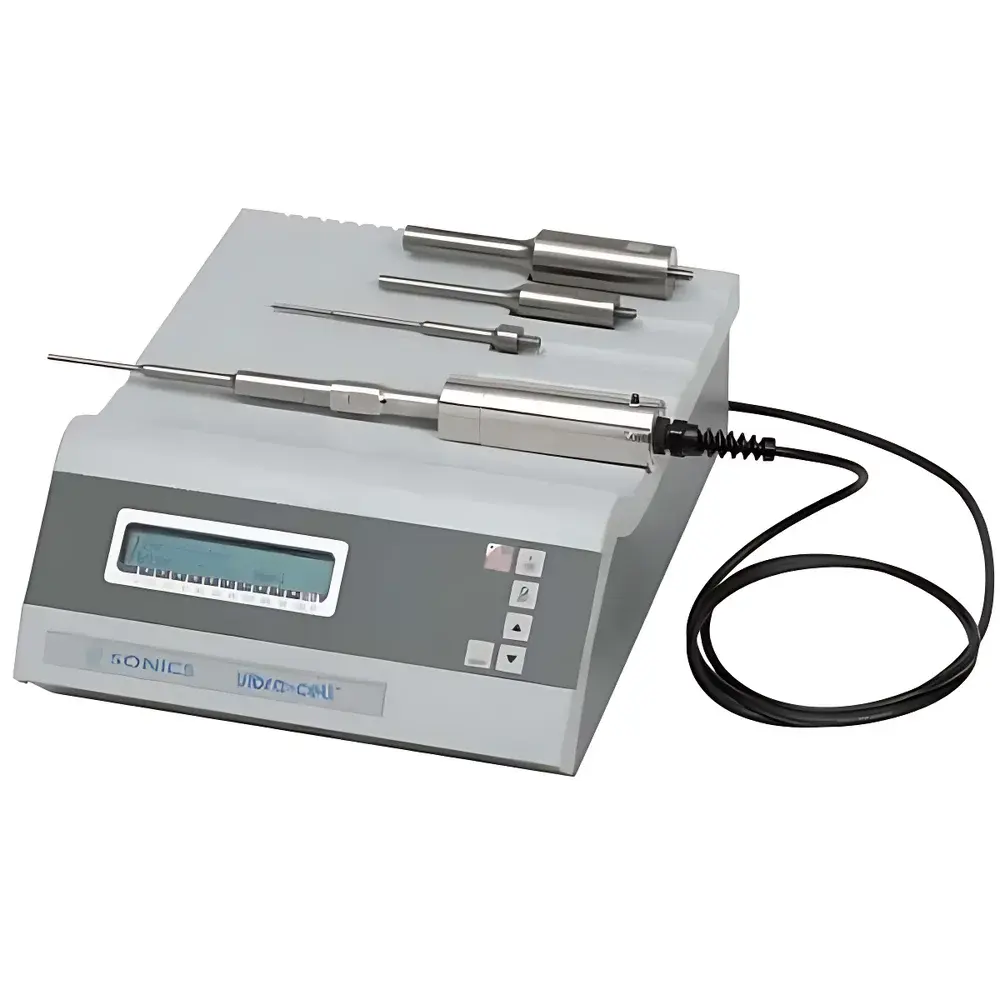
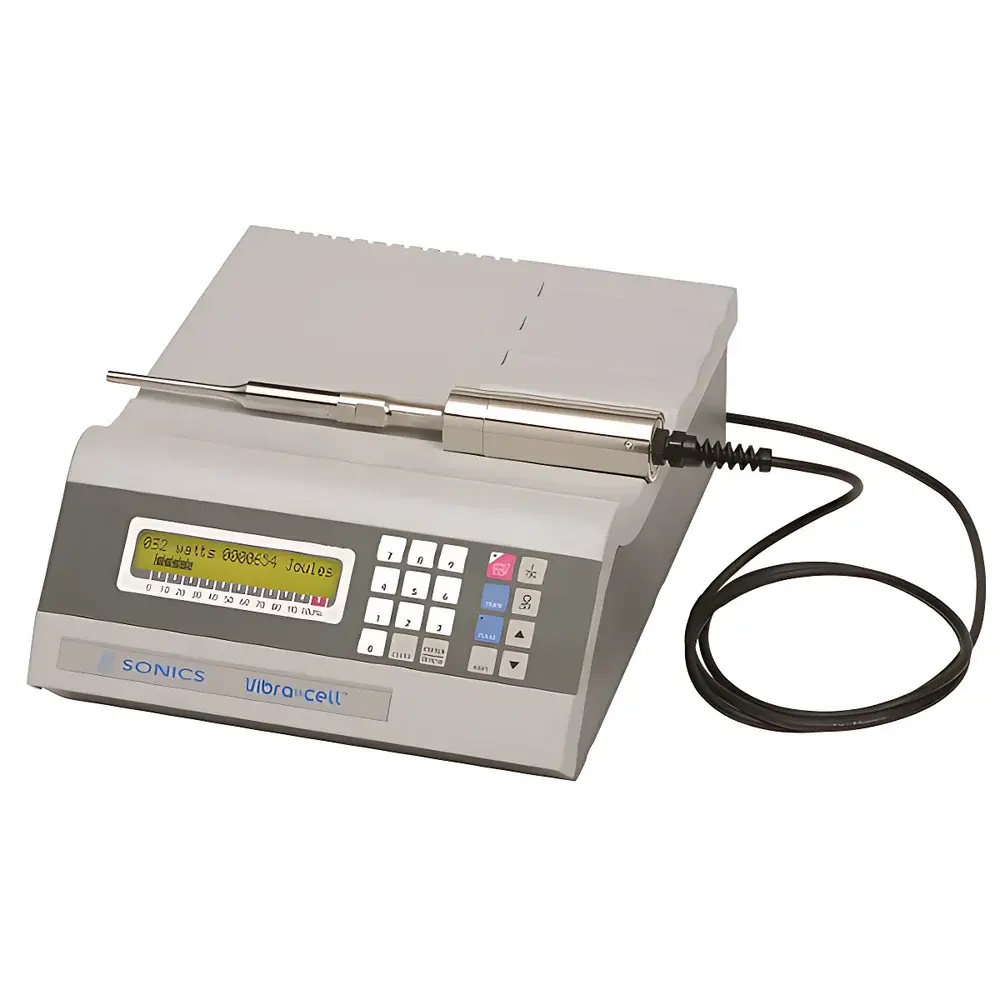
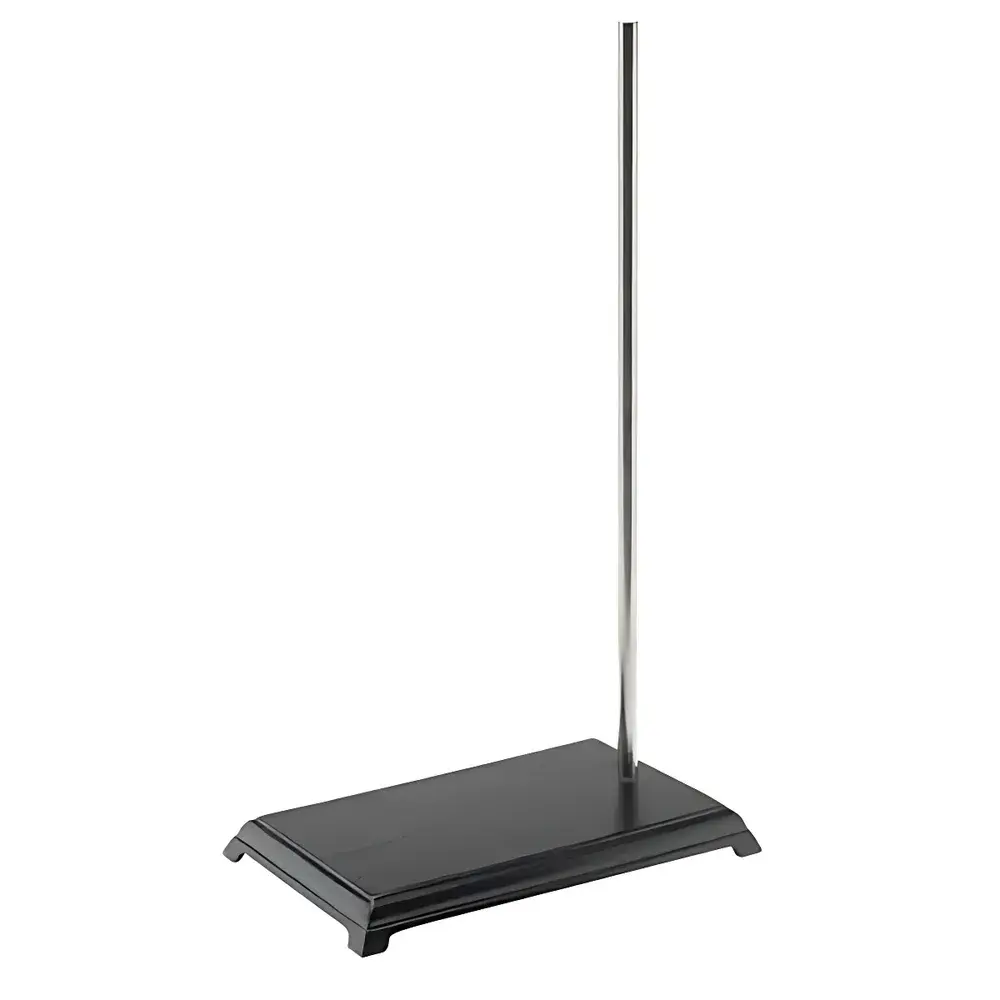
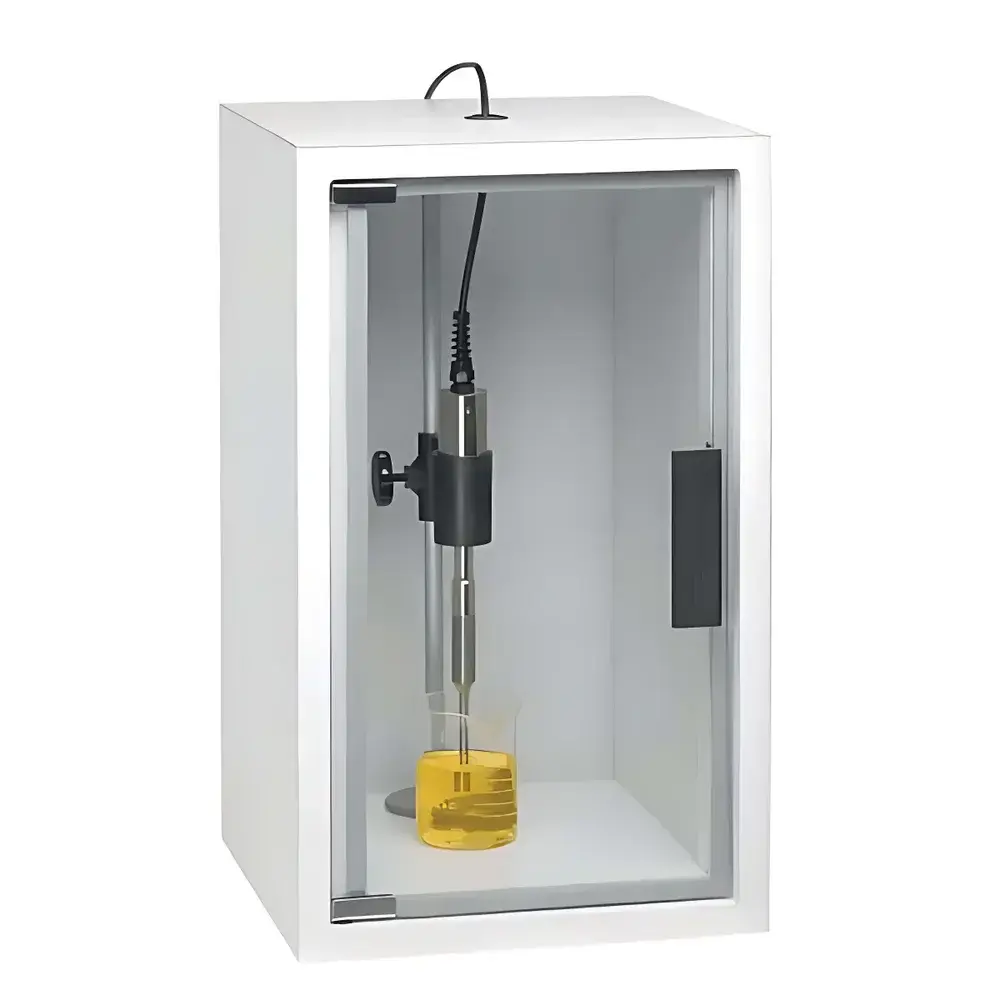
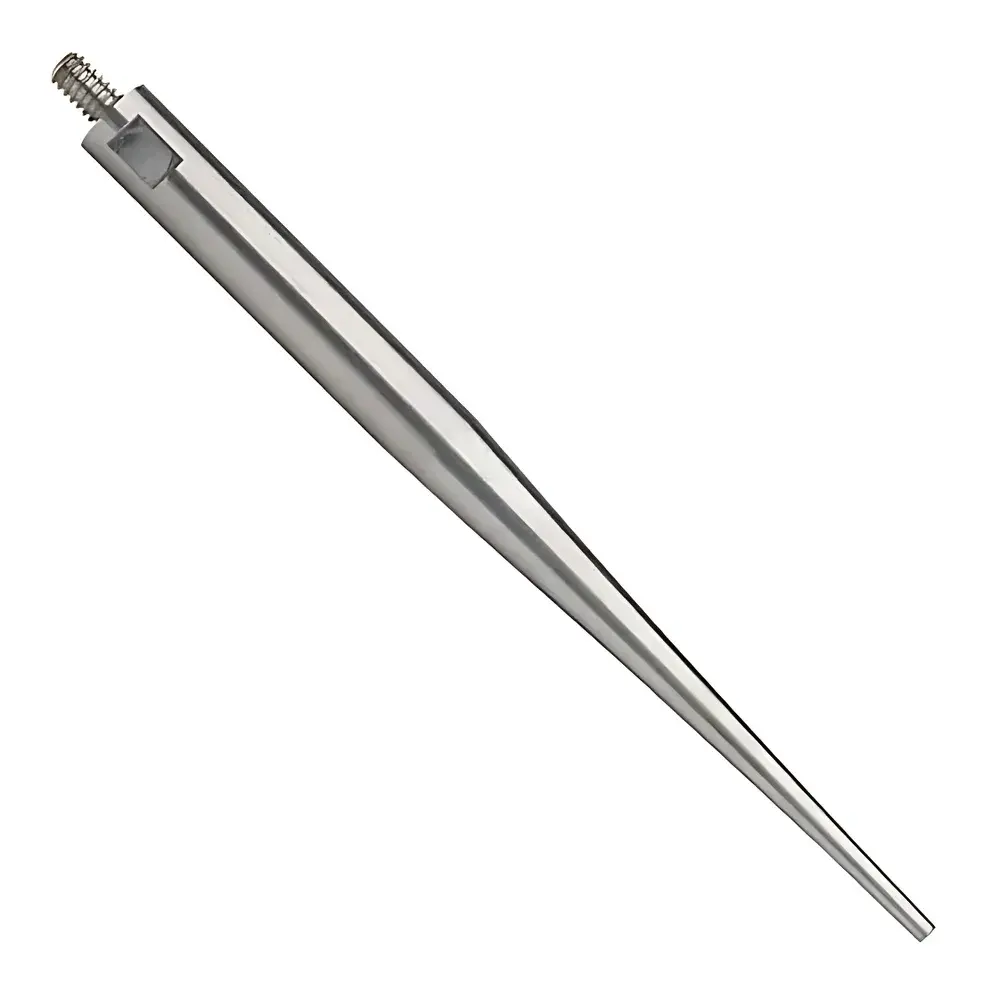
Cole-Parmer 04714-53 130W Ultrasonic Sonicator
| Brand | Cole-Parmer |
|---|---|
| Origin | USA |
| Model | 04714-53 |
| Output Power | 130 W |
| Frequency | 20 kHz |
| Sample Volume Range | 150 µL – 150 mL |
| Probe Material | Ti-6Al-4V Titanium Alloy |
| Amplitude Control | Variable, Auto-Compensated |
| Pulse Mode | Adjustable (0.1–10 s ON/OFF) |
| Timer Range | 1 s – 10 h |
| Display | 3-digit LCD wattmeter & real-time parameter screen |
| Compliance | ISO 9001:2000, CE |
Overview
The Cole-Parmer 04714-53 130W Ultrasonic Sonicator is a microprocessor-controlled laboratory sonicator engineered for precise, reproducible cell disruption, homogenization, emulsification, and particle size reduction via high-intensity ultrasonic cavitation. Operating at a fixed frequency of 20 kHz, the instrument utilizes piezoelectric transduction to convert electrical energy into mechanical vibration, which is amplified and transmitted through a replaceable titanium alloy probe (Ti-6Al-4V). Cavitation—generated by rapid formation and collapse of microbubbles in the liquid medium—produces localized shear forces exceeding 104 g, enabling efficient lysis of soft biological tissues, bacterial cells, yeast, and subcellular organelles without significant thermal degradation when used with pulsed operation. The system is designed for benchtop use in regulated research environments requiring traceable energy delivery, consistent amplitude maintenance, and compliance-ready operational logging.
Key Features
- Auto-resonance tracking and real-time amplitude compensation: maintains preset tip displacement regardless of load variation or probe wear.
- Digitally calibrated power monitoring: displays instantaneous power (W) delivered to the probe on a backlit 3-digit LCD screen.
- Programmable dual-timer architecture: independent process timer (1 s – 10 h) and pulse timer (0.1–10 s ON/OFF cycles) for thermally sensitive samples.
- Variable amplitude control (0–100%): enables fine-tuning of tip vibration intensity to match sample rheology and desired fragmentation level.
- Integrated overload protection circuitry with thermal cutoff and automatic shutdown to prevent transducer damage during extended operation.
- Hermetically sealed piezoelectric converter housing: resistant to moisture, dust, and corrosive vapors for long-term reliability in shared lab environments.
- Dedicated footswitch interface (optional, part #04712-05) and remote start capability for hands-free activation in biosafety cabinets or gloveboxes.
- Autoclavable probes (all standard diameters) and modular accessory compatibility—including microtip horns, multi-channel probes, and cup horns—for flexible workflow integration.
Sample Compatibility & Compliance
The 04714-53 is validated for processing soft biological matrices including mammalian cell suspensions, bacterial cultures, plant extracts, and colloidal dispersions. Its 150 µL–150 mL volume range supports applications from single-tube lysate preparation to small-batch formulation development. Optional cup horn (part #04712-16) enables closed-vessel processing of pathogenic, radioactive, or biohazardous samples without direct probe immersion—meeting containment requirements under BSL-2/3 protocols. The instrument conforms to ISO 9001:2000 quality management standards and carries CE marking for electromagnetic compatibility (EMC) and low-voltage directive compliance. While not FDA 21 CFR Part 11–certified out-of-the-box, its digital logging capabilities (power, time, pulse status) support audit-trail generation when integrated with validated LIMS or ELN systems under GLP/GMP frameworks.
Software & Data Management
This analog-digital hybrid sonicator does not include proprietary PC software but provides full manual control via front-panel membrane keys and real-time parameter visibility. All operational parameters—including elapsed time, set amplitude %, actual power (W), and pulse cycle status—are continuously displayed. For regulatory traceability, users may document settings manually or integrate external data loggers via the auxiliary output port (available on select configurations). The built-in 10-hour process timer meets common SOP requirements for repeatable treatment duration across batches. Energy delivery is quantifiable in joules (J) using the formula: E = P × t, where P is average power (W) and t is active sonication time (s)—a calculation routinely applied in method validation per ASTM E2810 and USP <1058> guidelines for analytical instrument qualification.
Applications
- Cell lysis and nuclear extraction for proteomics and nucleic acid isolation
- Nanoparticle dispersion and deagglomeration in pharmaceutical suspensions
- Emulsification of lipid-based drug delivery systems (e.g., liposomes, nanoemulsions)
- Soil and sediment homogenization for environmental contaminant analysis
- Accelerated solvent extraction of natural products and phytochemicals
- Preparation of uniform colloidal standards for DLS and TEM characterization
- Disruption of biofilms and extracellular polymeric substances (EPS) in microbiological studies
FAQ
What is the maximum recommended continuous operating time?
The unit supports up to 10 hours of total process time per session; however, for optimal transducer longevity and thermal stability, continuous operation should be limited to ≤5 minutes followed by ≥2 minutes cooling—especially at >70% amplitude.
Can the 04714-53 be used with corrosive solvents?
Titanium alloy probes resist most aqueous and mild organic media; however, prolonged exposure to strong acids (e.g., HF, concentrated HCl), halogenated solvents, or sodium hypochlorite requires validation and may void warranty.
Is calibration traceable to NIST standards?
Power output is factory-calibrated against reference acoustic sensors; formal NIST-traceable calibration services are available through Cole-Parmer’s authorized service centers upon request.
How does pulse mode improve temperature control?
By introducing controlled off-periods between ultrasonic bursts, pulse mode reduces net energy deposition, limiting sample temperature rise to typically <2 °C/min—critical for preserving enzyme activity or labile biomolecules.
Which probe diameter is recommended for 1 mL bacterial culture lysis?
A 3 mm probe (standard with 04714-53) delivers optimal energy density for volumes ≤5 mL; larger diameters (e.g., 6 mm) reduce cavitation intensity and are better suited for >10 mL viscous or particulate-laden suspensions.



