
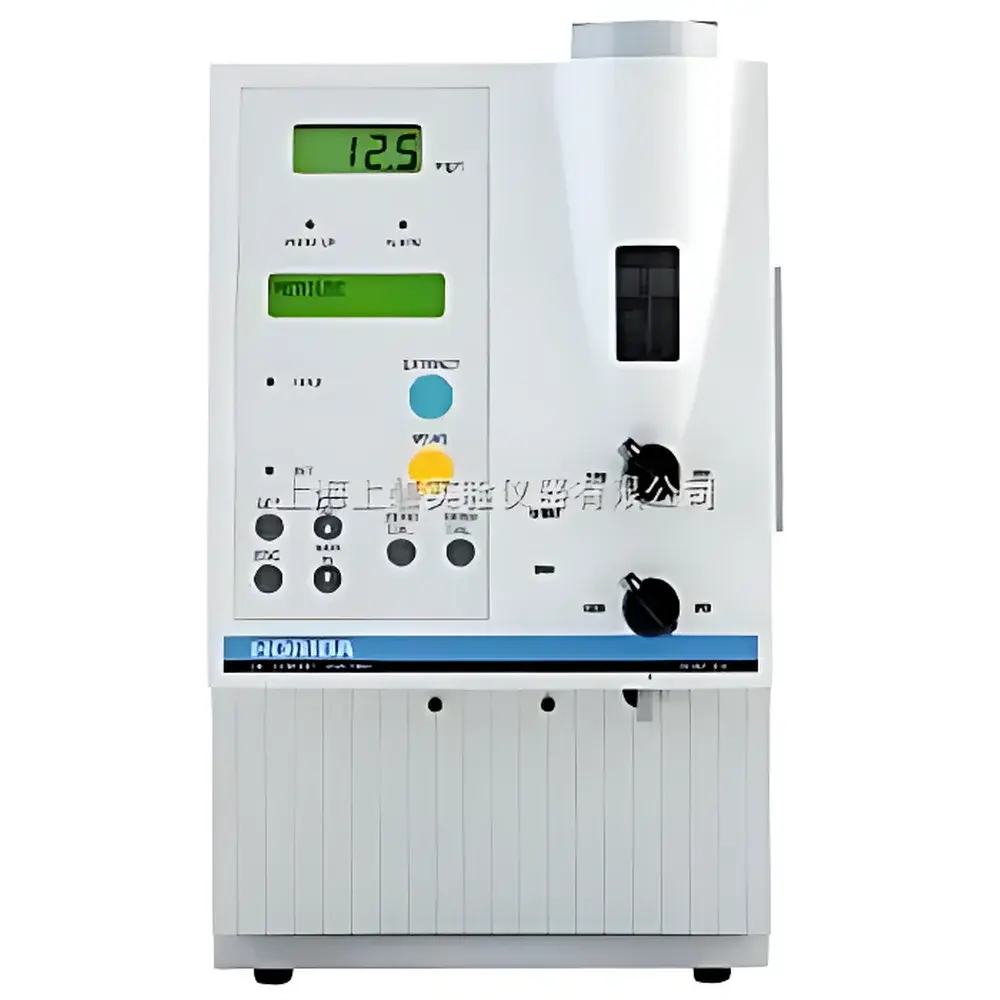
Horiba OCMA-310 Oil-in-Water Concentration Analyzer
| Origin | Japan |
|---|---|
| Manufacturer Type | Authorized Distributor |
| Origin Category | Imported Instrument |
| Model | OCMA-310 |
| Pricing | Available Upon Request |
Overview
The Horiba OCMA-310 Oil-in-Water Concentration Analyzer is a dedicated benchtop instrument engineered for precise, trace-level quantification of hydrocarbon oil contaminants in aqueous matrices—including freshwater, seawater, industrial process water, and wastewater effluents. It operates on the principle of solvent extraction followed by non-dispersive infrared (NDIR) absorption spectroscopy at a characteristic C–H stretching band near 2940 cm⁻¹. Unlike direct optical methods, the OCMA-310 employs a controlled liquid–liquid extraction step using halogenated solvents (e.g., S-316), isolating extractable petroleum hydrocarbons from interfering matrix components such as suspended solids, humic substances, or emulsified organics. This two-stage methodology—extraction + NDIR detection—ensures high selectivity, minimal cross-sensitivity, and compliance with internationally recognized analytical frameworks for oil-in-water measurement, including ISO 9377-2 and ASTM D7066.
Key Features
- Fixed dynamic measurement range of 0–200 mg/L oil-in-water—no manual range switching required, enabling seamless analysis across low-ppb to mid-ppm concentrations
- Integrated precision syringe-based fluid handling system ensures repeatable, gravimetrically verified sample and solvent dosing (10 mL water + 10 mL S-316)
- Digital display with real-time status monitoring: includes operational diagnostics, error code logging (e.g., “Solvent Low”, “Extraction Failure”, “IR Detector Drift”), and calibration verification prompts
- Optimized for use with Horiba’s proprietary recyclable extraction solvent S-316 (tetrachloroethylene analog), compatible with SR-305 Solvent Regenerator for activated carbon/activated alumina-based purification
- Robust architecture designed for routine operation in environmental labs, municipal wastewater treatment plants, and industrial QC environments—meets IP54 ingress protection for dust/moisture resistance
Sample Compatibility & Compliance
The OCMA-310 accepts clarified or filtered aqueous samples up to 100 mL volume; turbid or highly saline samples (e.g., seawater, produced water) require pre-filtration through 0.45 µm membrane filters to prevent particulate interference during extraction. It complies with method validation requirements under ISO/IEC 17025 for testing laboratories and supports audit-ready documentation when paired with GLP-compliant data recording practices. While not inherently 21 CFR Part 11 compliant, its digital output interface allows integration with validated LIMS or ELN platforms supporting electronic signatures and audit trails. The analyzer is routinely deployed in regulatory contexts aligned with EPA Method 1664 (revision B) equivalents and Japanese JIS K 0102 for petroleum hydrocarbon determination.
Software & Data Management
The OCMA-310 operates as a standalone instrument with embedded firmware controlling all extraction cycles, IR signal acquisition, baseline correction, and concentration calculation via built-in calibration curves. Data output is available via RS-232 serial interface (ASCII format) for connection to external PCs or lab printers. Optional Horiba Data Manager software (v3.x) enables batch report generation, trend charting over time-series measurements, and export to CSV or PDF formats. All calibration events, solvent regeneration logs (via SR-305), and system error records are timestamped and stored internally for ≥1,000 entries—supporting traceability in ISO 14001 environmental management systems.
Applications
- Monitoring influent and effluent streams at municipal and industrial wastewater treatment facilities
- Verification of oil/water separator efficiency in marine engine rooms, offshore platforms, and shipboard bilge systems
- Regulatory compliance testing for discharge permits (e.g., MARPOL Annex I, EU Water Framework Directive)
- Soil leachate analysis and groundwater plume characterization following hydrocarbon spills
- Quality control of rinse waters in metalworking, textile finishing, and automotive parts cleaning operations
- Field-deployable operation (with optional portable power supply) for rapid response to accidental releases in rivers or coastal zones
FAQ
What solvent is required for OCMA-310 operation?
S-316 (tetrachloroethylene-based) is the specified extraction solvent. It is supplied in 2.2 kg sealed containers and is fully compatible with the SR-305 Solvent Regenerator.
Can the OCMA-310 measure emulsified oil?
Yes—unlike gravimetric or UV-based methods, the solvent extraction step breaks emulsions and recovers both free and dispersed hydrocarbon phases, provided sample pH remains between 4–10.
Is daily calibration required?
A single-point calibration using certified 10 mg/L mineral oil standard is recommended before each analytical session; full multi-point calibration is advised weekly or after solvent replacement.
How often must the SR-305 solvent regenerator be serviced?
Activated carbon and alumina columns in the SR-305 typically support ≥500 extraction cycles before replacement; column life is monitored via pressure drop and post-regeneration blank absorbance checks.
Does the OCMA-310 meet US EPA requirements?
While not EPA-certified as a listed method, its performance characteristics align with the accuracy, precision, and detection limit criteria defined in EPA Method 1664B for total recoverable oil and grease (TROG).





