
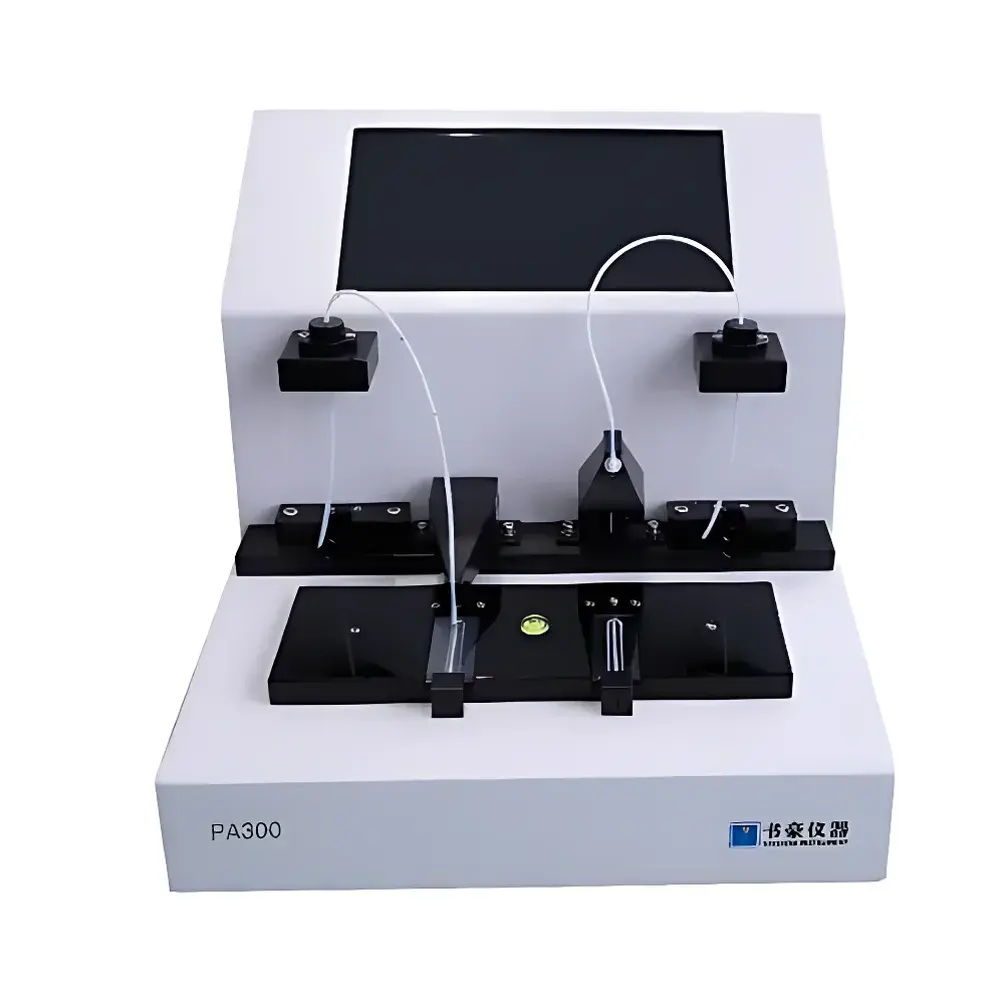
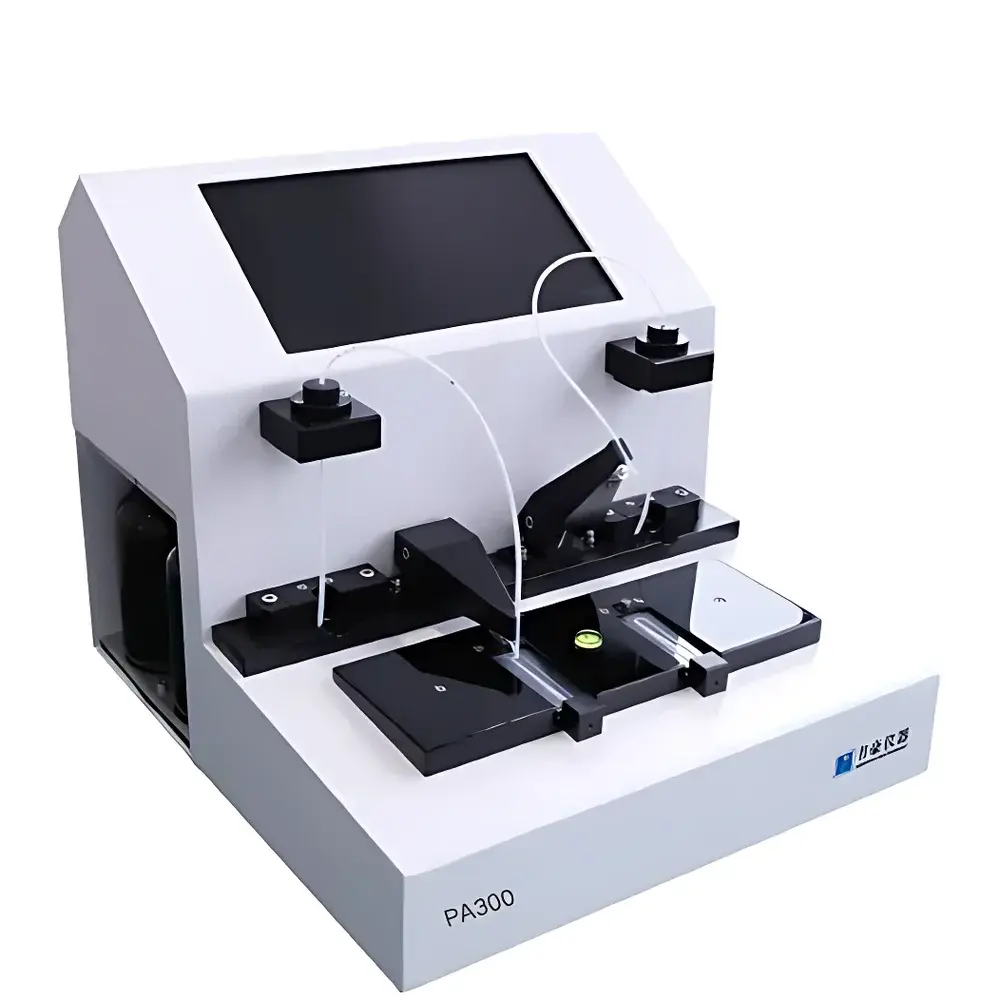
SOOHOW INSTRUMENT PA300 Dual-Channel Analytical Ferroscope
| Brand | SOOHOW INSTRUMENT |
|---|---|
| Origin | Jiangsu, China |
| Manufacturer Type | Direct Manufacturer |
| Country of Origin | China |
| Model | PA300 |
| Price Range | USD 25,000 – 30,000 |
Overview
The SOOHOW INSTRUMENT PA300 Dual-Channel Analytical Ferroscope is an engineered solution for quantitative ferrographic analysis of wear debris in lubricating oils. Based on the principle of high-gradient magnetic separation, the instrument applies a controlled magnetic field across a glass substrate to precipitate ferromagnetic and paramagnetic wear particles from oil samples according to their magnetic susceptibility, size, and density. This enables spatially resolved deposition—forming a ferrogram—where particles are stratified along a defined deposition track. The resulting pattern preserves morphological, dimensional, and distributional characteristics critical for wear mechanism identification (e.g., sliding, rolling fatigue, cutting, or corrosion). Designed in full compliance with ASTM D7690 (Standard Practice for Analysis of Wear Debris Using Analytical Ferrography) and equivalent to the Chinese national standard SH/T 0573–1993 “Test Method for Wear Particles in In-Service Lubricating Oils (Analytical Ferrography)”, the PA300 supports condition-based maintenance programs in power generation, marine propulsion, wind turbine gearboxes, and heavy-duty hydraulic systems.
Key Features
- Dual-channel independent fluidic pathways enable concurrent preparation of two ferrograms without cross-contamination or timing overlap—reducing total analysis cycle time by up to 45% compared to single-channel instruments.
- Programmable flow-rate control (0.1–2.0 mL/min, adjustable in 0.1 mL increments) ensures reproducible particle deposition velocity, minimizing streaking and enhancing inter-sample comparability.
- Integrated auto-start protocol: once sample vials are loaded and chamber sealed, the system initiates aspiration, magnetic deposition, solvent rinse, and drying sequence unattended—supporting walk-away operation during routine lab workflows.
- Optimized magnetic circuit design delivers uniform field gradient (≥1.2 × 10⁵ T/m) across both channels, enabling consistent separation of particles ranging from sub-micron (100 µm).
- Transparent ferrogram substrates (standard 60 mm × 24 mm glass slides) permit simultaneous brightfield and reflected-light microscopy—facilitating rapid differentiation between ferrous metals, non-ferrous metals, oxides, and organic contaminants.
- Low-sensitivity to water content: operational stability maintained with oil samples containing up to 1,000 ppm water—eliminating need for pre-drying or dehydration steps that may alter particle agglomeration state.
- Minimal particle stacking due to laminar flow profile and calibrated magnetic flux decay—preserving individual particle morphology for accurate shape factor and edge sharpness assessment.
Sample Compatibility & Compliance
The PA300 accepts mineral-, synthetic-, and bio-based lubricants including engine oils, turbine oils, hydraulic fluids, gear oils, and greases (after solvent dilution). Sample volume requirement: 1.0–2.5 mL per channel. Compatible with ISO 4406:2017 particle count reference standards and aligned with ISO 18436-4 Category II vibration and oil analysis certification requirements. Fully traceable calibration logs support GLP/GMP audit readiness; all operational parameters—including flow rate, magnetic field intensity, and deposition duration—are digitally recorded and exportable in CSV format for FDA 21 CFR Part 11–compliant environments.
Software & Data Management
The PA300 operates via embedded firmware with optional PC-based FerroView™ Suite (v3.2+), supporting image acquisition, particle classification (by morphology, size, and contrast), and automated wear severity scoring per ISO 12171 and ABC (Analytical Band Classification) methodology. All raw deposition metadata (timestamp, operator ID, sample ID, viscosity correction factor) is embedded into TIFF/OME-TIFF files. Audit trail functionality records user logins, parameter changes, and report exports—meeting ALCOA+ data integrity principles. Export formats include PDF analytical reports, Excel-compatible wear trend databases, and XML for LIMS integration.
Applications
- Early detection of abnormal wear modes in rotating machinery (e.g., gear pitting, bearing spalling, piston ring scuffing)
- Verification of filtration efficiency and filter element service life extension
- Root cause analysis following catastrophic failure events
- Baseline wear characterization during equipment commissioning and acceptance testing
- Monitoring additive depletion and oxidation byproduct formation through non-ferrous particle profiling
- Supporting ISO 55001 asset management frameworks with quantifiable wear rate metrics
FAQ
What lubricant viscosities can the PA300 accommodate without dilution?
Viscosities up to 300 cSt at 40 °C may be analyzed directly; higher-viscosity samples (e.g., gear oils >500 cSt) require dilution with naphtha or kerosene per ASTM D7690 Annex A1.
Is the PA300 compatible with automated particle image analysis software?
Yes—FerroView™ Suite includes AI-assisted particle recognition trained on over 12,000 labeled ferrogram images, supporting ISO 11500-compliant classification into 8 morphology groups.
How is calibration verified between runs?
Daily verification uses NIST-traceable iron oxide microsphere standards (5–50 µm); full calibration validation is performed semi-annually using dual-channel flowmeter verification and Hall-effect magnetic field mapping.
Can the PA300 be integrated into an existing laboratory information management system (LIMS)?
Yes—via RESTful API or HL7-compliant middleware; data fields include sample ID, deposition time, flow rate, operator code, and digital ferrogram hash for cryptographic integrity verification.
Does the instrument meet requirements for third-party accreditation (e.g., ISO/IEC 17025)?
All hardware specifications, uncertainty budgets, and maintenance logs conform to ILAC-G8:2021 guidelines; factory documentation includes metrological traceability statements for magnetic field and volumetric flow measurement subsystems.




