
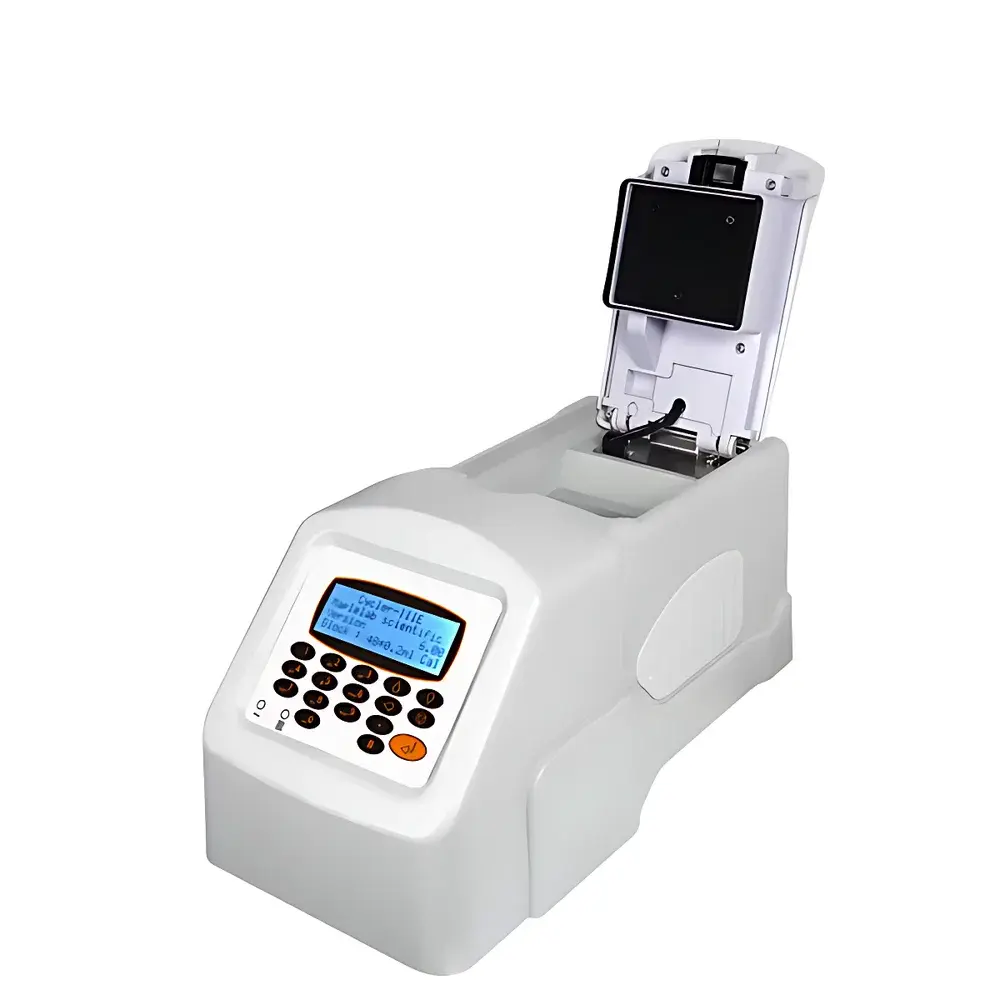
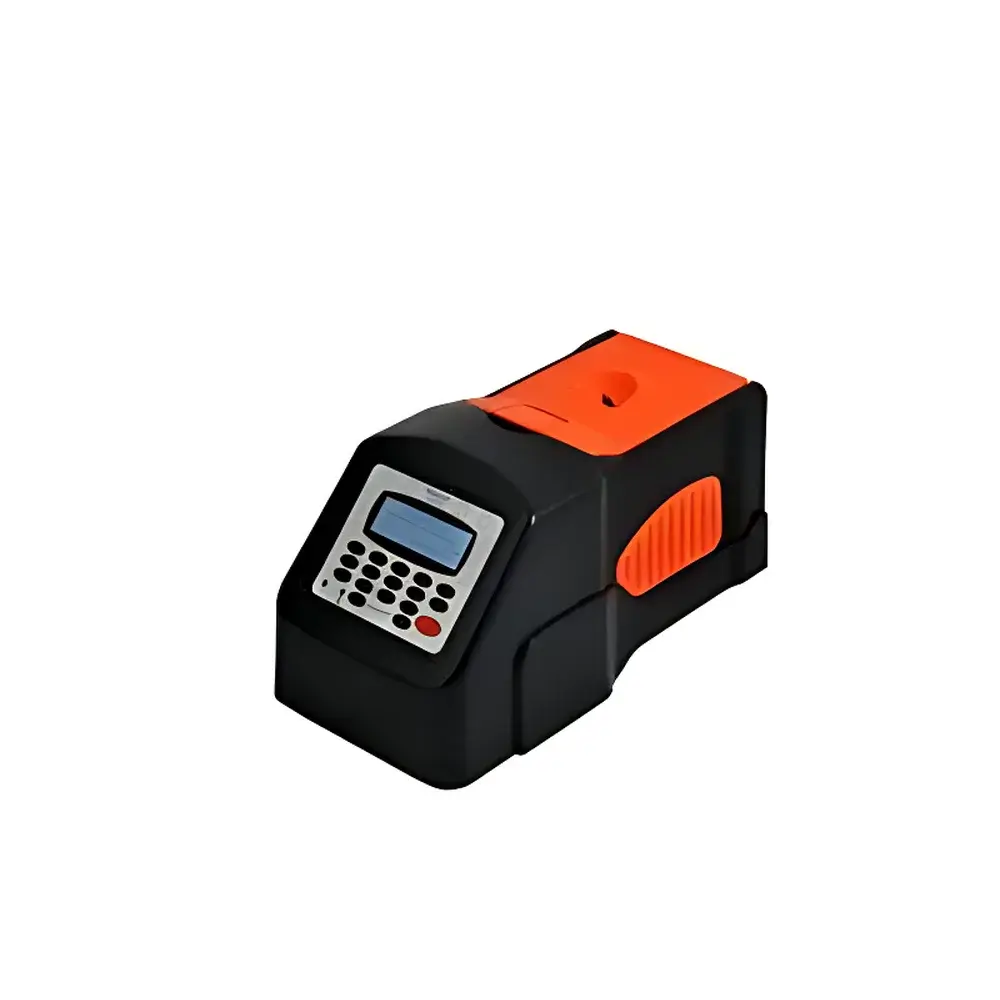
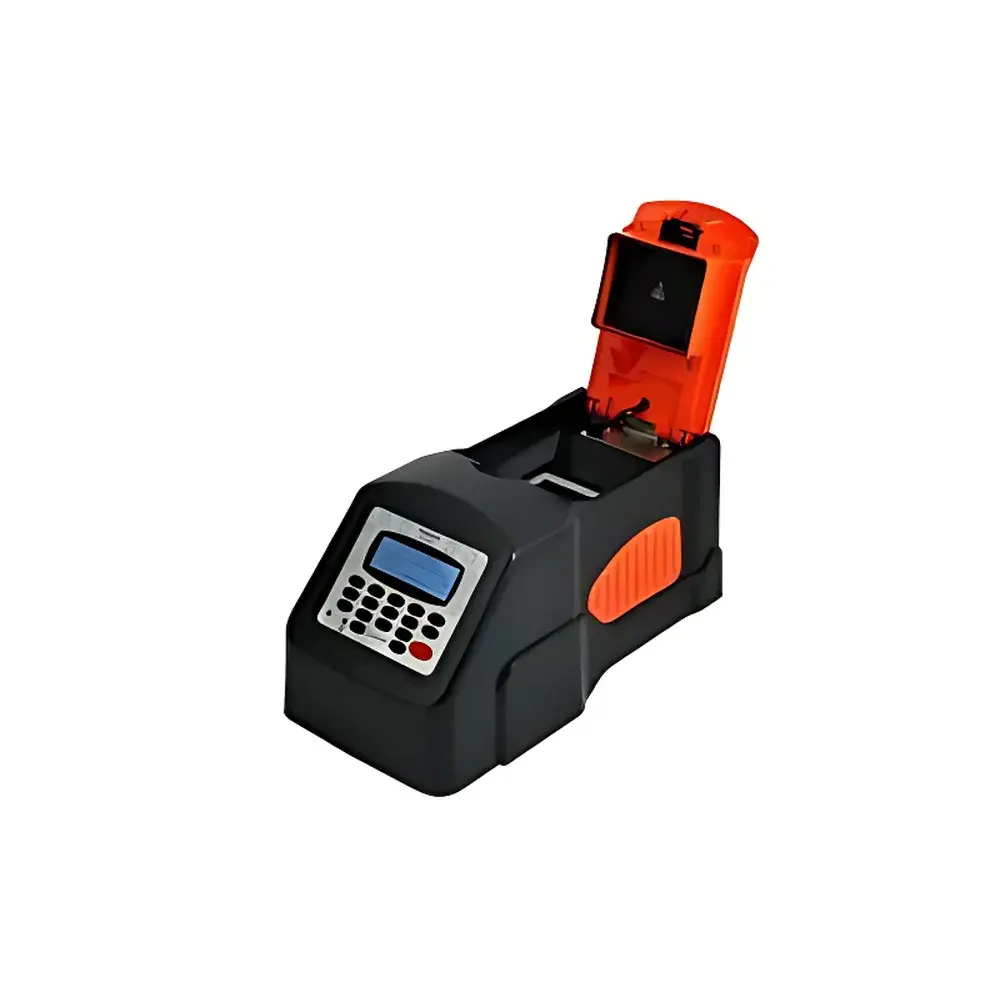
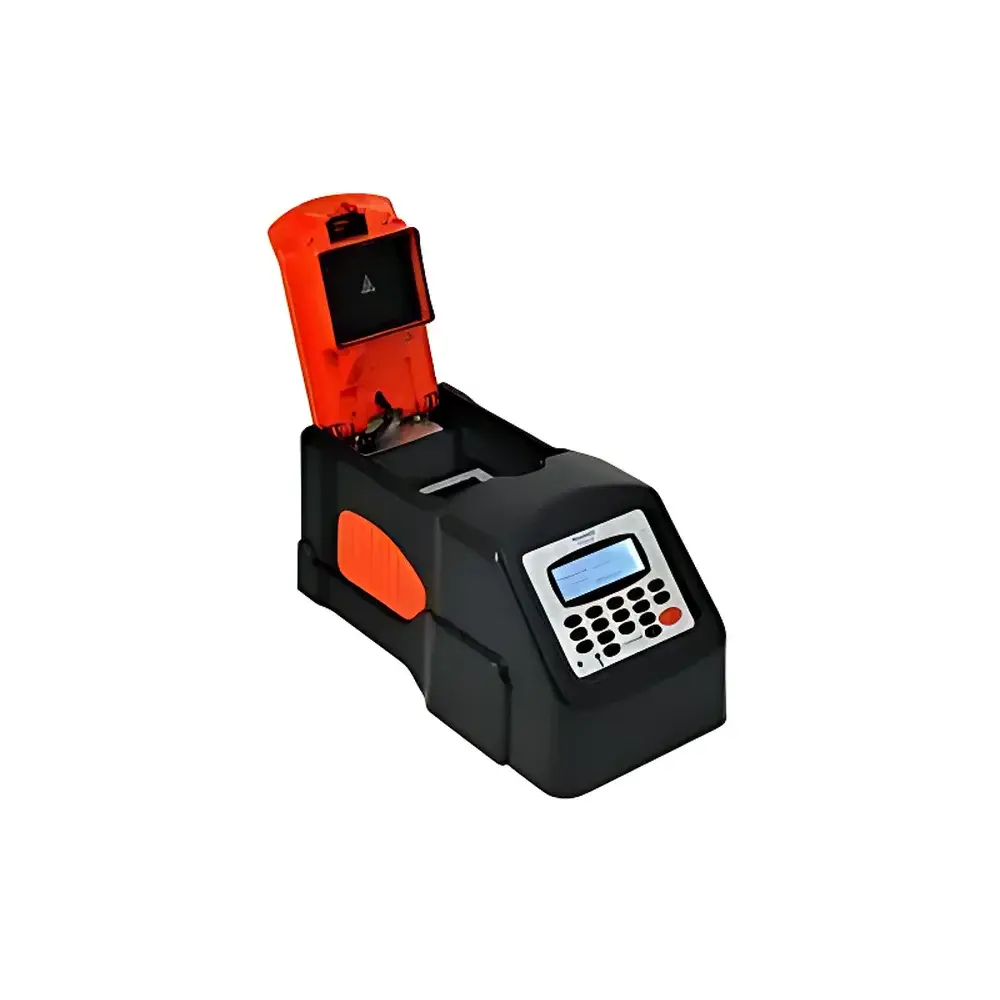
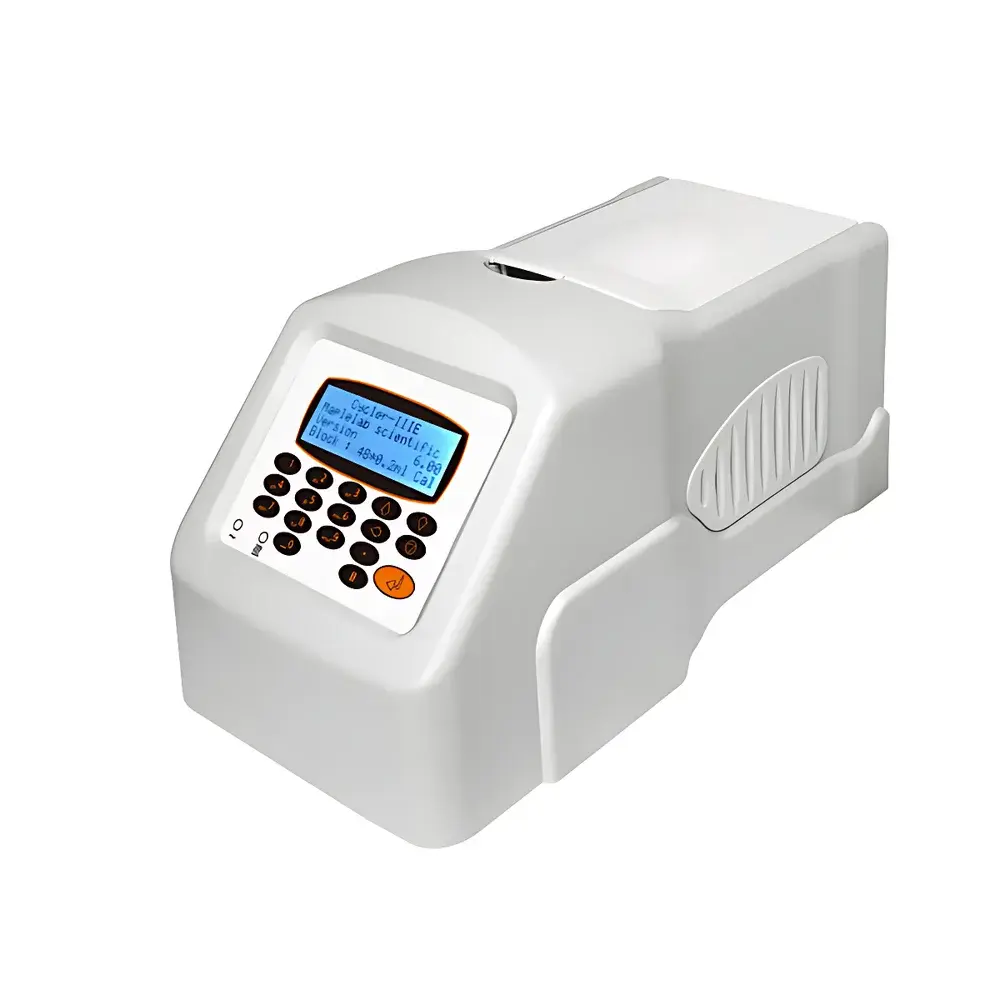
Maplelab Cycler IIIE Gradient PCR Thermal Cycler
| Brand | Maplelab |
|---|---|
| Origin | Guangdong, China |
| Manufacturer Type | Authorized Distributor |
| Country of Origin | China |
| Model | Cycler IIIE |
| Instrument Type | Gradient PCR Thermal Cycler |
| Sample Capacity | 48 × 0.2 mL or 30 × 0.5 mL wells |
| Max Heating Rate | 4.5 °C/s |
| Temperature Accuracy | ±0.5 °C |
| Block Uniformity | ±0.5 °C |
| Temperature Range | 4–99 °C |
| Max Cooling Rate | 3.0 °C/s |
| Heated Lid | 100–115 °C (programmable, auto-activated above 35 °C block setpoint) |
| Gradient Range | 20–80 °C |
| Max Gradient Span | 15 °C |
| Program Storage | 37 protocols (3-step format) |
| Dimensions (H×W×L) | 185 × 185 × 330 mm |
| Weight | 4.8 kg |
| Power Input | 120 V or 230 V AC |
Overview
The Maplelab Cycler IIIE is a compact, semi-sized gradient thermal cycler engineered for precision nucleic acid amplification via the polymerase chain reaction (PCR). Designed as an enhanced iteration of the Cycler IIIC platform, it integrates real-time gradient computation and predictive thermal profiling—enabling users to model and visualize temperature gradients across the heating block prior to run initiation. Its thermoelectric heating/cooling architecture delivers rapid thermal transitions (up to 4.5 °C/s heating, 3.0 °C/s cooling) while maintaining tight thermal control: ±0.5 °C accuracy and ±0.5 °C inter-well uniformity across the full operating range (4–99 °C). The instrument supports two interchangeable block configurations—48-well (0.2 mL) and 30-well (0.5 mL)—making it suitable for both standard PCR optimization and low-volume assay development in academic, clinical, and industrial molecular biology laboratories.
Key Features
- Intelligent gradient calculation engine: Predicts linear temperature distribution across the block; empirically validated against measured values with <±0.3 °C deviation.
- Programmable heated lid (100–115 °C): Automatically engages only when block temperature exceeds 35 °C, minimizing evaporation without manual intervention.
- Intuitive alphanumeric programming interface: Supports user-defined protocol naming, password protection, and storage of up to 37 three-step thermal profiles.
- Dual-block compatibility: Interchangeable 48×0.2 mL and 30×0.5 mL aluminum blocks—both optimized for rapid heat transfer and long-term thermal stability.
- Robust thermal architecture: Peltier-based system with active cooling and adaptive PID control ensures reproducible ramp rates and endpoint stability.
- Extended warranty & service support: Includes 4-year comprehensive parts-and-labor warranty, backed by certified technical field support and remote diagnostics capability.
Sample Compatibility & Compliance
The Cycler IIIE accommodates standard PCR consumables including thin-walled 0.2 mL and 0.5 mL tubes, 48-well and 30-well plates, and strip tubes—compatible with all major Taq DNA polymerases and master mixes. It meets essential safety and electromagnetic compatibility standards per IEC 61010-1 (Laboratory Equipment Safety) and IEC 61326-1 (EMC for Measurement and Control Equipment). While not FDA-cleared as an IVD device, its programmable parameters, password-protected method editing, and non-volatile protocol storage align with GLP and internal QA/QC requirements for research-use-only (RUO) applications. Audit trails are supported via optional external logging software compliant with 21 CFR Part 11 when integrated into validated workflows.
Software & Data Management
The Cycler IIIE operates via an embedded firmware interface with no PC dependency—ideal for benchtop use in resource-constrained or regulated environments. All protocols are stored locally in non-volatile memory; no cloud connectivity or proprietary drivers required. For laboratories requiring traceability, exported run logs (via USB port) include timestamped cycle data, gradient settings, lid activation status, and final hold conditions. When deployed in ISO 17025-accredited labs, the instrument’s calibration traceability (per Cycler IIIC reference standard) supports documented metrological verification. Optional CSV export enables integration with LIMS or ELN platforms for automated result archival.
Applications
- Primer annealing temperature optimization using linear gradient profiles (20–80 °C span, up to 15 °C differential).
- Routine end-point PCR for genotyping, pathogen detection, and cloning validation.
- Pre-sequencing template amplification where low sample volume (0.2 mL format) minimizes reagent cost.
- Teaching laboratories requiring intuitive operation, visual gradient feedback, and robust hardware durability.
- QC testing of extracted nucleic acids under controlled thermal cycling conditions aligned with ISO/IEC 17025 method validation guidelines.
FAQ
Does the heated lid require manual activation?
No—the lid activates automatically when the block setpoint exceeds 35 °C and deactivates upon completion of the final hold step.
Can I switch between 0.2 mL and 0.5 mL blocks without tools?
Yes—blocks are tool-free interchangeable; each is pre-calibrated and recognized by firmware upon insertion.
Is the gradient function limited to specific temperature ranges?
The gradient is fully functional across 20–80 °C; outside this range, the instrument operates in uniform-temperature mode.
How is temperature uniformity verified during calibration?
Calibration follows a 9-point block mapping protocol per ASTM E2251-22 (Standard Practice for Calibration of Thermal Cyclers), with traceable NIST-certified probes.
What power supply options are available?
Dual-voltage design (120 V / 230 V AC, 50/60 Hz); no external transformer required—auto-sensing circuitry adapts to regional mains input.
Related Products



