
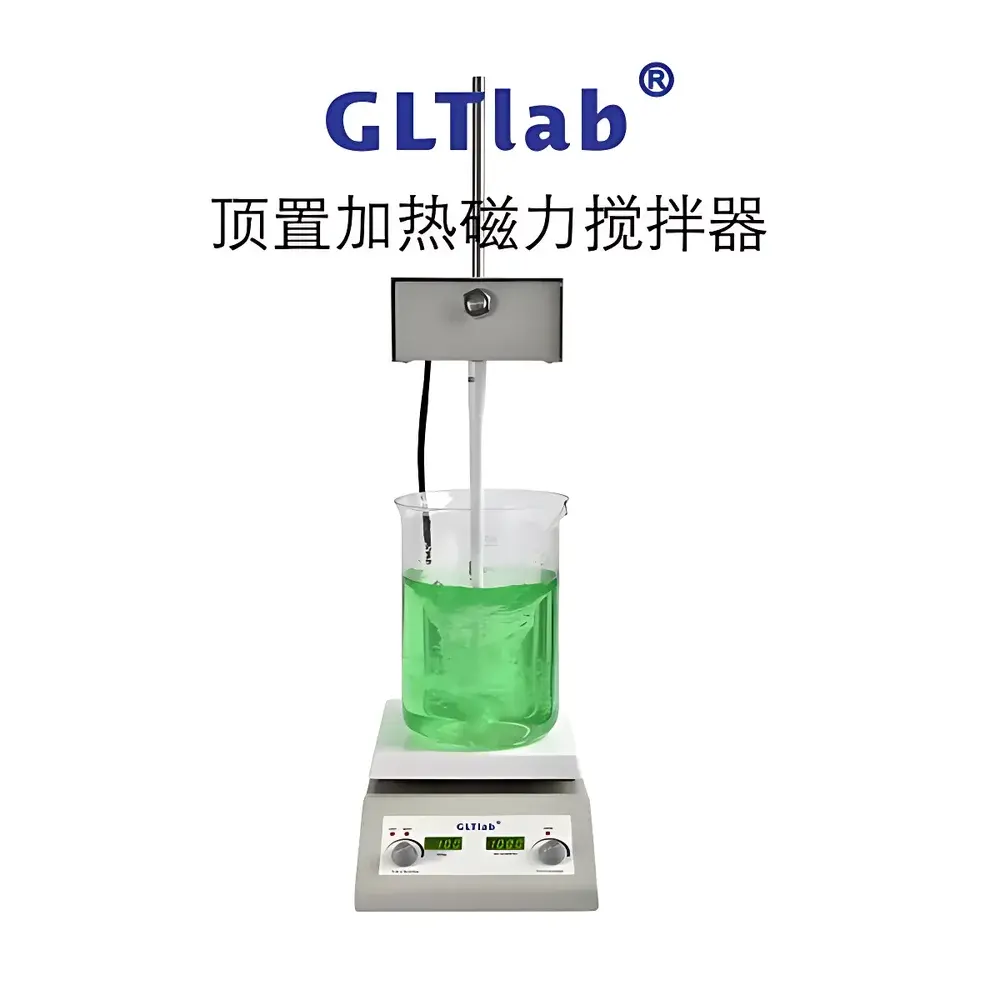
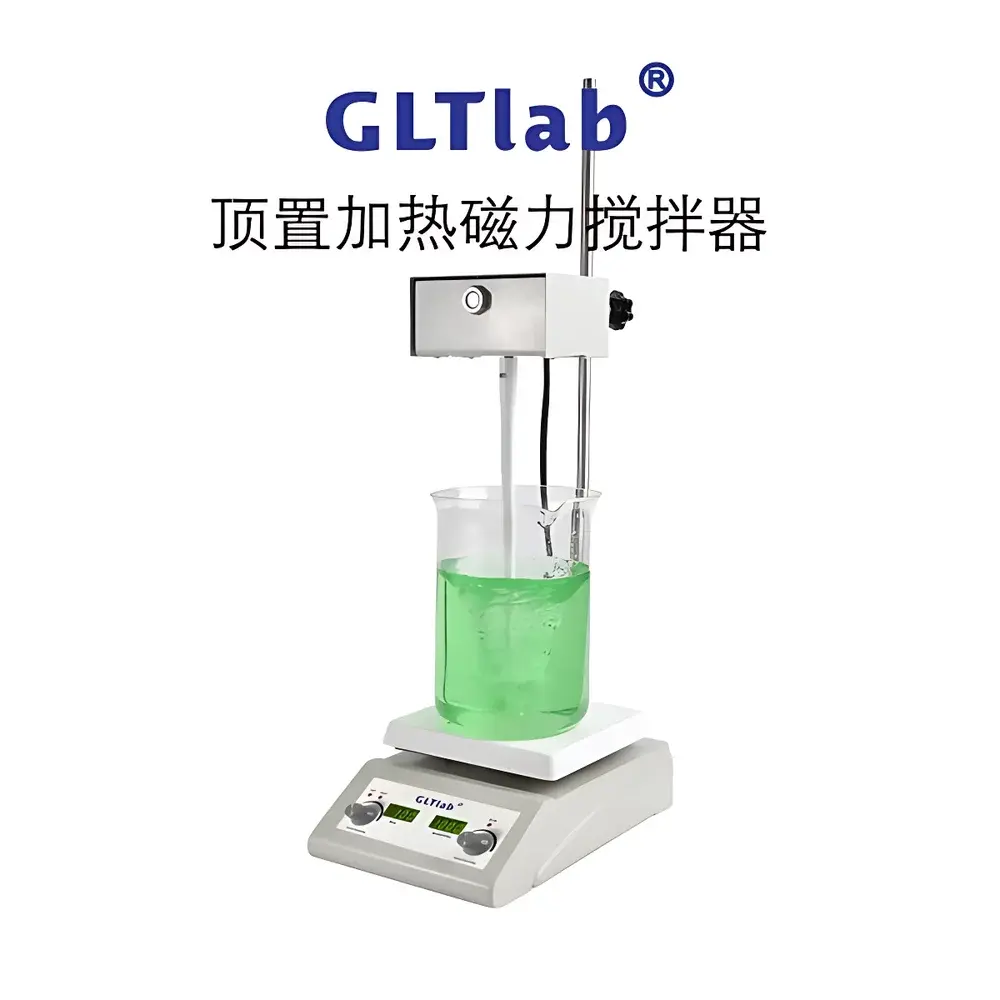
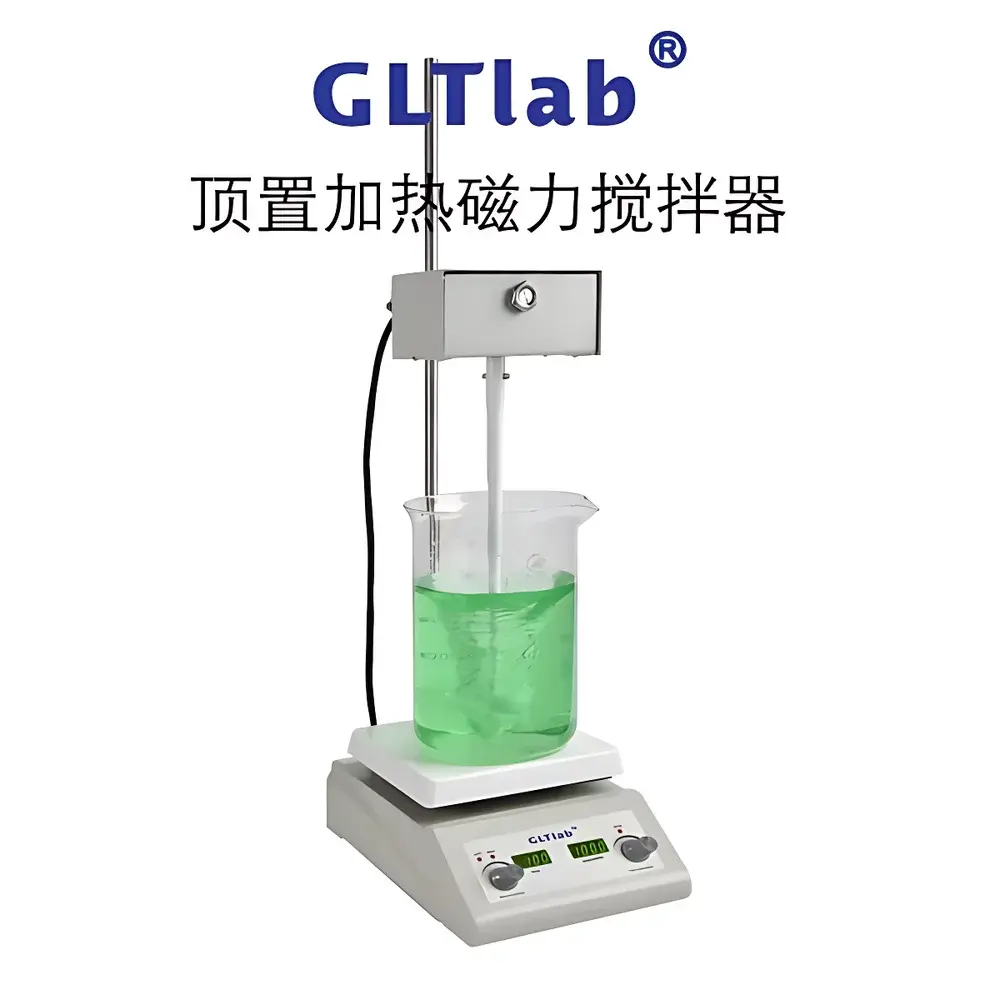
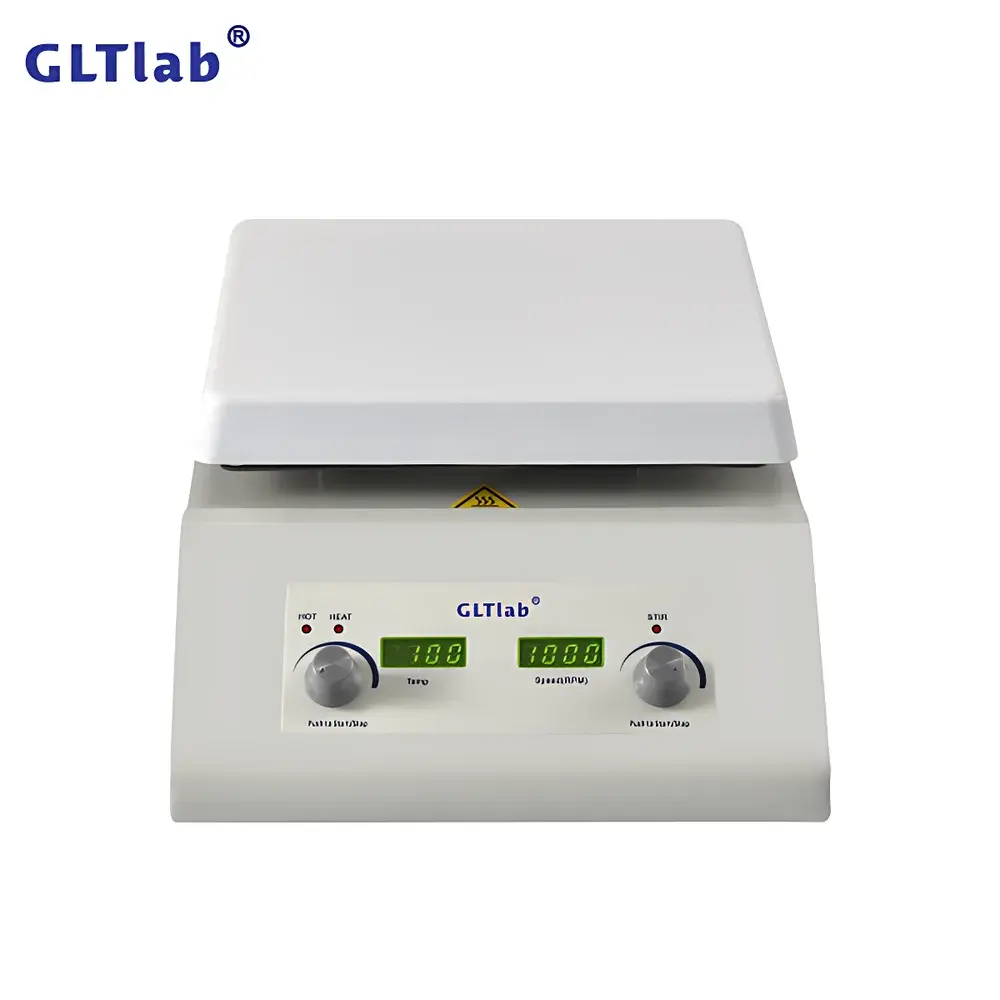
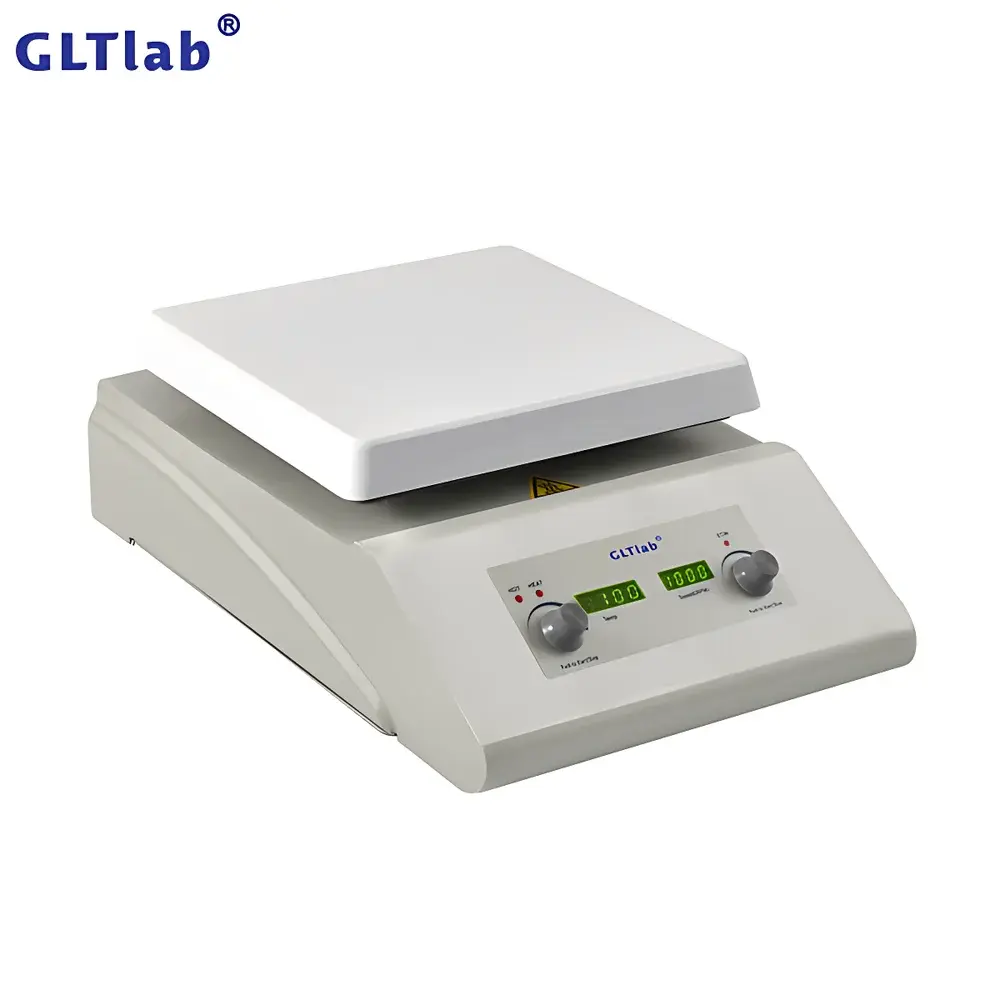
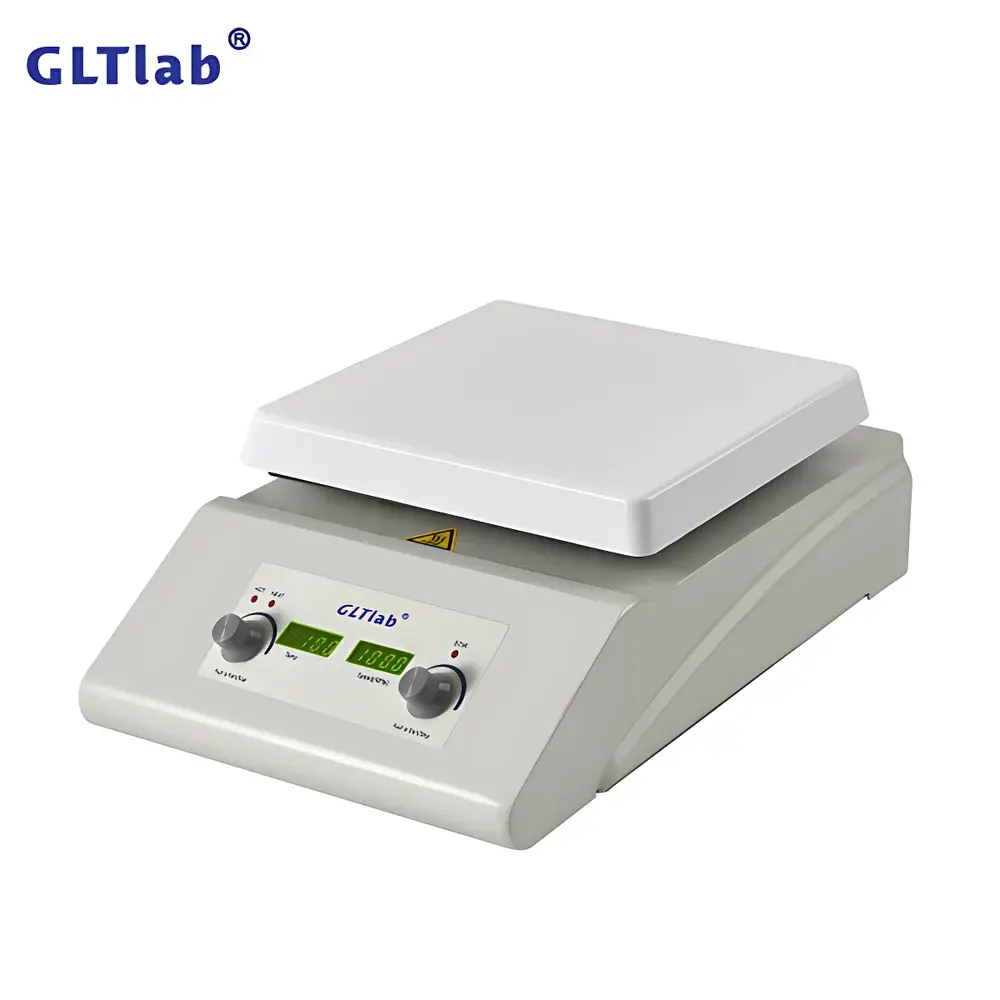
GLTlab OSH-GD Top-Mounted Heated Magnetic Stirrer with 7-inch Anodized Aluminum Heating Plate
| Brand | GLTlab |
|---|---|
| Origin | Guangdong, China |
| Manufacturer Type | Direct Manufacturer |
| Instrument Type | Heated Magnetic Stirrer |
| Max Stirring Volume | 15 L |
| Speed Range | 150–1500 rpm |
| Temperature Control Range | 35–400 °C |
| Stirring Torque | 80 N·cm |
| Max Viscosity Handling | 30,000 mPa·s |
| Heating Power | 750 W |
| Plate Dimensions | 178 × 178 mm (7″ × 7″) |
| Plate Material | Ceramic-Coated Anodized Aluminum |
| Integrated Chuck & Shaft Length | 250 mm |
| Shaft & Blade Material | Ceramic-Coated Aluminum |
| Support Rod Material | Stainless Steel (600 mm length) |
| Base Dimensions | 290 × 180 × 100 mm |
| Motor Housing Dimensions | 190 × 90 × 60 mm |
| Net Weight | 5 kg |
| Operating Ambient | 5–40 °C, ≤80% RH |
| IP Rating | IP21 |
| Voltage/Frequency | 110/220 V, 50/60 Hz |
| Total Power Consumption | 850 W |
Overview
The GLTlab OSH-GD is a dual-mode top-mounted heated magnetic stirrer engineered for high-temperature, high-torque laboratory mixing applications requiring precise thermal and rotational control. Unlike conventional bottom-heated stirrers, the OSH-GD integrates a top-mounted drive mechanism with an actively heated ceramic-coated aluminum plate—enabling direct contact heating of vessels while maintaining mechanical stability during vigorous agitation. Its design leverages Couette flow principles for efficient viscous fluid homogenization and supports both magnetic stirring (via external stir bars) and mechanical stirring (via integrated chuck-driven shafts), offering operational flexibility across diverse vessel geometries and media viscosities up to 30,000 mPa·s. The unit is calibrated for reproducible temperature ramping and steady-state thermal maintenance within ±2 °C accuracy across its full 35–400 °C range, making it suitable for solvent reflux, polymer dissolution, catalyst activation, and high-boiling-point reaction monitoring under controlled conditions.
Key Features
- Dual-operation mode: switch seamlessly between magnetic stirring (using standard PTFE- or glass-coated stir bars) and top-mounted mechanical stirring via the integrated 250 mm ceramic-coated aluminum shaft and precision-machined chuck
- 7-inch (178 × 178 mm) anodized aluminum heating plate with uniform ceramic coating—resistant to thermal shock, chemical corrosion, and mechanical abrasion from glassware contact
- High-torque DC motor delivering consistent 80 N·cm output across the full 150–1500 rpm speed range, with digital feedback control minimizing speed drift under load
- Independent PID temperature regulation with real-time plate-surface sensing; overheat protection activates automatically when surface temperature exceeds 420 °C
- Stainless steel support column (600 mm height) with fine-thread vertical adjustment and locking collar for repeatable probe positioning
- IP21-rated enclosure with reinforced motor housing and sealed electronics, compliant with IEC 61010-1 for laboratory electrical safety
Sample Compatibility & Compliance
The OSH-GD accommodates round-bottom flasks (50 mL–15 L), flat-bottom beakers, crystallization dishes, and jacketed reactors—provided vessel base diameter does not exceed 170 mm. Its ceramic-coated aluminum surface exhibits excellent resistance to common laboratory solvents (e.g., acetone, ethanol, toluene, concentrated HCl and NaOH up to 6 M), supporting extended use in acidic, basic, and organic environments without degradation. The device meets CE marking requirements per EN 61326-1 (EMC) and EN 61010-1 (safety), and its temperature and speed control architecture supports audit-ready documentation per GLP and ISO/IEC 17025 workflows. While not FDA 21 CFR Part 11–certified out-of-the-box, the system’s analog/digital hybrid interface allows integration into validated environments via external data loggers with electronic signature capability.
Software & Data Management
The OSH-GD operates via a front-panel membrane keypad with dual LED displays showing real-time rpm and plate temperature. It does not include embedded software or USB/Bluetooth connectivity; however, its analog 0–10 V output ports (for speed and temperature signals) are compatible with third-party DAQ systems such as National Instruments LabVIEW, Keysight PathWave, or custom Python-based acquisition scripts using NI-DAQmx drivers. Optional analog-to-digital converter modules enable time-stamped parameter logging at 1 Hz resolution, supporting traceability in regulated QC/QA labs. All calibration constants—including thermal offset compensation and tachometric gain—are user-accessible via service mode for periodic verification and adjustment.
Applications
- High-temperature synthesis of metal-organic frameworks (MOFs) and covalent organic frameworks (COFs) requiring sustained 250–350 °C agitation
- Viscous polymer solution preparation (e.g., PVDF in NMP, chitosan in acetic acid) where magnetic coupling alone fails above 10,000 mPa·s
- Controlled evaporation and concentration of heat-sensitive extracts under nitrogen blanket, leveraging precise low-end temperature control (35–80 °C)
- Inorganic nanoparticle precipitation (e.g., Fe₃O₄, TiO₂) with simultaneous pH adjustment and thermal aging
- Calibration of thermocouples and RTDs against NIST-traceable reference standards using the stable, uniform heating profile
FAQ
Can the OSH-GD stir sealed vessels under inert atmosphere?
Yes—its top-mounted drive permits integration with septum-capped flasks or glovebox-compatible reactors; ensure shaft seal compatibility with your atmosphere gas.
Is the heating plate surface temperature uniform across the entire 7-inch area?
Yes—thermal mapping per ASTM E220 confirms ≤±1.5 °C deviation at 200 °C across the central 150 mm zone.
What is the recommended maintenance interval for the motor and thermal sensor?
Inspect bearings and clean dust filters every 500 operating hours; recalibrate temperature sensor annually or after impact events.
Does the unit support external timer or relay control?
Yes—dry-contact terminals (NO/NC) are provided for external start/stop and thermal cutoff interlocks.
Can I use non-GLTlab stir shafts or chucks with this system?
Only shafts with 8 mm hex shank and ISO 8495–compliant chuck geometry are mechanically and thermally validated for safe operation.



