
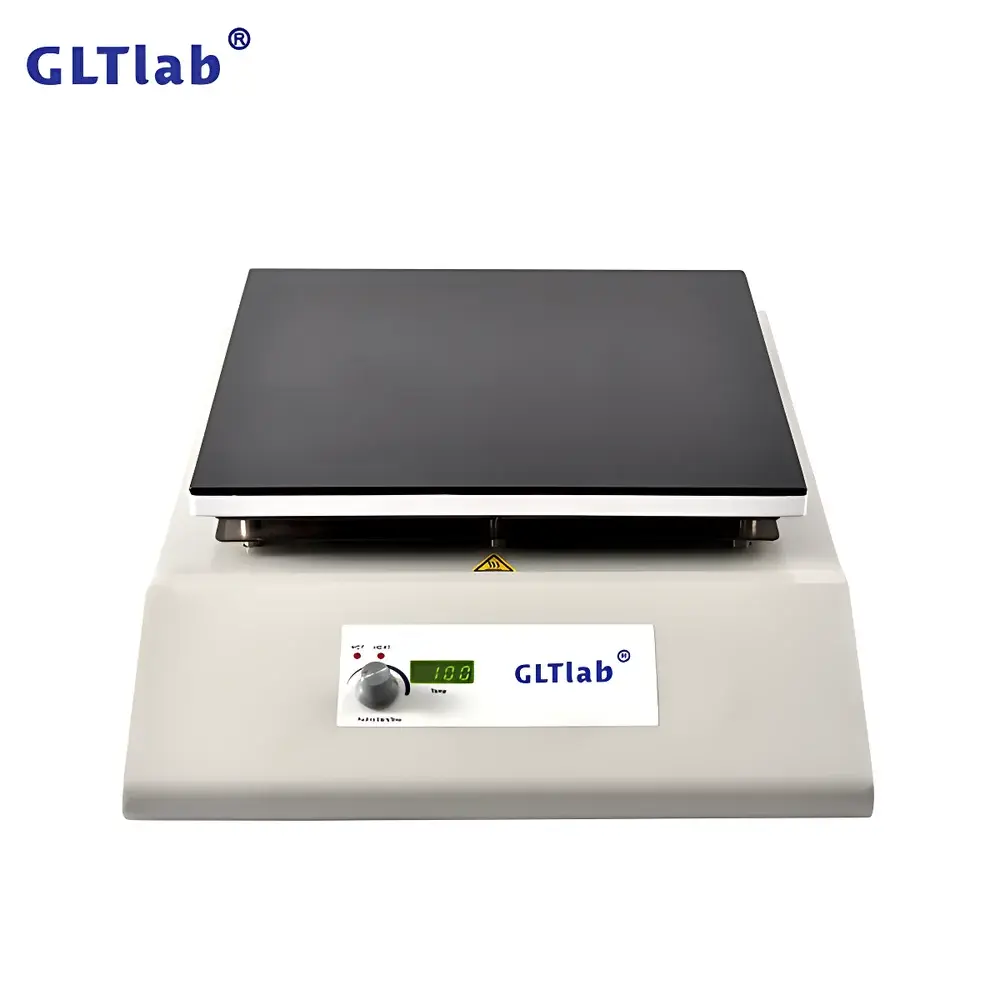
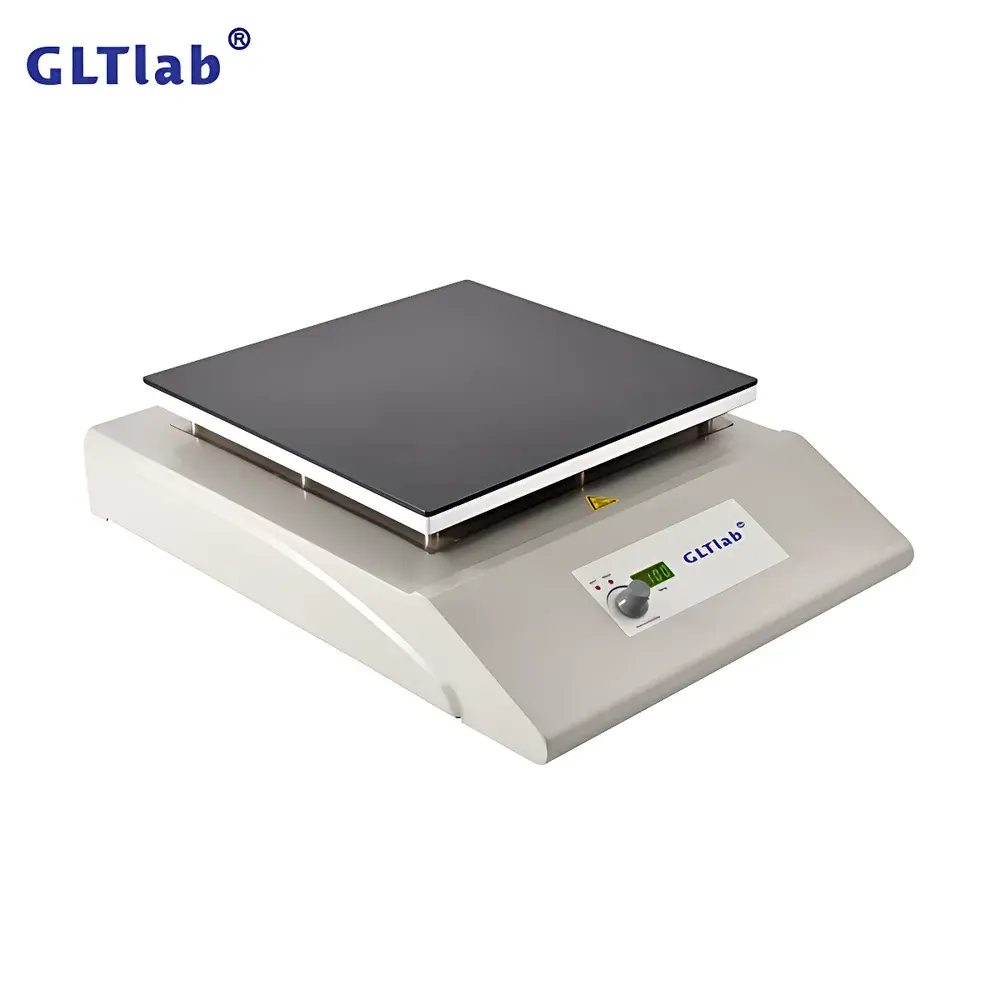
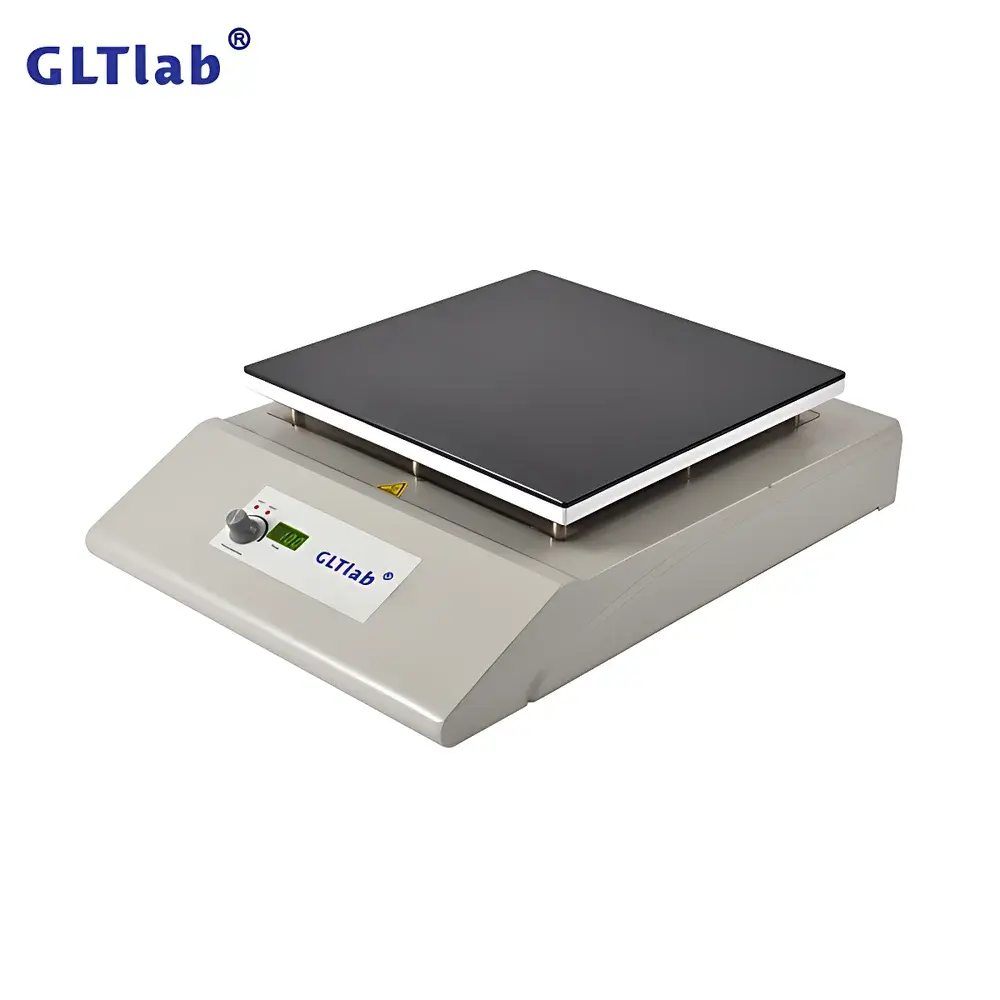
GLTlab HC-2 10-Inch Microcrystalline Ceramic Hotplate Stirrer
| Brand | GLTlab |
|---|---|
| Origin | Guangdong, China |
| Manufacturer Type | Direct Manufacturer |
| Product Category | Domestic |
| Model | HC-2 |
| Plate Dimensions | 300 × 300 mm |
| Heated Area | 220 × 220 mm |
| Max Plate Temperature | 550 °C |
| Heating Power | 1800 W |
| Stirring Speed Range | 100–1500 rpm |
| Max Stirring Capacity | 20 L |
| Control Method | Digital PID |
| Display | LED |
| Temperature Sensor | External PT1000 probe |
| Safety Features | Overheat cutoff, dry-run detection, probe disconnection alarm, “Hot Surface” indicator |
| Plate Material | Microcrystalline ceramic (acid-, alkali-, and thermal-resistant, uncoated) |
| Power Supply | 230 V, 50 Hz |
| Net Weight | 8.5 kg |
| Overall Dimensions (W × L × D) | 330 × 380 × 145 mm |
Overview
The GLTlab HC-2 10-Inch Microcrystalline Ceramic Hotplate Stirrer is an engineered solution for laboratories requiring precise, stable, and chemically inert thermal control combined with robust magnetic stirring. Designed around a monolithic microcrystalline ceramic top plate—distinct from coated steel or aluminum surfaces—the HC-2 delivers exceptional resistance to strong acids (e.g., concentrated HNO₃, H₂SO₄), caustic solutions (e.g., 50% NaOH), and thermal shock up to 550 °C. Its operation relies on resistive heating elements embedded beneath the ceramic substrate, regulated via a digital PID feedback loop that continuously compares real-time PT1000 sensor input (external probe optional) against setpoint, achieving ±1.5 °C temperature stability within ±3 °C accuracy over the full 50–550 °C range. The integrated high-torque stirrer motor employs rare-earth magnets and optimized rotor geometry to maintain consistent agitation across viscosities from water to 10,000 cP glycerol solutions, supporting volumetric mixing up to 20 L in standard borosilicate or PTFE-lined vessels.
Key Features
- 10-inch (300 × 300 mm) monolithic microcrystalline ceramic plate—non-porous, non-reactive, and resistant to scratching, etching, and thermal degradation under routine lab use
- Dual-function digital PID controller with independent setpoints for temperature and stirring speed (100–1500 rpm), both adjustable in 1 °C and 10 rpm increments
- External PT1000 temperature probe input with auto-calibration function; supports immersion, surface-contact, or air-gap measurement configurations
- Intelligent safety architecture: automatic shutdown triggered by probe disconnection, solvent evaporation (dry-run detection), or surface temperature exceeding 600 °C threshold
- Visual and audible alerts—including illuminated “HOT” warning icon and intermittent beeping—activated when plate surface exceeds 50 °C
- Spill containment design with raised plate perimeter and recessed control panel to minimize ingress of liquids into electronics
- No volatile organic coatings or PTFE layers—eliminates outgassing risks during high-temperature applications critical for trace-metal analysis or cleanroom workflows
Sample Compatibility & Compliance
The HC-2 accommodates standard laboratory glassware (e.g., round-bottom flasks, beakers, digestion vessels) up to 200 mm in diameter and 20 L capacity. Its inert ceramic surface ensures compatibility with aggressive reagents used in EPA Method 3050B acid digestions, ASTM D86 distillation setups, and ISO 11348-2 toxicity assays. While not certified to IEC 61010-1:2010 Ed.3 as a standalone unit, the HC-2 conforms to its essential safety requirements for laboratory electrical equipment—including dielectric strength testing, creepage/clearance distances, and thermal cutoff redundancy. It supports GLP-compliant documentation when paired with external data loggers recording time-stamped temperature/stir speed profiles. No built-in 21 CFR Part 11 functionality; however, audit trails may be generated externally using validated third-party software.
Software & Data Management
The HC-2 operates as a stand-alone instrument with no proprietary software dependency. All operational parameters are configured and monitored locally via the front-panel LED display and tactile membrane keys. For integration into automated workflows, the unit provides a 0–5 V analog output port (user-configurable for temperature or RPM signal) compatible with SCADA systems, LabVIEW DAQ modules, or PLC-based process controllers. Optional RS-485 Modbus RTU interface (add-on module) enables remote parameter readout and setpoint adjustment within validated network environments. Calibration records—including date, technician ID, reference standard (NIST-traceable dry-block calibrator), and deviation values—are maintained manually per internal QA protocols.
Applications
- Controlled-temperature digestion of environmental soil/sediment samples prior to ICP-MS analysis
- Long-duration reflux reactions in organic synthesis where metal ion contamination must be avoided
- Standardization of viscosity reference oils per ASTM D445 using constant-temperature bath emulation
- Preparation of calibration standards for UV-Vis spectrophotometry under thermally stabilized conditions
- Accelerated stability testing of pharmaceutical suspensions per ICH Q1A(R2) guidelines
- Heating and homogenization of high-viscosity polymer melts during rheological pre-conditioning
FAQ
Does the HC-2 support external temperature probe feedback for closed-loop control?
Yes—the unit accepts a standard PT1000 sensor (2-wire or 3-wire configuration) via rear-panel BNC input, enabling true closed-loop regulation with user-selectable sensor location (vessel bottom, sidewall, or solution phase).
Can the microcrystalline plate be cleaned with acetone or piranha solution?
Acetone, ethanol, and dilute nitric acid (≤10%) are fully compatible; piranha solution (H₂SO₄:H₂O₂) is not recommended due to potential oxidative stress on embedded heating elements despite plate inertness.
Is the stirring motor rated for continuous duty at 1500 rpm?
Yes—the brushless DC motor is rated for uninterrupted operation at maximum speed for ≥8 hours, with thermal protection limiting coil temperature rise to <90 °C ambient.
What is the minimum vessel size supported for stable stirring?
Stable bar engagement is achieved with vessels ≥60 mm diameter containing ≥100 mL liquid volume; smaller volumes require low-speed operation (<400 rpm) and vortex-suppressing stir bars.
Does the unit include a calibration certificate?
No factory-issued certificate is included; however, the HC-2 features a user-accessible calibration offset function (±10 °C range) and complies with ISO/IEC 17025 traceability requirements when adjusted against a NIST-traceable reference thermometer.



